
- Searing the Pork and Aromatics

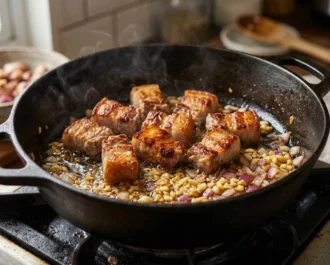
First, heat the cooking oil in a heavy-bottomed pot over medium-high heat. Carefully add the pork belly cubes in batches, ensuring you do not overcrowd the pan. Sear the meat until every side develops a beautiful, golden-brown crust, which locks in the essential juices. Once the pork is browned, remove the excess fat, leaving about two tablespoons in the pot. Toss in the minced garlic and chopped onions, sautéing them until the onions turn translucent and the garlic releases a fragrant aroma. This foundational step builds a complex flavor profile by utilizing the rendered pork fat to toast the aromatics. Ensure the heat remains steady so the garlic does not burn, which could introduce unwanted bitterness to your delicate Estofadong Baboy base.
- Deglazing and Simmering the Base
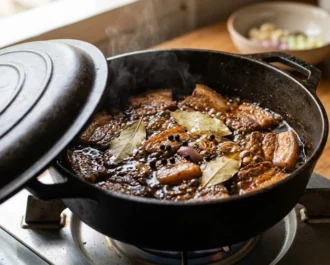
Pour the soy sauce, cane vinegar, and pineapple juice into the pot with the seared meat and aromatics. It is vital not to stir the mixture immediately after adding the vinegar to allow the harsh acidity to mellow out properly. Throw in the dried bay leaves and whole black peppercorns to infuse the liquid with earthy notes. Bring the entire mixture to a gentle boil, then immediately reduce the heat to a low simmer. Cover the pot tightly to trap the moisture, allowing the pork to braise slowly until it becomes tender. This slow-cooking process ensures that the collagen in the pork belly breaks down, creating a rich, velvety sauce that perfectly balances the salty soy and the bright, acidic fruit juice.
- Developing the Sweet and Savory Balance
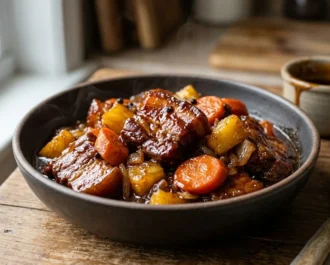
Once the pork has reached a semi-tender consistency, stir in the brown sugar. The sugar acts as a bridge between the salty soy sauce and the tangy pineapple juice, creating the signature "estofado" glaze. Add the sliced carrots at this stage, as they require a bit of time to soften without becoming mushy. Continue simmering the stew uncovered for another fifteen minutes to allow the sauce to reduce and thicken into a glossy syrup. Watch the pot closely as the sugar caramelizes; you want a deep mahogany color that coats the back of a spoon. Taste the sauce carefully, adjusting the salt or sugar if necessary to achieve that perfect Filipino flavor profile that leans delightfully toward the sweeter side.
- Incorporating the Fried Saba Bananas
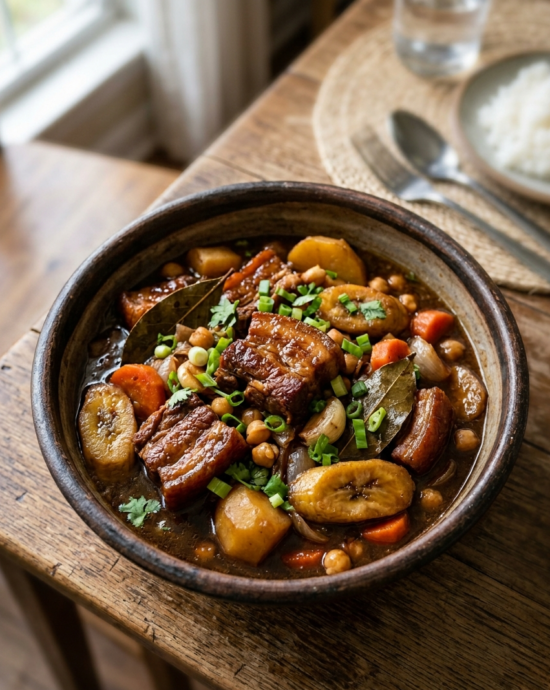
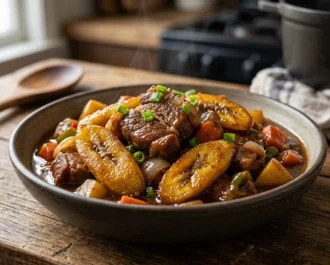
While the meat is finishing, lightly fry your sliced saba bananas in a separate pan until they are golden and caramelized. Gently fold these fried bananas into the main pot during the final five minutes of cooking. The bananas are the soul of Estofadong Baboy, providing a unique starchy sweetness and a soft texture that complements the savory pork perfectly. Be careful when stirring to ensure the bananas remain intact and do not turn into a paste. This step allows the bananas to absorb some of the savory sauce while releasing their natural sugars back into the stew. The result is a harmonious blend of textures where the fruit, vegetables, and meat coexist in a rich, dark, and incredibly flavorful Filipino braise.
- Final Reduction and Aesthetic Plating
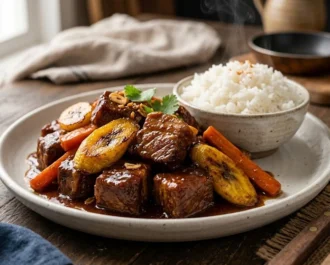
For the final touch, increase the heat slightly to achieve the desired sauce thickness. The liquid should be reduced until it is thick enough to cling to the pork cubes, rather than being thin like a soup. Check the pork one last time for fork-tenderness; it should practically melt in your mouth. Turn off the heat and let the dish rest for a few minutes to allow the flavors to settle and intensify. Transfer the Estofadong Baboy to a wide serving platter, arranging the golden bananas and vibrant carrots on top for a professional, appetizing presentation. Serve this masterpiece alongside a generous portion of steaming white rice, which will perfectly soak up the decadent, sweet-savory sauce you have meticulously crafted today.
- Calories:410 kcal21%
- Energy:1,716 kj21%
- Protein:26 g52%
- Carbohydrates:22 g8%
- Sugar:10 g11%
- Salt:1.2 g20%
- Fat:22 g28%
Table Of Contents
What Is Estofadong Baboy?
Estofadong Baboy is a classic Filipino braised pork dish slow-cooked in a rich, tangy sauce made from tomatoes, soy sauce, and vinegar, producing a deeply savory stew beloved across the Philippine archipelago. The word estofado traces its roots to Spanish colonial influence, derived from the Spanish term estofado, meaning a slow-braised or stewed dish, reflecting the centuries-long culinary exchange between the Philippines and Spain. In Filipino households, Estofadong Baboy represents the heart of traditional home cooking — a dish passed down through generations, each family adding its own small twist while preserving its essential character.
The flavor profile of Estofadong Baboy is a masterclass in the Filipino palate: sweet, salty, tangy, and deeply umami, with the tomato base providing body and acidity, soy sauce delivering savory depth, and a splash of cane vinegar adding brightness. Pork belly is the traditional cut of choice because its generous fat content renders slowly during braising, creating an impossibly tender texture and a silky, rich sauce that coats every grain of steamed rice beautifully. Regional variations abound — some versions include potatoes for substance, others add pineapple chunks for a tropical sweetness, and certain provincial recipes incorporate chorizo de bilbao for smokiness and color.
The dish is also closely related to other Filipino tomato-based stews like Afritada and Mechado, sharing DNA with the broader family of Spanish-influenced guisados that form the backbone of Filipino cuisine. Estofadong Baboy is typically served as the centerpiece of Filipino family meals, appearing at Sunday lunches, fiestas, and celebrations. Its slow-cooked nature makes it ideal for batch cooking and meal prep, as the flavors intensify beautifully over time. It is undeniably a must-try for anyone exploring authentic Filipino home cooking.
Ingredient Notes
- Pork Belly: Pork belly’s fat content is essential in Estofadong Baboy — the fat renders slowly during braising, enriching the sauce and keeping the meat moist and succulent throughout the long cooking time. Choose the best pork belly for Estofadong Baboy by selecting a slab with a good fat-to-meat ratio; a thickness of about two to three inches is ideal.
- Saba Bananas: Saba bananas (also called cardaba bananas) are a starchy, mildly sweet variety used throughout Filipino cooking that hold their shape during cooking unlike regular eating bananas. Select firm, fully yellow saba bananas without brown spots for the best texture in Estofadong Baboy.
- Green Olives: Green olives introduce a Spanish-heritage flavor note of brininess and mild bitterness that creates balance against the dish’s sweetness. Use pitted, brine-packed green olives for convenience and consistent flavor; avoid marinated or heavily seasoned olives, which can overwhelm the braising liquid.
- Brown Sugar: Brown sugar is preferable to white sugar in Estofadong Baboy because its molasses content adds a subtle caramel depth and richer sweetness that enhances the overall braising sauce complexity. How much sugar to use in Estofadong Baboy is a matter of personal preference — start with three tablespoons and adjust after tasting the braising liquid.
Ingredient Suggestions
- Chorizo de Bilbao: Adds a deep smoky, paprika-rich flavor and gorgeous reddish color to the sauce — a popular upgrade that elevates the dish considerably.
- Pineapple Chunks: A tablespoon of pineapple juice or fresh chunks added near the end of cooking adds tropical sweetness and helps tenderize the pork further.
- Quartered Potatoes: Adds hearty substance and helps thicken the sauce naturally as the starches release during braising — a classic addition in many Filipino households.
- Hard-Boiled Eggs: Whole boiled eggs added in the last 10 minutes absorb the rich braising liquid and make for a satisfying, protein-rich addition.
- Red Bell Pepper: Sliced red bell pepper adds sweetness, color, and a fresh vegetal note that brightens the overall profile of the stew without overpowering it.
Helpful Tips & Pro Tips
- Always Brown the Pork First: Skipping the browning step is the most common reason Estofadong Baboy ends up tasting flat and one-dimensional. Proper browning creates the Maillard reaction, which generates hundreds of complex flavor compounds that no amount of additional seasoning can replicate. Always sear in batches over medium-high heat and never crowd the pan.
- Balance the Sauce Before Braising: The sweet-salty-tangy ratio is the heart of this dish. Taste the braising liquid before you cover the pot and adjust soy sauce for saltiness, vinegar for brightness, and sugar for sweetness. Getting this balance right early prevents over-seasoning later when the sauce has reduced.
- Why Is My Estofado Tough? If your pork is tough after cooking, it simply hasn’t braised long enough. Pork belly and shoulder contain significant connective tissue that requires prolonged exposure to low, moist heat to break down into gelatin. Extend braising time in 15-minute increments until the meat yields easily to a fork.
- Use Pork Broth Instead of Water: Substituting plain water with good-quality pork broth as the braising liquid adds another layer of savory depth to the sauce without any extra effort. Even a low-sodium store-bought broth makes a noticeable difference in the final result.
- Rest Before Serving: Always allow the finished stew to rest off the heat for 5 to 10 minutes before plating. Resting allows the proteins to relax and reabsorb juices, producing noticeably juicier, more tender bites of pork with every serving.
How to Serve and Store
Estofadong Baboy is best served hot directly from the pot alongside generous portions of steamed white rice, which soaks up the rich, glossy tomato-soy sauce beautifully. For a more festive presentation, transfer to a wide, shallow serving dish and garnish with sliced spring onions or fresh parsley. The dish pairs wonderfully with a side of pickled papaya (atsara) to cut through the richness of the braised pork.
Leftover Estofadong Baboy keeps exceptionally well. Store in an airtight container in the refrigerator for up to 3 to 4 days — the flavors deepen and improve significantly overnight, making it an excellent make-ahead dish. For longer storage, freeze in portioned containers for up to 2 months. Thaw overnight in the refrigerator before reheating. Reheat gently on the stovetop over low heat with a splash of water or broth to loosen the sauce, or microwave covered on medium power until heated through.
Substitutions
- Pork Belly → Pork Shoulder (Budget-Friendly): Pork shoulder has less fat than belly but braises just as tenderly; it is also a more affordable cut widely available at most markets.
- Soy Sauce → Coconut Aminos (Gluten-Free): Coconut aminos provides a similar salty-umami profile with a slightly sweeter note and is completely gluten-free, making it ideal for those with gluten sensitivities.
- White Cane Vinegar → Apple Cider Vinegar (Pantry Alternative): Apple cider vinegar has a mild fruity acidity that closely mimics the softness of cane vinegar without the harsh sharpness of distilled white vinegar.
- Pork Belly → Firm Tofu or Jackfruit (Vegan): For a plant-based version, use pressed extra-firm tofu or unripe jackfruit in place of pork; both absorb the braising liquid well and produce a satisfying texture.
- Brown Sugar → Pineapple Juice (Natural Sweetener): Replace the sugar with 1/4 cup of fresh or canned pineapple juice for a naturally sweet, slightly tangy alternative that also helps tenderize the protein.
- Tomato Sauce → Canned Crushed Tomatoes: Crushed canned tomatoes work perfectly as a one-to-one substitute for tomato sauce and can produce a chunkier, more rustic stew texture that many home cooks prefer.
Suggested Recipes
- Afritadang Manok: This tomato-based Filipino chicken stew shares the same Spanish-influenced guisado technique as Estofado and features bell peppers, potatoes, and peas in a bright tomato sauce.
- Mechado: Another classic Filipino tomato-soy braised dish, traditionally made with beef chunks and finished with potatoes and carrots — perfect for those who love Estofado’s flavor profile.
- Adobong Baboy: The quintessential Filipino pork dish braised in soy sauce, vinegar, and garlic, sharing Estofado’s salty-tangy character but without the tomato component.
- Pochero: A hearty Filipino boiled meat stew with vegetables and saba bananas that shares Estofado’s Spanish heritage and slow-cooked, comfort-food spirit.