
- Step 1: Sauté the Aromatics

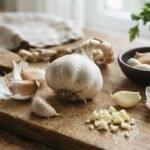
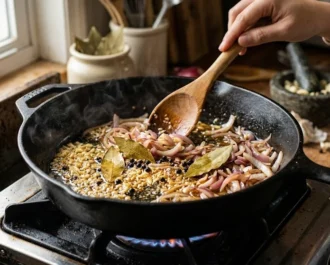
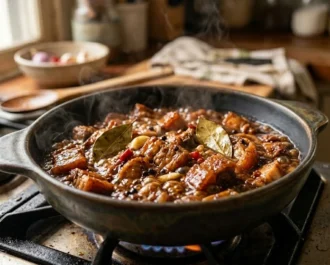
Heat the cooking oil in a wide, heavy-bottomed pot or deep pan over medium heat. Add the crushed garlic and stir continuously for 1 to 2 minutes until golden and deeply aromatic — the garlic forms the savory backbone of the paksiw sauce and should be cooked until it is genuinely golden and fragrant rather than merely warmed through. Add the sliced onions and cook, stirring occasionally, for 3 minutes until softened and translucent. The combination of garlic and onion cooked in oil before any liquid is added creates the aromatic foundation that gives lechon paksiw its depth and distinguishes it from simply simmering leftover lechon in sauce with no prior preparation. Add the whole black peppercorns and bay leaves, stirring them through the aromatics for 30 seconds to release their fragrant oils into the oil.
- Step 2: Add the Vinegar First
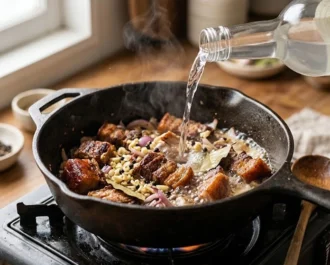
Pour the white cane vinegar directly into the pot with the aromatics and allow it to come to a boil over medium-high heat. Crucially, do not stir the vinegar immediately — let it boil undisturbed for 1 to 2 full minutes before stirring. This undisturbed boiling dissipates the harshest, most volatile acids in the vinegar, mellowing its sharp raw edge into a rounder, more integrated acidity. This technique — allowing vinegar to cook before stirring — is a foundational principle of Filipino paksiw cooking that prevents the finished sauce from tasting aggressively and unpleasantly sour. The vinegar should be visibly bubbling and the sharp, pungent vinegar aroma noticeably softening before you add any other liquid ingredients to the pot.
- Step 3: Add the Sauce and Liquids
Add the lechon sauce (sarsa) to the pot and stir it into the cooked vinegar-aromatic base, incorporating everything evenly. The lechon sauce is the defining ingredient of this dish — its sweet, tangy, liver-thickened character is what transforms leftover pork into the unmistakably distinctive flavor profile of authentic lechon paksiw. Pour in the water and soy sauce and stir to combine all the liquids into a unified, deeply colored sauce. Add the sugar and stir until dissolved. The sugar plays an essential balancing role — the dish requires a gentle, background sweetness to harmonize the sharpness of the vinegar, the saltiness of the soy sauce, and the savory complexity of the liver-based lechon sauce. Bring everything to a gentle simmer over medium heat.
- Step 4: Add the Lechon
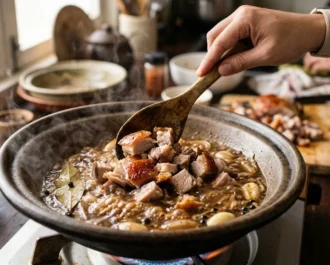
Add the chopped lechon or lechon kawali pieces to the simmering sauce, stirring gently to submerge and coat every piece thoroughly in the liquid. Arrange the pieces in a single layer as much as possible to ensure even sauce coverage on all surfaces. Bring the pot back to a simmer, then reduce the heat to medium-low, cover loosely, and allow the pork to braise in the paksiw sauce for 20 minutes, turning the pieces gently once at the halfway mark. The pork will absorb the complex, tangy-sweet sauce as it simmers, and the lechon skin — which may have softened since the original cooking — will partially re-crisp in some areas while others become deliciously sauce-saturated and tender. The sauce will gradually thicken as it reduces around the braising pork.
- Step 5: Reduce the Sauce
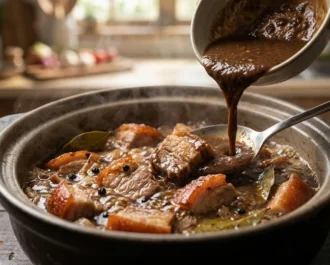
Remove the lid and increase the heat to medium. Allow the paksiw sauce to simmer uncovered for an additional 8 to 10 minutes, stirring occasionally, until it reduces to a thick, glossy, coating consistency that clings generously to every surface of the pork. As the sauce reduces, the flavors concentrate dramatically — the sweetness deepens, the vinegar acidity mellows further, and the liver-based lechon sauce develops a rich, complex, almost caramel-like quality that is one of lechon paksiw's most distinctive and addictive flavor characteristics. Taste the sauce at the halfway point of this reduction stage and adjust the seasoning with salt, sugar, soy sauce, or a small additional splash of vinegar to achieve the ideal balance between sweet, sour, and savory.
- Step 6: Final Seasoning and Serve
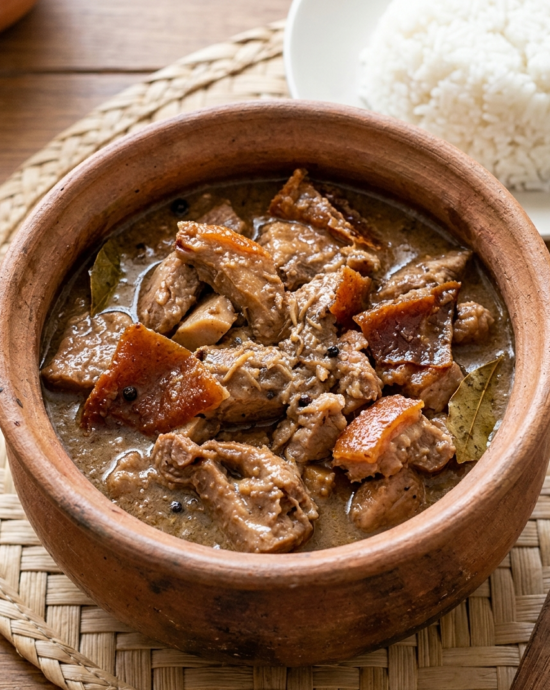
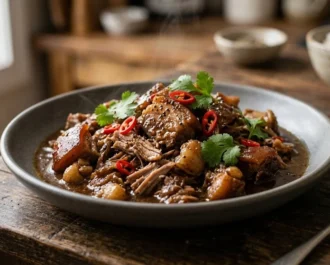
Taste the finished lechon paksiw one last time and make any final adjustments — the balance should be unmistakably sweet-sour-savory with the lechon sauce's liver character and the vinegar's acidity both clearly present and harmonious rather than competing. Remove and discard the bay leaves before serving. The finished sauce should be thick enough to coat the back of a spoon and hold its shape briefly when drizzled. Plate the lechon paksiw on a wide, deep platter or family-style bowl, spooning all the remaining sauce generously over every piece. Serve immediately over abundant steaming white rice — the sweet, tangy, deeply savory sauce soaking into the rice is one of the most deeply satisfying eating experiences in all of Filipino comfort cooking.
- Calories:460 kcal23%
- Energy:1,925 kJ23%
- Protein:28 g56%
- Carbohydrates:20 g7%
- Sugar:8 g9%
- Fat:26 g33%
- Salt:1.4 g23%
Table of Contents
What Is Lechon Paksiw?
Lechon paksiw is a Filipino braised pork dish made by simmering leftover lechon or lechon kawali in lechon sauce, vinegar, garlic, and spices until the pork is deeply infused with a sweet, tangy, savory sauce — one of the most cleverly delicious examples of Filipino culinary resourcefulness and the art of transforming leftovers into something arguably better than the original dish. The word paksiw refers to a traditional Filipino cooking method in which meat or fish is braised in vinegar and aromatics; combined with lechon — the Philippines’ most celebrated roasted pork — the result is a dish of extraordinary flavor complexity and satisfying richness.
Lechon paksiw exists specifically because of lechon’s cultural centrality to Filipino celebration. Whole roasted lechon almost always produces more pork than a gathering can consume, and the Filipino instinct to honor food by wasting none of it gave rise to this genius preparation for the leftovers. The lechon sauce — typically a sweet, tangy sauce thickened with liver that is served as a dipping condiment alongside whole lechon — becomes the primary braising liquid for the leftover pork in paksiw, creating a circular culinary logic: the sauce meant to complement the original dish becomes the medium that transforms its remnants into an entirely new one.
What makes lechon paksiw so distinctively delicious is the quality of that sauce. The liver-thickened, sweet-sour lechon sauce reduces during braising into a coating, intensely flavored glaze that penetrates the pork’s flesh and creates a dish with a more complex, more deeply developed flavor than the original roasted pork. For Filipino families, lechon paksiw the day after a celebration is often remembered as fondly as the lechon itself — a dish that turns abundance into art.
Ingredient Notes
- Lechon Sauce (Sarsa): The soul of lechon paksiw — its sweet, tangy, liver-enriched character is entirely irreplaceable. Mang Tomas All-Around Sarsa is the most widely used brand in Filipino households and the benchmark flavor for this dish. Look for the original variety rather than the hot version for the classic paksiw profile; the sweet, mild original allows you to control the spice level yourself.
- Leftover Lechon or Lechon Kawali: Any leftover roasted or fried pork can be used — whole lechon, lechon kawali, or even lechon de leche. Pork belly is ideal for its fat content and texture, which holds up beautifully to the braising without drying out. The skin-on portions are particularly prized as they absorb the sauce while maintaining an interesting textural contrast.
- White Cane Vinegar: Filipino sugarcane vinegar (sukang tubo) delivers the characteristically mild, rounded acidity that complements rather than dominates the sweet lechon sauce. Datu Puti or Marca Piña cane vinegar are the most common and authentic choices; avoid harshly acidic distilled white vinegar, which overpower the sauce’s delicate balance.
- Garlic: Generous garlic is essential to lechon paksiw’s aromatic foundation. Use at least 6 cloves, cooked until genuinely golden in oil before any liquid is added — this caramelized garlic contributes a sweeter, nuttier, more rounded garlic flavor than raw garlic added directly to the sauce.
- Sugar: The sugar in lechon paksiw is not for sweetness alone — it creates caramelization in the reducing sauce, deepening its color to a beautiful mahogany and adding a complexity that plain lechon sauce cannot provide on its own.
Ingredient Suggestions
- Pineapple tidbits — A small can added with the pork introduces a tropical sweetness and gentle acidity that complements the vinegar and lechon sauce beautifully in a sweet-sour variation beloved in some Filipino households.
- Star anise — One or two pods added with the bay leaves contribute a warming, anise-forward complexity that pairs extraordinarily well with the liver-based lechon sauce.
- Dried chili (siling labuyo) — One or two whole dried bird’s eye chilies added during simmering introduce a building heat that cuts through the dish’s richness without making it aggressively spicy.
- Fish sauce (patis) — A tablespoon added in the final seasoning stage deepens the umami complexity of the sauce significantly beyond what soy sauce alone provides.
- Hard-boiled eggs — Added in the last 10 minutes of simmering, whole or halved eggs absorb the sweet-tangy paksiw sauce and make the dish more filling and visually interesting.
Helpful Tips & Pro Tips
- Never stir the vinegar immediately after adding it. Allow the vinegar to boil undisturbed for at least 2 minutes before stirring — this reduces its harshest volatile acids and prevents the finished paksiw sauce from tasting aggressively sour. This is a fundamental Filipino paksiw technique that makes an immediately perceptible difference in the finished dish.
- The lechon sauce quality determines everything. Lechon paksiw is only as good as the lechon sauce used to make it. Use high-quality Mang Tomas rather than generic substitutes; if making homemade lechon sauce, ensure it is properly seasoned and has genuine liver content for the characteristic flavor that no liver-free substitute can replicate.
- Why does my lechon paksiw taste too sour? Oversour lechon paksiw is caused by using too much vinegar or not cooking it long enough before adding other ingredients. Add a teaspoon of sugar at a time, stirring between additions and tasting, until the acidity is balanced. The finished sauce should be pleasantly tangy — noticeably sour but not mouth-puckering.
- Let the sauce reduce fully. A thin, watery paksiw sauce lacks the concentrated, coating intensity that defines the dish at its best. Always simmer uncovered for the final 8 to 10 minutes to reduce the sauce to a thick, glossy consistency. The reduction concentrates flavors dramatically and creates the beautiful mahogany color characteristic of excellent lechon paksiw.
- Use a wide, shallow pan for maximum reduction. A wide pan increases the surface area of the simmering liquid, allowing faster, more efficient evaporation and sauce reduction. A deep, narrow pot requires significantly longer reduction times for the same result.
How to Serve and Store
Serve lechon paksiw family-style in a deep bowl or wide platter with all the sauce spooned generously over the pork, alongside abundant steaming white rice. The sauce-soaked rice is as much a part of the experience as the pork itself. For a complete Filipino spread, pair with ensaladang talong (grilled eggplant salad) or fresh tomatoes with fish sauce to provide refreshing contrast to the dish’s richness.
Store leftover lechon paksiw in an airtight container in the refrigerator for up to 4 days — the sauce actually deepens and improves significantly after the first day as the flavors continue to develop. Reheat gently on the stovetop over low heat, adding a small splash of water if the sauce has thickened excessively during storage. Lechon paksiw freezes well for up to 2 months; thaw overnight in the refrigerator and reheat gently before serving.
Substitutions
- Lechon sauce → Liver spread + soy sauce + sugar + vinegar — A homemade substitute using 2 tbsp liver spread, 2 tbsp soy sauce, 1 tbsp sugar, and 2 tbsp vinegar; approximates the sweet-sour-liver character of commercial lechon sauce.
- White cane vinegar → Apple cider vinegar — A readily available substitute with a similarly mild, slightly fruity acidity that works well in the paksiw sauce.
- Lechon → Roasted pork shoulder or liempo — Any roasted or braised pork cut can substitute for leftover lechon; the dish will still be delicious without the crackling element.
- Soy sauce → Coconut aminos — A gluten-free, slightly sweeter substitute for those with soy sensitivities; use the same quantity.
- Sugar → Brown sugar or muscovado — Budget-friendly pantry swaps that actually improve the dish by adding molasses depth to the reducing sauce.
- Pork → Firm tofu, fried golden — A vegan adaptation; deep-fried tofu absorbs the sweet-sour paksiw sauce well, producing a deeply flavored plant-based version.
Suggested Recipes
- Lechon Kawali — The crispy fried pork belly that most commonly serves as the starting point for lechon paksiw; making kawali first gives you perfect leftover material for paksiw.
- Pork Adobo — Shares lechon paksiw’s sweet-sour-savory flavor profile and vinegar-based braising technique in a simpler, from-scratch preparation.
- Paksiw na Pata — Pork knuckle braised in the same paksiw style using vinegar and soy sauce; a related dish that showcases the paksiw technique at its most indulgent.
- Litson Baboy — The whole roasted pig that is the original source of the lechon leftovers traditionally used to make paksiw; understanding lechon deepens appreciation for its delicious afterlife as paksiw.
Frequently Asked Questions

Jeff Smith
"Cooking is the intersection of history, science, and emotion."
For me, the kitchen has always been a laboratory of culture. With a background deeply rooted in digital strategy and precision, I approach the culinary arts with the same rigor I apply to the digital landscape—analyzing flavors, perfecting techniques, and documenting the nuance that makes Filipino cuisine truly world-class.
Findme Recipe was born from a desire to bridge the gap between traditional heritage and the modern home cook. Whether it is mastering the perfect balance of acidity in a classic Adobo or simplifying complex regional dishes for everyday kitchens, my mission is to preserve our culinary identity through accessible, data-backed, and delicious content.
I am not just building a database; I am cultivating a community where every Filipino kitchen feels empowered, every ingredient is celebrated, and every family heirloom recipe finds a place to thrive.
Join me as we translate the soul of our islands into recipes for the next generation.