
- Step 1: Make the Crepe Wrapper Batter
The crepe wrapper is what sets lumpiang sariwa apart from all other lumpia varieties, and getting the batter right is the first step to success. In a large mixing bowl, whisk together the all-purpose flour and salt until evenly distributed. Create a well in the center and crack in the eggs, then add half the water. Begin whisking from the center outward, gradually incorporating the flour into the wet ingredients to avoid lumps. Once the batter is smooth and thick, whisk in the remaining water and the cooking oil. The finished batter should be thin — thinner than pancake batter — and should coat the back of a spoon lightly. Strain through a fine mesh sieve to remove any remaining lumps. Rest the batter for at least 15 minutes before cooking.
- Step 2: Cook the Crepe Wrappers
Heat a non-stick crepe pan or a 10-inch non-stick skillet over medium-low heat. Lightly brush the surface with a very thin layer of oil — too much oil will make the crepe greasy and prevent the delicate folds from holding. Pour approximately 3–4 tablespoons of batter into the center of the pan and immediately tilt the pan in a circular motion to spread the batter into a thin, even circle about 8–9 inches in diameter. Cook for about 90 seconds over medium-low heat until the edges begin to lift away from the pan and the surface looks dry and set. Carefully slide a thin spatula underneath and flip — cook for just 15–20 seconds on the second side. Stack the finished crepes on a plate separated by pieces of parchment paper to prevent sticking.
- Step 3: Prepare the Filling
Heat oil in a large wok or wide pan over medium-high heat. Add the garlic and cook until fragrant and lightly golden, about 30 seconds. Add the onion and sauté for 2 minutes. Add the sliced pork and cook for 4–5 minutes, stirring frequently, until cooked through and lightly browned. Add the shrimp and cook for 1–2 minutes until pink. Season with fish sauce, salt, and pepper. Add the carrots and green beans first and stir-fry for 2 minutes, then add the jicama and cook for another 2 minutes. Add the cabbage and bean sprouts last and stir-fry briefly for just 1–2 minutes — these should remain slightly crisp. Remove from heat immediately. Transfer to a colander and allow any excess liquid to drain before assembling the rolls.
- Step 4: Make the Sweet Peanut Sauce
In a small saucepan over medium heat, combine the soy sauce, brown sugar, and water or broth. Stir until the sugar fully dissolves, about 2 minutes. Add the ground roasted peanuts and stir to incorporate. Bring to a gentle simmer, then add the cornstarch slurry — the dissolved cornstarch mixed with water — stirring constantly as you pour it in to prevent lumps. Continue stirring over low to medium heat until the sauce thickens to a glossy, spoonable consistency that coats the back of a spoon, about 3–4 minutes. Taste and adjust: add more soy sauce for saltiness or more sugar for sweetness. Remove from heat and stir in the toasted garlic. The sauce will continue to thicken slightly as it cools.
- Step 5: Assemble the Rolls
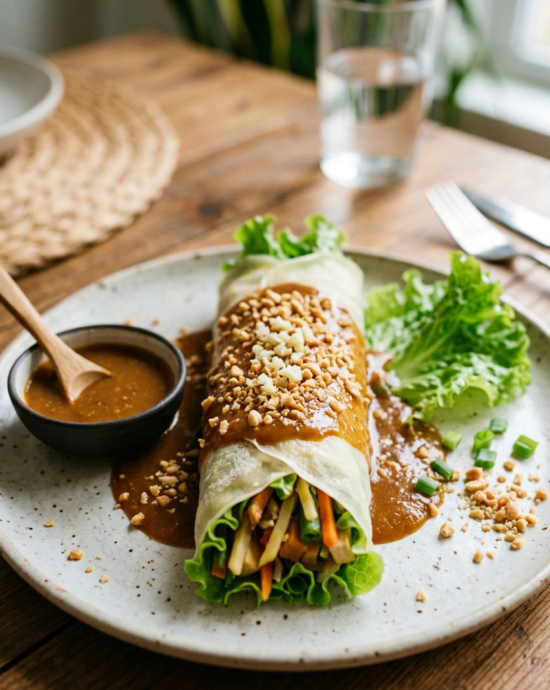
Lay one crepe flat on a clean surface. Place a whole lettuce leaf in the center of the crepe — the lettuce acts as a moisture barrier that keeps the crepe from becoming soggy as quickly. Spoon a generous portion of the drained filling (about 1/3 to 1/2 cup) in the center of the lettuce leaf, arranging it in a log shape across the middle of the crepe. Do not overfill — the roll will be difficult to close and may tear the delicate wrapper if packed too tightly. Fold the bottom edge of the crepe up and over the filling, then fold in the two sides, and roll forward to close. Place seam-side down on the serving platter. Repeat with remaining crepes and filling. The rolls should look neat, tightly sealed, and plump.
- Step 6: Serve with Garnishes
Arrange the finished lumpiang sariwa rolls on a serving platter seam-side down. Drizzle the warm sweet peanut sauce generously over each roll — do not be shy with the sauce, as it is integral to the overall flavor of the dish. Finish with a scattering of crushed toasted peanuts over the sauce for texture, and a pinch of minced toasted garlic on top of each roll for aroma. Some diners prefer additional sauce served on the side for dipping. Serve immediately while the filling is still warm and the crepe wrappers are tender and pliable. Lumpiang sariwa does not hold well once sauced — serve promptly for the best experience and texture.
- Calories:195 kcal10%
- Protein:11 g22%
- Carbohydrates:20 g7%
- Sugar:8 g9%
- Fat:8 g10%
Table of Contents
What Is Lumpiang Sariwa?
Lumpiang sariwa is a traditional Filipino fresh spring roll made with a soft, paper-thin crepe wrapper encasing a savory filling of stir-fried vegetables, pork, and shrimp, served cold or warm with a distinctive sweet-savory garlic peanut sauce. Unlike its fried counterpart lumpiang shanghai, lumpiang sariwa is never deep-fried — the word ‘sariwa’ means ‘fresh’ in Filipino, emphasizing the clean, lightly cooked nature of the dish. It stands as one of the most beloved and widely recognized lumpia varieties in Filipino cuisine, found at family celebrations, carinderia counters, and restaurant menus across the archipelago.
The dish traces its roots to the Chinese-Filipino culinary tradition that has profoundly shaped Philippine food culture. Chinese immigrants, particularly those from Fujian Province, brought a tradition of fresh spring rolls to the Philippines, which over centuries were adapted to incorporate local ingredients like singkamas, patis, and bagoong. The result is a uniquely Filipino interpretation that draws on Chinese technique while expressing distinctly local flavor preferences — particularly the affinity for garlic, peanuts, and the sweet-savory balance that defines so many classic Filipino dishes.
What makes lumpiang sariwa particularly special is the interplay of textures and temperatures. The thin, delicate crepe wrapper gives way to a warm, aromatic filling of crunchy vegetables and tender proteins, all unified by the glossy, sweet, garlicky peanut sauce poured generously on top. It is simultaneously light and satisfying, making it a popular choice for hot weather eating and as a lighter alternative to fried spring rolls. Lumpiang sariwa is a dish that rewards patience and attention to detail, but the result is always an elegant, crowd-pleasing centerpiece.
Ingredient Notes
- All-Purpose Flour: Use a standard, unbleached all-purpose flour for the wrappers. Avoid bread flour, which has too much gluten and will make the crepes tough. The batter should be very thin for the most delicate, pliable wrappers.
- Singkamas (Jicama): Adds the defining crunch to the filling. Choose a singkamas that feels solid and dense. Once peeled, it should be bright white and slightly moist — avoid any that appear yellowed or have a spongy texture.
- Roasted Peanuts: Freshly roasted peanuts ground into a coarse powder create the richest, most flavorful sauce. Pre-ground peanut butter can be used as a shortcut but will produce a slightly different texture.
- Lettuce: Romaine leaves are ideal for their firm structure that holds the filling without tearing. They also add a fresh, slightly bitter counterpoint to the rich peanut sauce.
Ingredient Suggestions
- Ubod (Heart of Palm): Adding thin strips of fresh ubod to the filling creates a more luxurious version of lumpiang sariwa — this variation is so beloved it has its own name, lumpiang ubod.
- Cooked Shrimp Sliced Lengthwise on Top: For visual elegance, arrange halved cooked shrimp on top of each roll before drizzling with sauce for a beautiful presentation suitable for entertaining.
- Chopped Kinchay (Chinese Celery): Add a handful to the filling just before removing from heat for a bright, herbal freshness that cuts through the richness of the peanut sauce.
- Hard-Boiled Quail Eggs: Halved quail eggs placed on top of each roll make a beautiful, traditional garnish that adds visual appeal and a subtle richness.
Helpful Tips & Pro Tips
- Rest the crepe batter for at least 15 minutes before cooking. Resting allows the gluten to relax and air bubbles to escape, resulting in smoother, more pliable crepes that tear less easily during wrapping.
- Why do my crepe wrappers tear? Tearing usually happens when the batter is too thick, the heat too high, or the pan insufficiently greased. Ensure the batter is very thin, cook on medium-low heat, and use a light coating of oil between each crepe.
- Drain the filling thoroughly before assembling. Excess moisture from the stir-fried vegetables is the most common cause of soggy wrappers. Allow the filling to drain in a colander for at least 5 minutes before use.
- Sauce the rolls just before serving. The peanut sauce will cause the crepe wrappers to soften quickly. For serving at gatherings, offer sauce on the side and let guests sauce their own portions to maintain texture.
How to Serve and Store
Serve lumpiang sariwa immediately after assembly and saucing. Arrange on a platter and drizzle the warm peanut sauce generously over each roll, finishing with crushed peanuts and toasted garlic. The rolls are best consumed within 20 minutes of assembly, as the crepe wrappers will soften progressively from the sauce and filling moisture. Store unassembled components separately: cooked filling refrigerated for up to 3 days, cooked crepes stacked with parchment and wrapped in cling film for up to 2 days, and peanut sauce refrigerated for up to 5 days. Reheat filling in a hot pan and warm sauce over low heat before assembling. Do not freeze assembled rolls.
Substitutions
- All-Purpose Flour → Rice Flour (Gluten-Free Wrapper): Use rice flour in a 1:1 substitution for a gluten-free crepe wrapper. The texture will be slightly more delicate, so handle gently.
- Pork → Chicken or Tofu: Thinly sliced chicken breast or pan-fried firm tofu cubes work equally well in the filling. Both absorb the fish sauce and aromatics beautifully.
- Fish Sauce → Soy Sauce: For a vegetarian or gluten-free option, substitute fish sauce with soy sauce or tamari in equal amounts.
- Roasted Peanuts → Cashews: Ground roasted cashews create a creamier, slightly sweeter sauce for those who prefer a milder peanut flavor or need a peanut-free alternative.
- Singkamas → Water Chestnuts: Canned water chestnuts drained and sliced provide a comparable crunch and mild sweetness when singkamas is unavailable.
Suggested Recipes
- Lumpiang Hubad: The wrapper-free version of this dish using the same filling and peanut sauce, served with lettuce leaves for hand-wrapping — great for casual, low-carb serving.
- Lumpiang Ubod: A premium version made with tender heart of palm as the star filling ingredient, often reserved for special occasions and celebrations.
- Lumpiang Shanghai: Crispy fried mini spring rolls filled with seasoned ground pork, the perfect contrast to fresh lumpia in a party spread.
- Pancit Canton: Stir-fried egg noodles with similar vegetable and protein combinations, ideal as a complementary dish at Filipino celebrations.
Frequently Asked Questions

Jeff Smith
"Cooking is the intersection of history, science, and emotion."
For me, the kitchen has always been a laboratory of culture. With a background deeply rooted in digital strategy and precision, I approach the culinary arts with the same rigor I apply to the digital landscape—analyzing flavors, perfecting techniques, and documenting the nuance that makes Filipino cuisine truly world-class.
Findme Recipe was born from a desire to bridge the gap between traditional heritage and the modern home cook. Whether it is mastering the perfect balance of acidity in a classic Adobo or simplifying complex regional dishes for everyday kitchens, my mission is to preserve our culinary identity through accessible, data-backed, and delicious content.
I am not just building a database; I am cultivating a community where every Filipino kitchen feels empowered, every ingredient is celebrated, and every family heirloom recipe finds a place to thrive.
Join me as we translate the soul of our islands into recipes for the next generation.