
- Step 1: Make the Shrimp Broth and Annatto Oil
Begin by making the two foundational elements that give Pancit Malabon its distinctive color and depth. For the shrimp broth, place the reserved shrimp heads and shells in a small saucepan with two and a half cups of water, bring to a boil, then simmer for fifteen minutes. Strain the broth through a fine mesh sieve and set aside. For the annatto oil, heat three tablespoons of vegetable oil in a small pan over medium-low heat and add two tablespoons of annatto seeds. Stir and cook for three to four minutes until the oil turns a deep, vivid orange-red and the seeds have released their color. Strain out the seeds and reserve the flavored oil separately. These two elements — the seafood-rich broth and the vivid annatto oil — are the essential building blocks of the dish's iconic sauce and color.
- Step 2: Cook and Prepare the Proteins
In a wok or large pan, heat a tablespoon of the annatto oil and sauté the minced garlic and onion until softened and fragrant, about two minutes. Add the boiled and sliced pork belly and cook briefly to heat through and lightly brown the edges. Remove and set aside. In the same wok, quickly sauté the shrimp over high heat for two minutes per side until pink, then remove and set aside. Cook the squid rings for just ninety seconds — they overcook extremely quickly and will become rubbery. Add the flaked tinapa and the shrimp paste to the wok and stir for one minute to bloom the bagoong's salty, fermented flavor into the hot oil. These layered seafood proteins are what give Pancit Malabon its extraordinarily complex, ocean-forward depth that distinguishes it from all other Philippine noodle dishes.
- Step 3: Build the Thick Annatto Sauce
In the same wok over medium heat, add the remaining annatto oil. Sprinkle the flour into the oil and stir constantly for two minutes to cook out the raw flour taste, creating a roux. Gradually pour in the shrimp broth while whisking continuously to prevent lumps from forming. The sauce will thicken quickly — keep stirring as you add the broth to achieve a smooth, glossy consistency. Add the oyster sauce and fish sauce to the thickening sauce, stirring to incorporate. Taste at this stage and adjust the seasoning carefully, keeping in mind that the tinapa and bagoong already contribute significant saltiness. The sauce should be boldly savory, deeply colored a vivid reddish-orange, and thick enough to cling generously to the noodles without being pasty or gluey. Remove from heat and set aside.
- Step 4: Cook the Soaked Noodles
Bring a large pot of water to a boil. Cook the pre-soaked thick luglug noodles in the boiling water for three to four minutes until tender but still slightly firm in the center — they will soften further when the hot sauce is poured over them. Do not overcook the noodles at this stage; erring on the firmer side is always better, as overly soft noodles will become completely mushy once the sauce is added. Drain the noodles thoroughly in a colander and rinse briefly with cold water to stop the cooking process. Transfer the noodles to a large serving platter, spreading them out evenly to create a generous, flat bed. The noodles should be warm and glistening, ready to receive the rich sauce and elaborate toppings that complete this iconic dish.
- Step 5: Sauce the Noodles and Arrange Toppings
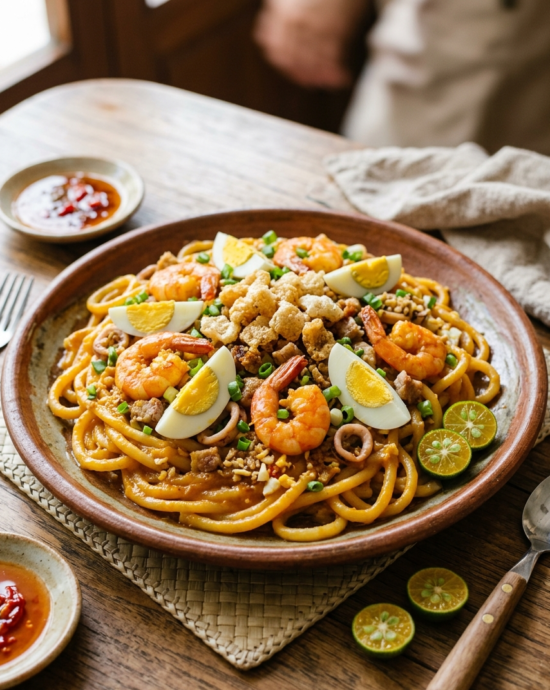
Pour the prepared annatto sauce generously over the warm noodles on the serving platter, using a ladle or spoon to distribute it evenly across the entire surface. The deep reddish-orange sauce should pool slightly around the noodles, coating every strand. Arrange the cooked proteins — the pork belly slices, shrimp, and squid rings — decoratively across the sauced noodles. Scatter the flaked tinapa generously over the top, followed by the crushed chicharron for crunch. Arrange the sliced hard-boiled eggs around the perimeter, alternating their placement with the proteins for visual balance and abundance. Finish with a generous scattering of chopped green onions across the entire platter. Place calamansi halves on the side. The final presentation should be bold, abundant, and visually arresting — Pancit Malabon is a celebratory dish and should look the part.
- Calories:520 kcal26%
- Protein:32 g64%
- Carbohydrates:58 g19%
- Sugar:2 g2%
- Energy:2175 kJ26%
- Fat:16 g22%
Table of Contents
What Is Pancit Malabon?
Pancit Malabon is a ceremonial Filipino noodle dish originating from the coastal city of Malabon in Metro Manila, historically known for its bustling fishing industry and robust seafood market. It is distinguished from other noodle dishes by its use of thick, round rice noodles known as luglug noodles, which are blanketed in a rich, starchy annatto-colored sauce thickened with flour and built on an intensely flavored shrimp broth. The dish is then adorned with an extraordinarily lavish assortment of toppings including shrimp, squid, smoked fish flakes from tinapa, crushed chicharron, hard-boiled eggs, and shrimp paste, making it visually one of the most dramatic and abundant-looking dishes in the entire Filipino culinary canon. The city of Malabon’s location along the Malabon River and Manila Bay made seafood the cornerstone of its culinary identity, and Pancit Malabon reflects this maritime heritage in every element of its composition. The sauce is unlike anything else in Filipino noodle cookery — thick, deeply colored, and layered with the briny, smoky, and fermented flavors of multiple seafood components working together. It is a dish that requires time, care, and good-quality ingredients, which is precisely why it is reserved for birthdays, christenings, and special occasions. The sheer generosity of its toppings signals celebration and abundance, adhering to the Filipino cultural belief that long noodles and extravagant presentations bring good fortune and long life to those who share in the meal.
Ingredient Notes
- Luglug (Thick Rice) Noodles: The best luglug noodles are thick, round, and perfectly white when dry. When soaked, they should turn translucent and become flexible without falling apart; noodles that disintegrate during soaking are too old and should be avoided.
- Tinapa (Smoked Fish): Choose tinapa with deeply golden, glossy skin and a strong, pleasant smoky aroma. Bangus (milkfish) tinapa is the most traditional choice for Pancit Malabon and delivers the most authentic flavor; carefully remove all bones before flaking.
- Bagoong Alamang (Shrimp Paste): Use a good-quality sautéed bagoong alamang — the pink or reddish, already-cooked variety — for the best results. Raw bagoong has an intensely pungent smell that requires longer cooking to mellow; the pre-cooked version integrates more seamlessly into the sauce.
- Annatto Seeds or Oil: Fresh annatto seeds should be deep reddish-brown to brick red and release their vibrant color readily when heated in oil. If using pre-made annatto oil, choose one with a vivid orange-red color as an indicator of freshness and potency.
Ingredient Suggestions
- Blue Crabs (Alimasag) — Steamed or boiled crab claws arranged on top of the platter add a spectacular visual element and a sweet, briny flavor that is traditional in upscale Malabon presentations.
- Tokwa (Firm Tofu) — Pan-fried cubed tofu adds a protein-rich vegetarian component that absorbs the sauce beautifully and adds pleasing textural contrast.
- Tahong (Green Mussels) — Steamed green mussels in their half-shells arranged decoratively around the platter are a Malabon tradition that adds dramatic presentation and oceanic flavor.
- Atchara — A small side of pickled papaya (atchara) cuts through the richness of the thick sauce and provides a refreshing palate-cleansing contrast.
Helpful Tips & Pro Tips
- Make the shrimp broth from scratch using the reserved heads and shells — this is non-negotiable for authentic Pancit Malabon. Store-bought seafood broth cannot replicate the rich, gelatinous, intensely flavored broth that shrimp heads provide.
- Add the flour to the annatto oil gradually while stirring to form a proper roux before adding the broth. Adding liquid before the flour has cooked will result in a lumpy, starchy-tasting sauce that coats the noodles unevenly.
- Cook the noodles and prepare the toppings separately and assemble just before serving. Pancit Malabon’s toppings should remain distinct and visually impressive on top, not mixed into the noodles and lost in the presentation.
- Why is my Pancit Malabon sauce thin? The sauce must be thickened sufficiently before pouring over the noodles. A properly thickened sauce coats the back of a spoon; if it slides off, cook it longer or add a small cornstarch slurry to achieve the right consistency.
- Always serve immediately after assembly — the chicharron begins absorbing moisture from the sauce within minutes. Prepare all toppings just before plating so the textural contrast between crispy and tender elements is at its best.
How to Serve and Store
Pancit Malabon is best enjoyed immediately after assembly while the toppings are at their best. Store leftovers without the chicharron and egg toppings in an airtight container in the refrigerator for up to two days. The sauce will thicken further upon refrigeration; when reheating, thin it with a small amount of warm shrimp broth or water and heat gently in a wok over medium heat, tossing until warmed through. Replace the chicharron with fresh pieces when serving leftovers. This dish is not recommended for freezing as the rice noodles become mushy and the toppings deteriorate significantly in quality and texture.
Substitutions
- Luglug Noodles → Bihon (Thin Rice Noodles) — a lighter alternative that changes the texture but maintains the gluten-free quality.
- Shrimp → Canned Tuna — a budget-friendly seafood option that still provides protein; drain well before adding.
- Tinapa → Smoked Salmon Flakes — a widely available alternative with a similar smoky, salty profile and flaky texture.
- Bagoong Alamang → Fish Sauce + Shrimp Paste — a combination that approximates the fermented seafood flavor for those outside the Philippines.
- Chicharron → Toasted Panko Breadcrumbs — provides similar crunch at a fraction of the cost; toast in butter for best results.
- Pork Belly → Chicken Breast — a leaner protein option for those avoiding pork; boil and slice the same way as the pork belly.
Suggested Recipes
- Pancit Palabok — a closely related noodle dish from Pampanga that uses a similar annatto-shrimp sauce but thinner rice noodles and a slightly different topping arrangement.
- Pancit Cabagan — another annatto-colored noodle dish from Northern Luzon featuring thick miki noodles and a signature chicharron topping.
- Kare-Kare — another elaborate, time-intensive Filipino dish with similarly dramatic presentation that is reserved for special occasions and celebrations.
- Sinigang na Hipon — a sour shrimp soup that also celebrates the seafood heritage of coastal Metro Manila communities.
Frequently Asked Questions

Jeff Smith
"Cooking is the intersection of history, science, and emotion."
For me, the kitchen has always been a laboratory of culture. With a background deeply rooted in digital strategy and precision, I approach the culinary arts with the same rigor I apply to the digital landscape—analyzing flavors, perfecting techniques, and documenting the nuance that makes Filipino cuisine truly world-class.
Findme Recipe was born from a desire to bridge the gap between traditional heritage and the modern home cook. Whether it is mastering the perfect balance of acidity in a classic Adobo or simplifying complex regional dishes for everyday kitchens, my mission is to preserve our culinary identity through accessible, data-backed, and delicious content.
I am not just building a database; I am cultivating a community where every Filipino kitchen feels empowered, every ingredient is celebrated, and every family heirloom recipe finds a place to thrive.
Join me as we translate the soul of our islands into recipes for the next generation.