
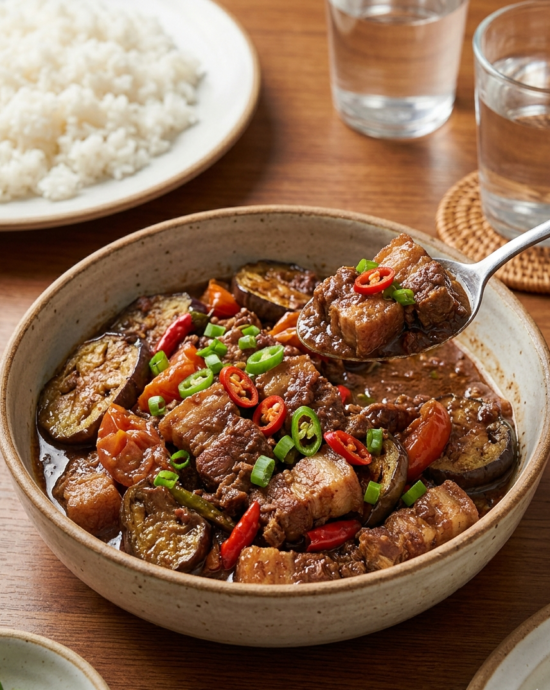

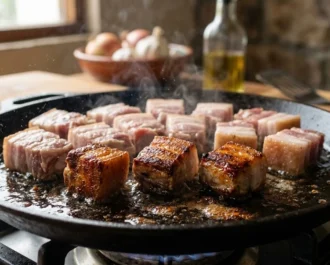
- Step 1: Render and Sear the Pork Belly

Heat the cooking oil in a large, wide, heavy-bottomed pan over medium-high heat. Add the pork belly cubes in a single layer, skin-side down first, and sear without moving for 3 to 4 minutes until the skin develops a deep, golden-brown crust and the fat begins to render visibly. Flip each piece and sear the remaining sides for 2 minutes each. This browning step is critical — the Maillard reaction creates a roasted, nutty exterior complexity that provides essential savory balance against the intensely salty, funky character of the bagoong. Without properly seared pork, the finished dish can taste one-dimensionally salty rather than layered and complex. Work in batches if necessary to avoid crowding, which causes steaming instead of proper searing. Set the browned pork aside on a clean plate.
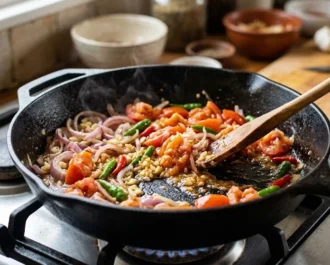
- Step 2: Sauté the Aromatics and Tomatoes
In the same pan with the rendered pork fat still in the pan, reduce heat to medium. Add the sliced onions and cook, stirring occasionally, for 3 minutes until softened and lightly translucent. Add the minced garlic and stir for 1 minute until golden and fragrant. Add the chopped tomatoes and bird's eye chilies if using, stirring everything together and scraping up any browned fond from the bottom of the pan. Cook the tomatoes for 3 to 4 minutes, pressing them gently with the back of a spoon until they completely break down into a thick, pulpy base. The tomatoes serve a critical function beyond flavor — their natural acidity provides a counterbalance to the bagoong's saltiness and helps build a more complex, rounded sauce base for the entire dish.
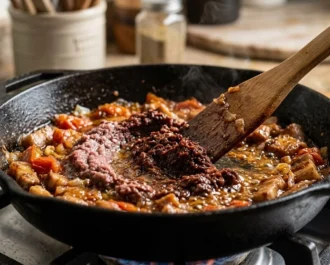
- Step 3: Add the Bagoong
Add the sautéed shrimp paste directly into the tomato-aromatic base and stir vigorously to incorporate it completely. If using raw, unsautéed bagoong, cook it in the pan for 3 to 4 minutes, stirring frequently, until it darkens slightly from pink-gray to a deeper reddish-brown and its raw, sharp smell transforms into a deeper, more complex, savory-funky aroma. This cooking of the bagoong is essential — raw shrimp paste has a pungent, harsh quality that mellows dramatically when cooked in oil and aromatics. Pour in the vinegar and allow it to boil undisturbed for 1 minute before stirring — this mellows the vinegar's sharpness just as in adobo preparation. Add the sugar and stir to dissolve, tasting the sauce for its balance of salty, sour, and sweet before adding the pork.
- Step 4: Return the Pork and Braise
Return the seared pork belly cubes to the pan, nestling them into the bagoong-tomato sauce and tossing gently to coat every piece thoroughly. Pour in the water or pork broth and stir to combine, ensuring the liquid reaches at least halfway up the sides of the pork pieces. Bring to a gentle simmer over medium heat, then reduce to medium-low, cover loosely, and allow the pork to braise for 25 to 30 minutes, turning the pieces once at the halfway mark. During the braise, the pork belly fat renders slowly into the sauce, enriching the bagoong base with extraordinary depth and body. The pork skin softens to a yielding, gelatinous tenderness and the meat becomes fall-apart soft, absorbing the complex, funky-savory bagoong sauce throughout every fiber.
- Step 5: Reduce to Sauce Consistency
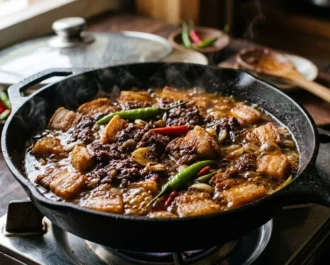
Remove the lid and increase the heat to medium-high. Allow the sauce to reduce uncovered for 8 to 10 minutes, stirring occasionally, until it thickens to a rich, glossy, coating consistency that clings generously to each piece of pork. As the sauce reduces, the flavors concentrate dramatically — the bagoong's funky depth intensifies beautifully, the tomato acidity rounds the saltiness, and the rendered pork fat gives the sauce a body and sheen that makes it irresistible over rice. Stir more frequently in the final 2 to 3 minutes of reduction to prevent the bagoong's salt content from causing the sauce to scorch on the bottom of the pan. The finished sauce should be thick, deeply reddish-brown, and intensely aromatic.
- Step 6: Finish with Fried Eggplant and Serve
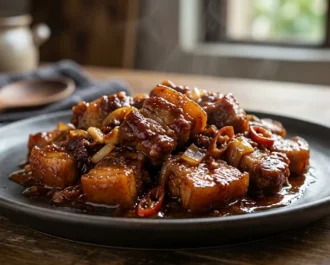
If using eggplant, add the pre-fried eggplant cubes to the finished pork binagoongan and toss gently to coat them in the sauce. Allow the eggplant to heat through for 2 minutes — the fried eggplant absorbs the bagoong sauce spectacularly, becoming deeply flavored and silky. Remove from heat and taste one final time, adjusting with a small additional pinch of sugar if too salty or a drop more vinegar if too rich. Transfer to a serving platter or bowl and serve immediately over steaming white rice. The intensely savory, deeply umami sauce pooling over the rice is the defining pleasure of pork binagoongan. Offer sliced green mango on the side — the sharp, fresh sourness of unripe mango is the classic counterpoint to binagoongan's bold, funky richness.
- Calories:440 kcal22%
- Energy:1,841 kJ22%
- Protein:26 g52%
- Carbohydrates:10 g4%
- Sugar:4 g4%
- Fat:32 g41%
- Salt:1.8 g30%
Table of Contents
What Is Pork Binagoongan?
Pork binagoongan is a Filipino braised pork belly dish cooked with fermented shrimp paste (bagoong alamang), tomatoes, vinegar, and garlic — one of the most intensely flavored, most boldly seasoned, and most deeply satisfying dishes in the entire national cuisine. The name derives directly from bagoong, the pungent, deeply savory fermented shrimp paste that serves as the dish’s primary seasoning and dominant flavor — a fermented condiment so fundamental to Filipino cooking that it appears in dozens of preparations across every region of the country, from the simplest kare-kare dipping sauce to the complex center of this beloved braised pork dish.
What makes pork binagoongan so compelling is the extraordinary flavor transformation that occurs when bagoong is cooked with aromatics and fatty pork belly. The raw shrimp paste — sharp, pungent, and aggressively saline when uncooked — mellows dramatically when sautéed in oil with onions, garlic, and tomatoes, developing a complex, deep, almost seafood-umami character that bears little resemblance to its raw state. Combined with the rendered fat of slow-braised pork belly, the sauce achieves a richness and depth that makes it one of the most compelling rice companions in Filipino cooking.
The dish holds a special place in the Filipino culinary hierarchy as an unapologetically bold, assertively flavored preparation that celebrates rather than conceals the funky intensity of fermented seafood. It is comfort food for those who love big, decisive flavors — the kind of dish that makes steamed white rice non-negotiable rather than optional. The traditional accompaniment of sliced green mango adds a sharp, fresh counterpoint that cuts through the extraordinary richness of the bagoong-pork belly combination with elegant simplicity.
Ingredient Notes
- Shrimp Paste (Bagoong Alamang): The soul of this dish — its quality determines everything about the finished flavor. Use pre-sautéed (ginisang) bagoong alamang for a more developed, rounded flavor, or raw bagoong and cook it yourself for maximum control. Look for bagoong with a firm, not watery, consistency and a deep pink-to-red color; avoid pale, watery bagoong, which has lost much of its fermented intensity.
- Pork Belly (Liempo): Skin-on pork belly is non-negotiable for pork binagoongan — the fat renders into the bagoong sauce during braising, creating a richness and body that lean cuts simply cannot provide. Look for pork belly with at least a 3 to 4 cm total thickness and an even alternation of fat and meat layers. The fat is not a luxury in this dish; it is a structural ingredient.
- Tomatoes: Fresh tomatoes cooked down into a pulpy base serve as the acid counterbalance to bagoong’s assertive saltiness. Ripe, red tomatoes with high natural sweetness provide the best flavor — the tomato’s sweetness and acidity are both essential to achieving the sauce’s balance. Do not substitute with tomato sauce, which lacks the fresh brightness of sautéed fresh tomato.
- White Cane Vinegar: A small addition of vinegar before the pork is returned to the pan cuts through the bagoong’s saltiness and adds a clean, bright acidity that lifts the entire sauce. Use Filipino cane vinegar for the mildest, most complementary acidity; allow it to boil undisturbed for 1 minute before stirring to mellow its sharpness.
- Sugar: A tablespoon of sugar is the essential balancing element in pork binagoongan — without it, the combined saltiness of the bagoong and the vinegar’s sharpness produce a sauce that is too one-directional. Brown sugar adds a subtle molasses depth that is preferable to plain white sugar.
Ingredient Suggestions
- Fried eggplant (talong) — The single most beloved addition to pork binagoongan; fried eggplant cubes tossed into the finished dish absorb the bagoong sauce spectacularly and add a silky textural contrast to the tender pork.
- Green mango (manggang hilaw) — Served fresh on the side rather than cooked into the dish; the sharp, sour crunch of unripe mango is the classic and perfect counterpoint to binagoongan’s richness.
- Crispy fried tofu — A popular meat extender that absorbs the bagoong sauce beautifully; add in the final 5 minutes so it soaks flavor while retaining some crispiness.
- Coconut milk — A small splash stirred in at the end creates a slightly creamier, less aggressively salty sauce that is particularly appealing to those new to bagoong.
- Okra — Added in the final 5 minutes of cooking, okra’s natural thickening effect enriches the sauce body and adds a pleasant mild flavor that complements the bagoong.
Helpful Tips & Pro Tips
- Use ginisang (pre-sautéed) bagoong for the most convenient, consistent result. If using raw bagoong, cook it thoroughly in oil before adding other ingredients — raw bagoong added directly to the sauce retains a harsh, aggressive quality that proper cooking eliminates. The color change from pink-gray to reddish-brown indicates that the bagoong is properly cooked.
- Balance is everything in pork binagoongan. The sauce must harmonize three competing elements: the bagoong’s saltiness, the vinegar’s acidity, and the sugar’s sweetness. Taste after each addition and adjust accordingly — every brand of bagoong varies in saltiness, so always season to taste rather than measuring rigidly.
- Why is my pork binagoongan too salty? Overly salty binagoongan is most commonly caused by using too much bagoong or by a particularly salty batch of shrimp paste. Add more sugar in small increments to balance the salt, or increase the tomato content by adding a fresh chopped tomato and cooking it down. A small additional splash of vinegar also helps balance excessive salt perception.
- Fry the eggplant separately for the best texture. Eggplant added raw to the braising sauce absorbs the oil and becomes waterlogged rather than silky. Pre-frying in hot oil until golden before adding to the finished dish produces a firmer, more textured eggplant that holds its shape while still absorbing the bagoong sauce flavor.
- Serve immediately for the best sauce consistency. Pork binagoongan sauce thickens significantly as it cools from the rendered pork fat solidifying. The sauce is at its most beautiful and glossy immediately off the heat — serve within 5 minutes of finishing for the ideal consistency over rice.
How to Serve and Store
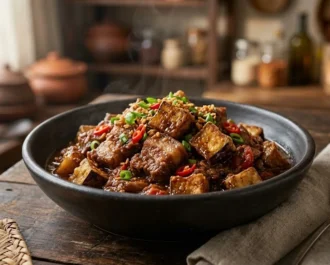
Serve pork binagoongan immediately over steaming white rice in deep bowls or on a family-style platter, with sliced green mango and additional fried eggplant on the side. The intensely savory sauce pooling over the white rice is the defining pleasure of the dish. A cold glass of water or fresh coconut juice is the ideal beverage companion to temper the dish’s assertive saltiness.
Store leftover pork binagoongan in an airtight container in the refrigerator for up to 3 days. The sauce solidifies around the pork as it chills due to the rendered fat — this is normal and indicates excellent quality. Reheat gently on the stovetop over low heat, stirring frequently and adding a small splash of water to loosen the sauce. Freeze for up to 2 months; thaw overnight in the refrigerator before reheating. Do not freeze portions containing fried eggplant, which degrades significantly in texture upon freezing.
Substitutions
- Bagoong alamang → Fermented black bean paste — A milder, less pungent substitute that provides comparable salty-umami depth with a different flavor character; reduce quantity by half.
- Pork belly → Pork shoulder (kasim) — A leaner alternative that still produces a flavorful sauce; increase braising time by 10 minutes for comparable tenderness.
- White cane vinegar → Apple cider vinegar — A mild, slightly fruity substitute with comparable balancing acidity.
- Pork → Firm tofu, deep-fried — A vegan alternative that absorbs the bagoong sauce well; use vegan bagoong (fermented mung beans or bagoong na isda alternatives).
- Sugar → Muscovado or brown sugar — A budget-friendly, flavor-enhancing substitute that adds molasses depth to the sauce balance.
- Fresh tomatoes → 2 tbsp tomato paste — A pantry substitute that provides comparable acid and color; cook out thoroughly before adding other ingredients.
Suggested Recipes
- Kare-Kare — The classic Filipino oxtail and peanut stew that is traditionally served with a generous side of sautéed bagoong, making pork binagoongan and kare-kare natural flavor companions on the Filipino table.
- Pork Adobo — Another assertively flavored Filipino pork belly preparation that showcases the same cut in a vinegar-soy braising tradition completely different from binagoongan.
- Bicol Express — Shares pork binagoongan’s bold, fermented-shrimp-paste character while adding coconut milk and bird’s eye chilies for a Bicolano regional variation.
- Lechon Kawali — The crispy-fried pork belly preparation that, like binagoongan, celebrates the extraordinary qualities of skin-on liempo in Filipino cooking.