
- Step 1: Prepare and Boil the Offal

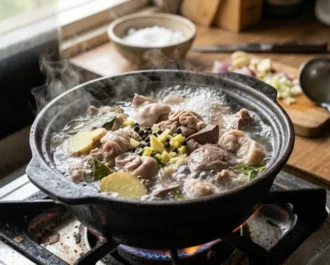
Begin by thoroughly cleaning the pork offal — particularly the intestines, which require the most preparation. Turn the intestines inside out and wash repeatedly under cold running water, scrubbing vigorously to remove all traces of residue. Rub with rock salt and rinse multiple times until the water runs clear and there is no unpleasant odor remaining. Place the cleaned offal — intestines, heart, and liver — in a pot with fresh cold water, a splash of vinegar, crushed garlic, and black peppercorns. Bring to a boil and simmer for 15 minutes to par-cook and further deodorize the offal. Drain, rinse the offal under cold water, and cut into bite-sized pieces approximately 2 centimeters in length. Set aside. This preliminary cleaning and par-cooking stage is the most important preparation step for producing a clean-tasting, properly odor-free dinuguan.
- Step 2: Sauté the Aromatics
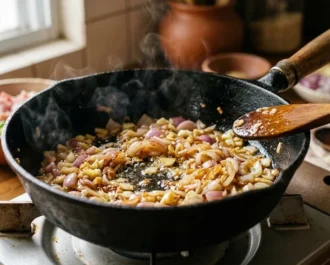
Heat the cooking oil in a large, heavy-bottomed pot over medium heat. Add the finely chopped onions and cook, stirring occasionally, for 3 to 4 minutes until softened, lightly translucent, and beginning to develop golden edges. Add the minced garlic and stir continuously for 1 to 2 minutes until deeply golden and fragrant — properly cooked garlic is one of dinuguan's most important aromatic elements and should be taken to a genuine golden brown rather than merely warmed through. The combination of onion and garlic cooked together in oil creates the savory, deeply aromatic base that underpins the entire complex flavor of the finished dish. Add the whole long green chilies, pressing them gently into the hot aromatics for 1 minute to begin releasing their fragrant, mild heat into the oil.
- Step 3: Brown the Pork Belly and Offal
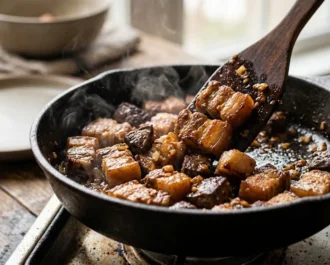
Increase the heat to medium-high and add the pork belly cubes to the aromatic base. Season with fish sauce and toss the pork to coat thoroughly. Cook for 3 to 4 minutes, stirring occasionally, until the pork develops a light golden exterior and the fish sauce caramelizes slightly against its surface. Add the par-cooked offal pieces and toss to combine, cooking for 2 more minutes until the offal is lightly browned and fragrant. The browning of both pork belly and offal before adding any liquid is a frequently skipped but critically important step — it creates roasted, savory depth in the meat components that adds a layer of complexity to the finished dinuguan beyond what unbrowned pork can achieve. Season with salt and black pepper.
- Step 4: Add Vinegar and Broth
Pour the white cane vinegar directly into the pan and allow it to come to a full boil over medium-high heat. Critically, do not stir the vinegar for the first 1 to 2 minutes — allow it to boil completely undisturbed until the sharp, pungent vinegar aroma noticeably softens and mellows. This undisturbed vinegar cooking technique, fundamental to all Filipino paksiw-style dishes, dissipates the harshest volatile acids in the vinegar and transforms its character from aggressively sour to pleasantly, cleanly acidic. Once the vinegar has cooked undisturbed, stir and add the pork broth or water. Bring to a gentle simmer and cook partially covered over medium-low heat for 15 minutes, allowing the pork to become nearly tender in the lightly acidic broth before the blood is added.
- Step 5: Add the Pork Blood
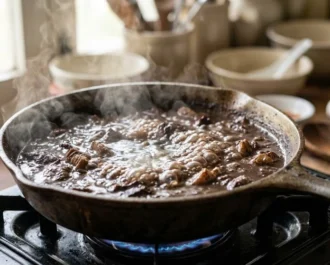
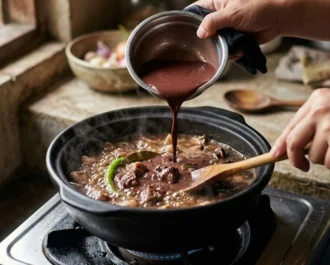
Reduce the heat to medium-low before adding the blood — never add blood to violently boiling liquid, as the extreme turbulence causes it to coagulate into unpleasantly large, rubbery chunks rather than incorporating smoothly into the sauce. Stir the strained pork blood vigorously just before adding to break up any clots, then pour it in a slow, steady stream while stirring the pot gently and continuously. As the blood enters the hot liquid, it immediately begins to thicken and darken the sauce from a light broth to a deep, rich, near-black color. Continue stirring gently for 2 to 3 minutes as the blood cooks and the sauce transforms dramatically. Add the sugar and stir to dissolve. The finished sauce should be uniformly dark, glossy, and smoothly thick — not clumpy or grainy.
- Step 6: Simmer, Taste, and Serve
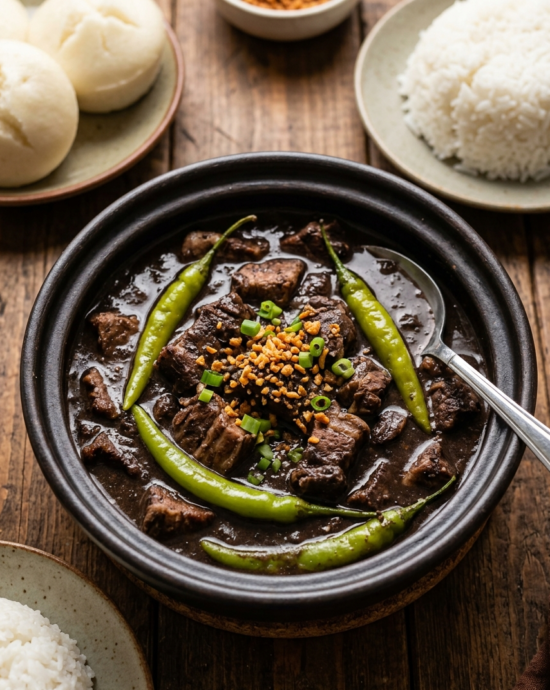
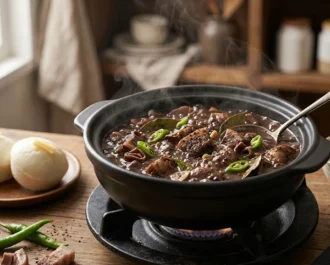
Allow the dinuguan to simmer gently over medium-low heat for 12 to 15 minutes, stirring occasionally to prevent the blood-thickened sauce from sticking on the bottom of the pot. The sauce will continue to thicken slightly as it simmers. Taste the finished dinuguan and adjust the seasoning carefully — the balance should be savory-sour with the vinegar clearly present but not dominant, the pork and offal flavors prominent, and a clean, mineral richness from the blood forming the sauce's body and backbone. Add additional vinegar for more acidity, fish sauce for more savory depth, or sugar to round the flavors. Remove from heat when the sauce is thick enough to coat the back of a spoon. Serve immediately with puto and steaming white rice.
- Calories:390 kcal20%
- Energy:1,632 kJ20%
- Protein:24 g48%
- Carbohydrates:8 g3%
- Sugar:2 g2%
- Fat:28 g36%
- Salt:1.5 g25%
Table of Contents
What Is Pork Dinuguan?
Pork dinuguan is a Filipino savory stew of pork meat and offal braised in a rich, dark sauce made from fresh pork blood, vinegar, and garlic — one of the most boldly distinctive, most culturally significant, and most deeply misunderstood dishes in the Philippine culinary canon. The name comes from dugo, the Filipino word for blood — a straightforwardly honest description of the dish’s most defining and visually dramatic ingredient. In the Philippines, dinuguan is universally beloved: a dish that appears at karinderia (roadside eatery) lunch counters, festive handaan celebrations, and family Sunday meals with equal frequency and equal enthusiasm.
Dinuguan’s history in the Philippines is ancient — blood stews are found across cultures worldwide, from European boudin noir to Spanish morciella, Vietnamese tiet canh, and Korean sundae. The Filipino version is distinguished by its characteristic use of vinegar as both a preservative and flavor-balancing agent, its assertive garlic aromatics, and the inclusion of pork offal alongside the pork belly, which gives the dish a complexity and textural variety that pure pork stews lack.
What surprises most first-time diners is how elegant and sophisticated dinuguan tastes when properly made. The blood creates a sauce of extraordinary silkiness and a mineral, savory richness that resembles a deeply reduced meat stock more than it does raw blood. The vinegar cuts through the richness with a bright, clean acidity, and the garlic and chilies add aromatic complexity without distracting from the dish’s unique character. Its traditional pairing with puto — steamed white rice cakes — is a Filipino culinary genius combination: the sweet, fluffy puto provides a perfect neutral backdrop against which dinuguan’s bold, assertive flavors can fully express themselves.
Ingredient Notes
- Pork Blood (Dugo ng Baboy): Fresh pork blood is the defining ingredient and must be as fresh as possible — sourced on the day of cooking from a wet market or butcher. Strain the blood through a fine sieve before use to remove any coagulated chunks. Blood that is darker than deep burgundy-brown or has a strong, unpleasant odor should not be used. In some markets, blood is sold pre-strained and cleaned; this is perfectly acceptable.
- Pork Offal (Intestines, Heart, Liver): The mix of offal provides textural variety — intestines become tenderly chewy, heart firms to a satisfying dense texture, and liver adds an earthy richness. Thorough cleaning is non-negotiable, particularly for intestines. Liver should be added last if possible, as it overcooks quickly and becomes grainy and unpleasant if subjected to the full braising time.
- White Cane Vinegar: Vinegar serves two functions in dinuguan: it tenderizes and deodorizes the offal during preparation, and it provides the essential acidity that balances the blood sauce’s richness. The mellow, mild acidity of Filipino cane vinegar is ideal — avoid aggressively acidic distilled vinegar, which can overpower the blood’s delicate mineral flavor.
- Long Green Chilies (Siling Haba): Added whole, these mild chilies contribute a gentle, fragrant heat and vegetal freshness to the dark, intensely savory sauce. They should not be sliced or broken — keeping them whole releases their flavor gradually and allows diners who find them too spicy to eat around them.
- Fish Sauce (Patis): The primary seasoning that adds depth without the visual intrusion of soy sauce’s dark color. Quality Filipino patis — Rufina or Tiparos — provides a rounded, complex saltiness that seasons the blood-based sauce more elegantly than table salt alone.
Ingredient Suggestions
- Pork ears (tainga) — A traditional offal addition with a uniquely gelatinous, cartilaginous texture that many Filipino diners prize in their dinuguan; add with the intestines during the par-cooking step.
- Pork lungs (baga) — Another beloved offal component with a spongy, airy texture that absorbs the blood sauce dramatically; clean and par-cook as with the other offal.
- Bird’s eye chilies (siling labuyo) — One or two whole labuyo chilies added with the green chilies create a more intensely spiced, fiery dinuguan beloved in Visayan regional versions.
- Ginger — A small thumb of ginger added during the sauté stage contributes a warming spice that complements the mineral richness of the blood sauce and adds an aromatic dimension.
- Pineapple tidbits — A small amount stirred in at the end is a surprising but beloved regional variation that adds a sweet-sour brightness that cuts through the dish’s richness.
Helpful Tips & Pro Tips
- Never add blood to violently boiling liquid. High-heat turbulence causes the blood proteins to coagulate instantly into large, rubbery chunks rather than dispersing smoothly throughout the sauce. Always reduce heat to a gentle simmer before pouring blood in, and stir constantly as you add it in a slow, steady stream.
- Add liver last, or cook it separately. Pork liver overcooks quickly — more than 8 to 10 minutes of heat turns it grainy, dry, and bitter. If using liver, add it in the final 10 minutes of simmering rather than at the beginning with the other offal, or cook it separately and stir it into the finished sauce just before serving.
- Why is my dinuguan grainy instead of smooth? Grainy dinuguan sauce results from blood added to overly hot liquid, causing rapid protein coagulation, or from blood that was not strained before adding. Always strain the blood and add it to a gently simmering rather than boiling liquid, stirring continuously for the first 2 to 3 minutes.
- Clean the offal with vinegar and salt. After the initial water rinse, rub the intestines vigorously with rock salt and pour a small amount of white vinegar over them, kneading for 2 to 3 minutes. This salt-vinegar cleaning dramatically reduces any residual odor and leaves the offal clean and neutral-smelling.
- The vinegar balance is everything. Too little vinegar produces a flat, one-dimensional blood sauce; too much makes the dish aggressively sour and unpleasant. Add vinegar in stages and taste — the finished dinuguan should be noticeably but pleasantly sour, with the acidity supporting rather than dominating the blood’s mineral character.
How to Serve and Store
Serve pork dinuguan in deep bowls with steamed puto (white rice cakes) placed on the side or floated on top — the soft, subtly sweet puto is the traditional and perfect accompaniment that has defined this pairing in Filipino food culture for generations. Serve with steamed white rice for a more filling meal. The deep, near-black sauce against the pure white puto creates one of Filipino cuisine’s most visually dramatic and culturally resonant presentations.
Store leftover dinuguan in an airtight container in the refrigerator for up to 3 days. The blood sauce thickens considerably upon chilling due to the natural gelatin content — reheat gently on the stovetop over low heat, stirring frequently and adding a small splash of water or broth to restore the sauce’s original consistency. Dinuguan freezes surprisingly well for up to 2 months; thaw overnight in the refrigerator and reheat gently to prevent the blood sauce from breaking.
Substitutions
- Pork offal → Pork belly only — An all-belly version produces a less complex but still deeply flavorful dinuguan for those who prefer to avoid offal entirely.
- Pork blood → Black bean sauce + beet juice — A creative non-blood substitute that approximates the dark color and savory depth; use 2 tbsp black bean sauce + ¼ cup beet juice for a visually similar result.
- White cane vinegar → Apple cider vinegar — A mild, readily available substitute with comparable balancing acidity.
- Fish sauce → Soy sauce — A gluten-free swap with comparable saltiness; use slightly less as soy sauce can be more assertive.
- Pork belly → Pork shoulder — A leaner alternative with less fat rendered into the sauce; the finished dish will be slightly less rich but still excellent.
- Siling haba → Banana peppers — A widely available mild chili substitute with comparable gentle heat and vegetal freshness.
Suggested Recipes
- Pork Adobo — Shares dinuguan’s vinegar-based braising philosophy and garlic-forward aromatics in a far more accessible, everyday Filipino pork preparation.
- Pork Menudo — Another Filipino pork and offal dish, this time tomato-based and festive in character; a natural thematic companion to dinuguan.
- Chicken Blood Stew (Dinuguan na Manok) — A lighter chicken version of the same blood stew technique; uses chicken blood and meat for a slightly milder flavor profile.
- Kare-Kare — The classic Filipino peanut stew that, like dinuguan, features offal prominently and pairs traditionally with fermented shrimp paste.