
- Step 1: Prepare the Sour Broth
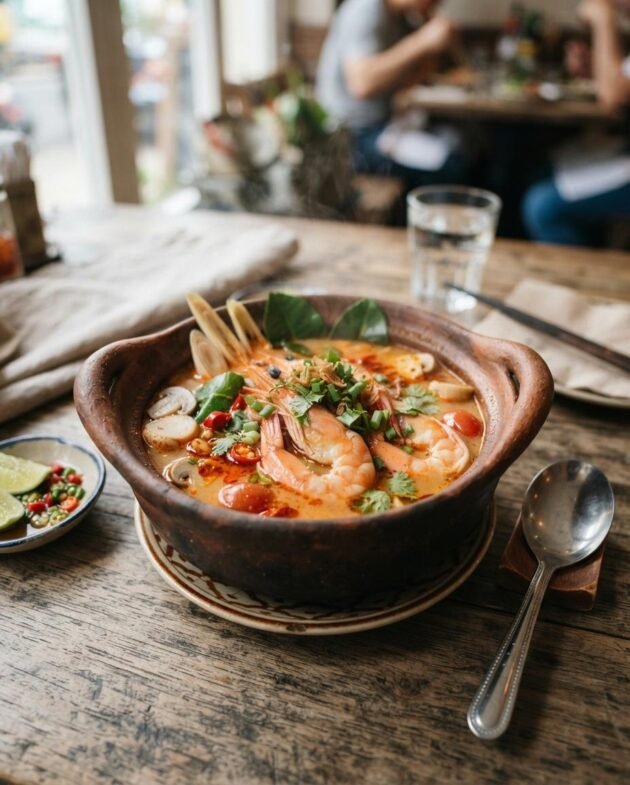
In a large pot, bring 1.5 liters of water to a boil. Add the quartered onion and tomatoes and simmer for five minutes until softened. Add the sinigang mix or fresh tamarind extract and stir to incorporate. Season with fish sauce and taste — the broth should be pleasantly and assertively sour. The quality of the tamarind sourness is the heart of Sinigang na Lapu-Lapu; adjust with additional sinigang mix for more sourness, or water to dilute if too sharp. The tomatoes add natural sweetness and body to the broth that balances the tamarind's acidity. This broth foundation is identical to sinigang na hipon but the delicate flavor of lapu-lapu will bring a different, more refined dimension to the finished soup.
- Step 2: Cook Vegetables
Add the eggplant and sitaw to the simmering broth and cook for three to four minutes. Add the siling haba. The vegetables should be tender but retain some firmness — they will continue cooking slightly after the fish is added. Lapu-lapu is a large, firm-fleshed grouper that can withstand the vegetable cooking time without being damaged, unlike more delicate fish. The eggplant in particular becomes extraordinary in the sour sinigang broth — it absorbs the tartness and becomes almost jammy in texture, a taste revelation for those who have not experienced it before. Add the fish sauce and taste one final time before introducing the fish.
- Step 3: Poach the Lapu-Lapu
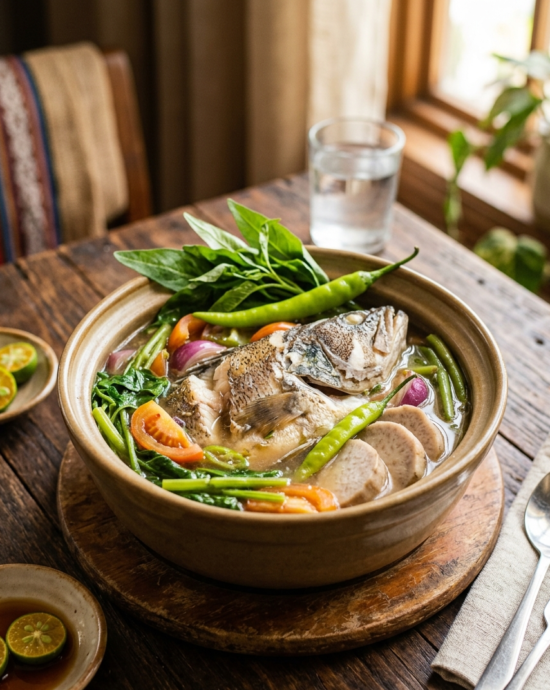
Gently lower the lapu-lapu steaks into the simmering sinigang broth, arranging them in a single layer. Reduce the heat to a gentle simmer — never a rolling boil, which would break up the delicate fish flesh and cloud the broth. Cover the pot and cook for eight to ten minutes until the fish is cooked through and the flesh flakes easily when tested with a fork. Lapu-lapu is a firm-fleshed fish that holds its shape beautifully during poaching, and its naturally sweet, mild, premium-quality flesh elevates the sinigang broth to a level of refinement not achievable with ordinary fish.
- Step 4: Add Greens and Finish
Add the kangkong or pechay and stir gently. Allow to wilt for one to two minutes. Taste the final soup — it should be beautifully sour, savory, and carry the clean, sweet, slightly delicate flavor of grouper throughout every spoonful. The fish's natural sweetness permeates the entire broth during poaching, transforming it from a plain tamarind soup into something richer and more complex. Lapu-lapu sinigang broth is so good it is often enjoyed by itself as a restorative soup. Serve immediately in deep bowls with rice.
- Calories:180 kcal9%
- Protein:28 g56%
- Carbohydrates:10 g4%
- Sugar:3 g3%
- Fat:3 g4%
- Salt (Sodium):580 mg25%
- Energy:753 kJ9%
Table of Contents
What Is Sinigang na Lapu-Lapu?
Sinigang na Lapu-Lapu is a premium Filipino sour soup using the prestigious grouper fish (lapu-lapu) poached in tamarind broth with traditional sinigang vegetables, considered by many Filipino food lovers as the finest and most refined version of sinigang due to the extraordinary quality and sweetness of lapu-lapu flesh. It is a celebratory fish dish of the highest order in Filipino culinary culture.
Lapu-lapu (Epinephelus spp.) is named after the legendary Mactan chieftain who famously defeated Ferdinand Magellan in 1521 — one of history’s most significant native resistance figures — making it one of the few foods in the Philippines with genuine historical and nationalistic significance. The fish is prized throughout Southeast Asia for its firm, pristine-white, sweet flesh and commands premium prices at markets and restaurants.
Cooking lapu-lapu in sinigang is considered one of the highest applications of both the premium fish and the sour soup technique in Filipino cuisine — the fish’s natural sweetness and the broth’s assertive sourness create a balance of extraordinary elegance that showcases both components at their mutual best. The resulting soup is simultaneously light and deeply satisfying, sour and sweet, simple and complex.
For visitors to the Philippines and Filipino food enthusiasts worldwide, Sinigang na Lapu-Lapu represents one of the most compelling arguments for Philippine cuisine’s sophistication and depth — a dish of genuine global gastronomic merit that deserves far wider international recognition.
Ingredient Notes
- Lapu-Lapu (Grouper) Fresh, live-tank lapu-lapu is the gold standard. The flesh should be firm, white, and spring back when pressed; avoid any fish with sunken eyes, discolored gills, or soft, yielding flesh. The skin of lapu-lapu contributes significant flavor to the broth during poaching — leave it on during cooking.
Ingredient Suggestions
- Snake Beans (Bataw) — Flat, wide string bean pods that cook faster and absorb the sour broth beautifully with a more tender texture than regular sitaw.
- Labanos (Radish) — White radish rounds added during the vegetable cooking stage add pleasant mild bitterness and absorb the sour broth exceptionally well.
Helpful Tips & Pro Tips
- Never add lapu-lapu to boiling broth — a rolling boil breaks up the delicate flesh and clouds the broth. The ideal cooking environment is a gentle, barely bubbling simmer.
- Lapu-lapu cooks faster than pork sinigang — check for doneness at eight minutes by gently pressing the flesh; it should feel firm and flake with minimal pressure from a fork.
How to Serve and Store
Serve immediately with steamed rice. The premium quality of lapu-lapu means this dish is best eaten fresh. Leftover broth with vegetables keeps 2 days refrigerated; do not reheat the fish — it becomes dry and loses its premium texture. Use leftover broth to poach fresh fish for a second meal.
Substitutions
- Lapu-Lapu → Maya-Maya (Red Snapper) — Similar premium quality fish with comparable sweetness and firm flesh that performs identically in sinigang.
- Sinigang Mix → Fresh Kamias (Bilimbi) — A more exotic souring agent that produces a slightly less tart, more fruity sinigang broth loved in many Visayan households.
Suggested Recipes
- Sinigang na Hipon — The shrimp sinigang that shares the same sour broth technique with a different but equally beloved protein.
- Tinola na Isda — A ginger-forward fish soup that contrasts sinigang’s sour approach with a clear, herbal broth of completely different character.
Frequently Asked Questions

Jeff Smith
"Cooking is the intersection of history, science, and emotion."
For me, the kitchen has always been a laboratory of culture. With a background deeply rooted in digital strategy and precision, I approach the culinary arts with the same rigor I apply to the digital landscape—analyzing flavors, perfecting techniques, and documenting the nuance that makes Filipino cuisine truly world-class.
Findme Recipe was born from a desire to bridge the gap between traditional heritage and the modern home cook. Whether it is mastering the perfect balance of acidity in a classic Adobo or simplifying complex regional dishes for everyday kitchens, my mission is to preserve our culinary identity through accessible, data-backed, and delicious content.
I am not just building a database; I am cultivating a community where every Filipino kitchen feels empowered, every ingredient is celebrated, and every family heirloom recipe finds a place to thrive.
Join me as we translate the soul of our islands into recipes for the next generation.