
- Step 1: Prepare the Puso (Hanging Rice)

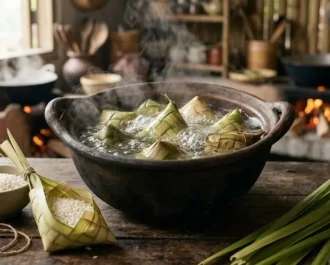
To make puso — the traditional woven palm-frond or banana-leaf hanging rice packets that are tuslob buwa's essential dipping vessel — begin by soaking 2 cups of rice in cold water for 30 minutes. If using banana leaves, cut them into 30 x 30 cm squares and briefly pass each sheet over a low flame to soften and make them pliable without tearing. Form each banana leaf into a cone shape, fill halfway with the soaked rice, fold the top closed tightly, and secure with kitchen twine. Submerge the rice packets completely in a pot of boiling water and cook for 35 to 40 minutes, or until the rice is fully cooked and firm. As a widely accessible shortcut, plain steamed white rice formed into palm-sized balls or small cups serves exactly the same functional purpose as puso for dipping.
- Step 2: Clean and Prepare the Pork Brain
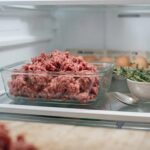
Pork brain requires careful, gentle cleaning before cooking. Place the brain in a bowl of cold salted water and allow it to soak for 15 to 20 minutes to draw out any remaining blood. Gently remove the thin membrane covering the brain using your fingertips, being careful not to break the delicate lobes — the membrane peels away in thin sheets when the brain is properly chilled and soaked. Rinse the cleaned brain gently under cold running water. The cleaned brain should be pale cream-white with no reddish blood coloring remaining. Pat gently dry with paper towels and set aside. If pork brain is unavailable or preferred to be avoided, chicken liver alone or a combination of pork liver and silken tofu can produce a comparable creamy, rich sauce with different but acceptable character.
- Step 3: Sauté Aromatics and Liver
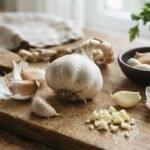
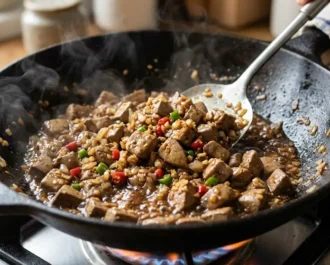
Heat the pork lard or cooking oil in a small, deep wok or heavy-bottomed pan over medium heat. Add the finely minced onion and cook, stirring, for 3 to 4 minutes until softened and lightly golden. Add the minced garlic and stir for 1 minute until deeply fragrant. Add the diced pork liver and cook, stirring frequently, for 2 to 3 minutes until just cooked through — the liver should be just opaque at the center, not dry and crumbly. Add the chopped bird's eye chilies and stir them through the aromatics and liver for 30 seconds to release their heat. Season with soy sauce and a pinch of sugar, stirring to coat everything in the seasoning. The sautéed liver and aromatics form the savory backbone of the tuslob buwa sauce, providing the umami depth that the brain alone cannot.
- Step 4: Add the Pork Brain
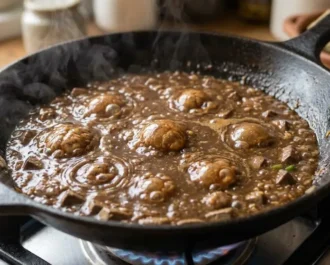
Add the cleaned pork brain to the pan, gently breaking it into rough pieces using a wooden spoon or spatula as it hits the heat — do not mash it into a smooth paste, as the irregular texture is part of authentic tuslob buwa's character. Pour in the water or pork broth and stir gently to combine the brain, liver, and aromatics into a unified mixture. The brain dissolves partially into the liquid as it cooks, thickening the sauce to a naturally rich, creamy consistency from the brain's high fat and lecithin content. Bring the mixture to a gentle simmer over medium-low heat — never a rolling boil, which causes the brain to separate and the sauce to become grainy. The key is low, steady heat that allows the brain to melt into the sauce smoothly.
- Step 5: Develop the Characteristic Bubbles
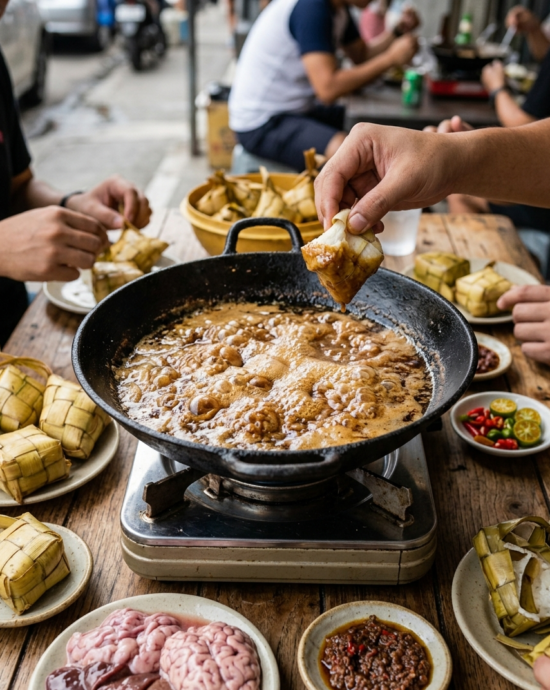
Reduce the heat to the lowest possible setting. The defining characteristic of tuslob buwa — its name literally translates to "dip in bubbles" — is the slow, lazy, gorgeous bubbling of the simmering sauce in the pan or clay pot. Allow the sauce to simmer at the gentlest possible heat, producing the characteristic large, lazy bubbles that rise and break slowly on the surface. This is the visual and theatrical signature of the dish — street vendors in Cebu serve tuslob buwa in small clay pots heated over single burners, and diners dip their puso directly into the slowly bubbling, fragrant sauce at the table. The sauce should be thick enough that the bubbles rise and break slowly rather than fizzing rapidly, indicating the correct consistency for dipping.
- Step 6: Season, Garnish, and Serve
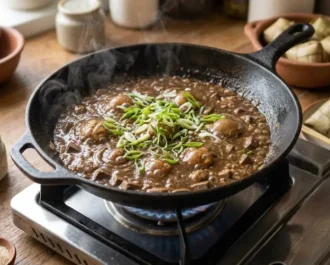
Taste the finished tuslob buwa sauce and adjust the seasoning with additional soy sauce, salt, black pepper, and a small amount of sugar as needed. The sauce should be deeply savory, richly creamy from the brain, with the soy sauce's umami depth and the chilies' heat clearly present. Scatter the finely sliced spring onions over the surface of the bubbling sauce just before serving — their freshness and mild onion fragrance provide a clean aromatic lift to the rich, heavy sauce. Serve the pan or clay pot of bubbling tuslob buwa directly at the table on a portable burner if possible, maintaining the gentle bubbling throughout the meal. Place the puso packets or rice balls alongside for dipping directly into the sauce.


- Calories:280 kcal14%
- Energy:1,172 kJ14%
- Protein:16 g32%
- Carbohydrates:10 g4%
- Sugar:3 g3%
- Fat:20 g26%
- Salt:1.7 g28%
Table of Contents
What Is Tuslob Buwa?
Tuslob buwa is a Cebuano Filipino street food dish of pork brain and liver simmered in soy sauce, garlic, and lard until it forms a rich, creamy, deeply savory bubbling sauce — served in a clay pot over a burner and eaten by dipping puso (woven hanging rice packets) directly into the slowly bubbling mixture at the table. The name is Cebuano for “dip in bubbles” — a description that captures both the technique and the theatrical visual of diners leaning over the pot, dipping their rice packets into the gently erupting, fragrant sauce while it still bubbles from the heat.
Tuslob buwa is a dish that exists almost entirely within the street food culture of Cebu City, where it originated in the carinderia stalls and late-night food streets of working-class neighborhoods before achieving city-wide and eventually national attention. It belongs to the same tradition of bold, resourceful Filipino cooking that transforms offal and overlooked cuts into dishes of extraordinary, addictive flavor — the same tradition that produced sisig, dinuguan, and goto. The pork brain provides the sauce’s extraordinary, silky richness — its high fat and lecithin content creates a naturally creamy emulsified sauce with a luxurious, velvety body that no other ingredient can replicate.
Tuslob buwa is the kind of dish that divides eaters before first taste and unites them after. Its combination of genuine communal eating — everyone dipping from the same bubbling pot — and the extraordinary richness of the brain-based sauce creates an experience that is simultaneously primal and sophisticated. For adventurous Filipino food lovers, it represents one of the most genuinely unique, most culturally specific, and most deeply memorable eating experiences in the archipelago.
Ingredient Notes
- Pork Brain (Utak ng Baboy): The defining ingredient and the source of tuslob buwa’s extraordinary, silky sauce. The brain must be as fresh as possible — purchased on the day of cooking from a wet market butcher. Fresh pork brain is pale cream-white; any gray coloring or off-smell indicates age and should be avoided entirely. The cleaning step — soaking in salted water and removing the membrane — is non-negotiable for producing a clean-tasting, odor-free sauce.
- Pork Liver: Provides the savory, earthy backbone that prevents the sauce from tasting one-dimensionally rich from the brain alone. Diced small and cooked briefly before the brain is added — overcooked liver becomes grainy and bitter and should be avoided. Look for fresh, bright reddish-brown liver with no gray discoloration.
- Pork Lard: The traditional cooking fat for tuslob buwa — lard’s rich, deeply porcine flavor is part of the dish’s authentic character. It is the correct fat for this preparation. Cooking oil is an acceptable substitute but produces a significantly less richly flavored result without lard’s characteristic depth.
- Soy Sauce: The primary seasoning that provides the umami saltiness balancing the brain’s richness. Use Filipino soy sauce — Silver Swan or Datu Puti — for the most authentic, rounded flavor profile; Japanese soy sauce is lighter and less assertively savory.
- Puso (Hanging Rice): The traditional woven palm-frond or banana-leaf rice packets that are the vessel for eating tuslob buwa. They must be firm enough to dip into the sauce without breaking — the starchiness of the cooked rice compressed inside the leaf packets creates the ideal dipping structure. Fresh pandesal rolls are the most accessible substitute.
Ingredient Suggestions
- Pork blood (dugo ng baboy) — A small amount stirred into the sauce near the end of cooking deepens its color to a darker, richer tone and adds another layer of mineral, savory complexity.
- Bagoong (fermented shrimp paste) — A small teaspoon stirred into the sauce adds a funky, fermented depth that is beloved in some Cebu street food variations of tuslob buwa.
- Ginger — A small thumb, finely grated, stirred in with the garlic adds a warming spice that cuts through the richness of the brain sauce and adds aromatic complexity.
- Lemon basil (sangig) — Scattered over the finished sauce as a garnish, lemon basil’s sweet, anise-like fragrance provides a fresh aromatic counterpoint to the rich, heavy sauce.
- Toasted garlic chips — Scattered over the sauce just before serving, they add a crunchy textural contrast and a deeper roasted garlic flavor that complements the dish beautifully.
Helpful Tips & Pro Tips
- Source the freshest possible pork brain. Freshness is non-negotiable for pork brain — it deteriorates quickly and older brain produces an unpleasant, muddy flavor that cannot be corrected with seasoning. Always source on the day of cooking from a trusted butcher or wet market stall. Pale cream-white color and clean smell are the primary freshness indicators.
- Keep the heat very low during cooking. The brain breaks down at relatively low temperatures — high heat causes it to separate into grainy curds rather than melting into the smooth, velvety sauce that defines excellent tuslob buwa. Low, patient heat produces a naturally emulsified, creamy sauce of extraordinary silkiness.
- Why is my tuslob buwa sauce grainy? Grainy sauce results from cooking the brain at too high a heat, which causes the brain proteins to coagulate unevenly. Reduce heat immediately if graininess appears and stir gently — you may be able to rescue a slightly grainy sauce by adding a small splash of broth and stirring vigorously over very low heat.
- Serve in a clay pot over a portable burner for the authentic experience. The visual and communal experience of dipping puso into a slowly bubbling, fragrant sauce at the table is central to tuslob buwa’s appeal. Serving in a clay pot on a portable butane burner replicates the street food experience in a home or restaurant setting with maximum theatrical impact.
- Balance the seasoning carefully — brain is naturally very rich. The richness of pork brain is extraordinary, and without sufficient soy sauce, chilies, and the bitter contrast of spring onions, the sauce can become cloying rather than addictive. Season assertively and don’t hold back on the bird’s eye chilies, which provide the essential heat that cuts through the fat.
How to Serve and Store
Serve tuslob buwa communally in a small clay pot or deep saucepan on a portable burner at the table, maintaining a gentle bubble throughout the meal. Place puso packets, pandesal rolls, or rice balls alongside for dipping. Scatter fresh spring onions and additional bird’s eye chilies on top. The communal, hands-on dipping ritual — each diner reaching into the shared bubbling pot — is as essential to the experience as the food itself.
Store leftover tuslob buwa sauce in an airtight container in the refrigerator for up to 2 days only — pork brain has a significantly shorter shelf life than other pork preparations. Reheat gently over the lowest possible heat, stirring frequently and adding a small splash of broth if the sauce has thickened too much. Do not freeze tuslob buwa — the brain sauce separates completely upon thawing and cannot be restored. For safety, consume within 48 hours of cooking.
Substitutions
- Pork brain → Silken tofu + chicken liver — A brain-free alternative; blend the silken tofu smooth and stir in after cooking the liver for a comparable creamy sauce texture without the brain.
- Pork liver → Chicken liver — A milder, more widely available substitute; use the same preparation technique and timing.
- Pork lard → Coconut oil — A neutral cooking fat substitute that produces a slightly less rich but acceptable result; avoid olive oil, which adds off-flavors.
- Soy sauce → Coconut aminos — A gluten-free substitute with comparable saltiness and a slightly sweeter flavor profile.
- Puso → Fresh pandesal rolls — The most widely accessible substitute for the hanging rice packets; their soft, pillowy texture is ideal for scooping the sauce.
- Bird’s eye chilies → Serrano peppers — A milder, widely available substitute; use 1.5 times the quantity for comparable heat.
Suggested Recipes
- Pork Dinuguan — Shares tuslob buwa’s bold, offal-forward character and its celebration of the Filipino tradition of transforming less conventional pork cuts into deeply satisfying dishes.
- Pork Sisig — Another iconic Cebu-and-Pampanga-associated pork dish that, like tuslob buwa, showcases Filipino cooking’s genius for creating addictive, deeply savory dishes from offal and organ meats.
- Goto (Beef Tripe Arroz Caldo) — Another beloved Filipino offal dish — beef tripe rice porridge — that shares tuslob buwa’s celebration of bold organ meat flavors in a distinctly Filipino preparation.
- Cebu Lechon — The whole roasted pig that is Cebu’s most famous culinary export; exploring tuslob buwa alongside Cebu lechon reveals the full breadth and ambition of Cebuano pork cookery.