
- Boil the Pork Belly

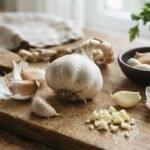
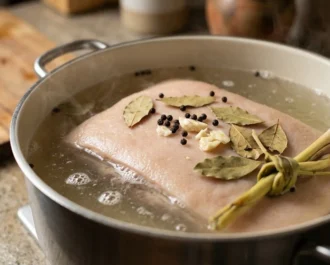
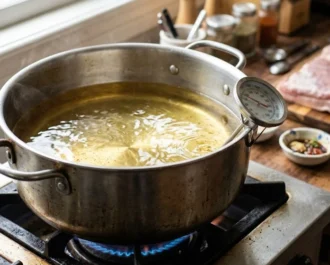
Place the whole pork belly slab skin-side up in a large pot and cover with 1 liter of cold water. Add the salt, whole black peppercorns, crushed garlic, bay leaves, and bruised lemongrass stalk if using. Bring the water to a full boil over high heat, then reduce to a steady simmer over medium heat. The initial boiling step does two essential things simultaneously: it begins tenderizing the tough collagen in the pork skin and fat layers, and it allows the aromatics — garlic, peppercorns, bay leaf, lemongrass — to gently infuse the meat with a subtle, savory fragrance that seasons it from the outside in. Simmer the pork belly uncovered for 45 to 50 minutes until the skin is tender when pierced with a fork but the meat still holds its shape without falling apart.
- Dry the Skin Overnight
Remove the boiled pork belly from the water and transfer it to a wire rack set over a baking sheet or tray. Pat every surface — especially the skin — completely dry with several layers of paper towels, pressing firmly to absorb as much surface moisture as possible. Season the skin generously with fine salt, rubbing it in thoroughly. Place the rack with the pork belly in the refrigerator, uncovered, for a minimum of 4 hours — though overnight drying of 8 to 12 hours produces dramatically superior crackling results. The cold, dry refrigerator air draws the remaining moisture from the skin, dehydrating its surface completely. This extended drying is the single most critical step for achieving the explosive, thunderously loud, shatteringly crisp crackling that defines exceptional lechon kawali.
- Prepare the Frying Oil
Pour enough cooking oil into a large, deep pot or wok to fully submerge the pork belly slab — the oil must cover the pork completely for even frying. Heat the oil over medium-high heat to 180°C (350°F). Use a kitchen thermometer for accuracy — oil that is too cool produces greasy, pale, soft crackling, while oil that is too hot burns the exterior before the interior heats through. If you do not have a thermometer, test the oil by dropping a small piece of bread into it: bread that sizzles immediately and turns golden in 30 seconds indicates the oil is at the correct temperature. Prepare a large tray lined with paper towels next to the stove to absorb excess oil from the finished lechon kawali immediately after frying.
- First Fry — Blanch the Pork
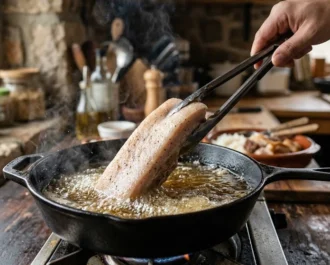
Carefully lower the dried pork belly slab into the hot oil using long tongs or a wire frying basket, skin-side down first. Stand back as you lower it — the residual moisture inside the pork will cause vigorous spattering of hot oil when it contacts the frying medium. Fry the pork belly at 180°C for 15 to 18 minutes, turning it carefully once or twice, until the skin is fully set, lightly golden, and beginning to bubble on the surface. This first fry is not intended to produce the final crackling — it is a blanching step that fully cooks the meat through, sets the skin's structure, and prepares the surface for the second, higher-temperature fry that will produce the spectacular crackling. Remove the pork from the oil and allow it to rest on the paper towel-lined tray for 5 minutes.
- Second Fry — The Crackling
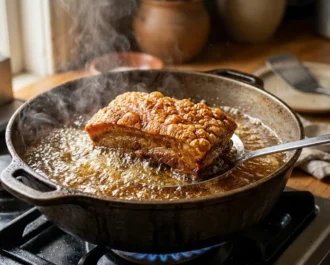
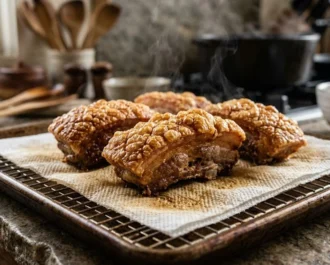
Increase the oil temperature to 200°C (390°F) — significantly hotter than the first fry. Carefully return the partially fried pork belly to the hot oil. The dramatically higher temperature in this second fry causes the moisture trapped just beneath the skin's surface to vaporize explosively, creating thousands of tiny steam bubbles that puff up the skin and produce the characteristic blistered, cratered surface texture of perfect lechon kawali crackling. Fry at this higher temperature for 8 to 12 minutes, turning occasionally, until the skin is completely blistered, deeply golden-brown, and audibly crackling and bubbling in the oil. The crackling should look like a rough, lunar landscape of golden, puffy blisters — uniformly golden without any pale, unblistered patches remaining.
- Drain, Rest, and Chop
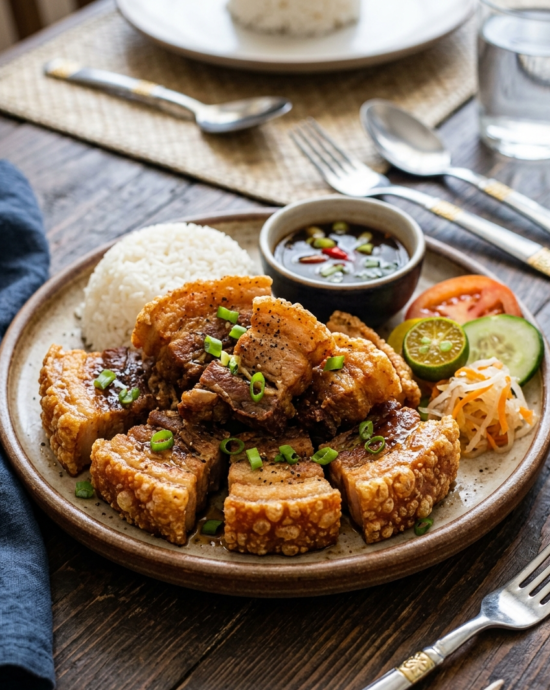
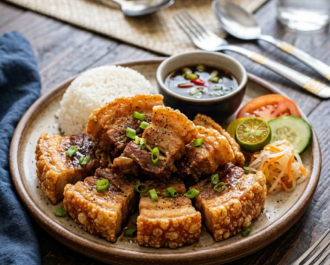
Remove the lechon kawali from the hot oil and immediately transfer it to the paper towel-lined tray, skin-side up. Allow it to drain and rest for 5 minutes before cutting — this brief rest allows the crackling to finish setting into its final, shatteringly crispy texture and allows the internal juices to redistribute back into the meat. Do not cover the resting pork belly; covering it traps steam that softens the crackling dramatically. Using a large, heavy cleaver or sharp chef's knife, chop the rested lechon kawali into serving pieces — typically thick rectangles of about 4 to 5 centimeters — cutting through the crackling with confident, decisive strokes rather than sawing. Serve immediately while the crackling is at its loudest, most explosive crispiness.
- Calories:580 kcal29%
- Energy:2,427 kJ29%
- Protein:34 g68%
- Carbohydrates:8 g3%
- Sugar:1 g1%
- Fat:44 g56%
- Salt:1.5 g25%
Table Of Contents
What Is Lechon Kawali?
Lechon kawali is a Filipino deep-fried pork belly dish with explosively crispy, blistered crackling and tender, juicy meat — one of the most beloved, most celebrated, and most immediately recognizable pork dishes in the entire national cuisine. The name combines lechon — the Filipino word for whole roasted pig, derived from the Spanish word for suckling pig — with kawali, the Filipino term for the wok or deep pan used to fry it. Lechon kawali is essentially the home cook’s answer to the spectacle of whole lechon: a preparation that delivers the same extraordinary pork crackling experience without requiring an entire roasted pig or the elaborate infrastructure of a proper lechon feast.
The defining characteristic of lechon kawali is its skin — when properly executed, the crackling is blistered, golden, impossibly light, and produces a sound like breaking glass when bitten into. Achieving this extraordinary crackling requires a two-step process: first, boiling the pork belly with aromatics until the skin is tender and the meat is cooked through; second, drying the skin completely in the refrigerator before deep-frying in a two-temperature process that causes the skin’s moisture to vaporize and create thousands of tiny air pockets.
Lechon kawali occupies a central place in Filipino celebration culture — it appears at birthday parties, family reunions, fiestas, and Christmas gatherings across every region of the Philippines. Its bold, unapologetic richness — the shatter of the crackling, the melting fat layer beneath, the savory tender meat — represents Filipino cooking at its most celebratory and most generously indulgent. Served with lechon sauce or spiced vinegar, it is an experience of extraordinary, joyful satisfaction.
Ingredient Notes
- Pork Belly (Skin-On): The best pork belly for lechon kawali is a thick, even slab with a generous fat layer between the skin and meat — approximately 3 to 4 centimeters of total thickness. The fat layer is essential: it renders during frying, basting the meat from within and creating the luscious, succulent interior beneath the crackling. Look for pale pink flesh and bright white fat with no discoloration.
- Rock Salt or Fine Salt (for skin): Salt applied to the skin before drying serves two purposes: it draws out additional moisture from the skin surface through osmosis, and it seasons the crackling directly. Use fine salt rather than coarse for more even coverage; apply generously and press in firmly.
- Aromatics (Peppercorns, Garlic, Bay Leaves): These aromatics simmer with the pork during boiling, infusing the meat with a subtle, savory background fragrance. While their contribution to the finished crackling is minimal, they noticeably season the interior meat, giving lechon kawali a more complex flavor beneath the crackling than plain boiled-and-fried pork.
- Cooking Oil: Use a neutral, high-smoke-point oil — refined coconut oil, lard, or vegetable oil. Lard produces the most authentic, richest-tasting lechon kawali and was the traditional frying medium before vegetable oil became more common. Avoid olive oil or any infused oil, which adds off-flavors at frying temperatures.
- Lemongrass (Tanglad): An optional but recommended addition to the boiling liquid that imparts a subtle citrusy, floral fragrance to the pork meat without affecting the crackling. A single bruised stalk is sufficient.
Ingredient Suggestions
- Five-spice powder — A pinch rubbed under the skin or added to the boiling water introduces a subtle, warm, anise-forward complexity borrowed from Chinese-influenced Filipino cooking.
- Liver sauce (mang tomas) — The quintessential Filipino dipping sauce for lechon kawali; its sweet, tangy liver-based character is the classic pairing that elevates the dish beyond the crackling alone.
- Spiced coconut vinegar (sinamak) — A Visayan-style spiced vinegar with garlic and chilies that provides a sharp, cleansing counterpoint to the lechon kawali’s extraordinary richness.
- Pickled green papaya (atchara) — Served alongside, the sweet-sour crunch of atchara cuts through the fat beautifully and refreshes the palate between bites.
- Chopped tomatoes with patis and calamansi — A simple, fresh tomato dipping condiment that provides bright acidity and juiciness as a counterpoint to the richness.
Helpful Tips & Pro Tips
- The overnight skin-drying step is non-negotiable for world-class crackling. A minimum of 8 hours of uncovered refrigerator drying dehydrates the skin completely, allowing it to blister explosively rather than fry up tough and chewy. Shortcuts produce inferior crackling — plan ahead and treat the drying step as a fundamental part of the recipe.
- The two-temperature frying technique is what creates the blisters. The first fry at 180°C sets the structure; the second at 200°C vaporizes the trapped moisture into steam bubbles. Never skip the two-fry process — a single fry at either temperature produces a flat, unblistered skin without the characteristic puffed, cratered appearance of proper lechon kawali crackling.
- Why is my lechon kawali crackling soft and not crispy? Soft crackling is almost always caused by insufficient skin drying before frying, oil that was not hot enough during the second fry, or covering the resting pork belly after frying, which traps steam. Ensure the skin is bone-dry before frying, verify oil temperature with a thermometer, and always rest the finished lechon kawali uncovered.
- Use a deep pot and long tongs for safety. Deep-frying a large pork belly slab causes significant spattering, especially during the first contact with the oil. Use a pot deep enough that the oil is at least 8 cm below the rim, wear long oven mitts, and lower the pork slowly and carefully into the oil away from your body.
- Chop immediately before serving. Lechon kawali crackling begins softening within minutes of leaving the fryer as steam from the hot meat migrates upward into the skin. Chop and serve as quickly as possible after the brief 5-minute rest to capture the crackling at its absolute loudest and crispiest.
How to Serve and Store
Serve lechon kawali immediately after chopping, arranged on a platter skin-side up to showcase the golden, blistered crackling. Accompany with a generous bowl of lechon sauce (Mang Tomas), calamansi halves, and steaming white rice. The pork belly’s extreme richness makes a light, acidic side — spiced vinegar, atchara, or fresh tomato salad — an essential counterbalance at the table.
Store leftover lechon kawali in an airtight container in the refrigerator for up to 3 days. To restore the crackling’s crispiness, reheat in a preheated 200°C oven or air fryer for 8 to 10 minutes — never microwave, which produces irreparably soggy crackling. Leftover lechon kawali is outstanding reused in lechon paksiw — simmered in the leftover lechon sauce with vinegar and spices. Freeze cooked pork belly for up to 1 month; re-fry directly from frozen at 200°C for 12 minutes.
Substitutions
- Pork belly → Pork shoulder (kasim) — A leaner alternative with less fat and skin surface; produces good crackling but less of the luscious fat layer beneath.
- Deep-frying oil → Air fryer — Set to 200°C for 25 minutes after the boiling and drying steps; produces excellent crackling with significantly less oil.
- Lechon sauce → Spiced vinegar (sinamak) — A lighter, more acidic gluten-free dipping sauce alternative that cuts through the richness beautifully.
- Pork belly → King oyster mushroom stems — A vegan alternative; boil, dry, score the surface, and air-fry at 200°C for a satisfying crackling-style texture.
- Table salt → Coarse sea salt — A budget-friendly substitute with comparable results; crush slightly before applying to skin for more even coverage.
- Bay leaves → Dried thyme — A pantry-friendly herb substitute in the boiling liquid; contributes a slightly different but pleasant aromatic note to the cooked meat.
Suggested Recipes
- Lechon Paksiw — The natural next step for lechon kawali leftovers, braised in lechon sauce, vinegar, and spices into a completely different, deeply savory dish.
- Crispy Pata — Deep-fried pork knuckle that uses the same boil-dry-fry technique as lechon kawali, producing an equally spectacular crackling on a different cut.
- Litson Baboy — The whole roasted pig version of the lechon experience; understanding lechon kawali deepens appreciation for this ultimate Filipino celebration dish.
- Sisig — Another iconic Filipino pork crackling and sizzling dish that celebrates the same crispy-fatty pork tradition in a completely different, chopped and seasoned format.
Frequently Asked Questions

Jeff Smith
"Cooking is the intersection of history, science, and emotion."
For me, the kitchen has always been a laboratory of culture. With a background deeply rooted in digital strategy and precision, I approach the culinary arts with the same rigor I apply to the digital landscape—analyzing flavors, perfecting techniques, and documenting the nuance that makes Filipino cuisine truly world-class.
Findme Recipe was born from a desire to bridge the gap between traditional heritage and the modern home cook. Whether it is mastering the perfect balance of acidity in a classic Adobo or simplifying complex regional dishes for everyday kitchens, my mission is to preserve our culinary identity through accessible, data-backed, and delicious content.
I am not just building a database; I am cultivating a community where every Filipino kitchen feels empowered, every ingredient is celebrated, and every family heirloom recipe finds a place to thrive.
Join me as we translate the soul of our islands into recipes for the next generation.