
- Step 1: Season and Prepare the Whole Fish
Begin with a fresh, whole tilapia or lapu-lapu that has been properly scaled, gutted, and cleaned. Using a sharp knife, score both sides of the fish with three to four diagonal cuts, cutting through the flesh down to the bone. These cuts serve two important purposes: they allow seasoning to penetrate deep into the thick flesh, and they help the fish cook more evenly during frying. Pat the fish completely dry inside and out using paper towels — this is non-negotiable for achieving a properly crispy exterior. Season the fish generously on both sides and inside the cavity with salt and ground black pepper, pressing the seasoning into the scored cuts. Allow the seasoned fish to rest for ten minutes so the salt can begin drawing out moisture and the flavors start to penetrate. Thorough seasoning at this stage sets the base flavor of the entire finished dish.
- Step 2: Dredge and Fry the Fish
Spread cornstarch in a wide, flat tray or plate. Coat the entire fish evenly in cornstarch — both sides, the head, and inside the cavity opening — shaking off any excess. The cornstarch coating is what creates the signature light, crispy crust that holds up beautifully when the sweet and sour sauce is poured over. Heat cooking oil in a large wok or deep frying pan over high heat until the oil reaches approximately 180°C. Carefully lower the fish into the hot oil using a wide spatula, laying it away from you to prevent splatter burns. Fry the fish for six to eight minutes on the first side without moving it, until the crust is deeply golden and the fish naturally releases from the pan. Flip carefully and fry the other side for five to six minutes. Drain on paper towels.
- Step 3: Sauté the Aromatics
While the fried fish rests on paper towels, pour off most of the frying oil, leaving approximately two tablespoons in the wok. Bring the wok back to medium-high heat. Add the minced garlic and julienned ginger, stirring constantly for thirty to forty-five seconds until fragrant — take care not to let the garlic burn, as this will make the entire sauce bitter. Add the sliced onion rings and continue stirring for one to two minutes until they soften and become translucent. The combination of garlic, ginger, and onion forms the aromatic backbone of the escabeche sauce. Add the julienned carrots next, as they require slightly more cooking time than the bell peppers. Stir-fry the carrots with the aromatics for two minutes until they begin to soften slightly but still retain a pleasant crunch. Proper development of these aromatics is essential for the sauce's depth of flavor.
- Step 4: Build the Sweet and Sour Sauce
Add the sliced red and green bell pepper strips to the wok and stir-fry for one minute — you want them vibrantly colored and slightly tender but with a good amount of crunch still remaining. Pour in the white vinegar, sugar, water, and soy sauce. Stir the mixture well, ensuring the sugar dissolves completely. Bring the sauce to a gentle boil over medium heat. Taste at this point and adjust the balance between sweet and sour according to your preference — add more sugar if you prefer a sweeter sauce or a splash more vinegar for greater tanginess. Season with salt and pepper as needed. The sauce should have a pleasant sweet-sour equilibrium with a slight savory undertone from the soy sauce. Allow the sauce to simmer for two minutes so the flavors meld together before you proceed to thickening.
- Step 5: Thicken the Sauce and Finish
Give the cornstarch slurry a good stir to recombine it (the starch settles quickly), then pour it in a thin, steady stream into the simmering sauce while stirring continuously. The sauce will almost immediately begin to thicken and turn glossy and translucent. Continue stirring and cooking for one minute until the sauce reaches a lightly syrupy consistency that coats the back of a spoon. If the sauce thickens too much, add a splash of water to loosen it. If it remains too thin, add a little more diluted cornstarch. The ideal escabeche sauce should be pourable but thick enough to cling to the fish and vegetables rather than pooling entirely on the plate. Adjust seasoning one final time, then remove from heat. The sweet and sour glaze is now ready to be poured over the fried fish.
- Step 6: Plate and Serve
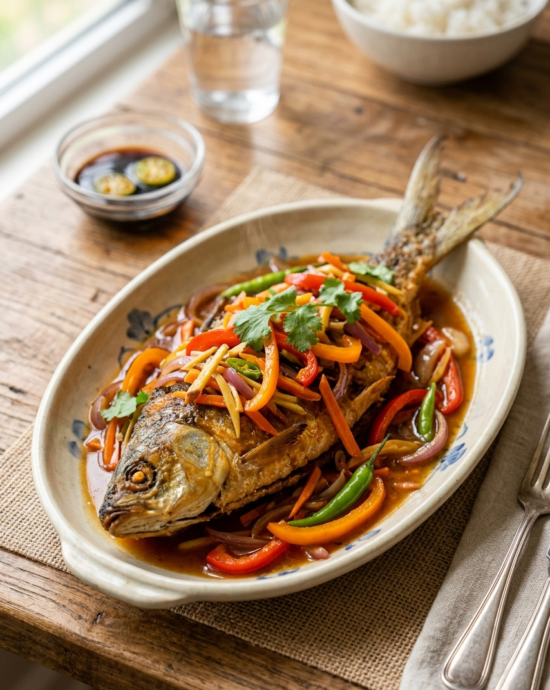
Transfer the crispy fried fish onto a large, deep serving platter. Pour the hot sweet and sour sauce with all the colorful vegetables generously over the fish, ensuring the sauce coats the scored cuts and pools slightly around the fish on the plate. The visual contrast of the golden-brown fish against the vibrant red and green peppers, orange carrots, and glistening amber sauce makes for a stunning presentation. Garnish with a few fresh spring onion strips or a wedge of calamansi if desired. Serve immediately with steamed rice while the fish crust still has some crispiness. Escabeche is often prepared ahead for fiestas and family gatherings, as the sweet-sour sauce actually improves as it sits and penetrates the fish further over several hours at room temperature.
- Calories:310 kcal16%
- Protein:26 g52%
- Carbohydrates:24 g8%
- Sugar:14 g16%
- Fat:12 g15%
Table of Contents
What Is Fish Escabeche?
Fish Escabeche is a beloved Filipino sweet and sour fish dish consisting of a whole deep-fried fish served with a glossy sauce made from vinegar, sugar, soy sauce, ginger, and colorful vegetables including bell peppers, carrots, and onions. The dish is a cornerstone of Filipino fiesta cooking and is commonly prepared for family celebrations, town fiestas, and holiday gatherings across the archipelago. The term escabeche traces its origins to the Spanish and Arabic culinary traditions brought to the Philippines during the colonial period, derived from the Arabic word “al-sikbaj,” referring to a dish of meat cooked with vinegar. Over centuries of local adaptation, the Filipino version evolved away from its Spanish counterpart, incorporating local ingredients, adjusting the flavor balance toward the sweeter side, and adopting whole fried fish as the preferred protein. The result is a dish uniquely Filipino in character despite its Mediterranean roots. Popular choices of fish for escabeche include tilapia, lapu-lapu (grouper), and maya-maya (red snapper) — all firm-fleshed fish that hold up well to frying and carry the bold sauce without breaking apart. The flavor profile is a carefully balanced interplay of sweet, sour, savory, and aromatic: the sugar and vinegar create the signature sweet-sour backbone, the soy sauce adds umami depth, and the ginger and garlic provide warmth and fragrance. The crunchy fried fish against the glossy, vegetable-laden sauce creates a satisfying textural contrast that makes fish escabeche one of the most memorable dishes in the Filipino culinary repertoire, beloved across generations and regions throughout the country.
Ingredient Notes
- Whole Fish (Tilapia or Lapu-lapu): Choose a fish with clear, bright eyes, red gills, shiny skin, and firm flesh — these are signs of freshness. Lapu-lapu delivers a firmer, sweeter flesh for escabeche, while tilapia is more economical and widely available.
- White Vinegar: Provides the essential sour component. Philippine white cane vinegar is ideal for its clean acidity. Adjust quantity based on your preferred sweet-sour balance.
- Sugar: Granulated white sugar is standard. The sugar quantity directly controls sweetness — taste and adjust as you build the sauce rather than adding all at once.
- Ginger: Use fresh ginger, not powdered. Fresh ginger delivers bright, aromatic heat that is fundamental to the escabeche flavor profile. Cut into thin matchsticks for visual appeal and even flavor distribution.
- Bell Peppers: Use both red and green for color contrast and complementary flavors. Choose firm, glossy peppers with no soft spots for best crunch in the finished dish.
Ingredient Suggestions
- Pineapple chunks: Adding 1/2 cup of pineapple chunks (fresh or canned) to the sauce introduces natural sweetness and a tropical fruity note that enhances the sweet-sour balance.
- Wood ear mushrooms: Soaked dried wood ear mushrooms add a satisfying chewy texture and subtle earthy flavor that pairs well with the bright escabeche sauce.
- Celery stalks: Thinly sliced celery adds freshness, crunch, and a clean herbal note that lightens the overall profile of the dish.
- Bird’s eye chili (siling labuyo): One or two sliced chilies stirred into the sauce add a pleasant kick that contrasts beautifully with the sweetness of the escabeche.
- Sesame oil: A few drops of sesame oil drizzled into the finished sauce just before serving adds a toasty, nutty fragrance that elevates the dish.
Helpful Tips & Pro Tips
- Score the fish deeply enough. Shallow cuts only season the surface; cuts that reach the bone ensure the thick flesh near the spine is properly seasoned and cooks through evenly during frying.
- Keep the vegetables crunchy. Overcooked vegetables turn mushy and lose their vibrant color — add bell peppers last and cook them for no more than one minute to preserve texture and visual appeal.
- Why does my escabeche sauce taste flat? Balance is everything. If the sauce lacks depth, add a splash more soy sauce for savory notes, and a pinch of white pepper for warmth. Taste at every stage and adjust incrementally.
- Let the fried fish drain on a rack, not flat on paper towels. Resting on a rack allows air circulation that keeps the bottom crust crispy instead of steaming soft from trapped heat.
- Make the sauce ahead if needed. The sweet-sour sauce can be made up to two days in advance and refrigerated, then reheated and poured over freshly fried fish at serving time for effortless entertaining.
How to Serve and Store
Fish escabeche is best served immediately after the sauce is poured over the freshly fried fish, while the crust still offers some resistance. Present it on a large platter family-style alongside steamed white rice. Leftover escabeche stores well in an airtight container in the refrigerator for up to 3 days. The flavors actually deepen and improve overnight as the sauce penetrates the fish further. Reheat gently in a covered pan over low heat with a splash of water to loosen the sauce — avoid microwaving at high heat as it toughens the fish. The sauce can be frozen separately for up to 1 month. For meal prep, fry the fish fresh and reheat the pre-made sauce for the closest to just-cooked quality.
Substitutions
- Whole tilapia → Whole maya-maya or snapper fillets: Snapper has firmer, sweeter flesh and works excellently — use thick fillets if whole fish is unavailable.
- White sugar → Brown sugar or palm sugar: Brown sugar adds molasses depth and a richer caramel note to the sweet-sour sauce.
- White vinegar → Rice vinegar (gluten-free option): Rice vinegar provides a slightly softer acidity with subtle sweetness that pairs well with the fish.
- Cornstarch coating → Rice flour coating: Rice flour creates an even crispier, lighter crust that stays crispy longer, especially suitable if the dish will sit before serving.
- Bell peppers → Snow peas or broccoli florets: For variation or when bell peppers are unavailable, both offer color contrast, crunch, and nutritional value.
Suggested Recipes
- Sweet and Sour Pork (Asado): The same sweet-sour flavor profile applied to pork — a natural progression for those who love the escabeche sauce style.
- Paksiw na Isda: A simpler, brothy vinegar-based fish dish that shares escabeche’s sour foundation but in a more humble, everyday format.
- Lumpiang Shanghai: Often served alongside escabeche at Filipino fiestas and family gatherings, making them natural menu companions.
- Kare-Kare: A rich peanut stew served at the same festive occasions, providing rich contrast to the bright sweet-sour notes of escabeche.
Frequently Asked Questions

Jeff Smith
"Cooking is the intersection of history, science, and emotion."
For me, the kitchen has always been a laboratory of culture. With a background deeply rooted in digital strategy and precision, I approach the culinary arts with the same rigor I apply to the digital landscape—analyzing flavors, perfecting techniques, and documenting the nuance that makes Filipino cuisine truly world-class.
Findme Recipe was born from a desire to bridge the gap between traditional heritage and the modern home cook. Whether it is mastering the perfect balance of acidity in a classic Adobo or simplifying complex regional dishes for everyday kitchens, my mission is to preserve our culinary identity through accessible, data-backed, and delicious content.
I am not just building a database; I am cultivating a community where every Filipino kitchen feels empowered, every ingredient is celebrated, and every family heirloom recipe finds a place to thrive.
Join me as we translate the soul of our islands into recipes for the next generation.