
- Step 1: Blanch the Pork

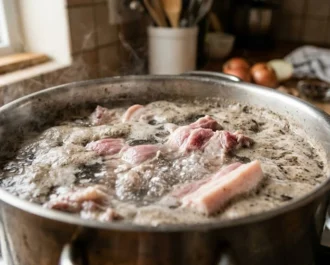
Place the pork pieces in a large pot and cover with cold water. Bring to a full boil over high heat and allow the pork to boil vigorously for 3 to 4 minutes — you will see a significant amount of gray-brown foam and impurities rise rapidly to the surface during this initial boil. This is protein and blood being released from the pork, and if left in the pot, they will cloud and slightly bitter the finished broth. Drain the pork completely, discarding the murky blanching water, and rinse each piece under cold running water to remove any remaining surface impurities. Clean the pot thoroughly before proceeding. This blanching step is absolutely essential for achieving the beautifully clear, clean-flavored broth that makes nilagang baboy so comforting and restorative — it takes only 10 minutes and transforms the quality of the finished soup dramatically.
- Step 2: Build the Broth
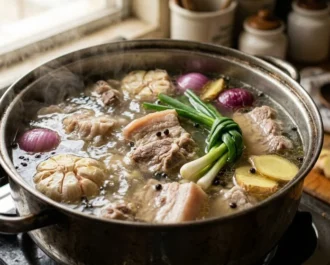
Return the blanched pork pieces to the clean pot. Add the 2 liters of fresh cold water along with the quartered onion, crushed garlic, thick ginger slices, knotted spring onion stalks, and whole black peppercorns. The aromatics added at this stage create the gentle, clear, subtly spiced broth that is the quiet hero of nilagang baboy — not aggressive or heavily seasoned, but layered with a warmth and depth from the garlic, ginger, and peppercorns that makes every spoonful deeply soothing. Bring to a full boil over high heat, then immediately reduce to a gentle, lazy simmer over medium-low heat. Skim off any remaining foam that rises during the first 10 minutes of simmering for a clear broth. Season with fish sauce and a pinch of salt.
- Step 3: Simmer the Pork Low and Slow
Partially cover the pot and allow the pork to simmer gently over medium-low heat for 50 to 60 minutes, or until the meat is very tender and easily pulls away from the bone when tested with a fork. The low, slow simmer is the defining technique of nilagang baboy — too high a heat produces tough, stringy pork and a cloudy broth; too short a cook time produces meat that is firm and unpleasantly chewy rather than the fall-off-the-bone tenderness that makes this soup so deeply satisfying. Check the water level periodically during this long simmer and add hot water in small amounts if the liquid drops below the level of the pork — the pork should remain submerged throughout the entire cooking period. Do not add cold water, which disrupts the cooking temperature and clouds the broth.
- Step 4: Add the Potatoes and Corn
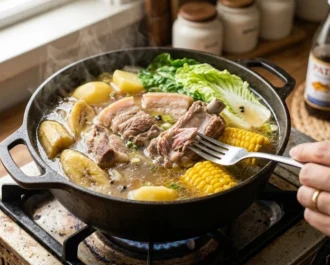
Once the pork is fully tender, add the quartered potatoes and corn rounds to the simmering broth. The potatoes will need approximately 12 to 15 minutes at a gentle simmer to become tender — they should yield easily to a fork while still holding their shape without crumbling or dissolving into the broth. Corn rounds need slightly less time — about 8 to 10 minutes — and contribute a beautiful natural sweetness to the broth as they cook that balances the savory pork and fish sauce seasoning beautifully. These two vegetables are the most substantial additions to the soup and make nilagang baboy significantly more filling and complete as a one-pot meal. Taste the broth at this stage and adjust the seasoning with additional fish sauce, salt, and a crack of black pepper.
- Step 5: Add the Remaining Vegetables
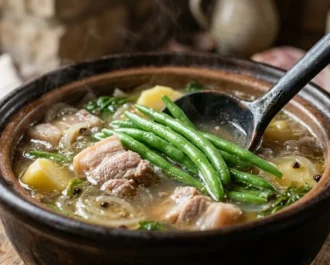
Once the potatoes are nearly tender, add the green beans to the pot, stirring gently to submerge them in the broth. Green beans need 4 to 5 minutes at a simmer to cook through while retaining their pleasant snap and vibrant green color. Finally, add the quartered cabbage pieces in the last 3 minutes of cooking — cabbage wilts and softens quickly in hot broth and should not be added too early, as overcooked cabbage becomes limp, excessively soft, and develops a sulfurous odor. The cabbage should be just tender-wilted with a slight residual firmness, still vibrant in color and fresh in flavor. Remove and discard the spring onion knots and ginger slices before serving, as these were added for flavor infusion rather than as eating vegetables.
- Step 6: Final Taste and Serve
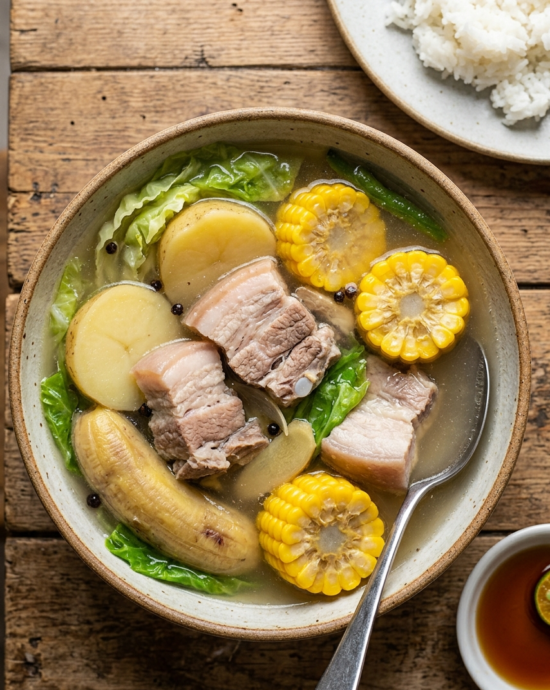
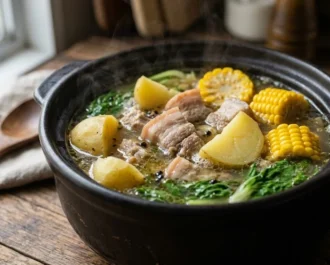
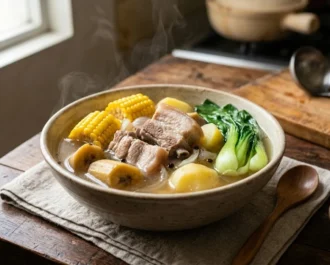
Taste the finished nilagang baboy broth one final time and make any necessary seasoning adjustments. The broth should be clear, clean, gently savory, and subtly peppery — not aggressively seasoned but deeply comforting and warming. It should taste of honest, well-made pork bone broth with the gentle presence of ginger and garlic, perfectly seasoned with fish sauce's characteristic umami depth. Ladle the soup generously into deep bowls, ensuring each bowl receives a satisfying portion of pork, potato, corn, green beans, and cabbage alongside plenty of the clear, golden broth. Serve immediately while piping hot alongside steaming white rice and a small bowl of fish sauce with calamansi — the classic Filipino soup condiment combination that allows each diner to season their individual bowl to taste at the table.
- Calories:310 kcal16%
- Energy:1,297 kJ16%
- Protein:26 g52%
- Carbohydrates:16 g6%
- Sugar:4 g4%
- Fat:16 g21%
- Salt:1 g17%
Table of Contents
What Is Nilagang Baboy?
Nilagang baboy is a Filipino pork soup made by slowly simmering pork ribs or belly in a clear, aromatic broth with potatoes, corn, cabbage, and green beans — one of the most deeply comforting, most universally beloved everyday dishes in the entire Philippine archipelago. The word nilaga derives from the Filipino verb ilaga, meaning “to boil” or “to simmer” — a simple, honest description of a dish whose entire identity is built on the gentle, patient extraction of flavor from pork bones and aromatic vegetables into a clean, golden broth of extraordinary restorative quality.
Nilagang baboy is the Filipino kitchen’s ultimate comfort food — the dish that appears on the table during cold rainy evenings, family Sunday lunches, and the quiet, ordinary days when nothing complicated is needed and simple, honest nourishment is everything. Unlike the more technically demanding or elaborate dishes in the Filipino repertoire, nilagang baboy asks only for good pork, clean water, fresh vegetables, and patience. Its beauty lies entirely in the quality of its broth — clear, golden, gently fragrant with ginger and black pepper, with a depth and richness that only the slow release of pork bone collagen and marrow can produce.
The dish is closely related to bulalo — the more intensely beefy version made with beef shank and marrow bones — and reflects the broader Southeast Asian tradition of clear, restorative bone broths that are considered as much medicine as food. In Filipino households, nilagang baboy is the soup you make when someone is unwell, when the weather turns cold, or when the family needs feeding with something honest and deeply good. It is Filipino home cooking at its most essential, most nourishing, and most enduringly beloved.
Ingredient Notes
- Pork Ribs or Pork Belly: Both cuts are traditional for nilagang baboy, and the choice depends on preference. Pork ribs — particularly the spareribs — produce a cleaner, lighter broth with a good amount of natural gelatin from the bones; pork belly produces a richer, slightly more unctuous broth from its higher fat content. Use bone-in cuts exclusively; boneless pork produces a significantly less flavorful broth without the marrow and collagen contribution from the bones.
- Cabbage: The cabbage is added last, just before serving, to preserve its natural sweetness and fresh, slightly crunchy texture. Napa cabbage (petsay) is an equally excellent substitute with a softer texture; ordinary green head cabbage is the most common choice for its sturdy leaves that hold up well in the hot broth without immediately collapsing.
- Corn on the Cob: Corn cut into rounds is one of nilagang baboy’s most beloved components — the natural sugars from the corn leach into the broth during cooking, adding a beautiful, gentle sweetness that rounds and enriches the overall flavor. Look for fresh, sweet yellow corn; avoid corn that has been stored too long, which loses sweetness and becomes starchy.
- Ginger: Fresh ginger sliced thickly is added to the broth as an aromatic rather than a primary flavor — its warming, slightly spicy presence adds a clean, restorative quality to the broth that is particularly appreciated as a digestive aid. Remove the ginger before serving as the spent slices are fibrous and not intended to be eaten.
- Fish Sauce (Patis): The primary seasoning for nilagang baboy — its deep, fermented umami saltiness adds the savory depth and complexity that distinguishes a properly seasoned nilaga from underseasoned, flat pork water. Season gradually and taste frequently; the right amount of patis makes the broth taste clean and deeply satisfying rather than merely salty.
Ingredient Suggestions
- Pechay (bok choy) — A common alternative or addition to cabbage in nilagang baboy; its delicate leaves and crisp stems add freshness and a slightly milder flavor than head cabbage.
- Eggplant (talong) — Sliced into thick rounds, eggplant added with the potatoes absorbs the pork broth deeply and becomes silky and rich, adding a pleasant textural variation.
- Radish (labanos) — Sliced and added with the potatoes, radish contributes a mild, slightly peppery note and absorbs the savory broth beautifully.
- Gabi (taro) — Quartered and added with the potatoes, taro becomes creamy and luxurious in the pork broth while simultaneously gently thickening it.
- Bone marrow pieces — Adding a few thick-cut beef marrow bones or additional pork femur bones to the pot enriches the broth to an extraordinary level of depth and silkiness.
Helpful Tips & Pro Tips
- Always blanch the pork first. Skipping the blanching step produces a murky, slightly bitter broth from the proteins and blood released during the initial cooking. The 10 minutes it takes to blanch, drain, rinse, and restart with fresh water is the single greatest quality improvement you can make to the finished soup.
- Low and slow is the only way. Nilagang baboy cooked at a vigorous boil produces tough, chewy pork and a cloudy, greasy broth. The collagen in pork ribs and belly only converts to gelatin — which creates the broth’s silky richness — at a sustained, gentle simmer. Reduce to medium-low heat after the initial boil and maintain a lazy, steady simmer throughout.
- Why is my nilagang baboy broth cloudy? Cloudy broth results from not blanching the pork before the main cook, from boiling too vigorously during the simmer, or from adding cold water during cooking. All three causes produce the same result: protein particles and fat suspended in the broth rather than clarified out of it. Blanching, gentle simmering, and adding only hot water if needed will produce a clear broth.
- Add vegetables in order of cooking time. Corn and potatoes need the longest time (12 to 15 minutes); green beans need medium time (4 to 5 minutes); cabbage needs the shortest (3 minutes). Adding them all at once produces mushy, overcooked vegetables. The sequential addition ensures every vegetable finishes cooking simultaneously.
- Season with patis at the table too. The correct amount of patis varies person to person — always serve extra fish sauce and calamansi on the side. The combination of patis and calamansi squeezed over the individual bowl at the table is a defining part of the nilagang baboy eating experience that enhances both the broth and the vegetables.
How to Serve and Store
Serve nilagang baboy piping hot in deep bowls, ensuring each serving has a generous amount of clear golden broth alongside the pork and vegetables. Place the fish sauce (patis) and calamansi on the table for diners to season their own bowls at the table — this individual seasoning ritual is an essential part of the experience. Serve with abundant steaming white rice; the rice soaks up the beautiful broth and makes the meal complete.
Store leftover nilagang baboy with the broth and solids together in an airtight container in the refrigerator for up to 3 days. The broth gels overnight from the natural collagen — this is a sign of excellent quality and is completely normal. Reheat gently on the stovetop over low heat; add fresh cabbage and green beans when reheating to replace vegetables that have softened excessively during storage. Freeze the broth and pork separately from the vegetables for up to 2 months.
Substitutions
- Pork ribs → Beef short ribs or bone-in chicken thighs — Both produce excellent clear bone broths with different flavor profiles; reduce cooking time to 40 minutes for chicken.
- Fish sauce → Soy sauce — A gluten-free, comparable seasoning substitute; start with slightly less as soy sauce can be more assertive in flavor than patis.
- Cabbage → Napa cabbage (petsay) — A softer, more delicate substitute that cooks even faster; add in the final 2 minutes only.
- Green beans → Chayote (sayote) slices — A budget-friendly alternative with a mild flavor and firm texture that holds up well in the simmering broth.
- Corn on the cob → Sweet potato — A starchy, naturally sweet substitute that contributes comparable sweetness to the broth without the corn’s texture.
- Pork → Firm tofu + vegetable broth — A vegan adaptation; simmer tofu in seasoned vegetable broth with the same vegetables for a plant-based nilaga.
Suggested Recipes
- Bulalo — The beef version of nilagang, made with beef shank and marrow bones; shares the same clear-broth simmering technique with a deeper, richer flavor profile.
- Sinigang na Baboy — The sour pork soup sibling of nilagang, using tamarind to add a bright, sharp acidity to a similar pork and vegetable format.
- Pork Adobo — The most classic of all Filipino pork dishes; a natural companion recipe that showcases pork belly in a completely different cooking tradition.
- Chicken Tinola — Shares nilagang baboy’s philosophy of clean, clear, ginger-forward broth with fresh vegetables — the chicken counterpart to this beloved pork soup.