
- Step 1: Blanch the Pork

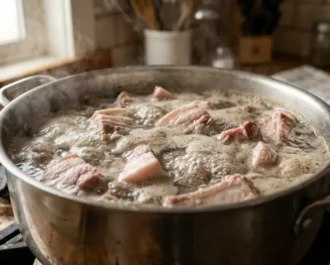
Place the pork pieces in a large pot and cover completely with cold water. Bring to a vigorous boil over high heat and allow the pork to boil for 3 to 4 minutes — the boiling will produce a significant amount of gray-brown foam and impurities rising rapidly to the surface. This blanching step is essential for sinigang na baboy: the foam consists of proteins and blood from the pork that, if left in the pot, produce a murky, bitter broth that masks the tamarind's clean, bright sourness. Drain the pork completely, discarding the blanching water entirely, and rinse each piece thoroughly under cold running water to remove any remaining surface impurities. Clean the pot before refilling it — this clean-start approach is the foundational step for achieving sinigang's characteristic beautifully clear broth.
- Step 2: Prepare the Tamarind Broth
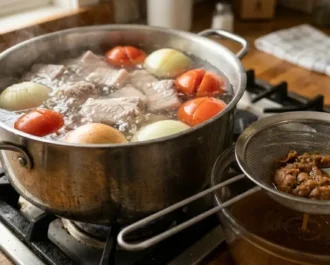
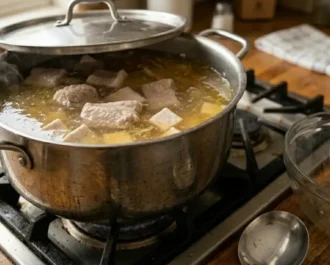
If using fresh tamarind pods, break them open, remove the seeds, and place the pulp in a bowl with 1 cup of warm water. Work the pulp with your fingers for 2 to 3 minutes, pressing and squeezing to dissolve it fully into the water. Strain through a fine mesh sieve, pressing firmly on the solids to extract every drop. The fresh tamarind liquid should be a deep amber-brown with a clean, intensely sour, fruity fragrance. If using instant sinigang mix, set the packet aside for later. In the clean pot, combine the blanched pork, 2 liters of fresh water, quartered tomatoes, and quartered onion. Bring to a full boil over high heat, then immediately reduce to a steady simmer over medium-low heat. The tomatoes cook down during the simmer, contributing their natural sweetness and a secondary mild acidity that rounds the tamarind's primary sourness.
- Step 3: Simmer the Pork Until Tender
With the broth simmering gently, skim off any remaining foam that rises during the first 5 minutes of the main cook for a clear broth. Add the fish sauce and season with a pinch of salt. Partially cover the pot and allow the pork to simmer over medium-low heat for 40 to 45 minutes, until the meat is completely fork-tender and nearly falling from the bone. The low, slow simmer is non-negotiable — too high a heat produces tough, chewy pork and a cloudy broth simultaneously, two failures that cannot be corrected after the fact. Check the liquid level periodically and add hot water in small amounts if needed to maintain the level. The tomatoes and onion will have largely dissolved into the broth by this stage, leaving a slightly golden, aromatic liquid. Add the taro (gabi) in the final 15 minutes of pork simmering, as it takes the longest of all the vegetables.
- Step 4: Add the Tamarind
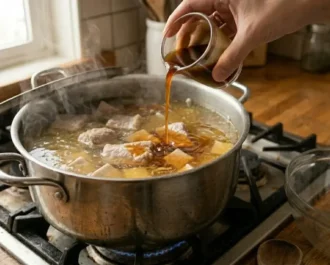
Once the pork is tender and the taro is beginning to soften, pour the prepared tamarind liquid into the broth and stir to incorporate. If using sinigang mix, add it now and stir until dissolved. The broth transforms immediately and dramatically — its color shifts from golden to a deep, clear amber, and the clean, bright sourness of tamarind fills the kitchen. Taste the broth carefully for sourness level and adjust by adding more tamarind liquid if a more assertive result is preferred. The sour level of sinigang na baboy is a deeply personal preference — some families prefer a gentle, background sourness while others demand the broth to be bracingly, boldly tart. Bring the broth back to a simmer after adding the tamarind and adjust the seasoning with additional fish sauce, salt, or a small pinch of sugar if the sourness needs balancing.
- Step 5: Add Vegetables in Sequence
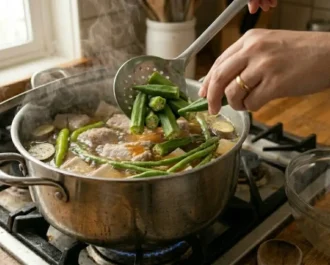
Add the daikon radish rounds and whole long green chilies first — the radish requires 6 to 8 minutes to cook through, and the chilies perfume the broth gently during this time without becoming overly sharp or splitting. After 3 minutes, add the eggplant rounds and sitaw pieces — both need 4 to 5 minutes at a simmer to become tender while retaining their structural integrity. Add the okra in the final 3 minutes — its natural mucilage slightly thickens the broth and adds a pleasant mild flavor that blends seamlessly with the tamarind. The staggered vegetable addition ensures that every component reaches its ideal tenderness simultaneously. Taste the broth at each addition stage, adjusting the sourness and salt as needed. Each vegetable releases its own flavors into the broth, subtly developing and deepening it with every addition.
- Step 6: Add Greens and Serve
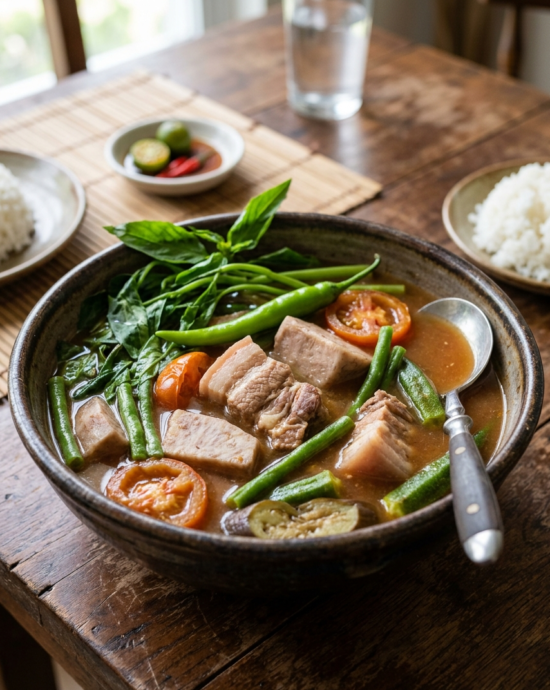
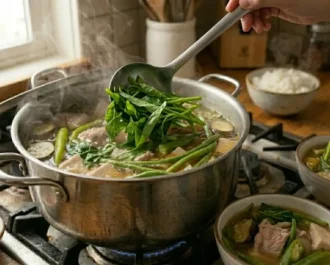
Add the kangkong or spinach to the simmering broth in the final 60 seconds of cooking, stirring gently until the leaves just wilt and turn brilliantly green. Kangkong's slightly earthy flavor provides a clean, fresh counterpoint to the sharpness of the tamarind broth and adds vibrant color. Remove from heat immediately after the greens wilt — a single minute of overcooking turns them dull green and slightly bitter. Taste the finished sinigang one last time and make any final seasoning adjustments. Ladle into deep bowls, ensuring each bowl receives abundant broth alongside pork, taro, and all the vegetables. Serve immediately while piping hot alongside steaming white rice with fish sauce and calamansi on the side for individual seasoning.
- Calories:320 kcal16%
- Energy:1,339 kJ16%
- Protein:26 g52%
- Carbohydrates:14 g5%
- Sugar:4 g4%
- Fat:18 g23%
- Salt:1.1 g18%
Table of Contents
What Is Sinigang na Baboy?
Sinigang na baboy is a Filipino pork sour soup made by simmering pork ribs or belly in a tamarind-based broth with taro, eggplant, sitaw, kangkong, and an abundance of seasonal vegetables — one of the Philippines’ most beloved, most frequently eaten, and most emotionally resonant national dishes. The word sinigang describes the cooking method — from the Tagalog verb sigang, meaning “to stew in a sour broth” — and encompasses an entire family of Filipino sour soups that use various souring agents including tamarind (sampalok), guava (bayabas), calamansi, bilimbi (kamias), or green mango. Of all the sinigang variations, sinigang na baboy — made with pork — is by far the most common, most universally loved, and most deeply embedded in the Filipino family cooking tradition.
Sinigang na baboy’s flavor profile is built on one defining principle: the clean, bracing, palate-awakening sourness of tamarind. Unlike Western sour soups that use vinegar or fermented dairy products, tamarind’s sourness is uniquely fruity, slightly sweet, and deeply aromatic — a three-dimensional acidity that stimulates the appetite, refreshes the palate, and pairs with the rich, gelatinous pork broth in a way no other souring agent can match. The vegetables in sinigang are not merely accompaniments — they each contribute distinct flavors and textures that build into a broth of remarkable complexity.
In 2021, sinigang na baboy made history when Taste Atlas ranked it the world’s best vegetable soup, validating internationally what Filipinos have always known: this humble, honest, deeply nourishing soup is among the greatest expressions of soup craft anywhere on earth.
Ingredient Notes
- Pork Ribs: Bone-in pork ribs are the most popular cut for sinigang na baboy — the bones contribute natural gelatin and collagen to the broth during the long simmer, giving the finished soup a silky richness and subtle body that boneless pork cannot provide. Spareribs are preferred over back ribs for more meat coverage; choose ribs with generous meat still attached to the bones.
- Fresh Tamarind Pods: The superior choice for sinigang’s souring agent — fresh tamarind produces a brighter, more aromatic, more dimensionally complex sourness than instant sinigang mix. Look for firm, plump pods with intact outer shells; cracked or moldy pods should be avoided. If fresh tamarind is unavailable, tamarind paste dissolved in water is a better substitute than instant mix.
- Taro (Gabi): Taro serves a unique role in sinigang that no other vegetable replicates — as it simmers in the broth, it releases its natural starch and slightly thickens and enriches the broth to a silkier consistency. It also absorbs the sour broth deeply, developing a mellow, earthy, slightly sweet flavor. Peel taro wearing gloves if possible — raw taro can irritate sensitive skin.
- Sitaw (Yard-Long Beans): The quintessential sinigang vegetable with a mild, slightly grassy flavor and a satisfying snap when properly cooked. Cut uniformly for even cooking; add precisely timed so they finish tender-crisp rather than limp and overcooked.
- Kangkong (Water Spinach): The traditional leafy green that defines sinigang’s finishing touch — its slightly earthy, hollow-stemmed character absorbs the sour broth beautifully and wilts with a pleasant texture that spinach cannot quite replicate. Use only the tender leaves and young stems; the older, thicker stems are too fibrous.
Ingredient Suggestions
- Green mango (manggang hilaw) — A regional souring alternative to tamarind that produces a sharper, more astringent sourness with a distinctive fruity character; a beloved Ilocano variation.
- Guava (bayabas) — Another traditional Filipino souring agent that produces a softer, more fragrant, less sharply acidic broth than tamarind; use ripe guavas cut in half and simmered with the pork.
- Pork belly instead of ribs — A fattier, richer alternative that renders more fat into the broth and produces a more unctuous, more indulgent soup; use the same technique with a slightly shorter simmer time.
- Green papaya — Wedges of unripe papaya added with the taro cook to a pleasantly firm, mildly bitter texture that pairs beautifully with tamarind’s sourness.
- Banana blossoms (puso ng saging) — Dried, soaked banana blossoms added with the firmer vegetables absorb the tamarind broth and develop a pleasantly chewy, deeply flavored quality unique to Visayan versions.
Helpful Tips & Pro Tips
- Blanching is the most important first step. Skipping the blanching step produces a murky, slightly bitter broth that cannot be corrected later. The 10-minute blanching investment produces the beautifully clear, clean amber broth that makes properly made sinigang so visually beautiful and so clean on the palate. Never skip it.
- Add tamarind after the pork is fully tender. Adding the tamarind at the beginning of cooking reduces the pork’s ability to tenderize — the acid interferes with collagen breakdown. Always add the souring agent after the pork is nearly or fully tender, then simmer briefly to allow the flavors to integrate.
- Why is my sinigang na baboy not sour enough? Insufficient tamarind is the most common sinigang problem. The sourness should be assertive and bracing — if you need to add more, dissolve additional tamarind paste in warm water and add incrementally, tasting between each addition. Sinigang should make the palate pucker pleasurably, not merely hint at sourness.
- Season more assertively than feels comfortable. Fish sauce and salt are significantly muted by the large volume of liquid in sinigang. Season the broth more boldly than instinct suggests and taste repeatedly — the finished broth should be distinctly savory-sour, not merely tinted water with vegetables floating in it.
- Time the vegetables with discipline. Vegetable sequence and timing are the difference between a beautiful sinigang and a pot of mush. Use a timer for each addition — taro and radish first, sitaw and eggplant next, okra third, kangkong last. Each vegetable reaching its ideal texture simultaneously is the mark of a well-executed sinigang.
How to Serve and Store
Serve sinigang na baboy piping hot in deep bowls, ensuring each serving receives generous broth alongside pork and all vegetable types. Place fish sauce (patis) and calamansi on the table for individual seasoning — this personalization ritual is a beloved part of the sinigang eating experience. Serve with abundant steaming white rice; the sour broth and rice is one of Filipino cooking’s greatest simple pleasures.
Store leftover sinigang in an airtight container in the refrigerator for up to 3 days. The broth’s tamarind sourness mellow slightly overnight, which many Filipino cooks actually prefer. Reheat gently on the stovetop over medium-low heat; avoid vigorous boiling, which dulls the tamarind’s brightness. Store the broth and solids together but note that vegetables soften further overnight. Do not freeze — the tamarind broth and cooked vegetables both degrade significantly upon thawing.
Substitutions
- Fresh tamarind → Sinigang sa sampalok mix (1 packet) — The most convenient substitute; adjust quantity to taste as packet concentration varies by brand.
- Pork ribs → Pork shoulder, bone-in — A more affordable, readily available substitute; produces a slightly less gelatinous but equally flavorful broth.
- Kangkong → Spinach or watercress — Both are mild, widely available substitutes; add in the final 60 seconds as kangkong.
- Sitaw → Green beans — A budget-friendly substitute with comparable mild flavor and tender-crisp texture; use the same quantity and cooking time.
- Fish sauce → Soy sauce — A gluten-free, vegetarian-friendly substitute; use slightly less as soy sauce can be more assertive in flavor.
- Pork → Bangus (milkfish) or shrimp — Classic protein alternatives that produce equally authentic sinigang in the sinigang na isda and sinigang na hipon traditions respectively.
Suggested Recipes
- Nilagang Baboy — The clear-broth sibling of sinigang; shares the same pork and vegetable philosophy without the tamarind sourness, offering a contrasting but equally comforting result.
- Sinigang na Hipon — The shrimp version of Filipino tamarind sour soup; lighter, quicker to prepare, and showcasing the same tamarind broth in a seafood context.
- Chicken Tinola — Another beloved Filipino pork-free clear soup that shares sinigang’s nourishing, restorative character using ginger as its primary aromatic rather than tamarind.
- Sinampalukang Manok — The chicken tamarind soup that uses the same souring technique as sinigang but applies it to chicken with a distinct sautéed-tomato base that deepens the broth’s flavor profile.