
- Step 1: Prepare the Tamarind Broth
If using fresh tamarind pods, place them in a pot with two cups of water and boil for 10 minutes until soft. Mash the cooked tamarind and strain the pulp through a fine sieve, pressing to extract all the sour tamarind liquid. Discard the seeds and fibrous material. Set the tamarind extract aside. If using packaged sinigang mix, it will be added later during cooking. In a large pot, bring 1.5 liters of water to a boil. Add the quartered onions and tomatoes and cook for five minutes — the tomatoes will dissolve partially into the broth, adding a subtle natural sweetness and body that balances the sour tamarind and creates the characteristic rich, full-bodied sinigang broth base rather than a thin, one-dimensional sour soup.
- Step 2: Add Tamarind and Season
Add the tamarind extract or sinigang mix packet to the simmering broth. Stir to incorporate and allow the soup to return to a simmer. Taste the broth and assess its sourness — sinigang should be pleasantly, assertively sour without being overwhelming. Add more tamarind extract for more sourness or dilute with additional water if too sour. Add the fish sauce to season, tasting as you go — the correct salt level is when the sourness and saltiness are in pleasant balance, with neither overwhelming the other. The broth at this stage should be a cloudy, tomato-tinged, beautifully sour-smelling soup that makes the mouth water in anticipation of the finished dish.
- Step 3: Add Vegetables
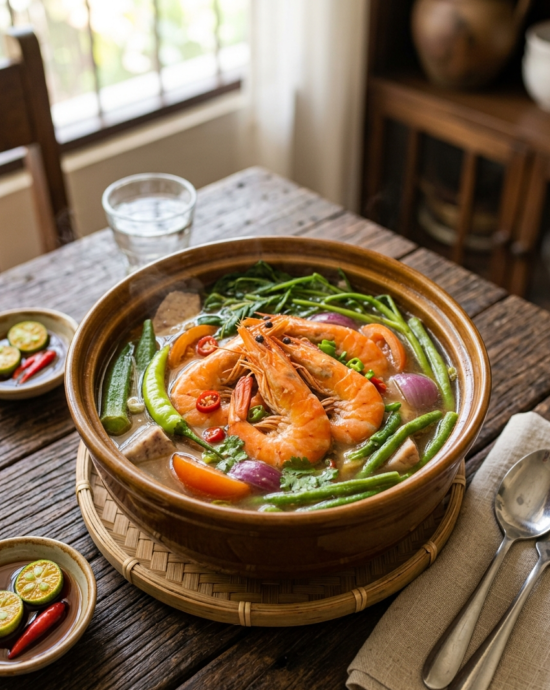
Add the eggplant chunks and sitaw to the simmering sinigang broth. Cook for three to four minutes until the vegetables begin to soften. Add the whole siling haba chilies. The eggplant absorbs the sour broth magnificently, becoming tender, slightly sweet, and intensely flavored, while the string beans retain a pleasant bite. These vegetables are the traditional companions to shrimp sinigang and their combination of textures — soft eggplant, slightly firm beans, and crunchy chili — creates the layered mouthfeel that makes a great bowl of sinigang satisfying on multiple levels. Do not cook the vegetables past the point of pleasant tenderness into mushiness.
- Step 4: Cook the Shrimp
Add the cleaned, shell-on shrimp to the simmering sinigang broth. Cook for three to four minutes, just until the shrimp shells turn uniformly pink-orange and the flesh is opaque and firm throughout. Shrimp cooks very quickly in the hot broth — the moment all the shells are vibrantly colored, the shrimp are done. Overcooked shrimp become rubbery and tough within minutes of their ideal doneness window passing. The shrimp's natural sweetness counterbalances the broth's tartness in a particularly harmonious way that makes sinigang na hipon arguably more elegant and refined in flavor than the pork version.
- Step 5: Add Kangkong and Serve
Add the kangkong leaves to the pot and stir gently to submerge them in the hot broth. They will wilt within one to two minutes. Taste the final soup and adjust seasoning — add fish sauce for saltiness or a small amount of fresh tamarind or squeeze of calamansi for additional brightness if needed. Serve immediately in large bowls with steamed white rice on the side. The ideal sinigang experience involves ladling the sour, vegetable-rich broth over the rice and eating the shrimp and vegetables together with the broth-soaked rice for maximum flavor integration.
- Calories:160 kcal8%
- Protein:22 g44%
- Carbohydrates:12 g4%
- Sugar:3 g3%
- Fat:2 g3%
- Salt (Sodium):640 mg28%
- Energy:669 kJ8%
Table of Contents
What Is Sinigang na Hipon?
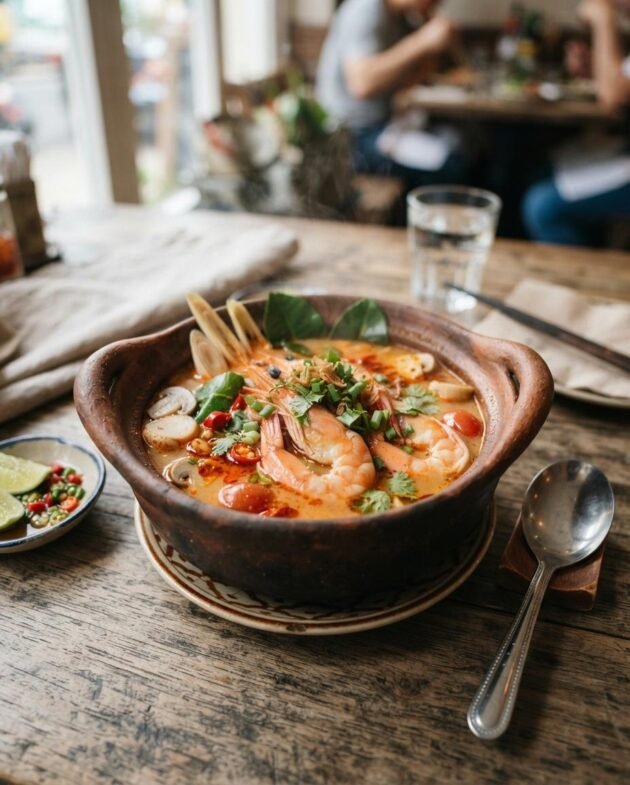
Sinigang na Hipon is a classic Filipino sour soup made by simmering large shrimp in a tamarind-soured broth with tomatoes, onions, and a selection of vegetables including eggplant, string beans, and kangkong water spinach, producing a deeply satisfying, tangy, naturally savory soup that is one of the most beloved dishes in the Philippine national cuisine. It is widely considered the shrimp variation of the national dish of the Philippines.
Sinigang is arguably the most quintessentially Filipino dish in existence — its sour broth made from native souring agents including tamarind, guava, kamias (bilimbi), or batwan distinguishes it entirely from the culinary traditions of neighboring Southeast Asian countries and gives Filipino cooking one of its most definitive, internationally recognizable flavor signatures. The dish predates Spanish colonization and represents an unbroken line of indigenous Filipino culinary tradition stretching back centuries.
Among the many protein versions of sinigang — pork (the most common), fish, beef, and chicken — the shrimp version is considered by many to be the most refined and elegant. The natural sweetness of fresh shrimp in particular creates a counterpoint to the broth’s assertive sourness that achieves a balance of extraordinary subtlety and appeal.
Sinigang na Hipon is also one of the healthiest major Filipino dishes — its broth is low in fat and calories while being rich in vitamins from the vegetables, minerals from the seafood, and the beneficial antioxidants in tamarind — making it as good for the body as it is deeply satisfying for the soul.
Ingredient Notes
- Shrimp (Hipon) Fresh, large shrimp with shells intact produce the most flavorful sinigang broth — the shells release flavor compounds into the soup during cooking that create additional depth. Shell-on cooking also protects the delicate flesh from the direct heat of the acidic broth, reducing the risk of overcooking.
- Tamarind (Sampalok) Fresh tamarind pods produce the most complex, authentic sinigang broth flavor — bright, clean, and fruit-forward sour. Packaged sinigang sa sampalok mix is an excellent and convenient substitute that produces very consistent results and is the preferred method for everyday home cooking.
Ingredient Suggestions
- Radish (Labanos) — Adding sliced white radish to the broth produces a pleasantly bitter, crunchy vegetable element that absorbs the sour broth beautifully.
- Okra — Adding whole okra pods during the vegetable cooking stage adds a characteristic mild, slightly viscous quality that some cooks love in their sinigang broth.
- Gabi (Taro) — Cubed taro root cooked until tender thickens the broth slightly and adds a starchy, creamy element popular in Visayan sinigang variations.
Helpful Tips & Pro Tips
- Season the sinigang broth to the correct sourness level before adding the shrimp — adjusting sourness while the shrimp is in the broth risks overcooking the delicate crustacean while you perfect the flavor balance.
- Do not boil the sinigang vigorously once the shrimp is added — a gentle simmer cooks the shrimp evenly and preserves the broth’s clarity.
- Why is my sinigang broth flat and not sour enough? The tamarind quantity needs to be increased, or the tamarind was not properly extracted. Taste and add tamarind extract in small increments until the assertive sourness characteristic of excellent sinigang is achieved.
How to Serve and Store
Sinigang na Hipon should be served immediately while the broth is hot and the shrimp are at their most tender. Serve in deep bowls with steamed rice. Leftover sinigang broth improves overnight; store separately from the shrimp and vegetables for best results. Reheat broth separately, then add fresh shrimp for the best quality reheated meal. Total storage up to 2 days refrigerated.
Substitutions
- Tamarind → Guava — Unripe guava is a traditional sinigang souring agent that produces a slightly less sour, more fruity broth loved in many Filipino regions.
- Shrimp → Fish Fillets — White fish fillets cut into portions cook quickly in the sour broth and produce an equally delicious Sinigang na Isda.
- Kangkong → Baby Spinach — A widely available substitute with similar wilting behavior in hot broth.
Suggested Recipes
- Sinigang na Lapu-Lapu — The premium fish version of sinigang using grouper that showcases the sour broth technique with a more delicate, flavorful fish.
- Halabos na Hipon — The pure, steamed shrimp preparation that highlights shrimp’s natural sweetness in complete contrast to sinigang’s assertive sourness.
- Butter Garlic Shrimp — The rich, buttery shrimp dish that uses the same hipon in a dramatically richer, saucier preparation.
Frequently Asked Questions

Jeff Smith
"Cooking is the intersection of history, science, and emotion."
For me, the kitchen has always been a laboratory of culture. With a background deeply rooted in digital strategy and precision, I approach the culinary arts with the same rigor I apply to the digital landscape—analyzing flavors, perfecting techniques, and documenting the nuance that makes Filipino cuisine truly world-class.
Findme Recipe was born from a desire to bridge the gap between traditional heritage and the modern home cook. Whether it is mastering the perfect balance of acidity in a classic Adobo or simplifying complex regional dishes for everyday kitchens, my mission is to preserve our culinary identity through accessible, data-backed, and delicious content.
I am not just building a database; I am cultivating a community where every Filipino kitchen feels empowered, every ingredient is celebrated, and every family heirloom recipe finds a place to thrive.
Join me as we translate the soul of our islands into recipes for the next generation.