
- Step 1: Clean and Purge the Snails
Proper cleaning of fresh kohol (golden apple snails or freshwater snails) is critically important both for safety and flavor. Place the live snails in a large basin of clean fresh water and allow them to purge for at least two to four hours, changing the water every hour — this process causes the snails to expel mud, sand, and intestinal waste from their digestive systems, which dramatically improves their flavor and removes gritty textures. After purging, scrub each snail shell vigorously under running water with a stiff brush to remove any algae, dirt, or debris from the exterior. Using kitchen scissors, clip off the pointed tip of each snail shell — this allows the snail meat to release from the shell more easily after cooking and enables the sauce to penetrate inside.
- Step 2: Blanch and Remove Inedible Parts
Bring a large pot of salted water to a boil. Add the cleaned snails and blanch for three to five minutes. Remove the snails and allow them to cool slightly. Using a toothpick, pin, or snail fork, extract the snail meat from the shells — insert the tool into the opening and twist gently to pull the meat out whole. Pull off and discard the round, hard operculum (the circular trap door that covers the shell opening) — this is inedible. Also identify and remove the dark, intestinal portion at the tail end of the snail body if you prefer a cleaner flavor, leaving only the firm, meaty foot and body portion. This cleaning step is what separates properly prepared Ginataang Kohol from a gritty, bitter-tasting version.
- Step 3: Sauté Aromatics with Bagoong
Heat two tablespoons of cooking oil in a large wok over medium heat. Add the sliced ginger and cook for 30 seconds until fragrant. Add the minced garlic and sliced onion and sauté for two to three minutes until softened. Add the bagoong alamang to the aromatics and cook for two minutes, stirring constantly, to mellow its fermented intensity — bagoong is the essential seasoning partner for kohol in Filipino cooking, the saltiness and oceanic brininess of the fermented shrimp paste complementing the mild, slightly mineral flavor of the freshwater snail meat in a combination that is deeply traditional and delicious. Add the sliced siling haba and stir everything together. The aroma at this stage should be powerfully savory and enticing.
- Step 4: Add Coconut Milk and Snails
Pour the coconut milk into the wok and bring to a gentle simmer. Add the extracted snail meat (or, if leaving them in the shell, add the shell-on snails directly). Stir to coat everything in the coconut milk. Cover the wok and simmer over medium-low heat for 15 to 18 minutes, stirring occasionally, until the snail meat is fully cooked and tender throughout. The snail meat is done when it is firm but yields to gentle pressure — still slightly springy, not rubbery or hard. The coconut milk will absorb the mild, slightly earthy flavor of the kohol during this simmering period, and the bagoong infused base will continue seasoning the liquid from underneath. The sauce at this stage should smell complex and deeply satisfying.
- Step 5: Add Coconut Cream and Chilies
Pour in the coconut cream and add the siling labuyo for additional heat if desired. Stir gently to combine. Cook uncovered over medium heat for five minutes more, stirring regularly, until the sauce thickens to a rich, creamy consistency with visible coconut fat pooling around the solids. This final coconut cream addition provides the richness and body that transforms the coconut milk base into a fully developed ginataan sauce. Taste and adjust — add salt if needed, more bagoong for depth, or more chili for heat. The finished sauce should be creamy, deeply savory with a background brininess, mildly spicy from the chilies, and carry the subtle, distinctive earthiness of the cooked kohol throughout.
- Step 6: Add Malunggay and Finish
Add the fresh malunggay (moringa) leaves to the simmering ginataang sauce and stir gently to wilt them into the dish. Malunggay leaves are traditional in many Filipino ginataan preparations and add a pleasant mild bitterness, brilliant green color, and extraordinary nutritional density — moringa is one of the most nutrient-rich leafy vegetables in the world, packed with protein, vitamins, and minerals. Cook for just two to three minutes after adding the malunggay — prolonged cooking destroys the nutritional content and turns the leaves from vibrant green to dull olive. Taste one final time and adjust all seasonings. Remove the whole ginger slices before serving.
- Step 7: Serve and Eat
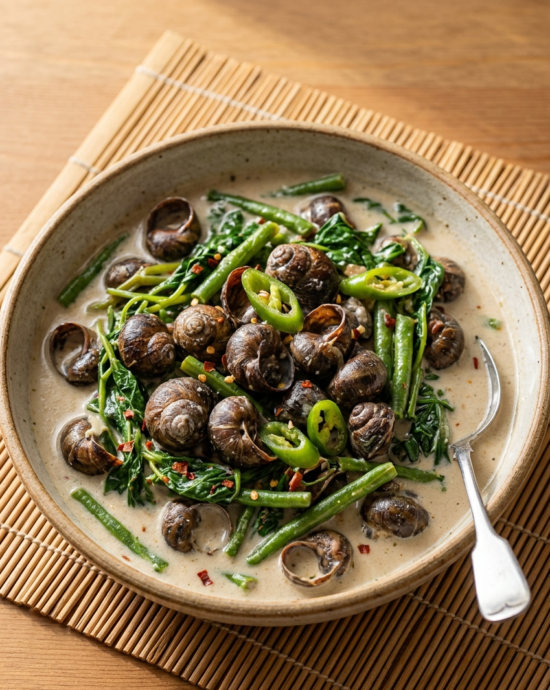
Transfer the Ginataang Kohol to a wide serving bowl, ensuring the snails (whether shell-on or removed) are evenly distributed through the rich coconut sauce. If serving shell-on, provide toothpicks or snail forks for extracting the meat at the table, and small bowls for discarded shells. Serve immediately alongside steamed white rice. Ginataang Kohol is a dish deeply embedded in Filipino rural culture — it is traditionally a dish of the harvest season, made when golden apple snails are most abundant in rice paddies. For urban Filipinos, it evokes powerful nostalgic memories of provincial childhood. The combination of coconut milk, bagoong, and malunggay with freshwater snail is quintessentially Filipino and impossible to recreate with any other ingredients.
- Calories:240 kcal12%
- Protein:18 g36%
- Carbohydrates:9 g3%
- Sugar:3 g3%
- Fat:15 g19%
- Salt (Sodium):520 mg23%
- Energy:1004 kJ12%
Table of Contents
What Is Ginataang Kohol?
Ginataang Kohol is a traditional Filipino dish made by cooking freshwater snails (kohol) in coconut milk with bagoong alamang, ginger, garlic, chilies, and malunggay leaves, producing a rich, briny, mildly spiced ginataan sauce that showcases one of the most culturally specific and regionally beloved ingredients in Philippine rural cooking. It is a dish with deep roots in the agricultural communities of Luzon and the Visayas.
Kohol — the golden apple snail (Pomacea canaliculata) — is a freshwater snail found abundantly in Philippine rice paddies, irrigation canals, and rivers. While the golden apple snail is simultaneously considered a serious agricultural pest in Philippine rice farming — it destroys young rice plants and costs farmers significant losses annually — it is also regarded as a food resource and prepared with enthusiasm in many rural communities where it is collected from the paddies and turned into dishes like Ginataang Kohol.
This dual identity of kohol as both pest and food reflects a broader Filipino cultural philosophy of resourcefulness and the ability to find culinary value in whatever the environment provides. The preparation of Ginataang Kohol transforms what is essentially a weed-equivalent in rice agriculture into a genuinely delicious, protein-rich dish through the application of the same coconut milk and bagoong cooking wisdom that Filipino cooks have applied to countless other ingredients.
For food anthropologists and those interested in the intersection of agriculture, ecology, and cuisine, Ginataang Kohol is a fascinating dish that embodies the complex relationship between Filipino rural communities and their rice paddy ecosystems — a relationship that produces not only rice but a rich tradition of foraging-based cooking.
Ingredient Notes
- Kohol (Golden Apple Snails) Fresh kohol must be purged thoroughly before cooking to eliminate grit and digestive waste — this step separates well-made Ginataang Kohol from a gritty, unpleasant version. Choose live snails with intact shells and seal their openings tightly when tapped — this indicates they are alive and safe to eat.
- Malunggay (Moringa) Malunggay leaves are the traditional vegetable addition to Ginataang Kohol and add nutritional density, mild pleasant bitterness, and vibrant color to the finished dish. Fresh malunggay is universally available at Philippine markets; frozen or dried moringa leaves can substitute in smaller quantities.
Ingredient Suggestions
- Sitaw (String Beans) — Adding cut string beans alongside the malunggay provides textural variety and additional vegetables for a more complete one-pot meal.
- Squash (Kalabasa) — Small cubes of squash cooked in the coconut milk add natural sweetness and body to the sauce.
- Dried Shrimp (Hibe) — Adding a small handful of dried shrimp to the aromatics amplifies the oceanic umami of the bagoong.
Helpful Tips & Pro Tips
- The purging step for fresh kohol is non-negotiable — insufficiently purged snails taste gritty and muddy. Four hours of purging with hourly water changes produces the cleanest, most pleasant flavor.
- Clipping the tip of each snail shell before cooking ensures the coconut sauce can flow inside the shell during simmering, seasoning the meat from all sides.
- Never add malunggay leaves early in the cooking process — add them in the final two to three minutes only to preserve their bright green color, nutritional value, and fresh flavor.
How to Serve and Store
Ginataang Kohol is best served immediately while the coconut sauce is rich and creamy and the malunggay leaves are still vibrant green. Serve with steamed rice and extra bagoong on the side for additional seasoning. Leftovers keep in the refrigerator for up to 2 days but the malunggay will discolor; reheat gently on the stovetop. Freezing is not recommended as snail texture degrades significantly.
Substitutions
- Kohol → Clams (Halaan) — Small clams can substitute for kohol with a similar briny, oceanic character that responds well to the coconut-bagoong sauce.
- Malunggay → Spinach — Fresh spinach wilted into the sauce at the end provides similar leafy green character with wider availability outside the Philippines.
- Bagoong Alamang → Fish Sauce — Use 1.5 teaspoons as a liquid substitute providing similar brininess without the shrimp paste texture.
Suggested Recipes
- Ginataang Alimango — A prestige coconut milk dish using crab that showcases the same ginataan technique at a more celebratory level.
- Ginataang Tulingan — A coconut milk fish dish that applies identical technique to a more everyday protein for accessible weeknight cooking.
- Bicol Express — The iconic spicy coconut milk pork dish that shares Ginataang Kohol’s Bicolano-influenced coconut-chili-bagoong flavor philosophy.
Frequently Asked Questions

Jeff Smith
"Cooking is the intersection of history, science, and emotion."
For me, the kitchen has always been a laboratory of culture. With a background deeply rooted in digital strategy and precision, I approach the culinary arts with the same rigor I apply to the digital landscape—analyzing flavors, perfecting techniques, and documenting the nuance that makes Filipino cuisine truly world-class.
Findme Recipe was born from a desire to bridge the gap between traditional heritage and the modern home cook. Whether it is mastering the perfect balance of acidity in a classic Adobo or simplifying complex regional dishes for everyday kitchens, my mission is to preserve our culinary identity through accessible, data-backed, and delicious content.
I am not just building a database; I am cultivating a community where every Filipino kitchen feels empowered, every ingredient is celebrated, and every family heirloom recipe finds a place to thrive.
Join me as we translate the soul of our islands into recipes for the next generation.