
- Step 1. Fry the curry paste
Heat the vegetable oil in a wide pan over medium heat, then add the panaeng curry paste. Stir-fry continuously for 3 to 4 minutes until the paste becomes deeply fragrant and slightly darker in color. This toasting step releases the essential oils from the dried chilies and spices within the paste, building the base flavor that defines panaeng's nutty, aromatic profile. Keep stirring to prevent the paste from sticking or scorching against the bottom of the pan.
- Step 2. Break the curry with coconut cream
Spoon in the thick cream from the top of one coconut milk can and stir it into the fried paste. Continue cooking over medium heat for 4 to 5 minutes, until the oil visibly separates and pools at the surface, a sign the curry base has properly 'broken.' This technique concentrates the flavor and color of the curry before any additional liquid dilutes its intensity, forming the rich, deep-orange foundation panaeng is known for.
- Step 3. Add the beef
Add the thinly sliced beef sirloin to the pan, stirring to coat each piece in the fragrant curry base. Cook for 4 to 5 minutes, just until the beef changes color and begins to firm up slightly. Searing the meat directly in the concentrated paste allows it to absorb maximum flavor before the sauce is loosened with more coconut milk, resulting in deeply seasoned, tender beef throughout the finished dish.
- Step 4. Add ground peanuts and remaining coconut milk
Stir in the ground roasted peanuts along with the remaining coconut milk and sliced kaffir lime leaves. Mix thoroughly to combine, then reduce the heat to a gentle simmer. Cook for 8 to 10 minutes, stirring occasionally, until the sauce thickens noticeably and clings to the beef. The ground peanuts are essential here, giving panaeng its characteristic thick, nutty texture that distinguishes it from thinner Thai curries.
- Step 5. Season the curry
Stir in the fish sauce and palm sugar, tasting as you go to find the right balance of salty, sweet, and nutty richness. Panaeng should taste slightly sweeter and milder in heat compared to red curry, with the peanuts softening the chili's sharp edge. Continue simmering for 2 to 3 minutes after seasoning to let the flavors fully incorporate before removing the pan from heat.
- Step 6. Garnish and serve
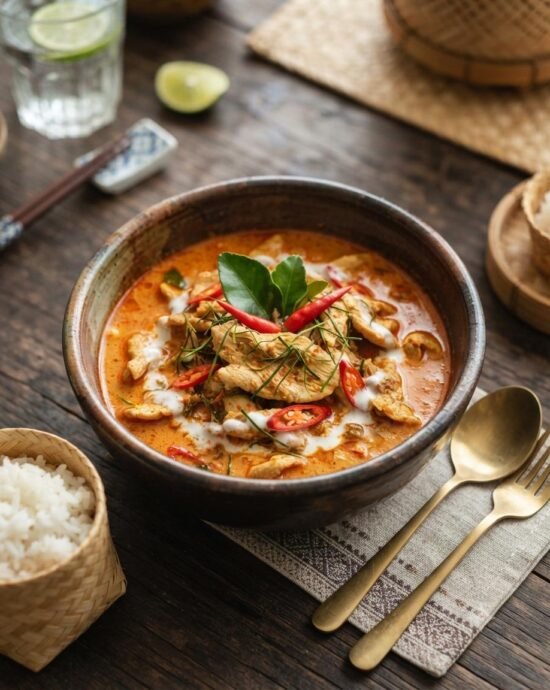
Spoon the curry onto a serving plate or shallow bowl, drizzling a swirl of coconut cream across the top for a glossy, restaurant-style finish. Scatter sliced red chili and extra shredded kaffir lime leaves over the surface for color and aroma. Serve immediately with steamed jasmine rice. The thick sauce should coat the rice generously, delivering rich, nutty, and aromatic flavor in every bite.
- Calories:420 kcal21%
- Protein:26 g52%
- Carbohydrates:10 g3%
- Sugar:5 g6%
- Energy:1757 kJ21%
- Salt:1.5 g25%
- Fat:31 g44%
Table of Contents
What Is Panaeng Curry?
Panaeng Curry is a thick, creamy Thai curry distinguished by ground roasted peanuts blended into its rich coconut sauce, creating a flavor profile that’s nuttier and milder than its red curry cousin. The dish likely traces its name and influence to Penang, Malaysia, reflecting the historical exchange of culinary ideas across Southeast Asia, though it has firmly evolved into a distinctly Thai preparation over generations. Unlike soupier curries, panaeng is intentionally cooked down until thick enough to cling to the meat rather than pool loosely in the bowl, a texture achieved by simmering uncovered and incorporating ground peanuts directly into the sauce. Beef is the most traditional protein choice, though chicken and pork versions are equally common, each absorbing the curry’s deep, savory-sweet character during the cooking process. The flavor balance leans toward mild sweetness and umami richness rather than aggressive heat, making panaeng an excellent introduction to Thai curry for those sensitive to spice, while still offering enough complexity to satisfy seasoned Thai food enthusiasts. Kaffir lime leaves, sliced thin and stirred directly into the sauce rather than left whole, contribute a citrus brightness that cuts through the dish’s richness and peanut-forward depth. The technique of ‘breaking’ the curry paste with thick coconut cream before adding protein remains essential, ensuring the final sauce carries concentrated flavor rather than a diluted, watery base. Served over steamed jasmine rice, panaeng curry delivers a satisfying, comforting meal that showcases the depth and versatility possible within Thai curry traditions, making it a beloved staple on Thai restaurant menus worldwide.
Ingredient Notes
- Panaeng curry paste: This paste is milder and slightly sweeter than standard red curry paste, often containing ground peanuts or coriander seed. Look for it specifically labeled ‘panaeng’ rather than substituting red curry paste alone.
- Roasted peanuts: Freshly roasted, unsalted peanuts ground coarsely deliver the best texture and flavor. Pre-ground peanut powder can work, but toasting your own peanuts beforehand adds noticeably more depth.
- Beef sirloin: Choose a tender cut like sirloin or flank, sliced thinly against the grain, to ensure the meat stays tender despite the relatively short cooking time in the curry sauce.
- Coconut cream: Reserve the thickest part of the coconut milk can for both ‘breaking’ the curry and the final garnish drizzle, since this concentrated cream delivers the richest mouthfeel.
- Kaffir lime leaves: Sliced thin and stirred into the sauce, these leaves provide essential citrus brightness; choose fresh or frozen over dried for maximum aromatic impact.
Ingredient Suggestions
- Sliced bell peppers: Adding thinly sliced bell peppers introduces color and a gentle sweetness that complements the nutty curry base.
- Extra peanuts for garnish: A final sprinkle of crushed roasted peanuts on top reinforces the dish’s signature nutty crunch and visual appeal.
- Thai basil: A few torn leaves stirred in near the end add a fragrant, anise-like lift to balance the richness.
- Pumpkin or squash: Cubed and simmered into the curry, these add natural sweetness and a satisfying, hearty texture.
- Extra curry paste: For deeper, spicier flavor, increase the paste slightly, balancing the added heat with a touch more palm sugar.
Helpful Tips & Pro Tips
- Always fry the curry paste thoroughly before adding coconut cream, since underdeveloped paste results in a flat, one-dimensional sauce lacking panaeng’s signature aromatic depth.
- Use freshly ground roasted peanuts rather than peanut butter, since peanut butter often contains added sugar and oils that can throw off the curry’s intended balance.
- Why is my panaeng curry too thin? You likely didn’t simmer it long enough uncovered; continue cooking until the sauce visibly thickens and coats the back of a spoon.
- Slice beef thinly against the grain to maximize tenderness, since panaeng’s relatively short simmering time won’t break down tougher cuts the way a long-braised curry would.
- Taste before adding all the palm sugar, since panaeng should taste rounded and savory-sweet rather than overtly sugary; adjust gradually to find the right balance.
How to Serve and Store
Serve Panaeng Curry hot over steamed jasmine rice, letting the thick, nutty sauce coat each spoonful generously. It pairs nicely with a side of stir-fried morning glory or a simple cucumber salad to balance the richness. Store leftovers in an airtight container in the refrigerator for up to 4 days, as the flavor tends to deepen overnight. Reheat gently over low heat on the stovetop, adding a splash of coconut milk if the sauce has thickened too much, and avoid high-heat microwaving to prevent the sauce from separating.
Substitutions
- Beef sirloin → Extra-firm tofu or mixed mushrooms — creates a satisfying plant-based version that still absorbs the rich, nutty sauce well. (Vegan)
- Fish sauce → Soy sauce or tamari — maintains the savory depth without animal-derived ingredients. (Vegan)
- Panaeng curry paste → A gluten-free certified red curry paste with ground peanuts added separately — avoids trace gluten sometimes present in commercial paste blends. (Gluten-Free)
- Beef sirloin → Chicken thigh — offers a more budget-friendly protein option without sacrificing the dish’s overall flavor. (Budget-Friendly)
- Roasted peanuts → Cashews, ground — provides a similar creamy nuttiness for those with peanut sensitivities aside from allergies.
- Palm sugar → Brown sugar — delivers comparable caramel sweetness using a readily available pantry staple.
Suggested Recipes
- Gaeng Daeng: A thinner, spicier red curry that shares the same coconut milk base and aromatic foundation as panaeng.
- Satay: Grilled skewered meat served with peanut sauce, echoing panaeng’s nutty flavor profile in a different format.
- Hoy Tod: A crispy oyster omelet that offers a textural contrast as part of a larger Thai meal alongside curry.
- Khao Man Gai: A mild, comforting chicken and rice dish that pairs well alongside panaeng’s richer, bolder flavors.
Frequently Asked Questions

Jeff Smith
"Cooking is the intersection of history, science, and emotion."
For me, the kitchen has always been a laboratory of culture. With a background deeply rooted in digital strategy and precision, I approach the culinary arts with the same rigor I apply to the digital landscape—analyzing flavors, perfecting techniques, and documenting the nuance that makes Filipino cuisine truly world-class.
Findme Recipe was born from a desire to bridge the gap between traditional heritage and the modern home cook. Whether it is mastering the perfect balance of acidity in a classic Adobo or simplifying complex regional dishes for everyday kitchens, my mission is to preserve our culinary identity through accessible, data-backed, and delicious content.
I am not just building a database; I am cultivating a community where every Filipino kitchen feels empowered, every ingredient is celebrated, and every family heirloom recipe finds a place to thrive.
Join me as we translate the soul of our islands into recipes for the next generation.