
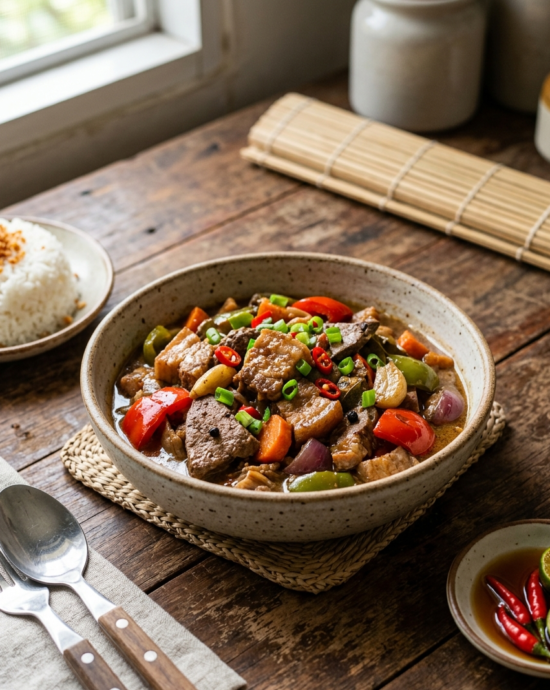

- Sautéing the Aromatics and Meat

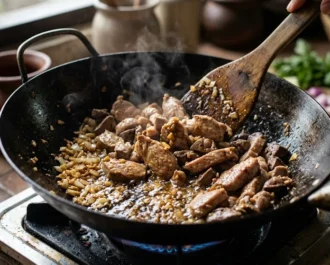
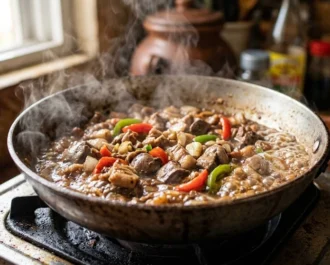
Begin by heating the cooking oil in a large pan or wok over medium heat. Once the oil is shimmering, add the crushed garlic and minced onions, sautéing them until the garlic is golden brown and the onions become translucent and fragrant. Carefully add the pork tenderloin strips and the optional heart or kidney pieces into the pan. Stir-fry the meat thoroughly for about five to seven minutes or until the pork turns a light brown color and releases its natural juices. This initial browning process is crucial as it builds a deep base of flavor for the entire stew. Ensure the heat is consistent so the aromatics do not burn while the pork begins to sear and tenderize beautifully.
- Developing the Savory Liquid Base
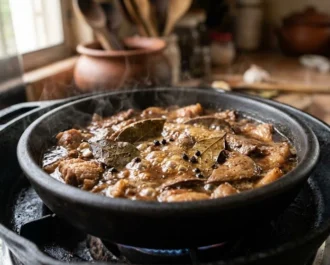
Once the pork has browned sufficiently, it is time to introduce the seasoning elements that define the dish's character. Pour in the soy sauce, water or pork broth, whole peppercorns, and the dried bay leaves. Stir the mixture gently to combine all the ingredients. Bring the liquid to a steady boil, then immediately lower the heat to a simmer. Cover the pan with a tight-fitting lid and allow the pork to braise for approximately twenty minutes. This slow simmering process ensures the meat becomes incredibly tender while absorbing the salty, earthy notes of the soy and spices. Keep an eye on the liquid levels, adding a splash more water if the sauce reduces too quickly during this stage.
- Incorporating the Delicate Pork Liver
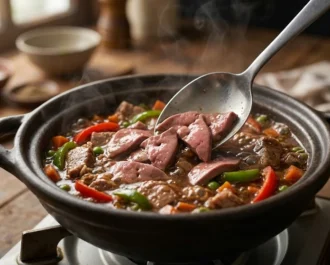
Now that the pork tenderloin is reaching the desired tenderness, add the sliced pork liver into the simmering pan. It is vital to add the liver at this specific stage because it cooks much faster than the muscle meat and can become tough or rubbery if overcooked. Stir the liver into the sauce, ensuring every piece is submerged. Continue to simmer the mixture for another five to eight minutes. As the liver cooks, it will naturally thicken the sauce, contributing a rich, creamy consistency and a distinctively deep, metallic flavor profile that is the hallmark of a traditional Igado. Maintain a gentle simmer to keep the textures soft and pleasant for the final plating and serving.
- The Essential Vinegar Deglazing Step
This step requires precision to achieve the perfect balance of flavors. Pour the vinegar over the meat mixture but do not stir it immediately. Allow the vinegar to boil uncovered for two to three minutes; this lets the harsh acidity evaporate, leaving behind a mellow tanginess that cuts through the richness of the liver and pork fat. After the initial boil, stir the contents of the pan thoroughly to incorporate the acidity into the savory soy base. This technique, rooted in Filipino adobo traditions, creates a complex, bright flavor profile. Taste the sauce at this point and add a pinch of salt or ground black pepper if necessary to harmonize the salty, sour, and savory components perfectly.
- Adding the Vibrant Vegetable Finish
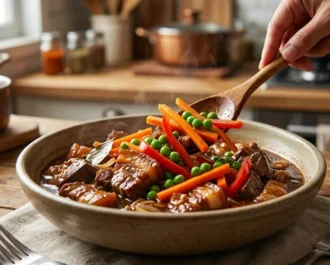
For the final touch, toss in the julienned carrots, red bell peppers, and the green peas. These vegetables provide a necessary crunch and a burst of color against the dark, rich sauce. Stir the vegetables into the stew and cook for an additional three to five minutes. You want the carrots and peppers to be tender-crisp rather than mushy, preserving their natural sweetness and nutritional value. The red and green hues make the dish visually appealing, characteristic of a festive Filipino spread. Once the vegetables are perfectly cooked and the sauce has reached a glossy, thick consistency, remove the pan from the heat. Your authentic Pork Igado is now ready to be served hot with steamed rice.
- Calories:320 kcal16%
- Protein:28 g56%
- Carbohydrates:12 g4%
- Sugar:4 g8%
- Salt:1,200 mg50%
- Fat:18 g23%
Table of Contents
What Is Pork Igado?
Pork Igado is a traditional Filipino braised pork and liver dish originating from the Ilocos region in Northern Luzon, known for its bold sour-salty flavor profile created by the combination of vinegar, soy sauce, and tender organ meat. It belongs to the family of Filipino adobo-style dishes but distinguishes itself through the mandatory inclusion of pork liver and the bright garnish of bell peppers and green peas, making it visually striking and nutritionally dense.
The dish has deep roots in Ilocano culinary tradition, where resourcefulness in cooking led to the ingenious use of both lean pork and offal in a single, economical preparation. Historically, Ilocano households prepared Igado during celebrations and family gatherings, making it a festive dish associated with communal eating and regional pride. The name ‘Igado’ is believed to derive from the Spanish word ‘hígado,’ meaning liver, reflecting the significant Spanish culinary influence during the colonial period in Philippine history.
Flavor-wise, Pork Igado delivers a complex, layered taste experience. The vinegar provides a bright sourness that cuts through the richness of the pork and liver, while the soy sauce contributes deep umami and savory saltiness. The garlic and bay leaves add aromatic backbone, and the liver thickens the sauce while imparting its characteristic earthy, mineral flavor. The red bell peppers offer mild sweetness and a satisfying crunch, and the green peas add pops of freshness that lighten the overall richness.
For anyone seeking to explore authentic Filipino regional cuisine beyond the familiar adobo and sinigang, Pork Igado is an essential dish to try. It represents the Ilocano philosophy of bold, vinegar-forward cooking and showcases how simple, accessible ingredients can be transformed into a deeply satisfying and culturally meaningful meal.
Ingredient Notes
- Pork Tenderloin: Pork tenderloin is the ideal cut for Igado because its lean, fine-grained muscle fibers become exceptionally tender after braising without falling apart. When selecting the best pork tenderloin for Igado, look for a piece with a pale pink color, firm texture, and minimal visible fat marbling; avoid any cuts with a grayish hue or unpleasant odor.
- Pork Liver: Fresh pork liver is what gives Igado its signature earthy depth and helps thicken the braising sauce into a glossy coating. Choose the best pork liver for Igado by selecting pieces that are deep reddish-brown, firm, and free of any greenish discoloration or bile duct residue; fresh liver should smell clean and metallic, not sour.
- White Cane Vinegar: Philippine white cane vinegar (sukang maasim) is the traditional acid component for authentic Igado, offering a clean, sharp sourness without the harsh bite of distilled white vinegar. How to choose vinegar for Igado: opt for locally produced cane vinegar brands like Datu Puti or Silver Swan for the most authentic flavor profile.
- Soy Sauce: Regular Filipino soy sauce provides the salty, umami backbone of the braising liquid and contributes to the characteristic dark color of the finished dish. Use a naturally brewed soy sauce rather than a chemically produced variety for a rounder, more complex flavor.
- Red Bell Pepper: Red bell peppers add vibrant color, mild sweetness, and textural contrast to Igado, balancing the dish’s acidity and richness. Select firm, deeply colored red bell peppers with taut, glossy skin and no soft spots for the best texture and sweetest flavor.
Ingredient Suggestions
- Pork Kidney — Adding cleaned, sliced pork kidney alongside the liver intensifies the organ-meat richness and is a traditional Ilocano variation that adds complexity.
- Chili Peppers — Adding two to three sliced siling haba (long green chili) introduces a gentle heat that plays beautifully against the vinegar’s sourness without overwhelming the dish.
- Annatto Oil — Replacing regular cooking oil with annatto-infused oil imparts a beautiful golden-orange hue to the braising liquid, making the presentation even more visually striking.
- Potatoes — Adding small diced potatoes during the braising step creates a heartier, more filling dish, as the starch absorbs the braising liquid beautifully.
- Hard-Boiled Eggs — Peeled hard-boiled eggs added in the final five minutes of cooking absorb the tangy sauce and add protein, a popular home-style Igado variation.
Helpful Tips & Pro Tips
- Soak the liver in cold water and vinegar for 15 minutes before cooking to reduce its strong smell and slightly mellowy bitterness. Pat completely dry before adding to the pan to ensure even cooking and prevent steaming.
- Never add the liver at the start of cooking. Liver overcooks quickly and becomes grainy and bitter within minutes of being exposed to high heat; always add it in the final 5–7 minutes to keep it tender and custardy inside.
- Why is my Igado too sour? The vinegar-to-water ratio is likely off or the dish hasn’t cooked long enough to mellow the acid. Add a pinch of sugar and simmer for an additional five minutes to soften the vinegar’s sharpness without compromising the overall flavor balance.
- Use a heavy-bottomed pan or Dutch oven for braising to distribute heat evenly and prevent the sauce from scorching on the bottom during the long simmer. Cast iron or stainless steel works exceptionally well.
- Allow the dish to rest for five minutes off heat before serving — this allows the sauce to thicken slightly as it cools and lets the flavors meld into a more cohesive, harmonious final dish.
How to Serve and Store
Serve Pork Igado in a wide, shallow bowl accompanied by generous portions of steamed white rice to soak up the rich, tangy braising sauce. It pairs beautifully with a simple side of fresh tomato and onion salad dressed with a splash of fish sauce for a complete Ilocano-inspired meal. Leftover Igado should be transferred to an airtight container and refrigerated within two hours of cooking; it will keep well for up to 3 days in the refrigerator. To freeze, portion the cooled Igado into freezer-safe containers, where it will remain good for up to 2 months. Reheat on the stovetop over low heat, adding a splash of water to loosen the sauce if needed.
Substitutions
- Pork Tenderloin → Chicken Breast — A leaner, lower-fat swap suitable for those avoiding red meat; reduce braising time to 15 minutes to prevent drying out.
- Pork Liver → Chicken Liver — Milder in flavor and easier to find, chicken liver is a budget-friendly substitute that cooks even faster (3–4 minutes only).
- White Cane Vinegar → Apple Cider Vinegar — A widely available gluten-free alternative with a slightly fruity note that works well in this braised preparation.
- Soy Sauce → Coconut Aminos — A soy-free, gluten-free option with a slightly sweeter, milder flavor profile ideal for those with soy allergies.
- Pork (all) → Firm Tofu + Mushrooms — A vegan-friendly swap that absorbs the braising liquid beautifully; use pressed extra-firm tofu and meaty shiitake mushrooms for best results.
Suggested Recipes
- Pork Adobo — The quintessential Filipino braised dish shares Igado’s vinegar-and-soy base, making it a natural next step for anyone who loves tangy, savory Filipino flavors.
- Dinuguan — Another beloved Ilocano and Filipino offal dish, this pork blood stew pairs well with Igado enthusiasts who enjoy rich, organ-forward preparations.
- Paksiw na Pata — A classic vinegar-braised pork hock dish that shares the sour-savory braising philosophy of Igado but offers a meltingly tender collagen-rich eating experience.
- Bicol Express — For those who enjoy the complexity of Filipino braised pork dishes, Bicol Express offers a coconut-milk-and-chili variation that is equally bold and satisfying.