
How to Make a French Omelette: The Silkiest, Creamiest Recipe You’ll Ever Try
- May 21, 2026
- 0
- 4 Min Read
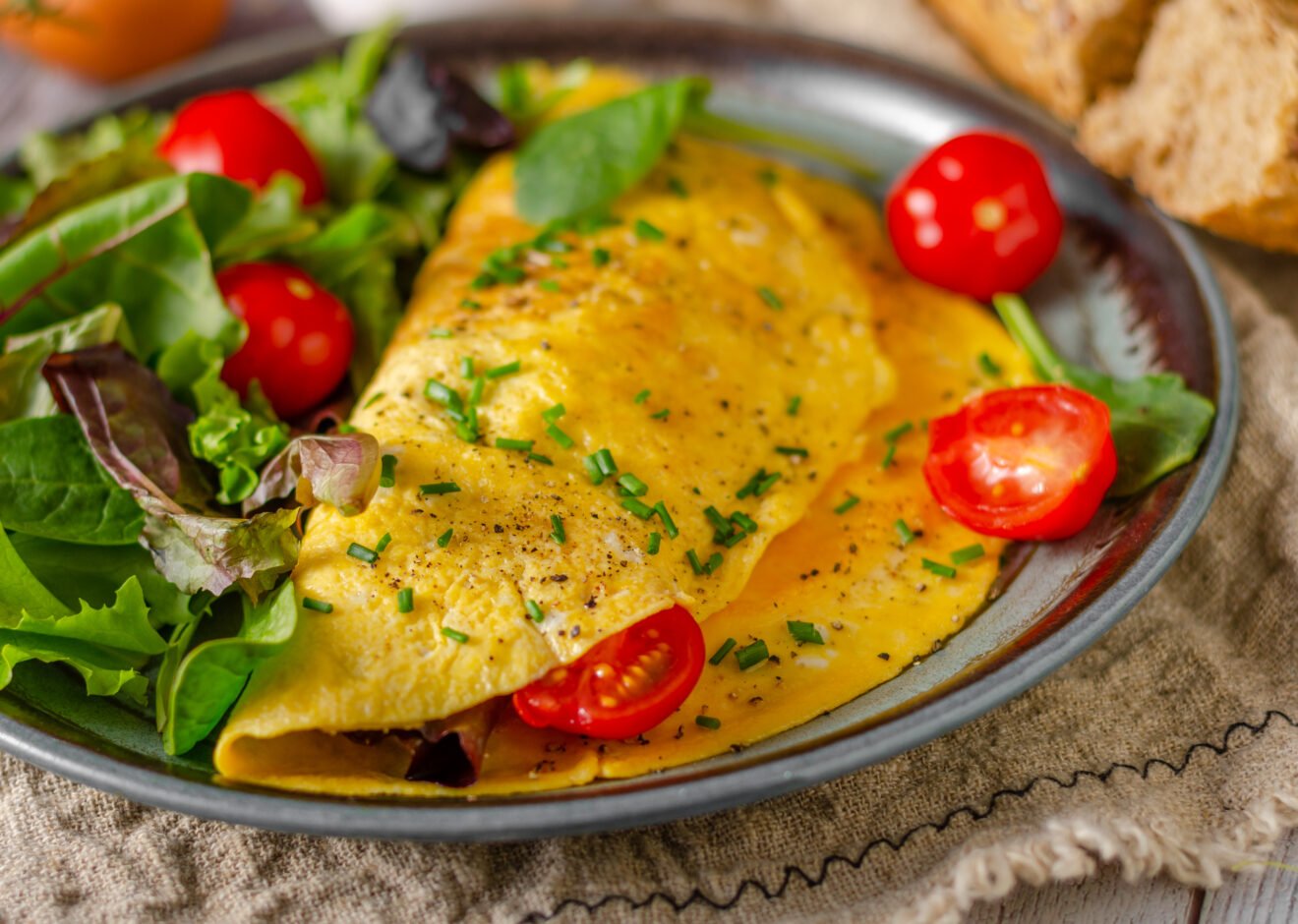
The First Time a French Omelette Humbled Me
I still remember the morning I stood in a tiny Paris apartment kitchen, watching a chef’s wrist flick the pan in a single, fluid motion. The eggs barely touched color. No browning, no crust — just a pale, ivory roll that trembled slightly as it slid onto the plate. The aroma was nothing dramatic: warm butter, gentle steam, faintly eggy. And yet that first bite — yielding, custardy, almost molten in the center — permanently changed how I understood what eggs could be.
Learning how to make a French omelette is not about following a recipe. It is about understanding restraint. This dish rewards patience, precision, and a willingness to throw away your first three attempts without judgment.
Why Temperature Is Everything (The Science Behind the Silk)
The French omelette’s signature pale exterior and creamy, barely-set interior come down almost entirely to heat management. Unlike its American counterpart, which tolerates high heat and a browned bottom, the French omelette demands medium-low heat — between 140°C and 160°C (280°F–320°F) at the pan surface.
At this temperature, the egg proteins denature slowly and trap moisture rather than expelling it. The result is a velvety, custardy curd rather than a rubbery, dry sheet. Going even slightly over 165°C (330°F) causes the proteins to tighten aggressively, squeezing out liquid and producing that dreaded spongy texture.
Butter is the other critical variable. You need it to foam but not brown — the moment the foam subsides and the butter begins to color, your window has closed. Use unsalted European-style butter (higher fat content, 82–84%) for the cleanest flavor and best emulsification with the egg proteins.
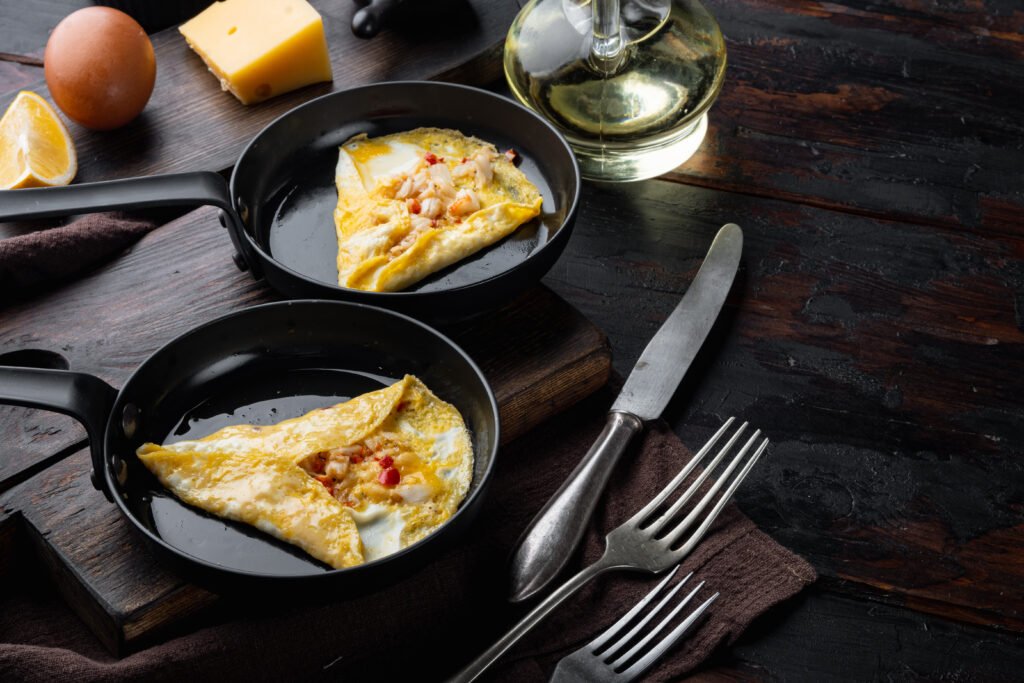
How to Make a French Omelette: Step-by-Step
Ingredients (Serves 1):
- 3 large eggs, room temperature
- 15g / 1 tablespoon unsalted butter
- 1 pinch of fine sea salt
- 1 pinch of white pepper (optional)
- 1 teaspoon cold water or crème fraîche (optional, for added creaminess)
- Fresh herbs for filling: chives, tarragon, or fines herbes (optional)
Equipment: 20–22cm (8-inch) non-stick or well-seasoned carbon steel pan
Step 1: Beat the eggs properly. Crack 3 eggs into a bowl. Add salt, white pepper, and water or crème fraîche if using. Whisk vigorously for 30–45 seconds until the yolks and whites are fully homogeneous with no streaks. Do not over-whisk to the point of foam — you want a smooth, uniform liquid.
Step 2: Heat the pan. Place your pan over medium-low heat for 1–2 minutes. Add the butter and watch it closely. When it melts, foams, and the foam begins to settle — but before any golden color appears — you are ready.
Step 3: Add the eggs and begin moving immediately. Pour in the beaten eggs. Using a silicone spatula or a fork held flat, stir continuously in small, rapid circles, pulling the set egg from the edges to the center. Keep the pan moving as well. This stage takes only 30–45 seconds.
Step 4: Stop stirring and shape. When the eggs are just barely set — still glossy and slightly liquid on top — stop stirring. Shake the pan gently to loosen the omelette. Add any herb filling now, placing it across the center third.
Step 5: Fold and roll. Tilt the pan at 45 degrees away from you. Using the spatula, fold the near edge of the omelette over the center. Then tip the pan further so the omelette rolls onto the plate seam-side down. The exterior should be pale yellow to light gold — never brown.
Step 6: Finish and serve. Optionally rub the surface with a small cold knob of butter for a glossy sheen. Serve immediately — a French omelette waits for no one.
Food Safety & Storage
The USDA recommends eggs be cooked to an internal temperature of 71°C / 160°F for full safety. A French omelette, by design, is intentionally soft and barely set in the center, which means the interior may sit closer to 65–68°C / 150–155°F. For healthy adults, this presents minimal risk with fresh, high-quality eggs. Those who are immunocompromised, pregnant, elderly, or serving young children should cook the omelette to full doneness.
Storage: French omelettes are not designed to be stored — they are a two-minute dish meant to be eaten the moment they land on the plate. If you must store leftovers, refrigerate within two hours in an airtight container and consume within 24 hours.
Reheating: Gently warm in a non-stick pan over the lowest possible heat for 60–90 seconds, covered with a lid to retain moisture. Microwave reheating is not recommended as it will toughen the egg proteins and destroy the texture. Accept that reheated omelette is a different, lesser dish — and plan accordingly.
Frequently Asked Questions

Jeff Smith
"Cooking is the intersection of history, science, and emotion."
For me, the kitchen has always been a laboratory of culture. With a background deeply rooted in digital strategy and precision, I approach the culinary arts with the same rigor I apply to the digital landscape—analyzing flavors, perfecting techniques, and documenting the nuance that makes Filipino cuisine truly world-class.
Findme Recipe was born from a desire to bridge the gap between traditional heritage and the modern home cook. Whether it is mastering the perfect balance of acidity in a classic Adobo or simplifying complex regional dishes for everyday kitchens, my mission is to preserve our culinary identity through accessible, data-backed, and delicious content.
I am not just building a database; I am cultivating a community where every Filipino kitchen feels empowered, every ingredient is celebrated, and every family heirloom recipe finds a place to thrive.
Join me as we translate the soul of our islands into recipes for the next generation.