
- The Master Stock Braise

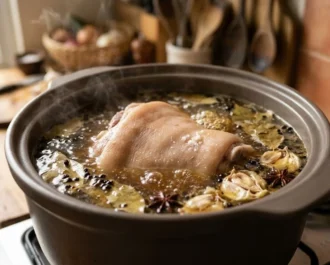
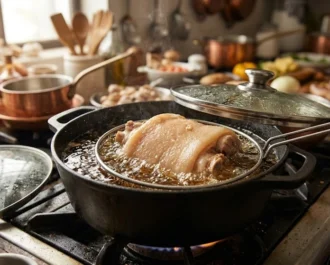
To begin this celebratory Filipino centerpiece, place the whole pork leg into a large stockpot. Submerge the meat completely in two liters of water, ensuring the entire trotter is covered. Add the sea salt, black peppercorns, dried bay leaves, smashed garlic, and star anise. Bring the liquid to a rolling boil over high heat, then immediately reduce to a gentle simmer. Cover the pot and allow the pork to braise for at least two hours. This slow-cooking phase is vital; it breaks down the tough collagen in the leg, ensuring the meat becomes incredibly tender while absorbing the deep, aromatic flavors of the spices. Once the meat is soft but not falling off the bone, carefully remove the leg from the flavorful broth.
- Strategic Cooling and Drying
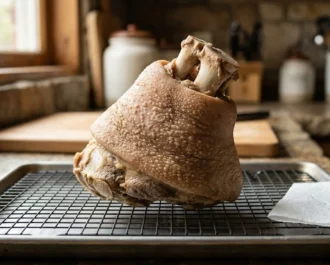
Achieving the perfect crackling requires extreme discipline regarding moisture control. Place the boiled pork leg on a wire rack and pat the skin thoroughly dry with paper towels. For a professional-grade finish, let the meat air-dry in the refrigerator for a minimum of five hours, though overnight is highly recommended. This chilling process tightens the skin and allows the fat to solidify, which is essential for the blistering effect during frying. If you are in a rush, you can use a hairdryer on a cool setting to speed up the surface evaporation. A bone-dry skin surface is your primary defense against dangerous oil splattering and the secret to achieving that coveted, uniform golden-brown color that makes the dish visually stunning.
- Mechanical Skin Preparation
Once the pork leg is cold and the skin feels like parchment, use a sharp fork or a specialized meat pricker to create hundreds of tiny punctures across the entire surface of the rind. Be careful to only pierce the skin and the fat layer, avoiding the deep muscle tissue to prevent juices from escaping. These micro-perforations act as vents, allowing the steam to escape and the hot oil to enter, which causes the skin to puff up into a light, crispy texture rather than staying hard and leathery. After pricking, rub an additional teaspoon of fine salt into the skin. The salt acts as a desiccant, drawing out any microscopic droplets of moisture that could compromise the final crunch of your masterpiece.
- The First Stage Frying
In a very deep, heavy-duty pot or a professional deep fryer, heat the neutral cooking oil to a steady 350°F. Carefully lower the prepared pork leg into the hot oil using long-handled tongs or a frying basket. Use a heavy lid or a splash shield immediately, as the remaining moisture in the bone can cause significant popping. Fry the leg for approximately fifteen to twenty minutes, rotating it occasionally to ensure even browning on all sides. During this initial fry, the fat renders out and the skin begins to take on a pale, golden hue. You are looking for a consistent base cook that heats the meat thoroughly to the bone while preparing the exterior for its final high-heat transformation.
- The High-Heat Blistering
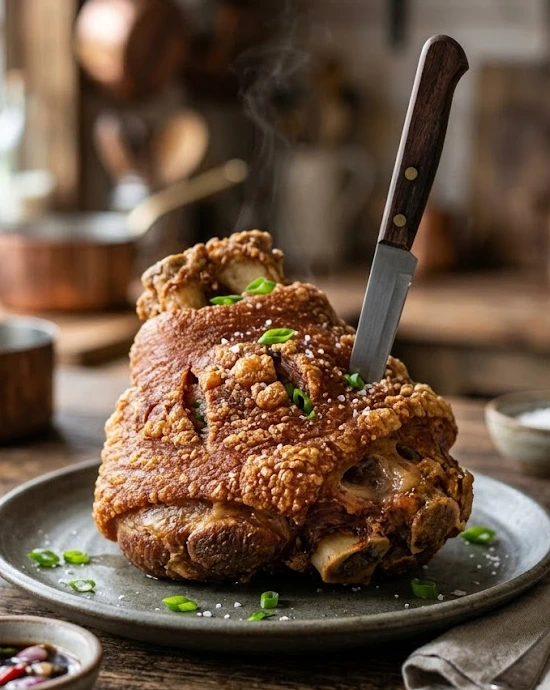
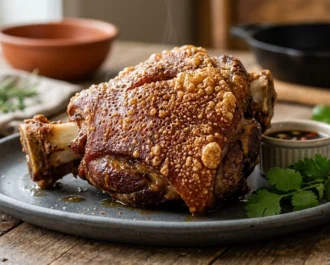
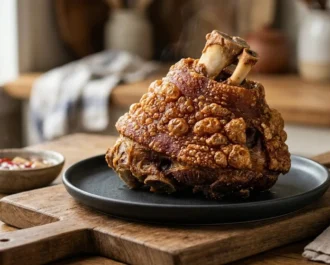
For the final spectacular finish, remove the pork leg from the oil and increase the burner heat until the oil temperature reaches a scorching 400°F. Submerge the leg back into the oil for a brief but intense two to three minutes. This sudden thermal shock causes the skin to expand rapidly, creating the signature blistered and bubbly appearance that defines a perfect Crispy Pata. The skin should now be mahogany in color and shatteringly crisp to the touch. Carefully lift the leg from the oil and let it rest on a rack for ten minutes before carving. This resting period allows the internal juices to stabilize, ensuring every slice is a harmonious blend of crunchy exterior and succulent, melt-in-your-mouth interior meat.
- Calories:820 kcal41%
- Protein:55 g110%
- Carbohydrates:2 g1%
- Sugar:g
- Salt:1,280 mg56%
- Fat:64 g82%
Crispy Pata is the undisputed monarch of Filipino celebrations, a dish that commands attention the moment it hits the table. Its history is a relatively modern tale of culinary ingenuity, credited to Rodolfo Ongpauco of the famous Barrio Fiesta restaurant in the 1950s. Seeking a way to utilize the often-discarded pork leg, he applied the deep-frying technique to a whole braised trotter, creating a sensation that would become a staple of Philippine gastronomy. Unlike its roasted cousin, Lechon, which requires a spit and hours of fire-tending, Crispy Pata offers a similar contrast of textures—brittle, salty skin and tender, gelatinous meat—achieved through the precision of the stovetop. It represents the Filipino love for communal dining, usually served whole with a knife plunged into the center.
The flavor profile is a sophisticated balance of deep savory notes and bright acidity. The meat itself carries the subtle sweetness of the pork and the warm aromatics of the braising liquid, while the skin provides a salty, smoky crunch. It is a “must-try” because it offers a unique mouthfeel that few other dishes can replicate; the rendered fat beneath the skin provides a buttery richness that dissolves on the tongue. Traditionally paired with a dipping sauce of soy sauce, vinegar, minced garlic, onions, and bird’s eye chilies, the dip provides the necessary sharp contrast to the dish’s decadence. It is more than just food; it is a multisensory experience of sound, texture, and flavor that encapsulates the festive spirit of the Philippines.