
- Aromatic Foundation and Sautéing

Begin by heating your oil in a wide, heavy-bottomed pot over medium heat. Add the julienned ginger, sliced onions, and minced garlic. Sauté these aromatics until the onions become translucent and the ginger releases its signature pungent fragrance, which is vital for neutralizing the briny scent of the crabs. Incorporate the shrimp paste at this stage, stirring constantly for two minutes to cook off the raw funk and develop a deep, savory umami base. This initial layer of flavor is the secret to a professional-grade sauce. Ensure the heat is not too high to prevent the garlic from burning, which could introduce unwanted bitterness to your delicate coconut base. This careful tempering of spices sets the stage for the rich seafood to follow.
- Developing the Coconut Base
Once the aromatics are perfectly softened and fragrant, pour in the thin coconut milk. Stir gently to scrape up any browned bits of shrimp paste from the bottom of the pan, integrating those concentrated flavors into the liquid. Bring the mixture to a very gentle simmer. It is crucial at this stage to avoid a rolling boil, which might cause the coconut milk to separate or curdle. This liquid serves as the poaching medium for the vegetables, allowing them to absorb the spice notes before the heavy cream is added later. The consistency should remain fluid yet flavorful, providing a light bath that will eventually thicken into a luscious, velvet-like coating as the starches from the vegetables begin to release into the pot.
- Softening the Harvest Vegetables
Gently add the cubed squash into the simmering liquid. Cover the pot and allow the squash to cook for approximately eight minutes until it begins to soften but still maintains its structural integrity. The goal is for the edges of the squash to slightly melt into the sauce, providing a natural sweetness and a vibrant golden hue to the final dish. Once the squash is halfway done, toss in the long beans. These vegetables add essential textural contrast, offering a soft, buttery bite from the squash against the slight snap of the green beans. Monitor the liquid levels closely; if the sauce reduces too quickly, you may add a splash of water to ensure the vegetables are evenly cooked through.
- Poaching the Primary Protein
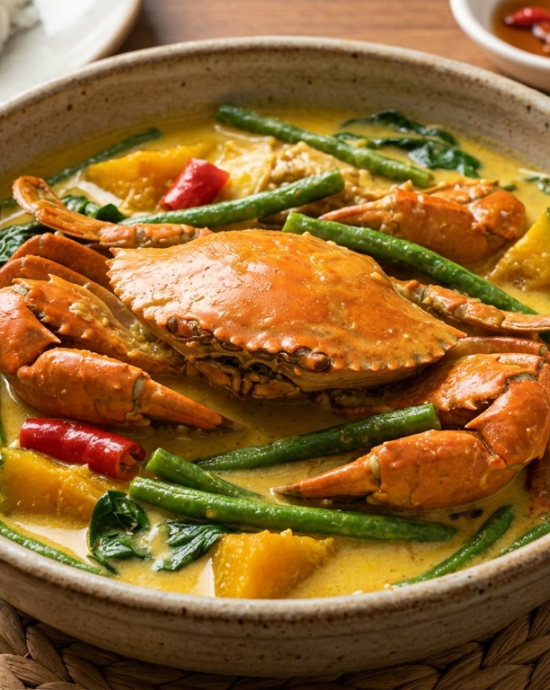
Carefully nestle the cleaned crab halves into the pot, ensuring they are partially submerged in the simmering coconut broth. The shells will quickly transition from a dull greenish-brown to a brilliant, festive orange as they cook. Covering the pot is essential here, as the trapped steam ensures the delicate white meat inside the claws and body remains moist and tender. Flip the crabs halfway through the ten-minute cooking period to ensure even heat distribution. As the crabs cook, they release their sweet, oceanic juices into the sauce, creating a complex maritime bouillon that marries perfectly with the fatty coconut milk. This exchange of flavors is what defines the authentic taste of a traditional coastal Filipino ginataan.
- The Rich Creamy Finish
Lower the heat to its minimum setting and pour in the thick coconut cream, also known as kakang gata. This is the most decadent part of the process, transforming the broth into a thick, luxurious sauce. Add the bird's eye chilies now to infuse a subtle, creeping heat that cuts through the richness of the fats. Stir with extreme care to avoid breaking the softened vegetables or the crab shells. Simmer uncovered for five more minutes until the sauce coats the back of a spoon beautifully. Taste the sauce and adjust with salt or extra shrimp paste if necessary. The final result should be a harmonious balance of sweet coconut, salty shrimp paste, spicy chili, and the unmistakable essence of fresh crab.

- Calories:480 kcal24%
- Protein:28 656%
- Carbohydrates:18 g6%
- Sugar:5 g10%
- Salt:1200 mg52%
- Fat:34 g44%
Ginataang Alimango is a masterclass in the Filipino culinary philosophy of linamnam—a term describing a specific, multifaceted deliciousness that coats the palate. Rooted in the coastal traditions of the Philippine archipelago, this dish celebrates the abundance of the sea and the ubiquitous coconut tree, often referred to as the “tree of life.” Historically, cooking with coconut milk was a practical way for seaside communities to create calorie-dense, flavorful meals using local ingredients. The dish is a vibrant tapestry of textures: the firm, sweet meat of the mud crab, the buttery melt of squash, and the snap of long beans, all tied together by a golden, silken sauce.
The flavor profile is a sophisticated balance of opposites. The natural sugars in the coconut milk and squash provide a gentle sweetness that offsets the pungent, fermented depth of the shrimp paste. Meanwhile, ginger and garlic provide a sharp aromatic backbone that cleanses the palate, and the sudden pop of heat from the silken bird’s eye chilies ensures the richness never becomes cloying. It is a celebratory dish, often reserved for Sunday family lunches or special gatherings where eating with one’s hands is not just accepted but encouraged. Cracking through the orange shells to reach the succulent meat, while soaking up the sauce with hot steamed rice, is a visceral, communal experience. More than just a recipe, Ginataang Alimango is a testament to the Filipino ability to transform humble, earth-grown ingredients into a luxurious feast that feels both comforting and profoundly indulgent.