How to Disinfect a Cutting Board Properly: Step-by-Step Guide for Wood and Plastic Boards
- May 14, 2026
- 0
- 5 Min Read
A chopping board is one of the hardest-working tools in any kitchen. After two decades in professional kitchens, I can still recognize the sharp, clean scent of freshly sanded maple the moment a wooden cutting board hits the prep station. During a busy dinner service, the rhythmic sound of knives against a stable chopping board becomes part of the kitchen’s heartbeat. But behind every perfectly sliced vegetable or trimmed cut of meat is a critical truth: a poorly maintained cutting board can quickly become a food safety risk.
Whether you use a bamboo chopping board, a heavy butcher block, or a plastic cutting board for raw proteins, knowing how to disinfect cutting board surfaces correctly is essential. Proper sanitation protects flavor, extends the life of your kitchen tools, and reduces the risk of cross-contamination.
Chopping Board vs Cutting Board: Is There a Difference?
In most kitchens, the terms chopping board and cutting board are used interchangeably. However, culinary professionals often make subtle distinctions.
A chopping board is typically thicker and designed for heavy-duty prep work like chopping herbs, portioning poultry, or breaking down vegetables. A cutting board is often thinner and intended for slicing or lighter knife tasks.
Common Materials Used
- Wooden cutting board
- Bamboo chopping board
- Plastic cutting board
- Composite fiber board
- End-grain butcher block
Each material reacts differently to moisture, knife pressure, and bacteria growth, which affects how you should clean and disinfect it.

Why Proper Cutting Board Sanitation Matters
Food safety begins at the prep station. Raw chicken, seafood, and beef can leave harmful bacteria such as Salmonella or E. coli on a cutting board surface. If the board is not sanitized correctly, those bacteria can transfer to fruits, vegetables, or ready-to-eat foods.
The science behind sanitation is straightforward. Warm water and soap remove surface debris, but disinfecting agents reduce microbial contamination at a deeper level. Wood boards naturally absorb and trap some bacteria beneath the surface fibers, while plastic boards can develop knife grooves that harbor pathogens.
This is why professional kitchens often color-code every chopping board:
- Red for raw meat
- Green for vegetables
- Blue for seafood
- Yellow for poultry
Separating prep surfaces dramatically lowers cross-contamination risk.
How to Disinfect Cutting Board Properly
If you want to know how to disinfect cutting board surfaces effectively, consistency matters more than expensive cleaning products.
Step 1: Scrape Off Food Debris
Use a bench scraper or paper towel to remove loose food particles immediately after use.
Step 2: Wash Thoroughly
Wash the chopping board with:
- Hot water
- Mild dish soap
- A non-abrasive scrub brush
For stubborn residue, sprinkle coarse salt over the surface and scrub with half a lemon.
Step 3: Apply a Disinfecting Solution
To disinfect a cutting board safely, use one of these methods:
Bleach Solution
Mix:
- 1 tablespoon (15 ml) unscented bleach
- 1 gallon (3.8 liters) water
Apply to the cutting board surface and let it sit for 2–5 minutes before rinsing thoroughly.
White Vinegar Method
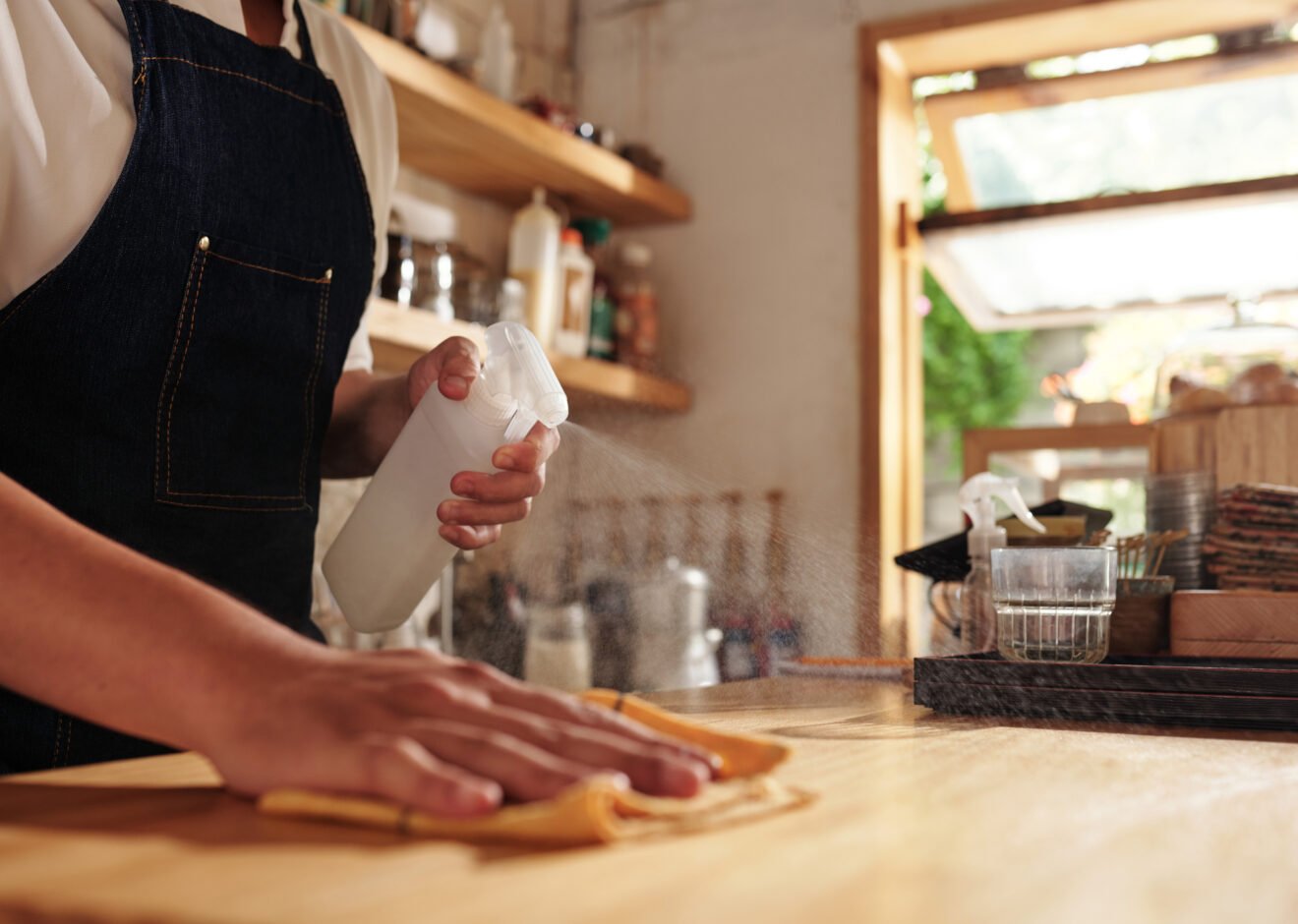
Spray undiluted white vinegar over the chopping board after washing. Vinegar helps reduce odors and some bacteria naturally.
Hydrogen Peroxide
Use 3% hydrogen peroxide directly on the board surface for additional sanitizing power.
Step 4: Dry Completely
Always air-dry the cutting board upright. Moisture trapped underneath encourages bacterial growth and warping.
The Best Way to Maintain a Wooden Chopping Board
Wooden cutting boards require more care but reward you with durability and knife protection.
Essential Maintenance Tips
- Oil the board monthly using food-grade mineral oil.
- Never soak a wooden chopping board in water.
- Avoid dishwashers for wood surfaces.
- Sand lightly if deep knife grooves appear.
A properly maintained maple or walnut cutting board can last for decades in a professional kitchen.
Plastic vs Wooden Cutting Board: Which Is Better?
Professional chefs debate this constantly.
Wooden Cutting Board Advantages
- Gentle on knives
- Naturally attractive
- Long lifespan
- Some woods resist bacterial survival
Plastic Cutting Board Advantages
- Dishwasher-safe
- Lightweight
- Affordable
- Easier to color-code
For home cooks, the best solution is often using both:
- Wooden chopping board for bread, vegetables, and herbs
- Plastic cutting board for raw meat and seafood
Food Safety and Storage Guidelines
Food safety extends beyond learning how to disinfect cutting board surfaces.
Replace a Cutting Board When:
- Deep grooves cannot be cleaned
- Cracks begin forming
- Persistent odors remain
- Warping prevents stability
Safe Kitchen Practices
- Use separate boards for raw proteins and produce
- Wash hands for at least 20 seconds after handling meat
- Sanitize the sink area after washing poultry boards
Reheating and Cross-Contamination
Cooked foods reheated after contact with contaminated surfaces should reach:
- 165°F (74°C) for poultry dishes
- 145°F (63°C) for seafood
- 160°F (71°C) for ground meats
Professional kitchens rely on thermometers, not guesswork.
Common Mistakes People Make With Cutting Boards
Putting Wood in the Dishwasher
High heat strips natural oils and causes cracking.
Using One Board for Everything
Cross-contamination risk increases dramatically.
Ignoring Knife Grooves
Bacteria settle into deep cuts where soap may not fully penetrate.
Storing Boards While Damp
Moisture encourages mold and bacterial growth.
Choosing the Right Chopping Board for Your Kitchen
When buying a new chopping board, consider:
- Size of your prep area
- Knife type
- Frequency of cooking
- Cleaning preference
A home cook preparing quick meals may prefer a dishwasher-safe plastic cutting board. A serious culinary enthusiast often benefits from a heavy end-grain wooden chopping board that stabilizes knife work and lasts longer.
The best cutting board is the one you consistently clean, sanitize, and maintain correctly.
Frequently Asked Questions

Jeff Smith
"Cooking is the intersection of history, science, and emotion."
For me, the kitchen has always been a laboratory of culture. With a background deeply rooted in digital strategy and precision, I approach the culinary arts with the same rigor I apply to the digital landscape—analyzing flavors, perfecting techniques, and documenting the nuance that makes Filipino cuisine truly world-class.
Findme Recipe was born from a desire to bridge the gap between traditional heritage and the modern home cook. Whether it is mastering the perfect balance of acidity in a classic Adobo or simplifying complex regional dishes for everyday kitchens, my mission is to preserve our culinary identity through accessible, data-backed, and delicious content.
I am not just building a database; I am cultivating a community where every Filipino kitchen feels empowered, every ingredient is celebrated, and every family heirloom recipe finds a place to thrive.
Join me as we translate the soul of our islands into recipes for the next generation.