
- Step 1: Roast the Eggplants
The key to excellent ensaladang talong lies entirely in how the eggplants are cooked. Place whole, unpeeled eggplants directly over an open gas flame on medium heat, turning every two to three minutes using tongs. Allow the skin to char and blister completely on all sides — the outside should be thoroughly blackened. This direct flame cooking does two essential things: it imparts a deep, unmistakable smoky flavor throughout the flesh, and it steams the interior from within as the charred skin seals in the moisture. Continue roasting for ten to twelve minutes total until the eggplant collapses and feels very soft throughout when pressed gently. Alternatively, roast under a broiler or over charcoal for equally good results.
- Step 2: Cool and Peel
Once the eggplants are fully roasted and completely soft, transfer them immediately to a plate or baking sheet and allow them to cool for at least five to seven minutes until they are comfortable enough to handle. Do not rush this step — the eggplants need time to cool or you risk burning your hands during peeling. Once cool enough, use your fingers to gently peel away the charred, papery skin, revealing the silky, smoke-infused flesh underneath. Work over a colander or strainer to allow excess liquid to drain away — roasted eggplant releases significant moisture that can make the finished salad watery if not properly drained. Discard the charred skin entirely and gently press the flesh to remove as much liquid as possible.
- Step 3: Prepare the Flesh
Transfer the peeled eggplant flesh to a cutting board. Using a fork, gently shred or pull the flesh into thin strips following the natural grain of the vegetable. Some cooks prefer to keep the eggplant in larger, rustic pieces rather than shredding it finely — both approaches produce a delicious result, though shredded flesh absorbs the dressing more thoroughly. Avoid chopping the eggplant with a knife, which can make it too fine and mushy. The goal is a tender, slightly chunky texture that has character and visual appeal. Arrange the prepared eggplant on a flat serving plate or in a shallow bowl. The flesh should be pale cream to pale grey in color with enticing wisps of smokiness visible.
- Step 4: Make the Dressing
In a small bowl, combine the white cane vinegar, fish sauce, and sugar if using. Whisk or stir together until the sugar dissolves completely. Taste the dressing — it should be pleasantly tangy, savory, and subtly sweet. Adjust the balance by adding more vinegar for tartness, fish sauce for savory depth, or sugar to round out sharp edges. The dressing for ensaladang talong is intentionally simple to allow the smoky flavor of the roasted eggplant to remain the star of the dish. Unlike dressed salads in other cuisines, this dressing is lightly applied rather than heavily coating — the goal is to accent and enhance rather than overpower the delicate, complex smokiness of the perfectly roasted talong.
- Step 5: Prepare the Toppings
Dice the fresh tomatoes into small, even pieces approximately half an inch in size. Place in a fine-mesh strainer briefly to drain excess juice, which prevents the salad from becoming watery. Finely dice the onion and set aside. If using hard-boiled eggs and salted eggs, peel and slice them into neat rounds. The combination of plain hard-boiled eggs with salted eggs is a classic Filipino preparation — the regular egg provides a mild, creamy counterpoint while the intensely salty, cured egg amplifies the overall savory character of the dish. Slice fresh chili if using. Have spring onions or cilantro washed and roughly chopped for the garnish.
- Step 6: Assemble and Serve
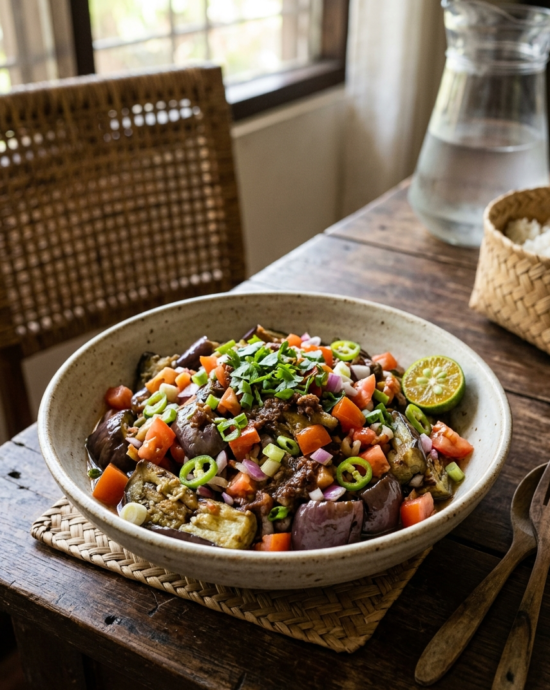
Arrange the shredded roasted eggplant on a serving plate. Scatter the diced tomatoes and onions over the top in an even layer. If using sliced eggs, arrange them attractively around or on top of the vegetables. Drizzle the prepared dressing evenly over the entire salad. Garnish with sliced spring onions or fresh cilantro leaves and fresh chili. Serve immediately or chill briefly in the refrigerator for ten to fifteen minutes before serving — slightly chilled ensaladang talong is incredibly refreshing alongside grilled meats or fried fish. The combination of smoky eggplant, bright tomatoes, pungent onion, tangy dressing, and rich egg creates a harmonious, multi-layered Filipino salad that is far more complex than its simple ingredient list suggests.
- Calories:90 kcal5%
- Protein:4 g8%
- Carbohydrates:13 g5%
- Sugar:7 g8%
- Fat:2 g3%
Table of Contents
What Is Ensaladang Talong?
Ensaladang talong is a traditional Filipino roasted eggplant salad made by charring whole eggplants over an open flame until the flesh is smoky and tender, then dressing the peeled, shredded flesh with vinegar, fish sauce, fresh tomatoes, onions, and often sliced eggs. It is one of the most beloved and ubiquitous side dishes in Filipino home cooking, prized for its remarkable depth of flavor, incredible simplicity, and the way it transforms an ordinary vegetable into something extraordinary through the magic of flame-roasting. The dish reflects the Filipino cooking philosophy of extracting maximum flavor from minimal ingredients through precise technique. Eggplant, called talong in Filipino, has been cultivated and eaten in the Philippines for centuries and appears in countless Filipino preparations, but ensaladang talong is perhaps its most iconic and universally loved form. The defining characteristic of the dish is the smoky flavor derived from direct-flame roasting, which creates a complex, slightly sweet, deeply savory profile that no other cooking method can fully replicate. While the salad is simple in concept, it is deeply satisfying and versatile — it serves as a refreshing side dish alongside grilled meats, fried fish, or rice-based meals, and its cool, tangy profile provides welcome contrast to richer, heavier dishes on the Filipino table. The optional addition of salted eggs (itlog na maalat) is a beloved Filipino touch that adds a pungent, intensely savory element that elevates the salad to a more substantial and satisfying dish. Ensaladang talong is also notable for its nutritional virtues — it is low in calories, high in fiber and antioxidants, and naturally gluten-free.
Ingredient Notes
- Eggplants (Talong): Choose medium to large, firm eggplants with smooth, shiny, deep purple skin. Avoid eggplants with wrinkled or dull skin, which indicates they are past their prime. Heavier eggplants have more flesh and less seed cavity. Smaller seeds mean less bitterness.
- Cane Vinegar (Sukang Maasim): Filipino white cane vinegar has a milder, slightly sweet profile compared to distilled white vinegar. It is the traditional choice for ensaladang talong and produces the most authentic flavor. Coconut vinegar is an equally authentic alternative.
- Salted Eggs (Itlog na Maalat): Duck salted eggs produce a richer, creamier yolk than chicken salted eggs. The vivid orange yolk is a visual and flavor highlight of the finished salad. Buy from reliable sources that use clean curing methods.
Ingredient Suggestions
- Bagoong alamang — a teaspoon on the side adds the classic Filipino pungent counterpoint to the smoky eggplant
- Grilled shrimp — placed on top of the finished salad turns this side dish into a substantial main course
- Cucumber slices — add freshness and crunch to balance the soft, smoky eggplant texture
- Fried tofu — pressed, cubed, and pan-fried; a satisfying protein addition for a vegetarian version
Helpful Tips & Pro Tips
- Char the eggplant completely — do not stop early. Many cooks under-roast eggplant out of hesitation. The skin must be thoroughly blackened and the eggplant completely collapsed to achieve the deep, authentic smoky flavor that defines excellent ensaladang talong.
- Drain the eggplant thoroughly after peeling. Roasted eggplant releases a significant amount of liquid. Press it gently in a strainer or wrap in a cloth and squeeze lightly to remove excess moisture. Skipping this step results in a watery, diluted salad.
- Why does my ensaladang talong taste bland? Bland results almost always come from insufficient charring of the eggplant or under-seasoning the dressing. Both the smokiness and the dressing seasoning are essential. Taste and adjust the dressing with additional fish sauce.
- Prepare the dressing just before serving. The tomatoes and onions release moisture over time, and the dressing becomes diluted if mixed too far in advance. For the freshest flavor and best texture, assemble and dress the salad no more than fifteen minutes before serving.
How to Serve and Store
Serve ensaladang talong at room temperature or slightly chilled as a side dish alongside grilled or fried meat and fish, or with steamed rice as part of a larger Filipino meal. It is traditionally served at room temperature in Filipino homes. Leftovers can be stored in an airtight container in the refrigerator for up to 2 days, though the eggplant continues to release moisture over time. Stir before serving and drain excess liquid. Not suitable for freezing.
Substitutions
- Fish sauce (patis) → Soy sauce — suitable for those avoiding fish-based seasonings; provides saltiness without the fishy note
- Fish sauce → Salt — the simplest substitute; adjust to taste as salt is more concentrated than fish sauce
- Salted eggs → Hard-boiled eggs with an extra pinch of salt — approximates the richness without the intense salted egg character
- Cane vinegar → Rice wine vinegar — milder and slightly sweet, a good substitute in the dressing
- Fresh chili → Chili flakes — dried chili flakes provide heat without the fresh crunch; use sparingly
Suggested Recipes
- Tortang Talong — grilled eggplant battered in egg and pan-fried, another beloved Filipino preparation of the same vegetable
- Kinilaw — Filipino ceviche that shares the same vinegar-dressed, refreshing side dish role at Filipino meals
- Grilled Liempo — the classic Filipino grilled pork belly that pairs perfectly with a cool, tangy ensaladang talong
- Pinakbet — a cooked mixed vegetable dish featuring talong alongside other vegetables in a savory shrimp paste-based stew
Frequently Asked Questions

Jeff Smith
"Cooking is the intersection of history, science, and emotion."
For me, the kitchen has always been a laboratory of culture. With a background deeply rooted in digital strategy and precision, I approach the culinary arts with the same rigor I apply to the digital landscape—analyzing flavors, perfecting techniques, and documenting the nuance that makes Filipino cuisine truly world-class.
Findme Recipe was born from a desire to bridge the gap between traditional heritage and the modern home cook. Whether it is mastering the perfect balance of acidity in a classic Adobo or simplifying complex regional dishes for everyday kitchens, my mission is to preserve our culinary identity through accessible, data-backed, and delicious content.
I am not just building a database; I am cultivating a community where every Filipino kitchen feels empowered, every ingredient is celebrated, and every family heirloom recipe finds a place to thrive.
Join me as we translate the soul of our islands into recipes for the next generation.