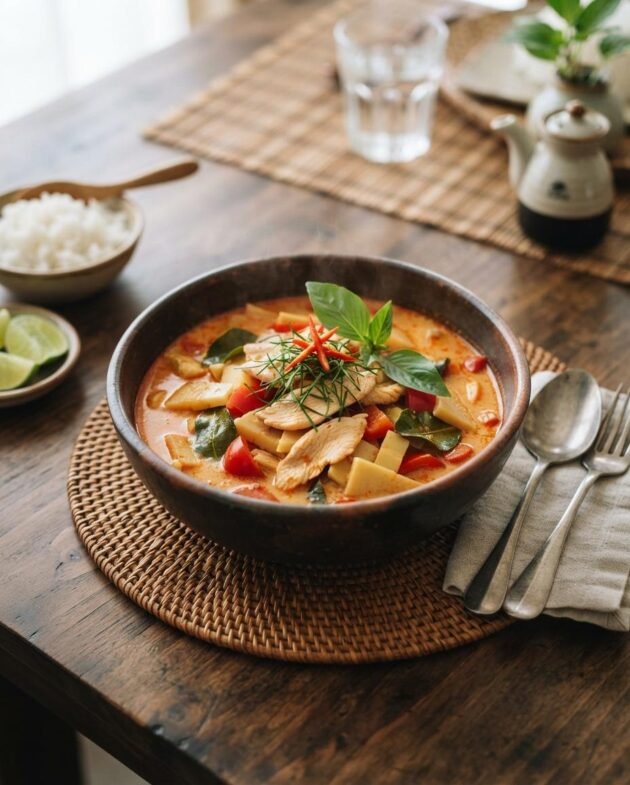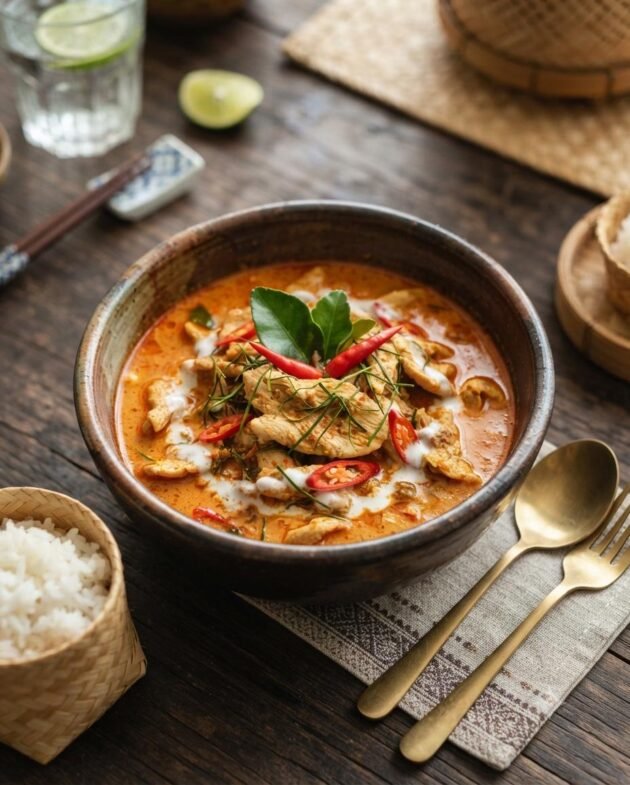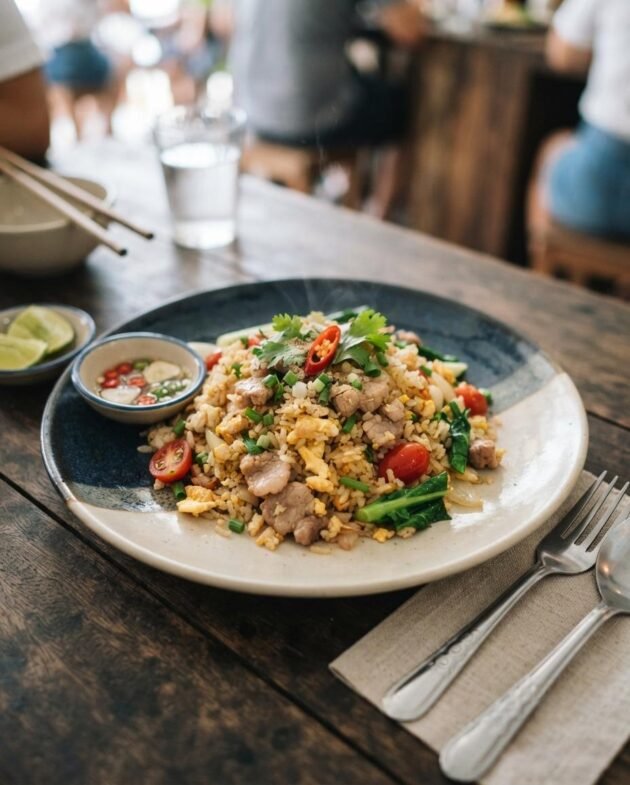

- Step 1: Sauté Aromatics and Protein
Heat cooking oil in a large, wide pan or wok over medium-high heat. Add the chopped onion and cook for two to three minutes, stirring regularly, until it becomes soft and slightly translucent. Add the minced garlic and continue sautéing for another minute until fragrant and beginning to turn golden. If using pork, add it now and cook, stirring frequently, for five to seven minutes until it is browned and cooked through. If using shrimp, set it aside for now and add it later in the recipe as shrimp cooks very quickly and will become rubbery if added too early. Season the aromatics and pork with fish sauce at this stage to allow the meat to absorb the seasoning as it continues to cook in the pan.
- Step 2: Add Kalabasa
Add the cubed kalabasa to the pan with the sautéed aromatics and pork. Toss gently to coat the squash pieces in the garlicky, savory oil and seasonings. Cook, stirring occasionally, for three to four minutes over medium heat. This brief initial sauté of the squash develops a slightly caramelized edge on the exterior of each cube, adding depth to the final dish that boiling or poaching alone cannot achieve. The squash will begin to soften around the edges and take on a beautiful golden color. At this point you may add the bagoong alamang if using, stirring it into the pan and allowing it to cook with the other ingredients for one minute to mellow and develop its complex fermented shrimp flavor.
- Step 3: Pour in Coconut Milk
Pour the coconut milk into the pan, stirring gently to combine with all the ingredients. Add the whole or sliced green chili peppers. Bring the liquid to a gentle simmer over medium heat — do not allow it to boil vigorously, as hard boiling causes coconut milk to separate into curds and oily liquid rather than remaining a smooth, creamy emulsion. Once gently simmering, reduce the heat to medium-low and cook uncovered for twelve to fifteen minutes, stirring occasionally. The squash will become tender and begin to break down slightly along the edges, naturally thickening the coconut milk into a luscious, golden-hued sauce. The kitchen will fill with the intoxicating aroma of sweet squash and rich coconut.
- Step 4: Add String Beans
Add the cut sitaw (string beans) to the pan and stir to combine with the squash and coconut milk. The beans need approximately five to seven minutes of gentle simmering to become tender while maintaining a pleasant slight crunch and vibrant green color. Continue to cook over medium-low heat, stirring occasionally and monitoring the consistency of the sauce. As the squash becomes fully tender, pieces along the edges will dissolve into the coconut milk, further thickening the sauce naturally. If the sauce becomes too thick, add a small splash of water or additional coconut milk to achieve the right consistency — it should be rich and creamy but pourable, coating the back of a spoon lightly.
- Step 5: Add Shrimp and Coconut Cream
If using shrimp, add the peeled, deveined shrimp to the pan and stir gently. Shrimp cooks in just two to three minutes — watch for them to curl into a C shape and turn pink and opaque, which indicates they are fully cooked. Avoid overcooking shrimp as they become tough and rubbery quickly. Once the shrimp is cooked, pour in the coconut cream and stir to incorporate. The addition of coconut cream at the end of cooking — rather than at the beginning — gives the sauce an extra layer of richness and a luxurious, silky finish that elevates the dish from everyday to special. Taste and adjust seasoning with additional fish sauce, salt, or a pinch of pepper.
- Step 6: Final Seasoning and Serve
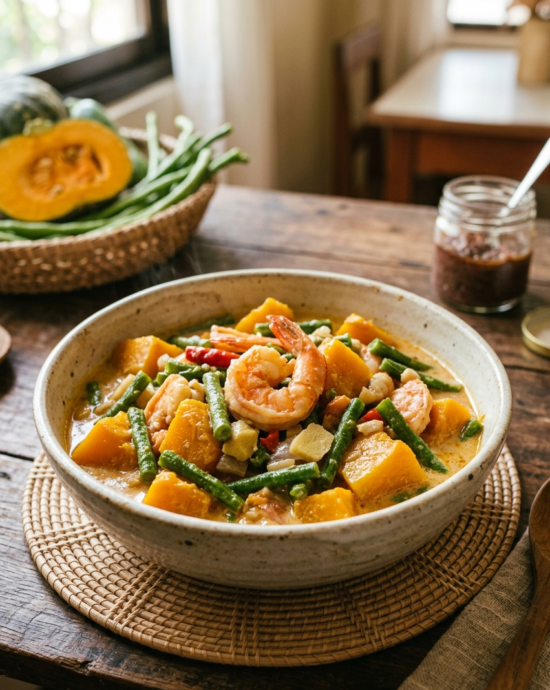
Do a final taste of the ginataang kalabasa and adjust seasoning as needed with fish sauce, salt, or a touch more bagoong alamang for additional depth. The finished dish should have a beautifully thick, golden, and creamy sauce with tender squash that is beginning to melt at the edges, fully cooked string beans with a slight bite, and plump, perfectly cooked shrimp. The overall flavor should be rich and coconutty with a pronounced savory depth, a subtle sweetness from the squash, and a mild heat from the chili. Transfer to a large serving bowl and serve immediately alongside steamed white rice. A side of additional bagoong alamang is the traditional Filipino accompaniment.
- Calories:220 kcal11%
- Protein:13 g26%
- Carbohydrates:14 g5%
- Sugar:5 g6%
- Fat:15 g19%
Table of Contents
What Is Ginataang Kalabasa?
Ginataang kalabasa is a beloved Filipino dish made from kalabasa — the local variety of squash closely related to kabocha or Caribbean pumpkin — cooked in rich, creamy coconut milk alongside shrimp or pork and string beans. The term ginata comes from gata, the Filipino word for coconut milk, and describes an entire category of Filipino dishes prepared with this essential ingredient. Ginataang kalabasa is one of the most popular gata dishes in everyday Filipino home cooking, prized for its beautiful golden color, deeply satisfying creaminess, and the way the natural sweetness of the squash harmonizes perfectly with the richness of coconut milk. The dish is a textbook example of Filipino culinary balance: the sweet squash and rich coconut counterpart the saltiness of fish sauce or bagoong, while the green chili provides a gentle background heat that keeps each bite interesting. Kalabasa, the Filipino name for this variety of cucurbit squash, is widely grown throughout the Philippine archipelago and has been a dietary staple for generations. It is rich in beta-carotene, vitamins A and C, potassium, and dietary fiber, making ginataang kalabasa as nutritious as it is delicious. The addition of bagoong alamang as both a cooking ingredient and a condiment is a distinctly Filipino touch that provides a pungent, fermented counterpoint to the sweetness of the squash and coconut, creating a complex flavor profile that is deeply satisfying. This dish appears on Filipino tables year-round but is especially beloved during the harvest months when squash is at its sweetest and most plentiful, and it occupies a special place in the canon of Filipino comfort food.
Ingredient Notes
- Kalabasa (Filipino Squash): Choose a firm, heavy squash with deep orange or golden flesh. The deeper the orange color, the sweeter and more flavorful it will be. Avoid squash with soft spots or blemished skin. Kabocha squash is an excellent substitute.
- Coconut Milk and Cream: Use full-fat coconut milk for the richest sauce. Reserve coconut cream to add at the end of cooking for extra luxuriousness. Freshly pressed coconut milk from grated coconut is ideal if available at your wet market.
- Shrimp: Fresh, raw shrimp produce the best flavor in ginataang kalabasa. Medium to large shrimp work best. If using frozen, thaw completely and pat dry before cooking to prevent excess water from diluting the sauce.
Ingredient Suggestions
- Malunggay leaves — stir in at the very end for a nutritional boost and a fresh, slightly earthy herbal note
- Dried shrimp (hibe) — a small handful added with the aromatics intensifies the umami depth of the coconut sauce
- Spinach or kangkong — wilt in at the end for additional greens and color contrast
- Chicharon (pork cracklings) — crumbled on top as garnish adds irresistible crunch and savory richness
Helpful Tips & Pro Tips
- Never boil coconut milk vigorously. This is the cardinal rule of cooking with gata. A hard boil breaks the emulsion, causing the coconut milk to separate into oil and solids rather than remaining a smooth, creamy sauce. Always maintain a gentle, steady simmer.
- Use overripe squash for a sweeter, more naturally thickened sauce. A squash that is fully mature with deep orange flesh is sweeter and breaks down more readily during cooking, thickening the sauce naturally without any added starch.
- Why is my ginataang kalabasa watery? Watery sauce usually results from cooking on too low a heat, preventing proper reduction, or from using light coconut milk. Use full-fat coconut milk and maintain a steady simmer to achieve a properly thick, luscious sauce.
- Add coconut cream at the very end, never at the beginning. Coconut cream is richer and more delicate than coconut milk. Adding it at the end of cooking preserves its fresh, sweet flavor and gives the sauce an appealing gloss without the risk of curdling.
How to Serve and Store
Serve ginataang kalabasa hot over steamed white rice as a main dish. It is also delicious alongside grilled fish or fried pork chops. A side of bagoong alamang on the table is the traditional Filipino accompaniment that elevates the dish. Store leftovers in an airtight container in the refrigerator for up to 3 days. The sauce thickens considerably upon refrigeration — reheat gently over low heat with a splash of water or coconut milk to restore the original creamy consistency. Freezing is not recommended as the coconut milk sauce can become grainy upon thawing.
Substitutions
- Kalabasa → Butternut squash or kabocha — both have a similar sweet, dense flesh that performs equally well in this recipe
- Shrimp → Pork belly or chicken thighs — equally traditional Filipino proteins for this gata dish
- Shrimp → Firm tofu (vegan) — press and pan-fry before adding; absorbs the coconut sauce beautifully
- Fish sauce → Soy sauce — for a pescatarian-free version that still provides savory saltiness
- Full-fat coconut milk → Light coconut milk — produces a thinner sauce; add a teaspoon of cornstarch to compensate
Suggested Recipes
- Ginataang Langka — unripe jackfruit cooked in the same coconut milk tradition; the closest sibling dish to ginataang kalabasa
- Laing — dried taro leaves in coconut milk with pork and chili; another rich gata classic
- Bicol Express — pork cooked in coconut milk with lots of chili; spicier and punchier but in the same gata family
- Puso ng Saging — banana blossom in coconut milk with pork; a textural cousin to ginataang kalabasa
Frequently Asked Questions

Jeff Smith
"Cooking is the intersection of history, science, and emotion."
For me, the kitchen has always been a laboratory of culture. With a background deeply rooted in digital strategy and precision, I approach the culinary arts with the same rigor I apply to the digital landscape—analyzing flavors, perfecting techniques, and documenting the nuance that makes Filipino cuisine truly world-class.
Findme Recipe was born from a desire to bridge the gap between traditional heritage and the modern home cook. Whether it is mastering the perfect balance of acidity in a classic Adobo or simplifying complex regional dishes for everyday kitchens, my mission is to preserve our culinary identity through accessible, data-backed, and delicious content.
I am not just building a database; I am cultivating a community where every Filipino kitchen feels empowered, every ingredient is celebrated, and every family heirloom recipe finds a place to thrive.
Join me as we translate the soul of our islands into recipes for the next generation.