
- Step 1. Brown the Pork
Heat the sesame oil in a small pot or traditional ttukbaegi over medium heat. Add the ground pork and cook for 3 to 4 minutes, breaking it apart as it browns, until fully cooked through. Browning the pork thoroughly at this stage builds a savory, meaty foundation that distinguishes this version of soondubu jjigae, so let it develop some color before moving on rather than rushing this step.
- Step 2. Build the Chili Oil Base
Add the gochugaru and gochujang directly to the pot with the cooked pork, stirring constantly for 30 seconds to 1 minute until fragrant and the oil takes on a deep red hue. Add the minced garlic and diced onion, continuing to stir for another minute until the onion begins to soften. This blooming step is essential for extracting the full depth of flavor and color from the chili flakes and paste.
- Step 3. Add the Vegetables and Stock
Stir in the enoki mushrooms and diced zucchini, cooking for 1 to 2 minutes to coat them in the chili oil. Pour in the anchovy or pork stock and bring the mixture to a boil over medium-high heat. Let it simmer for 5 minutes, allowing the vegetables to soften slightly and the broth to become infused with the savory, spicy base built in the previous steps.
- Step 4. Add the Tofu
Using a spoon, scoop the soft silken tofu directly into the pot in large, rough chunks, keeping the pieces loosely textured rather than cut into neat cubes, which is traditional for soondubu jjigae. Season with the soy sauce and salt, then let the stew simmer gently for 3 to 4 minutes, allowing the tofu to warm through without breaking apart completely.
- Step 5. Add the Egg
While the stew is still bubbling vigorously, crack the egg directly into the center of the pot, letting it settle into the hot broth without stirring. The residual heat will begin cooking the egg white while the yolk remains soft, adding a rich, custardy element once mixed in by the diner at the table. Let the stew simmer for another minute to allow the egg white to set slightly.
- Step 6. Finish and Serve
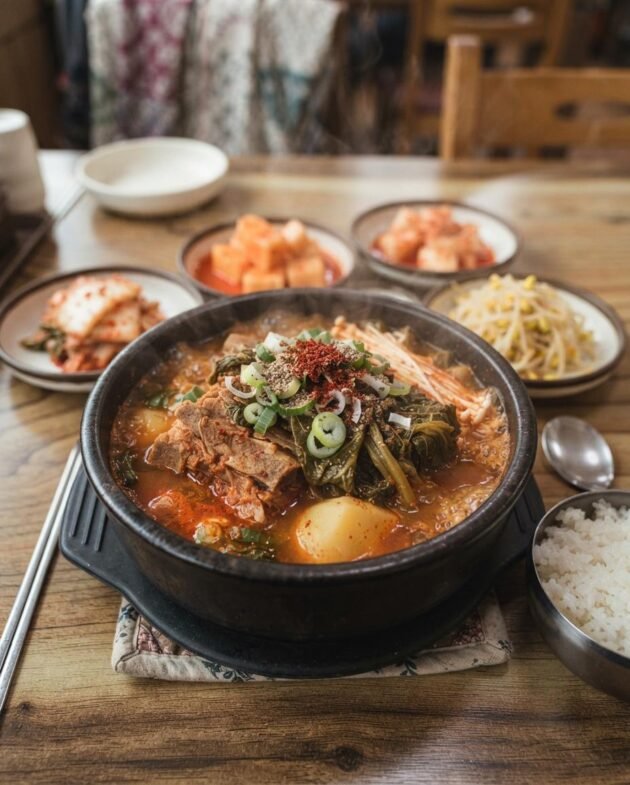
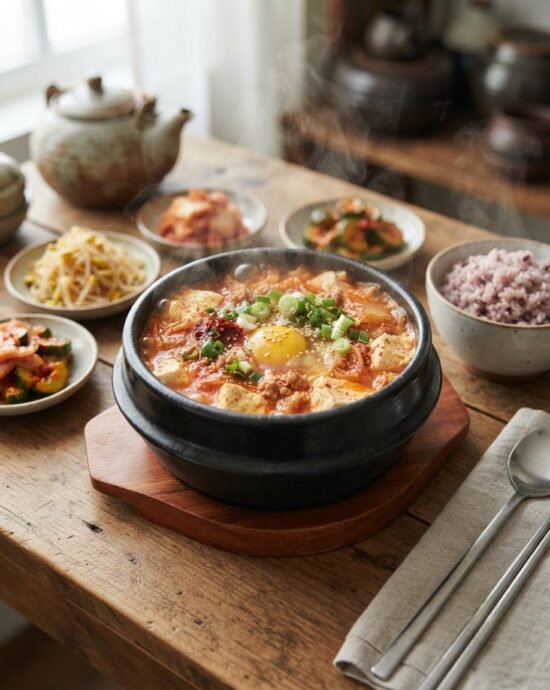
Scatter the chopped green onions over the top of the stew and give it one final gentle stir, being careful not to break up the tofu. Serve soondubu jjigae immediately while still boiling, ideally straight from the stone pot it was cooked in, alongside a bowl of steamed rice to balance the stew's spicy, savory intensity.
- Calories:340 kcal17%
- Protein:24 g48%
- Carbohydrates:10 g4%
- Sugar:3 g3%
- Energy:1423 kJ17%
- Salt:2.1 g35%
- Fat:21 g30%
What is Soondubu Jjigae?
Soondubu jjigae is a fiery, deeply savory Korean stew built around silken soft tofu simmered in a spicy chili broth, in this version enriched with browned ground pork, enoki mushrooms, and zucchini for a heartier, more filling take on the classic dish. The name combines soondubu, referring to extra-soft, uncurdled tofu, with jjigae, the general Korean term for stew, and the dish is beloved for the dramatic contrast between its silky, delicate tofu and its bold, intensely spicy broth. While seafood-based versions featuring clams and shrimp are perhaps the most internationally recognized style of soondubu jjigae, ground pork is an equally traditional and widely loved variation found throughout Korean households and restaurants, offering a richer, more savory depth thanks to the rendered fat and browned flavor developed as the meat cooks. The technique of blooming gochugaru and gochujang together in hot sesame oil before adding any liquid is essential to building the stew’s full flavor, extracting maximum color and heat from the chili before the broth is even introduced. Like other versions of this beloved dish, the pork-based soondubu jjigae is traditionally served bubbling hot in a stone pot called a ttukbaegi, which retains heat exceptionally well and keeps the stew at a rolling simmer throughout the meal, allowing a raw egg cracked in at the very end to gently cook in the residual heat. Comforting, spicy, and deeply satisfying, this pork and vegetable rendition of soondubu jjigae remains a staple of everyday Korean home cooking.
Ingredient Notes
- Silken Soft Tofu: Look specifically for sundubu tofu, sold in tube-shaped packaging in the refrigerated section of Korean grocery stores, as it is far softer than standard silken tofu found elsewhere.
- Ground Pork: A moderate fat content works best here, since the rendered fat enriches the broth; overly lean pork can result in a less flavorful stew.
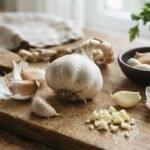
- Gochugaru: Korean chili flakes provide the stew’s signature red color and fruity heat; blooming them in hot oil is essential to unlocking their full flavor.
- Enoki Mushrooms: These delicate, slightly sweet mushrooms add texture without overpowering the broth; trim the tough root end before adding to the pot.
- Anchovy Or Pork Stock: A savory, umami-rich base that supports the spicy seasoning; a good stock makes a noticeable difference in the final depth of flavor.
Ingredient Suggestions
- Kimchi: Adding chopped, well-fermented kimchi introduces extra tang and depth that pairs beautifully with the pork.
- Shrimp: A handful added alongside the pork creates a surf-and-turf style version of the stew for extra richness.
- Extra gochujang: A small spoonful stirred in adds a touch more sweetness and body to the chili base.
- Perilla leaves: A few torn leaves stirred in near the end add a distinctive herbal aroma.
- Sliced green chili: For those who want extra heat, a few fresh slices intensify the stew’s spiciness further.
Helpful Tips & Pro Tips
- If your broth tastes flat, the chili flakes and paste likely were not bloomed long enough in the hot oil; that step is essential for extracting full flavor and color.
- Brown the pork thoroughly before adding the chili paste, since well-developed color on the meat builds a deeper, more savory foundation for the broth.
- Add the egg only once the stew is at a full rolling boil, since a lukewarm broth will not cook the egg properly.
- Use a stone or heavy clay pot if available, since it retains heat exceptionally well and keeps the stew bubbling at the table far longer than a thin metal pot.
- Do not over-stir once the tofu is added; gentle handling keeps the delicate curds mostly intact rather than dissolving into the broth.
How to Serve and Store
Serve soondubu jjigae immediately while it is still bubbling hot, ideally straight from a stone pot, alongside a bowl of steamed rice and a few simple banchan to balance the heat. Because the dish contains a raw or barely cooked egg, it is best enjoyed fresh; leftovers should be stored in an airtight container in the refrigerator and eaten within 1 to 2 days. When reheating, bring the stew back to a full boil on the stovetop rather than microwaving, both for food safety and to restore the broth’s proper texture. Soondubu jjigae does not freeze particularly well due to the delicate tofu, which can become watery and grainy once thawed.
Substitutions
- Ground Pork → Mushrooms and extra tofu — A fully plant-based version that still delivers a hearty, satisfying stew. (Vegan)
- Soy Sauce → Tamari — Keeps the seasoning gluten-free without sacrificing the savory backbone of the broth. (Gluten-Free)
- Ground Pork → Ground turkey or chicken — A leaner, often more affordable protein option that still works well in the stew. (Budget-Friendly)
- Anchovy Stock → Vegetable broth — A vegetarian-friendly base that still supports the bold chili seasoning.
- Raw Egg → Soft-boiled egg on the side — A food-safety-conscious alternative for those who prefer not to add a raw egg directly to the pot.
Suggested Recipes
- Kimchi Jjigae: Another spicy Korean stew that shares soondubu jjigae’s gochugaru-based broth technique.
- Doenjang Jjigae: A milder, savory soybean stew that offers contrast to soondubu jjigae’s fiery heat.
- Gamjatang: A hearty pork bone soup that shares this dish’s use of pork for a rich, savory broth.
- Bibimbap: A rice bowl that pairs naturally as a side alongside a bubbling pot of soondubu jjigae.

Jeff Smith
"Cooking is the intersection of history, science, and emotion."
For me, the kitchen has always been a laboratory of culture. With a background deeply rooted in digital strategy and precision, I approach the culinary arts with the same rigor I apply to the digital landscape—analyzing flavors, perfecting techniques, and documenting the nuance that makes Filipino cuisine truly world-class.
Findme Recipe was born from a desire to bridge the gap between traditional heritage and the modern home cook. Whether it is mastering the perfect balance of acidity in a classic Adobo or simplifying complex regional dishes for everyday kitchens, my mission is to preserve our culinary identity through accessible, data-backed, and delicious content.
I am not just building a database; I am cultivating a community where every Filipino kitchen feels empowered, every ingredient is celebrated, and every family heirloom recipe finds a place to thrive.
Join me as we translate the soul of our islands into recipes for the next generation.