
- Step 1: Prepare the Pork Broth Base
Begin by making a rich pork broth if not using store-bought. Simmer pork bones with one whole onion, a crushed head of garlic, peppercorns, and bay leaves in six cups of water for forty-five minutes to one hour over medium heat. Skim off any gray foam that rises to the surface in the first ten minutes of simmering — these are impurities from the bone marrow and blood that would otherwise cloud the broth and give it a slightly bitter, unpleasant taste. A clear, golden broth is the mark of a well-made Batchoy Tagalog. Strain the finished broth through a fine mesh sieve and set it aside. Measure out four cups for this recipe and reserve the rest for other uses. Season the strained broth with fish sauce, soy sauce, and freshly ground black pepper to taste before proceeding.
- Step 2: Sauté the Aromatics
Heat cooking oil in a large pot or deep pan over medium-high heat. Once the oil is hot, add the minced garlic and cook until lightly golden, stirring constantly to prevent burning, about one minute. The garlic should turn pale gold and smell intensely fragrant but not bitter. Immediately add the diced onions and cook until they become soft and translucent, about three minutes. Properly cooked aromatics are the invisible foundation of every great Filipino soup — the combination of garlic and onion sautéed in oil creates the savory, aromatic base that will permeate every component of the dish. Stir the aromatics frequently and keep the heat at medium to prevent scorching. Season with a pinch of salt at this stage, which helps the onions release their natural sugars and soften more evenly. Do not skip this step even if you are pressed for time.
- Step 3: Brown the Pork and Offal
Increase the heat to medium-high and add the thinly sliced pork strips to the sautéed aromatics. Spread the pork in as thin a layer as possible and resist stirring for sixty to ninety seconds to allow it to brown properly on one side. Turn the pork over and brown the other side. Add the cleaned, sliced pork intestines and cook for another two minutes, stirring occasionally. The intestines should be prepped by boiling in salted water with vinegar for twenty minutes before this recipe begins to remove odors and ensure food safety. Add the thinly sliced pork liver last — liver cooks quickly and becomes tough and grainy if overcooked. Stir-fry the liver with the other meats for just two to three minutes until it changes color from deep red to a grayish-brown throughout. Season everything with fish sauce and pepper.
- Step 4: Add the Broth and Simmer
Pour the four cups of prepared pork broth over the browned meats and aromatics in the pot. Stir gently to combine everything, scraping up any flavorful bits stuck to the bottom of the pan. Bring the soup to a boil over high heat, then immediately reduce to a gentle simmer over medium-low heat. Allow the soup to simmer uncovered for fifteen to twenty minutes, which gives the pork strips time to become fully tender and allows the flavors of the meats, aromatics, and seasonings to meld into a cohesive, deeply satisfying broth. Taste the broth at the ten-minute mark and adjust seasoning — add more fish sauce for saltiness and umami, more black pepper for heat, or a small splash of soy sauce for deeper color. If the broth tastes too rich, add a small amount of water or additional unseasoned broth to dilute.
- Step 5: Final Seasoning and Finishing
Once the pork is tender and the broth has developed a rich, savory flavor, do a final taste and seasoning adjustment. Batchoy Tagalog differs from La Paz Batchoy in that it typically does not use egg noodles — the pork and offal serve as the primary substance of the soup alongside the broth. Some regional Tagalog variations do add thin egg noodles or misua (thin wheat noodles), which can be added at this stage and simmered for just two to three minutes until just tender. The broth should be golden, slightly oily from the rendered pork fat, and intensely savory with layers of garlic and onion flavor underneath. Add a small drizzle of additional fish sauce if the soup tastes flat, and a pinch of white pepper for a cleaner, slightly sharper heat than black pepper provides.
- Step 6: Garnish and Serve
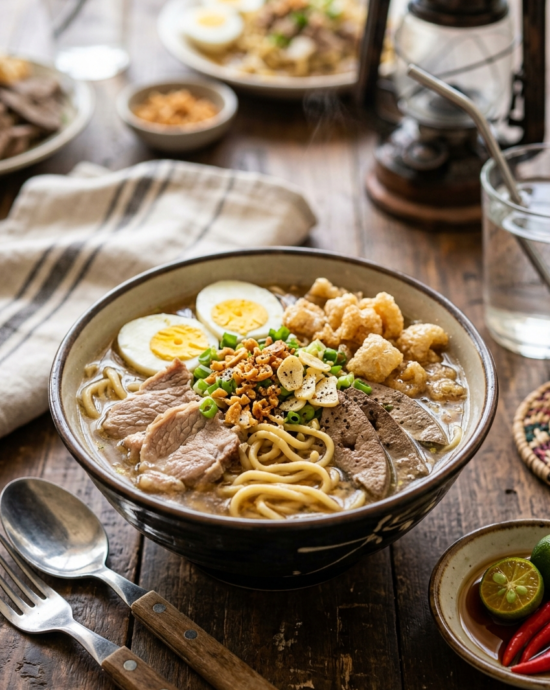
Ladle the hot Batchoy Tagalog into deep serving bowls. Place a halved hard-boiled egg in each bowl, yolk-side up, for visual appeal and added protein. Top each bowl with a generous handful of crushed chicharon (pork cracklings), which provides a satisfying textural contrast to the tender pork and silky broth — the cracklings will soften slightly in the hot soup while still retaining some crunch. Scatter sliced spring onions over the top for freshness and color. For extra flavor, add a sprinkle of toasted garlic flakes or a few drops of calamansi juice squeezed directly into the bowl. Serve immediately with a side of steamed white rice for a filling Filipino comfort meal. Offer additional fish sauce, vinegar, and chili on the side for diners to customize their bowls.
- Calories:380 kcal19%
- Protein:32 g64%
- Carbohydrates:8 g3%
- Sugar:2 g2%
- Fat:24 g31%
Table of Contents
What Is Batchoy Tagalog?
Batchoy Tagalog is a hearty Filipino pork soup that should not be confused with the more internationally famous La Paz Batchoy from Iloilo — though they share a name and some ingredients, they are distinctly different dishes with separate regional identities. Batchoy Tagalog is a clear, deeply savory pork broth-based soup featuring strips of pork, pork liver, and pork intestines (bituka), typically served with crushed chicharon on top and halved hard-boiled eggs. The dish is a staple in Tagalog-speaking provinces, particularly around Batangas, Quezon, and Cavite, where it is considered a quintessential comfort food served for breakfast, lunch, or merienda. The name ‘batchoy’ itself is believed to derive from a Chinese-Filipino cooking term, reflecting the historical influence of Chinese traders and settlers in Philippine food culture. The combination of pork offal — specifically liver and intestines — might seem intimidating to the uninitiated, but these cuts contribute an extraordinary depth of flavor that is irreplaceable in the finished soup. The liver adds a rich, iron-forward bitterness that balances the fatty sweetness of pork, while the intestines, when properly cleaned and cooked, become tender and absorb the broth beautifully. Chicharon is the signature garnish that sets Batchoy Tagalog apart from other Filipino pork soups — the crushed pork cracklings add textural complexity and an additional hit of rich pork flavor that elevates every spoonful. Whether enjoyed as a warming bowl on a rainy Tagalog morning or as a filling midday meal, Batchoy Tagalog represents the resourcefulness and bold flavor preferences of Filipino home cooking.
Ingredient Notes
- Pork Liver: Pork liver is what gives Batchoy Tagalog its characteristic depth and slight bitterness. Select firm, bright liver with a uniform deep reddish-brown color and no grayish spots, which indicate age. Slice it very thinly and add it last, as overcooking liver even by a minute or two makes it tough and grainy.
- Pork Intestines (Bituka) Pork intestines must be meticulously cleaned before use to remove any strong odors. Boil them in water with vinegar, garlic, and salt for twenty to thirty minutes, then rinse thoroughly before slicing and adding to the soup. Well-prepared bituka has a mild, savory flavor and a pleasantly chewy texture.
- Chicharon: Chicharon (pork cracklings) serves as both garnish and flavor enhancer in Batchoy Tagalog. Use freshly made or high-quality commercial chicharon for the best crunch. Crush them coarsely just before serving — too fine and they dissolve immediately; too large and they are difficult to eat with a spoon.
Ingredient Suggestions
- Misua Noodles — Add thin misua wheat noodles in the last two minutes for a heartier, more substantial soup bowl.
- Fried Garlic — Top each bowl with crispy fried garlic for a fragrant, crunchy garnish that complements the pork broth beautifully.
- Calamansi — A squeeze of calamansi brightens the entire bowl and cuts through the richness of the pork fat in the broth.
- Pork Blood — Some traditional recipes include pork blood for a richer, darker broth — add it coagulated and sliced for an authentic regional variation.
Helpful Tips & Pro Tips
- Clean the pork intestines properly before cooking — this is non-negotiable. Boil the intestines in water with a generous pour of white vinegar, crushed garlic, salt, and bay leaves for at least twenty minutes. Drain, rinse under cold running water, and check for any remaining odor before slicing and using in the recipe.
- Add the pork liver last and cook it for no more than three minutes total in the soup. Overcooked liver becomes grainy and bitter, which will permeate the entire broth. The liver is done when it has changed color throughout but still has a slightly pink center, which carryover heat will finish cooking.
- Use bone-in pork pieces for making the broth — neck bones, knuckles, or spine produce a much more gelatinous, deeply flavored broth than lean meat alone. The collagen from the bones creates a silkier mouthfeel and a more satisfying soup base.
- Why is my Batchoy Tagalog broth cloudy? Cloudy broth is typically caused by not skimming the foam during the initial boiling phase or by boiling the broth too vigorously. A rapid boil emulsifies the fat and proteins into the liquid, creating a grey, turbid soup. Always skim diligently and maintain a gentle simmer rather than a full boil.
How to Serve and Store
Serve Batchoy Tagalog piping hot in deep bowls immediately after garnishing with chicharon, as the pork cracklings begin to soften within minutes of contact with the hot soup. Accompany with steamed white rice, which is the traditional partner for this soup in Tagalog provinces. The soup keeps well refrigerated for up to three days in an airtight container — store the chicharon garnish separately and add fresh to each bowl upon reheating. Reheat gently over low heat to avoid toughening the liver and intestines. The broth can also be frozen for up to one month without the solid ingredients, which should be added fresh when serving.
Substitutions
- Pork liver → Chicken liver — More widely available and milder in flavor, chicken liver produces a similarly rich but slightly less intense result.
- Pork intestines → Pork shoulder — For those who prefer to avoid offal, diced pork shoulder provides a meatier, more accessible version of the soup.
- Fish sauce → Soy sauce — Provides saltiness and umami without the fishy note for those sensitive to fish sauce.
- Pork cracklings → Fried wonton strips (gluten-free issue: use rice crackers) — Provides a similar crunchy garnish for those who cannot find chicharon.
- Pork broth → Chicken broth — Creates a lighter, more mild-flavored soup that still pairs well with the pork meats.
- Hard-boiled eggs → Soft-boiled eggs — A soft, runny yolk adds a luxurious creaminess to each bowl of soup.
Suggested Recipes
- La Paz Batchoy — The Ilonggo version of batchoy featuring egg noodles and a darker, more complex broth.
- Bulalo — Another Filipino pork/beef bone soup with a similarly rich, gelatinous broth and comforting character.
- Lomi — A thick egg noodle soup from Batangas that shares the pork-and-offal tradition of Tagalog comfort cooking.
- Goto (Rice Congee) — A Filipino rice porridge featuring similar offal ingredients in a lighter, congee-style base.
Frequently Asked Questions

Jeff Smith
"Cooking is the intersection of history, science, and emotion."
For me, the kitchen has always been a laboratory of culture. With a background deeply rooted in digital strategy and precision, I approach the culinary arts with the same rigor I apply to the digital landscape—analyzing flavors, perfecting techniques, and documenting the nuance that makes Filipino cuisine truly world-class.
Findme Recipe was born from a desire to bridge the gap between traditional heritage and the modern home cook. Whether it is mastering the perfect balance of acidity in a classic Adobo or simplifying complex regional dishes for everyday kitchens, my mission is to preserve our culinary identity through accessible, data-backed, and delicious content.
I am not just building a database; I am cultivating a community where every Filipino kitchen feels empowered, every ingredient is celebrated, and every family heirloom recipe finds a place to thrive.
Join me as we translate the soul of our islands into recipes for the next generation.