
- Step 1: Clean and Cut the Squid
Clean the fresh squid by removing the transparent quill from inside the body tube, pulling it out smoothly in one piece. Remove the head by grasping it firmly and pulling it away from the body — the internal organs will come with it. Reserve the tentacles by cutting them just below the eyes, removing the hard beak at the base. Peel off the thin purple-pink outer membrane from the body tube — this is optional but produces a cleaner, more tender result. Rinse the cleaned body tubes and tentacle clusters under cold running water. Cut the cleaned body tubes into rings approximately one centimeter wide — uniform thickness is important for even frying. Pat all pieces completely dry with paper towels, pressing firmly to remove as much moisture as possible.
- Step 2: Prepare the Breading Station
Set up an efficient two-stage breading station. In one wide, shallow bowl, combine the all-purpose flour, cornstarch, baking powder, salt, black pepper, garlic powder, and paprika. Whisk everything together until uniformly combined — the baking powder is the key secret ingredient that makes Filipino Calamares uniquely light and crispy, as it creates tiny bubbles of carbon dioxide in the coating during frying that produce an airy, shatteringly thin crust. In a second shallow bowl, beat the eggs until smooth. Taste a pinch of the seasoned flour and adjust salt, pepper, or paprika to your preference. Having the breading station fully organized before you begin coating the squid ensures efficiency and consistent coating quality.
- Step 3: Coat the Squid Rings
Working with a handful of squid rings at a time, dip them first into the beaten egg, allowing excess to drip off for three to four seconds — too much egg creates a heavy, wet coating that does not fry crisply. Transfer the egg-coated rings immediately into the seasoned flour mixture and toss to coat thoroughly, pressing gently to ensure the flour adheres to every surface of each ring. Shake off any excess loose flour by tossing the coated rings in a fine mesh sieve or in your hands — excess flour falls off during frying and burns in the oil, creating bitter, dark particles that contaminate the oil and stick to subsequent batches. Place the coated rings on a wire rack or clean plate in a single layer.
- Step 4: Heat Oil for Deep Frying
Pour enough cooking oil into a deep, heavy pot to achieve a depth of at least three to four inches — the squid rings must be able to float and be fully surrounded by oil during frying for even, all-over crispiness. Heat the oil over medium-high heat to 180°C (355°F). Use a kitchen thermometer for accuracy. If you do not have a thermometer, test the oil temperature by dropping a small piece of the coated squid into it — if it sinks to the bottom and floats back up within two to three seconds while sizzling vigorously, the temperature is correct. Oil that is too cool produces oily, soggy Calamares; oil that is too hot burns the coating before the squid inside is cooked.
- Step 5: Fry in Small Batches
Carefully lower a small batch of the coated squid rings into the hot oil — never fry more than can fit in a single, uncrowded layer. Overcrowding drops the oil temperature dramatically and results in oily, pale, poorly crisped Calamares. Fry for approximately two to three minutes, turning the rings once halfway through, until the coating is deep golden brown and uniformly crispy. The squid inside will cook perfectly in this short time — do not be tempted to fry longer in search of more color, as extended frying toughens the squid into the rubber texture you are trying to avoid. Remove with a spider strainer and drain on a wire rack (not paper towels, which trap steam and soften the crust).
- Step 6: Prepare the Dipping Sauce
While the Calamares fries in batches, prepare the classic Filipino-style dipping sauce. In a small bowl, combine the mayonnaise, sweet chili sauce, and calamansi juice. Stir until fully blended into a smooth, pale orange-pink sauce. Taste and adjust — add more sweet chili for sweetness and heat, more calamansi for brightness, or a pinch of salt if needed. This simple mayo-sweet chili combination is the most popular Filipino dipping sauce for Calamares and its creaminess, sweetness, and mild acidity complement the crispy, savory squid rings perfectly. For a spicier version, substitute some of the sweet chili with sriracha. For a more traditional Spanish approach, serve with aioli.
- Step 7: Plate and Serve Immediately
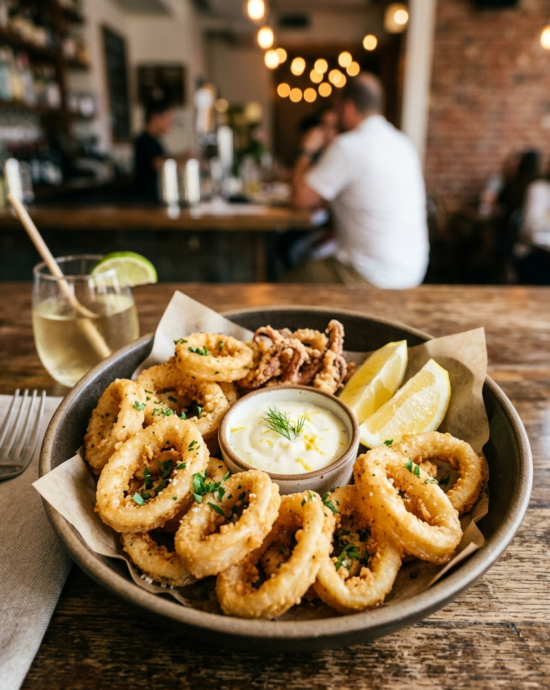
Transfer the freshly fried Calamares to a large serving platter lined with a layer of fresh lettuce or paper for presentation. Arrange the rings and tentacle clusters in a generous mound and serve the dipping sauce in a small bowl alongside. Place calamansi or lemon wedges around the platter for guests to squeeze over the hot rings. Serve absolutely immediately — Calamares is one of the most time-sensitive dishes in Filipino cooking, as the crispy coating begins losing its textural integrity within five to ten minutes of leaving the fryer due to steam buildup from the hot squid inside softening the crust. The perfect Calamares experience is eating them seconds after they emerge from the oil.
- Calories:380 kcal19%
- Protein:26 g52%
- Carbohydrates:32 g12%
- Sugar:1 g1%
- Fat:16 g21%
- Salt (Sodium):580 mg25%
- Energy:1590 kJ19%
Table of Contents
What Is Calamares?
Calamares is a Filipino deep-fried squid dish made by coating fresh squid rings and tentacles in a seasoned flour-and-cornstarch batter and deep-frying them until golden, light, and shatteringly crisp — the Filipino adaptation of the Spanish and Italian calamari that has become one of the country’s most beloved seafood snacks, pulutan, and restaurant staples. It is found on virtually every Filipino restaurant and carinderia menu and is universally regarded as one of the most crowd-pleasing dishes in Philippine cuisine.
The dish arrived in the Philippines through Spanish colonial influence during the 300-plus years of colonization that introduced squid frying techniques from the Iberian Peninsula. Filipino cooks adopted and adapted the preparation to local tastes and ingredients, adding the characteristic Filipino seasoning profile and developing the specific cornstarch-and-baking-powder coating formula that produces the uniquely light, airy crust that distinguishes Filipino Calamares from its Mediterranean predecessors.
The name ‘Calamares’ itself is the Spanish and Filipino word for squid, reflecting the deep linguistic and culinary legacy of Spanish colonialism in Philippine food culture. However, the Filipino version has evolved into something distinctly its own — lighter in batter texture, more aggressively seasoned, and served with the uniquely Filipino mayo-sweet chili dipping sauce rather than the aioli or marinara typical of European preparations.
As a pulutan, Calamares is in a class by itself — crispy, snackable, endlessly addictive, and perfectly calibrated to complement cold beer in a way that few other foods can match. It represents one of the happiest intersections of Spanish culinary heritage and Filipino taste preferences in the national cuisine.
Ingredient Notes
- Fresh Squid: Fresh squid produces dramatically superior Calamares compared to frozen, as frozen squid releases more water during frying, which interferes with coating adhesion and oil temperature stability. Choose the best squid for Calamares by selecting medium-sized specimens (about 15–20cm body length) with pearlescent, shiny skin, firm flesh, and a clean, mild ocean smell.
- Cornstarch: The combination of all-purpose flour and cornstarch is what gives Filipino Calamares its signature coating texture — flour provides structure and flavor while cornstarch produces the extra lightness and delicate crispiness that makes the crust shatter rather than chew. The ratio of flour to cornstarch critically affects the final texture.
- Baking Powder : Baking powder is the secret ingredient that makes Filipino Calamares coating uniquely light and airy. The heat of the frying oil activates the baking powder, releasing carbon dioxide gas that creates microscopic bubbles throughout the coating, resulting in an unusually light, almost tempura-like texture.
Ingredient Suggestions
- Beer Batter — Replacing the beaten egg with cold beer creates an even lighter, crisper batter with a subtle yeasty flavor dimension popular in restaurants.
- Parmesan in Coating — Adding two tablespoons of finely grated parmesan to the flour mixture adds savory umami depth and helps the coating brown more beautifully.
- Sriracha Mayo — Mixing sriracha into the mayonnaise dipping sauce creates a spicier, more vibrant alternative dip.
Helpful Tips & Pro Tips
- The single most important variable in crispy Calamares is maintaining oil temperature. Add only small batches to the oil and use a thermometer to verify the temperature returns to 180°C before adding each new batch.
- Why is my Calamares coating falling off? The squid rings were not dried thoroughly enough before coating, causing the egg and flour to slide off the wet surface. Pat with paper towels aggressively and allow to air-dry for 10 minutes on a wire rack before breading.
- For extra crispy Calamares, double-coat the rings — after the initial flour coating, return to the egg, then coat in flour a second time. This creates a thicker crust with superior crunch retention.
How to Serve and Store
Calamares is at its absolute best served immediately after frying while the coating is at maximum crispiness. Serve with the mayo-sweet chili dipping sauce, calamansi wedges, and cold beer. Leftover Calamares can be refrigerated for up to 1 day but will lose most of its crispiness. Reheat in an air fryer at 200°C for three to four minutes or in a 220°C oven for five minutes to restore some crunch. Never microwave, as this makes the coating soft and rubbery. Freezing cooked Calamares is not recommended.
Substitutions
- Squid → Large Shrimp — Peeled, deveined shrimp coated and fried identically produces excellent crispy shrimp using the same batter and technique.
- All-Purpose Flour → Rice Flour — Creates a lighter, gluten-free coating with exceptional crispiness that holds up longer than wheat flour.
- Eggs → Buttermilk — A slightly tangier egg substitute that produces a well-adhering, flavorful coating with a tender interior texture.
Suggested Recipes
- Adobong Pusit — The braised squid ink counterpart to Calamares that showcases the same squid protein in a completely different, richly sauced preparation.
- Sizzling Gambas — Another beloved Filipino fried and sautéed seafood pulutan that shares Calamares’ position as an essential pairings with beer.
- Baked Tahong — A complementary shellfish appetizer that rounds out a complete Filipino seafood pulutan spread alongside Calamares.
Frequently Asked Questions

Jeff Smith
"Cooking is the intersection of history, science, and emotion."
For me, the kitchen has always been a laboratory of culture. With a background deeply rooted in digital strategy and precision, I approach the culinary arts with the same rigor I apply to the digital landscape—analyzing flavors, perfecting techniques, and documenting the nuance that makes Filipino cuisine truly world-class.
Findme Recipe was born from a desire to bridge the gap between traditional heritage and the modern home cook. Whether it is mastering the perfect balance of acidity in a classic Adobo or simplifying complex regional dishes for everyday kitchens, my mission is to preserve our culinary identity through accessible, data-backed, and delicious content.
I am not just building a database; I am cultivating a community where every Filipino kitchen feels empowered, every ingredient is celebrated, and every family heirloom recipe finds a place to thrive.
Join me as we translate the soul of our islands into recipes for the next generation.