
- Step 1: Rinse and Start the Glutinous Rice
Rinse the glutinous rice briefly under cold running water in a fine mesh sieve, swishing it with your hand for thirty seconds until the water runs slightly clearer. Unlike regular rice, glutinous rice for champorado does not need to be soaked beforehand — the long, slow cooking process in excess water will naturally soften and break down the grains into the porridge-like consistency the dish is known for. Place the rinsed rice in a medium to large heavy-bottomed saucepan with four cups of cold water. Bring to a boil over medium-high heat, stirring occasionally to prevent the rice from settling and sticking to the bottom of the pot. Once boiling, reduce the heat to medium-low and begin stirring more frequently. The starch released by the glutinous rice will quickly begin to thicken the water into a creamy, porridge-like mixture within the first five to eight minutes of cooking.
- Step 2: Add the Tablea and Cook Until Thick
Once the rice has been cooking for ten to twelve minutes and the mixture has begun to thicken noticeably, add the chopped tablea pieces directly into the pot. Tablea is native Philippine cacao ground into dark, slightly bitter discs — it is less sweet and more intensely chocolatey than Dutch-processed cocoa powder, with an earthy, roasted quality that gives authentic champorado its distinctive flavor profile. Stir the tablea vigorously into the hot rice porridge, pressing the pieces against the side of the pot to help them dissolve fully into the mixture. Continue cooking over medium-low heat, stirring almost constantly, for another ten to fifteen minutes until the tablea has fully dissolved and the champorado has thickened to a creamy, spoonable consistency. The mixture should coat the back of a wooden spoon thickly when done.
- Step 3: Sweeten and Season the Champorado
Add the sugar to the champorado in increments, stirring well after each addition and tasting before adding more. Tablea varies significantly in natural sweetness depending on its source and processing method — some varieties are quite bitter and require more sugar, while others from sweeter cacao regions need less. Start with one-third cup of sugar, taste, and add more as needed. The finished champorado should be pleasantly sweet without being cloying, with the bitterness of the cacao still clearly perceptible underneath the sweetness — that balance is what makes champorado distinctive. Add a small pinch of salt, which is a crucial step that most home cooks overlook. Salt in sweet dishes does not make them taste salty; it amplifies and brightens all the other flavors, making the chocolate taste more intense and the sweetness taste cleaner.
- Step 4: Add the Milk and Final Consistency Check
Pour the evaporated milk or fresh milk into the champorado and stir gently to combine. Evaporated milk gives champorado a richer, creamier texture and a slightly caramelized sweetness that enhances the chocolate flavor, while fresh whole milk produces a lighter, more delicate result. Sweetened condensed milk, though not traditional, creates an ultra-rich, indulgent version that requires no additional sugar. After adding the milk, check the consistency of the champorado — it should be thick and creamy but still pourable, moving slowly when you tilt the pot. If it is too thick, add small amounts of milk or hot water to thin it to your preferred consistency. If it seems too thin, continue cooking uncovered over low heat, stirring frequently, for another five minutes to allow excess moisture to evaporate and the starch to thicken further.
- Step 5: Serve with Tuyo and a Milk Drizzle
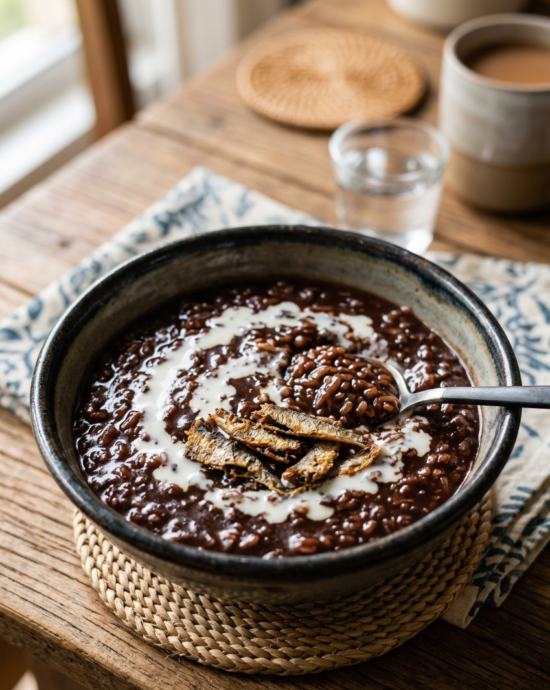
Ladle the hot champorado into deep bowls or wide soup plates. Drizzle a generous pour of evaporated milk or fresh milk directly over the surface of each bowl — this milk is not mixed in but left as a white swirl or pool on the dark chocolate surface. This contrast of dark chocolate porridge with white milk is not only visually beautiful but provides a temperature and richness contrast as the cold milk meets the hot champorado. The classic Filipino accompaniment to champorado is tuyo — small, dried, salted fish that are pan-fried or grilled until crispy. The intensely salty, savory, slightly smoky tuyo next to the sweet chocolate porridge creates one of the most unexpectedly delicious sweet-salty flavor contrasts in Filipino cuisine. Serve the tuyo in a small plate alongside each bowl of champorado and let diners discover the magic of combining the two.
- Calories:320 kcal16%
- Protein:6 g12%
- Carbohydrates:62 g21%
- Sugar:28 g31%
- Fat:6 g8%
Table of Contents
What Is Champorado?
Champorado is a beloved Filipino chocolate rice porridge that occupies a unique and cherished place in the country’s culinary landscape as both a traditional breakfast staple and a comforting merienda snack. At its most authentic, champorado is made with glutinous rice (malagkit) slowly cooked in water until it forms a thick, creamy porridge, into which tablea — dark, fermented native Philippine cacao discs — is dissolved to create a deeply chocolatey, slightly bitter, and utterly comforting dish. The name champorado traces its origins to the Spanish colonial period, derived from the Mexican ‘champurrado,’ a warm chocolate masa drink brought to the Philippines via the Manila-Acapulco Galleon Trade route. Over centuries, Filipino cooks transformed it from a liquid chocolate drink into a thick rice porridge using local glutinous rice and native tablea, creating something entirely distinct from its Mexican ancestor. The tablea used in authentic champorado is made from locally grown Davao or Benguet cacao, fermented and sun-dried before being stone-ground and formed into tablets. This native cacao has a more complex, earthy flavor profile than commercial chocolate, with natural floral and fruity notes alongside its characteristic bitterness. What makes champorado particularly memorable in Filipino food culture is its traditional pairing with tuyo — intensely salty dried fish — a sweet-salty combination that seems improbable on paper but is transcendently satisfying in practice. Champorado is rain-day food, school-morning food, and grandparent-cooked food — a dish deeply embedded in the sensory memory of Filipino childhood and warmly associated with comfort, family, and home.
Ingredient Notes
- Tablea:Tablea is the defining ingredient of authentic Filipino champorado — these dark, native cacao discs have a more complex, fruity-bitter flavor than commercial cocoa powder. Look for tablea made from pure cacao without added sugar or flavor; the best quality tablea breaks with a snap and smells intensely of roasted chocolate and fruit.
- Glutinous Rice: Glutinous rice (malagkit) creates champorado’s signature thick, creamy porridge texture through its high starch content. Do not substitute with regular white rice, which will produce a grainier, less sticky result. Short-grain glutinous rice tends to break down faster and produce a smoother porridge than long-grain varieties.
Ingredient Suggestions
- Cocoa Powder — Use Dutch-processed cocoa powder (one-quarter cup) as a quick substitute for tablea when the authentic ingredient is unavailable, though the flavor will be less complex.
- Muscovado Sugar — Replace white sugar with muscovado for a molasses-rich, deep caramel sweetness that complements the dark cacao beautifully.
- Condensed Milk — Drizzle sweetened condensed milk instead of evaporated milk over the finished champorado for an ultra-rich, indulgent version.
- Banana Chips — Float crispy banana chips on top for a crunchy, tropical garnish that complements the chocolate flavor surprisingly well.
Helpful Tips & Pro Tips
- Stir champorado constantly once the rice begins to release its starch — the thick mixture scorches easily on the bottom of the pot if left unattended. Use a wooden spoon or heat-resistant spatula and scrape the bottom and edges of the pot in long, sweeping strokes every thirty seconds or so.
- The tablea dissolving process takes longer than most recipes suggest. Break or chop the tablea into very small pieces before adding to help it melt faster and more evenly. Undissolved chunks of tablea in finished champorado indicate it was not cooked long enough after adding the chocolate.
- Let the champorado cool for five minutes before drizzling cold milk on top. The contrast between the warm chocolate porridge and the cool milk creates a temperature interplay that most people find very enjoyable, but if the champorado is boiling hot, the milk immediately warms up and loses this effect.
- Why is my champorado not thick enough? Insufficient cooking time is the most common reason. Glutinous rice must cook long enough for its starch granules to fully burst and gelatinize. Cook at a steady simmer for at least twenty-five total minutes, stirring frequently, until the mixture holds its shape when scooped and then slowly spreads.
How to Serve and Store
Champorado is traditionally served hot for breakfast or merienda (afternoon snack), always with a drizzle of evaporated or fresh milk over the top and crispy tuyo (dried fish) on the side. It can also be served at room temperature, when it thickens further to a nearly pudding-like consistency. Store leftover champorado in an airtight container for up to two days in the refrigerator. It will thicken considerably as it chills — reheat over low heat with a splash of milk or water, stirring until it returns to a creamy, pourable consistency. Champorado can be frozen for up to three weeks and thawed overnight in the refrigerator before reheating.
Substitutions
- Tablea → Dutch-processed cocoa powder — Use one-quarter cup of unsweetened Dutch-process cocoa powder as a more accessible substitute, adding it gradually while tasting for bitterness.
- Glutinous rice → Regular white rice — Creates a grainier, less sticky porridge; increase the water ratio and cooking time by twenty percent.
- Evaporated milk → Coconut milk (vegan and lactose-free) — Full-fat coconut milk provides an equally rich and creamy topping with a subtle tropical flavor.
- Sugar → Stevia or monk fruit sweetener — For a lower-sugar version, though both sweeteners have slightly different flavor profiles than cane sugar.
- Tuyo accompaniment → Salted nuts — Salted, roasted cashews or peanuts provide the salty contrast to the sweet champorado for those who prefer not to eat dried fish.
- Water → Milk for cooking — Cook the rice in milk instead of water from the start for an extra-rich, creamy champorado.
Suggested Recipes
- Arroz Caldo — Another Filipino rice porridge, this one savory and ginger-forward, representing the other side of the Filipino lugaw tradition.
- Goto (Beef Tripe Congee) — A savory Filipino congee that uses the same glutinous rice porridge technique as champorado.
- Binignit — A Visayan coconut milk dessert soup made with glutinous rice balls, sweet potato, and banana, sharing champorado’s warm, comforting character.
- Tsampuradong Mais — A corn-based version of champorado popular in Visayas that replaces glutinous rice with ground corn grits.
Frequently Asked Questions

Jeff Smith
"Cooking is the intersection of history, science, and emotion."
For me, the kitchen has always been a laboratory of culture. With a background deeply rooted in digital strategy and precision, I approach the culinary arts with the same rigor I apply to the digital landscape—analyzing flavors, perfecting techniques, and documenting the nuance that makes Filipino cuisine truly world-class.
Findme Recipe was born from a desire to bridge the gap between traditional heritage and the modern home cook. Whether it is mastering the perfect balance of acidity in a classic Adobo or simplifying complex regional dishes for everyday kitchens, my mission is to preserve our culinary identity through accessible, data-backed, and delicious content.
I am not just building a database; I am cultivating a community where every Filipino kitchen feels empowered, every ingredient is celebrated, and every family heirloom recipe finds a place to thrive.
Join me as we translate the soul of our islands into recipes for the next generation.