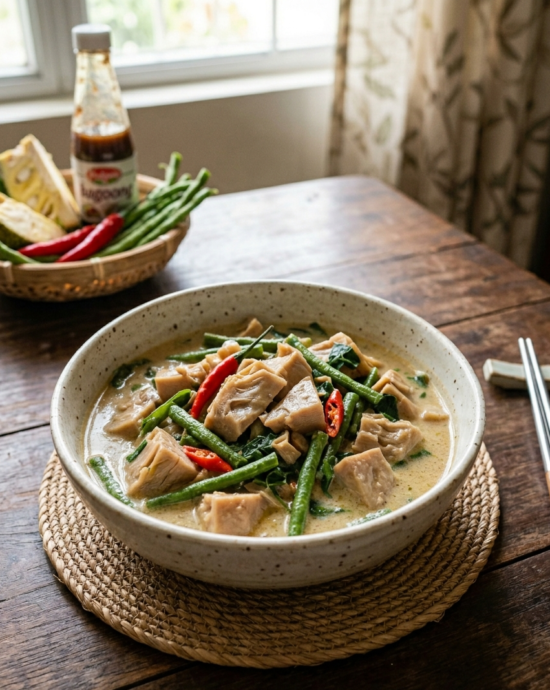

- Step 1: Prepare the Young Jackfruit
If using fresh young jackfruit, begin by oiling your hands and knife generously before cutting, as fresh jackfruit releases a very sticky latex that is extremely difficult to remove without oil. Cut the jackfruit into quarters, remove the core, and chop the flesh into roughly one-inch pieces. Transfer to a pot of water with a pinch of salt and boil for fifteen to twenty minutes until slightly tender. This pre-boiling step removes some of the raw, slightly astringent flavor and begins the tenderizing process. Drain and set aside. If using canned young jackfruit, drain and rinse thoroughly under cold running water, then squeeze out excess moisture before using. Canned jackfruit is already pre-cooked and will require less total simmering time.
- Step 2: Sauté Aromatics and Pork
Heat cooking oil in a large, heavy pan or wok over medium-high heat. Add the chopped onion and cook for two to three minutes until softened and translucent. Add the minced garlic and julienned ginger and continue to sauté for one to two minutes until fragrant and the garlic is lightly golden. Add the cubed pork belly to the pan, pushing the aromatics aside to allow the pork to make contact with the hot pan surface. Cook the pork, turning occasionally, for five to seven minutes until it is browned and some fat has rendered out. The rendered pork fat combines with the aromatics to create a deeply savory base that will infuse the coconut milk with incredible richness and depth of flavor.
- Step 3: Add Bagoong and Jackfruit
Add the bagoong alamang to the pan and stir to combine with the pork and aromatics. Cook the shrimp paste for one to two minutes, stirring constantly, to allow it to develop its flavors and mellow slightly in the heat. The kitchen will fill with the intensely savory, slightly funky aroma of cooking bagoong, which signals that it is becoming properly integrated into the dish. Add the prepared young jackfruit pieces and toss everything together thoroughly, ensuring all the jackfruit is coated with the bagoong-pork-aromatics mixture. Stir-fry for three to four minutes over medium-high heat. The jackfruit will absorb the savory flavors from the bagoong and pork, developing a delicious preliminary seasoning before the coconut milk is added.
- Step 4: Add Coconut Milk and Simmer
Pour the coconut milk into the pan and add the green chili peppers and bird's eye chili if using. Stir gently to combine all ingredients. Bring to a gentle simmer over medium heat — never allow to boil vigorously. Reduce the heat to medium-low and simmer uncovered for twenty to twenty-five minutes, stirring occasionally. During this time the jackfruit will become fully tender, absorbing the coconut milk and bagoong flavors deeply throughout. The liquid will reduce and thicken as the jackfruit naturally releases starch into the sauce. The finished sauce should be creamy, slightly thick, and a beautiful ivory-golden color with a complex, deeply savory-coconutty aroma. Check periodically to ensure the bottom is not scorching.
- Step 5: Add Coconut Cream and Adjust
Once the jackfruit is fully tender and the sauce has thickened to your liking, pour in the coconut cream and stir to incorporate. The coconut cream adds a final layer of luxurious richness and a distinctly sweet, pure coconut flavor that elevates the sauce beautifully. Allow to simmer for two to three more minutes after adding the cream. Taste the dish and adjust seasoning carefully — the bagoong provides significant saltiness, so taste before adding any additional salt or fish sauce. If the dish needs more heat, gently crush one or two of the bird's eye chilies into the sauce. If it is too spicy, add an extra splash of coconut milk to temper the heat.
- Step 6: Final Check and Serve
The ginataang langka is ready when the jackfruit is completely tender and able to be easily pulled apart with a fork, resembling the texture of slow-cooked pulled pork. The sauce should be thick, creamy, and clinging to every piece of jackfruit and pork. The color should be a beautiful, warm ivory-gold with flecks of chili and the green color of the whole chili peppers. Do a final taste adjustment for salt, heat, and richness. Transfer to a large serving bowl. Serve immediately alongside steamed white rice and additional bagoong alamang as a condiment. The combination of the rich, spicy-savory ginataang langka with plain steamed rice and pungent bagoong on the side is a deeply satisfying, quintessentially Filipino eating experience.
- Calories:270 kcal14%
- Protein:9 g18%
- Carbohydrates:13 g4%
- Sugar:4 g4%
- Fat:21 g27%
Table of Contents
What Is Ginataang Langka?
Ginataang langka is a classic Filipino dish made from young, unripe green jackfruit cooked in coconut milk with pork, shrimp paste, and chili. It belongs to the gata family of Filipino dishes — preparations built around the rich, creamy base of freshly pressed or canned coconut milk — and is one of the most satisfying and flavorful representatives of this beloved culinary tradition. Young jackfruit, called langka in Filipino, is the unripe, green-skinned fruit of the jackfruit tree, which is botanically distinct from the sweet, ripe yellow jackfruit enjoyed as a dessert or snack. When young and green, jackfruit has a firm, starchy flesh with a mild, neutral flavor and a remarkably meaty, fibrous texture that absorbs whatever flavors it is cooked in, making it one of the most versatile savory ingredients in Southeast Asian cooking. In recent years, young jackfruit has gained international popularity as a plant-based meat substitute, but in the Philippines it has been eaten this way for centuries, long before the plant-based food movement brought it to global attention. Ginataang langka is particularly associated with regions where both coconut palms and jackfruit trees grow abundantly — notably the Bicol, Quezon, and Laguna provinces of Luzon. The Bicolano version is typically made spicier, with generous amounts of bird’s eye chili reflecting the Bicolano love of heat, while versions from other regions may be milder. The dish is deeply nutritious, providing dietary fiber, vitamin C, potassium, and a range of B vitamins from the jackfruit, alongside the protein and fat from pork and coconut milk. It is a prime example of Filipino ingenuity in using every part of a tree fruitfully.
Ingredient Notes
- Young Jackfruit (Langka): Fresh young jackfruit should have green, firm skin with no soft spots. When cut, the flesh should be pale white to cream and starchy rather than soft and sweet. Oil your hands and knife generously before handling as the latex is extremely sticky.
- Bagoong Alamang (Shrimp Paste): The bagoong is what gives ginataang langka its characteristic funky, deeply savory backbone. Use well-fermented, quality bagoong. Pre-sautéed bagoong (ginisang bagoong) from a jar works excellently if freshly sautéed bagoong is unavailable.
- Ginger: Fresh ginger adds a warm, aromatic quality to the coconut milk that balances the richness of the sauce. Use young, tender ginger if available — it has a milder, less fibrous quality. Peel and julienne thinly for best flavor integration.
Ingredient Suggestions
- Malunggay leaves — stir in at the very end; adds nutrition and a fresh earthy counterpoint to the rich coconut sauce
- Dried shrimp (hibe) — a tablespoon added with aromatics intensifies the savory depth alongside the bagoong
- More bird’s eye chili — if you love Bicolano-style heat, double the amount for a fiery, deeply satisfying version
- Kangkong (water spinach) — wilt a handful into the finished dish for added greens and textural variety
Helpful Tips & Pro Tips
- Pre-boil fresh jackfruit to reduce bitterness and cooking time. Fresh young jackfruit benefits from a preliminary boil in salted water for fifteen to twenty minutes. This removes the raw, slightly bitter taste and begins tenderizing the dense flesh before it enters the coconut milk.
- Oil everything when handling fresh jackfruit. The sticky white latex of fresh jackfruit is notoriously difficult to remove from skin and kitchen surfaces. Oil your hands, knife, and cutting board thoroughly before beginning. Remove any latex from hands with cooking oil, not soap and water.
- Why is my ginataang langka too salty? Excessive saltiness almost always comes from over-adding bagoong. Bagoong brands vary widely in saltiness. Start with two tablespoons, taste the dish after simmering, and add more gradually rather than all at once.
- Simmer low and slow for the best texture. Young jackfruit needs sufficient time to become fully tender and absorb the coconut-bagoong sauce. Rushing the process over high heat prevents the jackfruit from achieving its characteristic pulled-meat-like texture.
How to Serve and Store
Serve ginataang langka hot over steamed white rice with additional bagoong alamang on the side. It is a hearty main dish that needs only rice to be a complete meal. Store leftovers in an airtight container in the refrigerator for up to 3 days. The sauce thickens as it cools — reheat gently over low heat with a splash of water or coconut milk to restore the creamy consistency. Not recommended for freezing as the coconut sauce can become grainy and the jackfruit texture changes undesirably upon thawing.
Substitutions
- Pork belly → Chicken thighs — brown well before adding jackfruit; cooks faster and is a leaner alternative
- Pork belly → Skip entirely (vegan) — ginataang langka is equally popular as a fully vegan dish in the Philippines
- Bagoong alamang → Miso paste — for a non-fishy umami alternative that still provides fermented depth
- Fresh young jackfruit → Canned young jackfruit in brine — rinse thoroughly, drain, and squeeze before using; widely available
- Bird’s eye chili → Chili flakes — use a half teaspoon for a more controlled, evenly distributed level of heat
Suggested Recipes
- Ginataang Kalabasa — squash in coconut milk; the closest sibling dish that uses the same gata base and cooking technique
- Laing — dried taro leaves in coconut milk; another spicy, bagoong-accented gata classic from the Bicol region
- Bicol Express — pork and chili in coconut milk; the spicier, meat-forward cousin in the same gata family
- Kare-Kare — a peanut-based stew that also uses young jackfruit as one of its traditional vegetables
Frequently Asked Questions

Jeff Smith
"Cooking is the intersection of history, science, and emotion."
For me, the kitchen has always been a laboratory of culture. With a background deeply rooted in digital strategy and precision, I approach the culinary arts with the same rigor I apply to the digital landscape—analyzing flavors, perfecting techniques, and documenting the nuance that makes Filipino cuisine truly world-class.
Findme Recipe was born from a desire to bridge the gap between traditional heritage and the modern home cook. Whether it is mastering the perfect balance of acidity in a classic Adobo or simplifying complex regional dishes for everyday kitchens, my mission is to preserve our culinary identity through accessible, data-backed, and delicious content.
I am not just building a database; I am cultivating a community where every Filipino kitchen feels empowered, every ingredient is celebrated, and every family heirloom recipe finds a place to thrive.
Join me as we translate the soul of our islands into recipes for the next generation.