
- Step 1: Prepare the Crispy Noodle Topping
Begin by making the crispy fried noodle topping, which is Khao Soi's most distinctive visual element and provides the essential crunchy texture contrast to the soft braised noodles in the bowl. Take a portion of the dried egg noodles — approximately 25 grams per serving — and pull them apart into loose, individual strands. Pour vegetable oil to a depth of three centimeters in a small saucepan and heat to 180°C (350°F). Test the temperature by dropping in a single noodle — it should immediately sizzle, puff, and float to the surface within two seconds. Working in small batches, fry the dried noodle strands for sixty to ninety seconds until they turn golden, crispy, and puffed throughout. Remove with a slotted spoon and drain on paper towels. The noodles will crisp further as they cool. Season very lightly with salt immediately after frying while still hot. Store in a single layer at room temperature until ready to serve.
- Step 2: Quick-Pickle the Shallots
Thinly slice the shallots into rings as uniformly as possible for even pickling and an elegant visual presentation. Place the sliced shallot rings in a small bowl and pour the white vinegar over them along with a small pinch of salt and a small pinch of sugar. Toss briefly to coat all the rings in the acidic pickling liquid. Press the shallots down gently to ensure they are fully submerged. Allow the shallots to pickle at room temperature for a minimum of fifteen minutes — during this time the sharp, pungent rawness of the fresh shallot is tamed and replaced with a bright, pleasantly acidic tang. The shallots will turn a beautiful pale pink color from the acid reaction with their natural anthocyanin pigments. Pickled shallots are a signature traditional garnish for Khao Soi that provides essential brightness and acidity to cut through the rich coconut curry broth.
- Step 3: Bloom the Curry Paste
Pour the coconut milk into a large saucepan or wok and bring it to a simmer over medium heat. Reserve approximately 100ml of the coconut milk for later use. Add the Khao Soi curry paste (or the red curry paste and curry powder combination) to the simmering coconut milk. Stir vigorously to break up the paste and disperse it throughout the coconut milk. Cook, stirring frequently, for four to five minutes over medium heat until the paste is fully dissolved and the mixture has thickened slightly and darkened in color. The distinctive aroma of Northern Thai Khao Soi should emerge during this step — complex, spiced, and coconut-rich with notes of dried chili, turmeric, and galangal. You may notice the oil beginning to separate from the coconut milk at the edges — this cracking of the coconut milk indicates proper paste integration and is the foundation for a rich, complex broth.
- Step 4: Add Stock and Chicken
Pour the chicken stock into the coconut milk and curry paste mixture and stir well to combine into a smooth, unified broth. Add the fish sauce and palm sugar, stirring to dissolve. Bring the broth to a gentle simmer over medium heat. Add the bone-in chicken legs or thighs to the simmering broth. The bone-in pieces are essential for Khao Soi — they slowly release their collagen into the broth during braising, adding body, richness, and a silky mouthfeel that boneless pieces cannot produce. Ensure the chicken is fully submerged — add a small amount of additional water if needed. Reduce heat to low, cover the pot with a lid, and braise the chicken for 35 to 40 minutes until the meat is completely tender and just beginning to fall away from the bone at the joints. The broth will deepen in color and develop a rich, layered complexity during this extended simmering time.
- Step 5: Cook the Fresh Noodles
Bring a large pot of unsalted water to a rolling boil. Add the fresh egg noodles and cook according to the package instructions — typically two to three minutes for fresh egg noodles until just tender with a slight chew. Do not overcook the noodles; they will continue cooking briefly in the hot curry broth when the soup is assembled. Drain the cooked noodles and divide them evenly among the four large serving bowls. To prevent the noodles from sticking together while the bowls are being assembled, drizzle a very small amount of neutral oil over each portion and toss gently to coat the strands. The noodles should be in a loose, untangled mound at the bottom of each bowl, ready to receive the hot curry broth and chicken. This separation ensures even broth distribution when it is poured over.
- Step 6: Adjust the Broth and Finish
Once the chicken is perfectly tender, remove the pieces from the pot and allow them to cool slightly. Taste the Khao Soi broth carefully and adjust the seasoning: add more fish sauce for saltiness and depth, palm sugar for sweetness, or a small squeeze of lime juice for brightness. The broth should be rich and coconut-forward with a complex spice profile from the Khao Soi paste — a gentle warmth, a hint of turmeric earthiness, and a fragrant dried chili depth. If the broth seems thin, simmer uncovered for five additional minutes to concentrate the flavors. Once the chicken is cool enough to handle, remove the skin and shred or slice the meat from the bones into large, generous pieces for presentation. Return the chicken pieces to the broth briefly to reheat. Pour the reserved coconut milk directly into the broth and stir gently — this final addition freshens the coconut character and adds a beautiful creamy sheen.
- Step 7: Assemble and Serve
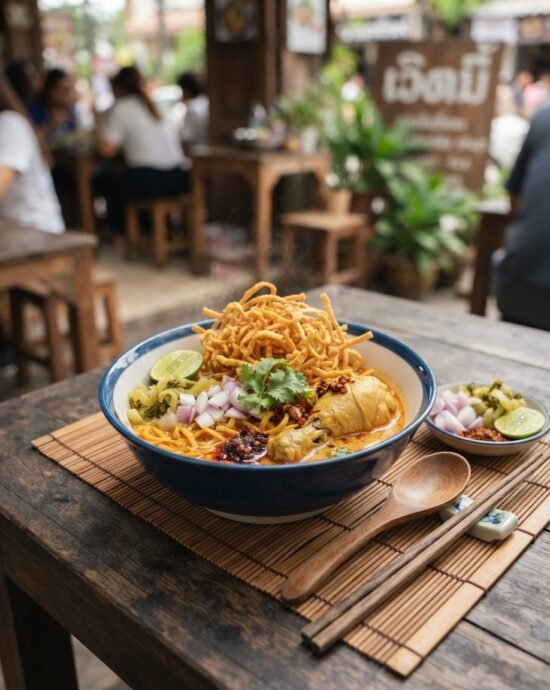
Ladle the rich, aromatic Khao Soi broth generously over the noodles in each bowl, ensuring each serving receives a generous portion of the tender braised chicken. The broth should be abundant — Khao Soi is a soup noodle dish, and the noodles should be fully submerged in the fragrant curry broth rather than sitting in a shallow puddle. Crown each bowl with a generous handful of the golden, puffed crispy fried noodles balanced on top — these must remain above the broth until the moment of eating to preserve their crunch. Arrange a small mound of the pickled shallots beside the crispy noodles, followed by a small pile of fermented mustard greens if using, and a generous mound of fresh cilantro leaves. Drizzle a teaspoon of chili oil in a decorative swirl over the surface of the broth. Place a lime wedge on the rim of each bowl and serve immediately with additional condiments on the table.
- Calories:580 kcal29%
- Protein:34 g68%
- Carbohydrates:52 g19%
- Sugar:8 g9%
- Fat:26 g33%
- Salt:2.0 g33%
- Energy:2428 kJ29%
Table of Contents
What Is Khao Soi?
Khao Soi is Northern Thailand’s most celebrated and beloved noodle dish — a rich, golden, coconut curry broth soup ladled over soft, tender boiled egg noodles and crowned with a dramatic tangle of crispy deep-fried egg noodles on top, accompanied by a distinctive array of traditional garnishes including pickled shallots, fermented mustard greens, chili oil, and fresh lime. The dish is the culinary crown jewel of Chiang Mai, the ancient capital of the Lanna Kingdom in Northern Thailand, where it has been eaten and celebrated for well over a century and where the finest versions are still found at small, family-run street restaurants. Khao Soi’s origins are complex and reflect the rich multicultural history of the Northern Thai borderlands. The dish is widely believed to have been introduced to the region by Yunnanese Muslim traders and caravans who traveled the ancient trade routes between present-day Myanmar and Yunnan province in southern China, bringing with them a noodle soup with Islamic culinary traditions. The dish then merged with local Northern Thai and Lanna culinary traditions, incorporating the region’s use of coconut milk and dried chilies over time. The name Khao Soi reportedly derives from a Shan or Yunnanese phrase for “cut noodles,” referencing the hand-cut fresh noodles originally used in the dish. What makes Khao Soi unique in the Thai noodle pantheon is the contrast between the two preparations of noodle in a single bowl: soft, soupy boiled noodles below and gloriously crunchy, oil-puffed fried noodles on top — a textural juxtaposition that makes every spoonful simultaneously soft and crunchy, rich and bright, spiced and cooling.
Ingredient Notes
- Khao Soi Curry Paste: Authentic Khao Soi paste includes dried chilies, shrimp paste, lemongrass, galangal, and a notable quantity of turmeric that gives the broth its characteristic golden color. Look for Mae Ploy or specialty Northern Thai brands for the most authentic result.
- Fresh Egg Noodles: Fresh egg noodles are traditional for Khao Soi — their slight richness from the egg complements the coconut broth beautifully. Select medium-thickness fresh noodles from an Asian market for the closest authentic result.
- Bone-In Chicken: Bone-in chicken pieces are essential for the depth of the Khao Soi broth. The collagen from the bones slowly releases into the broth during braising, creating a silky body and richness that boneless chicken cannot achieve.
- Pickled Shallots: Quick-pickled shallots are a non-negotiable traditional accompaniment to Khao Soi that provides brightness and acidity to cut through the rich coconut broth. Select firm, tight shallots without soft spots for even, attractive slicing.
Ingredient Suggestions
- Fermented Mustard Greens: This traditional Northern Thai garnish provides a pleasantly sour, funky contrast to the rich broth that is arguably the most important condiment for authentic Khao Soi and should not be omitted when available.
- Beef Shank: Using beef shank instead of chicken creates a Khao Soi Neua — a more indulgent, deeply savory version popular in northern Thailand that requires longer braising time but produces extraordinary depth of flavor.
- Extra Chili Oil: A generous drizzle of high-quality homemade or commercial Thai chili oil adds both heat and an enticing red-orange color to the surface of the golden broth, elevating the visual impact significantly.
Helpful Tips & Pro Tips
- Fry the crispy noodles at the correct oil temperature. Too cool and the noodles absorb excessive oil and become greasy rather than crispy; too hot and they brown instantly before puffing. Aim for 180°C and test with a single noodle first.
- Always use bone-in chicken for Khao Soi. The bones and skin release collagen and fat into the broth during braising, creating a silky, rich body that boneless chicken simply cannot provide regardless of cooking time.
- Why does my Khao Soi broth taste flat? Insufficient curry paste or under-blooming the paste in coconut milk are the most common causes. Ensure the paste is fully cooked in the coconut milk for four to five minutes before adding stock.
- Pickle the shallots at least 15 minutes before serving. Fresh raw shallots are too aggressively pungent as a garnish and overpower the delicate coconut broth. Pickling tames and brightens them into an ideal acidic counterpoint to the rich soup.
How to Serve and Store
The Khao Soi broth and chicken can be refrigerated in an airtight container for up to three days and improves in flavor overnight. Store the crispy fried noodles in a separate container at room temperature — they will begin to soften after a few hours and must be refreshed by re-frying for one minute before serving. Fresh egg noodles should be cooked fresh for each serving. The broth freezes well for up to two months — thaw overnight and reheat gently.
Substitutions
- Chicken → Tofu or Mushrooms — creates a vegan Khao Soi when combined with vegetable stock and soy sauce replacing fish sauce.
- Fish Sauce → Soy Sauce — provides comparable saltiness for a fully vegetarian or vegan version of the broth.
- Fresh Egg Noodles → Dried Egg Noodles — cook according to package instructions; increase time by two minutes for adequate softness.
- Khao Soi Paste → Red Curry Paste plus curry powder and turmeric — a practical combination that approximates the Northern Thai flavor profile when specialty paste is unavailable.
- Palm Sugar → Brown Sugar — an adequate and widely available substitute for the gentle caramel sweetness.
Suggested Recipes
- Massaman Curry: Both Massaman and Khao Soi share warming spice influences from Muslim trade routes — Massaman is the southern equivalent of Khao Soi’s northern spice-meets-coconut philosophy.
- Thai Green Curry: Explore the full range of Thai coconut milk-based dishes by serving Khao Soi alongside the more herb-forward, fresh-spiced Green Curry for a Northern-meets-Central Thai feast.
- Mango Sticky Rice: The sweet, cool coconut sticky rice dessert provides perfect relief from Khao Soi’s warming, spiced richness and makes an ideal complete Northern Thai menu.
Frequently Asked Questions

Jeff Smith
"Cooking is the intersection of history, science, and emotion."
For me, the kitchen has always been a laboratory of culture. With a background deeply rooted in digital strategy and precision, I approach the culinary arts with the same rigor I apply to the digital landscape—analyzing flavors, perfecting techniques, and documenting the nuance that makes Filipino cuisine truly world-class.
Findme Recipe was born from a desire to bridge the gap between traditional heritage and the modern home cook. Whether it is mastering the perfect balance of acidity in a classic Adobo or simplifying complex regional dishes for everyday kitchens, my mission is to preserve our culinary identity through accessible, data-backed, and delicious content.
I am not just building a database; I am cultivating a community where every Filipino kitchen feels empowered, every ingredient is celebrated, and every family heirloom recipe finds a place to thrive.
Join me as we translate the soul of our islands into recipes for the next generation.