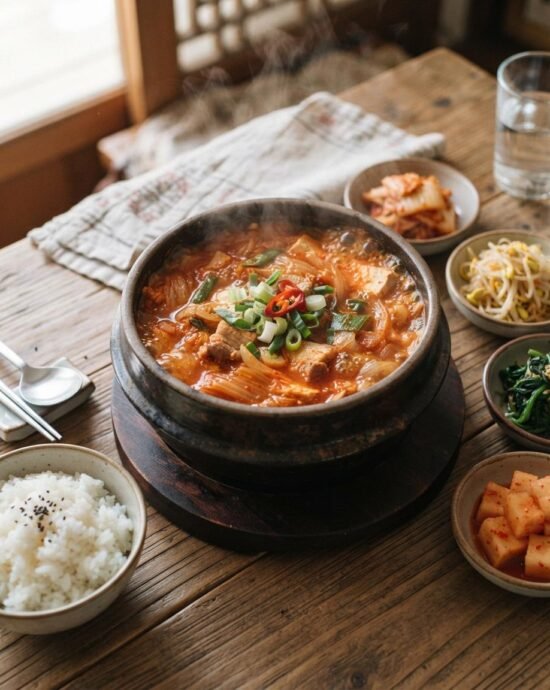

- Render the pork belly
Heat the sesame oil in a heavy-bottomed pot or Korean stone pot over medium heat. Add the sliced pork belly and cook for 4 to 5 minutes, stirring occasionally, until the fat renders out and the edges turn golden brown. This rendered fat becomes the flavor foundation of the entire stew, so resist the urge to drain it away. The pork does not need to cook through completely at this stage since it will continue simmering later. If you are using a leaner cut, add an extra teaspoon of oil to compensate for the missing fat and prevent the aromatics from sticking.
- Saute the aromatics and kimchi
Add the sliced onion and garlic to the pot and stir for 1 to 2 minutes until fragrant. Add the chopped kimchi and continue stirring for 3 to 4 minutes, letting it caramelize slightly against the hot pot, which deepens its tang into a richer, more savory flavor. Stir in the gochugaru and gochujang, coating the kimchi and pork evenly so the chili paste does not clump. This step builds the stew's base flavor before any liquid is added, which is the key to a jjigae that tastes layered rather than simply spicy.
- Add liquid and simmer
Pour in the kimchi juice and water or anchovy stock, stirring to release any browned bits from the bottom of the pot. Bring the stew to a boil over high heat, then reduce to a steady simmer and cook uncovered for 15 minutes. This simmering time allows the pork to become tender and the kimchi to soften further while the broth reduces slightly and intensifies in flavor. Taste partway through and adjust the seasoning with soy sauce and sugar to balance the natural sourness of the kimchi with a touch of savory sweetness.
- Add the tofu
Gently slide the cubed soft tofu into the pot, being careful not to break the pieces apart. Let the stew return to a gentle simmer and cook for another 5 minutes, just long enough for the tofu to warm through and absorb some of the spicy broth. Avoid stirring vigorously once the tofu is in, since soft tofu breaks apart easily; instead, tilt the pot slightly or use a spoon to baste the tofu with broth if needed.
- Finish and serve
Scatter the chopped green onions over the top and give the stew one final gentle stir. Taste the broth one more time and adjust with additional soy sauce, gochugaru, or a splash of kimchi juice if you want more tang or heat. Ladle the stew into individual bowls or serve directly from a sizzling stone pot at the table, which keeps it piping hot throughout the meal. Kimchi jjigae is meant to be eaten bubbling hot alongside a bowl of steamed rice.
- Calories:380 kcal19%
- Protein:19 g38%
- Carbohydrates:12 g4%
- Sugar:5 g6%
- Energy:1590 kJ19%
- Salt:2.4 g40%
- Fat:28 g40%
What is Kimchi Jjigae?
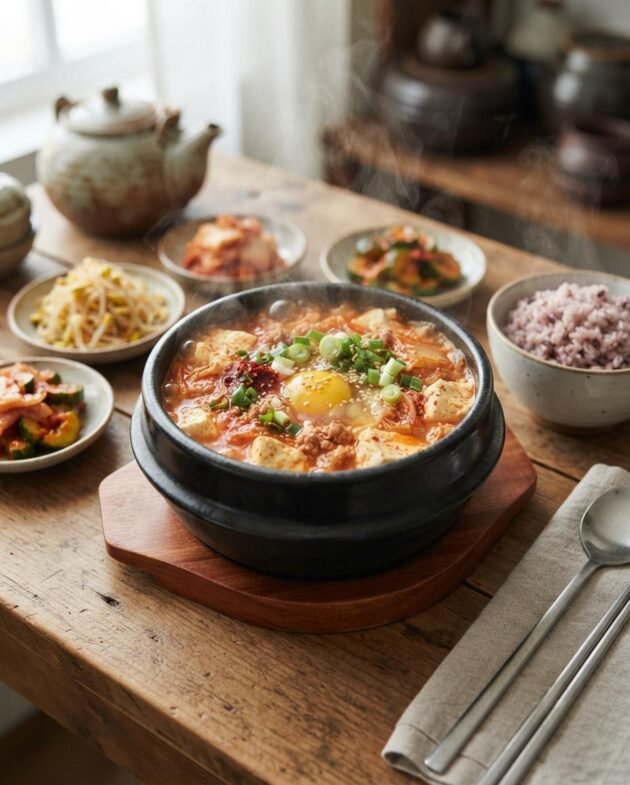
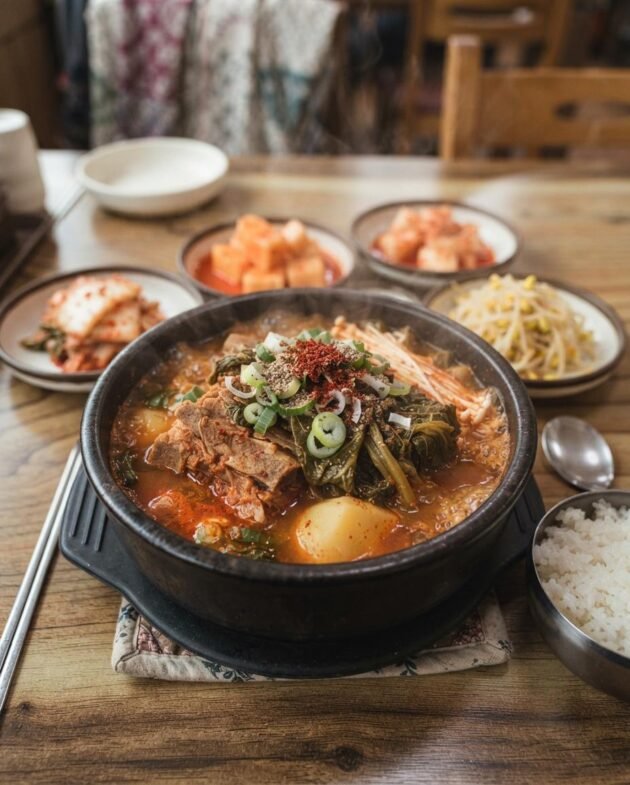
Kimchi jjigae is a bold, deeply savory Korean stew built around well-fermented kimchi, simmered with pork belly, tofu, and a spicy gochujang-based broth until every ingredient is infused with tangy, umami-rich flavor. As one of the most beloved dishes in Korean home cooking, kimchi jjigae exists as a practical solution to using up kimchi that has aged past its ideal fresh-eating point; the deeper sourness that develops in older kimchi actually improves the stew, giving it a complexity that fresh kimchi cannot replicate. The dish is typically cooked and served in a heavy stone or clay pot called a ttukbaegi, which retains heat exceptionally well and keeps the stew bubbling at the table long after it leaves the stove. Pork belly is the most traditional protein because its rendered fat enriches the broth, though tuna, spam, or beef are common regional and household variations. The combination of spicy chili paste, tangy fermented cabbage, and silky tofu creates a stew that is simultaneously comforting and invigorating, often served as a centerpiece alongside steamed rice and an array of banchan side dishes. Kimchi jjigae reflects a broader philosophy in Korean cuisine of minimizing waste while maximizing flavor, transforming an ordinary pantry staple into one of the country’s most recognized and cherished comfort foods, equally at home on a rainy weeknight or a festive family table.
Ingredient Notes
- Kimchi: Well-fermented, slightly sour kimchi works best in jjigae because its tang deepens with cooking; avoid fresh, mild kimchi, which will not develop the same rich flavor.
- Pork belly: Look for pork belly with visible fat marbling, since the rendered fat is what gives the broth its signature richness and body.
- Gochugaru: Korean chili flakes provide color and a fruity heat distinct from other chili powders; choose a coarse-ground variety labeled specifically for Korean cooking.
- Gochujang: This fermented chili paste rounds out the stew’s heat with sweetness and umami; a small amount goes a long way, so measure carefully.
- Soft tofu: Silken or soft tofu provides a delicate, custardy contrast to the hearty pork and kimchi; handle it gently to keep the cubes intact.
Ingredient Suggestions
- Canned tuna: A traditional variation that adds a briny richness and turns the stew into a quicker weeknight option.
- Spam, sliced: A popular Korean home-cooking addition that lends salty, savory depth and extra protein.
- Mushrooms: Sliced enoki or shiitake mushrooms add an earthy layer and extra texture to the broth.
- Perilla leaves: A few torn perilla leaves stirred in at the end add a distinctive herbal note common in Korean stews.
- Instant noodles: Adding a block of ramyeon noodles turns the stew into a heartier, one-pot meal.
Helpful Tips & Pro Tips
- If your kimchi jjigae tastes flat or one-dimensional, it is usually because the kimchi was not sauteed long enough before adding liquid; that browning step is essential for depth.
- Use kimchi that has fermented for at least two to three weeks for the best flavor, since very fresh kimchi lacks the sourness that defines a proper jjigae.
- Do not skip rendering the pork belly fat; it forms the backbone of the broth’s richness and cannot be replicated by simply adding oil.
- Add the tofu near the end of cooking and avoid stirring too vigorously afterward, since soft tofu breaks apart easily in a simmering stew.
- Taste and adjust the broth just before serving; kimchi brands vary widely in saltiness and sourness, so the final seasoning should always be checked.
How to Serve and Store
Serve kimchi jjigae bubbling hot, ideally straight from the stone pot it was cooked in, alongside a bowl of steamed short-grain rice and a few simple banchan like seasoned spinach or pickled radish. Leftover stew keeps well in an airtight container in the refrigerator for up to 4 days, and many cooks find the flavor actually improves overnight as the ingredients continue to meld. Reheat gently on the stovetop over medium-low heat, adding a splash of water or stock if the broth has thickened too much. Kimchi jjigae also freezes well for up to 2 months, though it is best to freeze it without the tofu and add fresh tofu when reheating.
Substitutions
- Pork belly → Firm tofu or mushrooms — A hearty plant-based swap that still absorbs the spicy, tangy broth. (Vegan)
- Soy sauce → Tamari — Provides the same salty depth without gluten. (Gluten-Free)
- Pork belly → Bacon or leftover pork — A budget-friendly alternative that still delivers rendered fat for flavor. (Budget-Friendly)
- Anchovy stock → Vegetable broth — Keeps the stew vegetarian while still providing a savory liquid base.
- Fresh gochugaru → A mix of paprika and cayenne — An emergency substitute when Korean chili flakes are unavailable, though the flavor will be less fruity.
Suggested Recipes
- Sundubu Jjigae: Another spicy, tofu-forward Korean stew that shares the same chili-based broth technique.
- Doenjang Jjigae: A milder, savory stew that offers a fermented soybean alternative to kimchi’s tang.
- Bibimbap: A rice bowl that pairs naturally alongside a bowl of spicy kimchi jjigae for a complete meal.
- Galbi: Grilled short ribs that make a rich, smoky counterpoint to the tangy heat of kimchi jjigae.

Jeff Smith
"Cooking is the intersection of history, science, and emotion."
For me, the kitchen has always been a laboratory of culture. With a background deeply rooted in digital strategy and precision, I approach the culinary arts with the same rigor I apply to the digital landscape—analyzing flavors, perfecting techniques, and documenting the nuance that makes Filipino cuisine truly world-class.
Findme Recipe was born from a desire to bridge the gap between traditional heritage and the modern home cook. Whether it is mastering the perfect balance of acidity in a classic Adobo or simplifying complex regional dishes for everyday kitchens, my mission is to preserve our culinary identity through accessible, data-backed, and delicious content.
I am not just building a database; I am cultivating a community where every Filipino kitchen feels empowered, every ingredient is celebrated, and every family heirloom recipe finds a place to thrive.
Join me as we translate the soul of our islands into recipes for the next generation.