
- Step 1: Prepare the Dried Taro Leaves
Begin by handling your dried taro leaves with care — this is the most important prep step in the entire recipe. If the leaves are still slightly moist, spread them out on a clean surface and allow them to air-dry further. Do not wash the dried leaves with water, as excess moisture will cause itching and skin irritation from the calcium oxalate crystals naturally present in taro. Break the dried leaves into manageable pieces, roughly 2–3 inches, discarding any overly thick stems or discolored sections. The drier and more brittle your leaves are at this stage, the better they will absorb the coconut milk during cooking. Set aside in a bowl until needed. Handle gently to prevent excessive crumbling.
- Step 2: Sauté the Aromatics and Pork
Heat a heavy-bottomed pan or wok over medium-high heat. Add a small amount of oil and render the pork belly slices until lightly golden, about 4–5 minutes. The goal is to develop a slight crust on the pork while releasing its natural fat, which will become the flavor base of the dish. Add the crushed garlic and sauté for one minute until fragrant, then add the onion and ginger. Continue stirring for another 2–3 minutes until the onion becomes translucent and glossy. Add the dried shrimp and shrimp paste at this point, stirring everything together. The bagoong will add a deeply savory, umami-rich layer that is characteristic of authentic Bicolano laing. Season lightly and proceed.
- Step 3: Add the Coconut Milk
Pour in the first extraction of coconut milk — the thinner, less rich extract — into the pan with the sautéed aromatics and pork. Stir to combine everything thoroughly and bring the mixture to a gentle simmer over medium heat. Do not cover the pan yet. Allow the coconut milk to begin reducing, which concentrates the flavor. This stage usually takes about 8–10 minutes. As the liquid simmers, the fat from the pork and the natural oils from the coconut milk will begin to create a rich, aromatic base sauce. Keep the heat steady at medium — too high and the coconut milk may break and curdle. Stir occasionally to prevent sticking along the bottom of the pan.
- Step 4: Add the Taro Leaves — Do Not Stir
This is the most critical rule of making laing: once the dried taro leaves are added to the simmering coconut milk, do not stir. Gently layer the dried taro leaves on top of the simmering liquid and press them down slightly so they are submerged or at least saturated. Stirring at this point will cause itchiness and prevent the leaves from fully cooking through and neutralizing the oxalic acid crystals. Cover the pan with a lid and allow the taro leaves to cook undisturbed for at least 20–25 minutes over low to medium-low heat. The steam and coconut milk work together to soften and cook the leaves thoroughly. Resist the urge to peek or stir during this time.
- Step 5: Add the Coconut Cream and Chilies
After 25 minutes, carefully lift the lid — the taro leaves should be visibly softened and the coconut milk significantly reduced. At this point, it is now safe to gently fold and stir the mixture for the first time. Add the coconut cream (second extraction) and the whole siling labuyo bird's eye chilies. The coconut cream adds richness and a final layer of sweetness that balances the heat from the chili and the saltiness of the bagoong. Stir gently but thoroughly to incorporate everything. If adding shrimp, fold them in now as well. Allow the laing to continue simmering uncovered for another 10–12 minutes, stirring occasionally, until the sauce thickens to your desired consistency.
- Step 6: Final Seasoning and Finishing
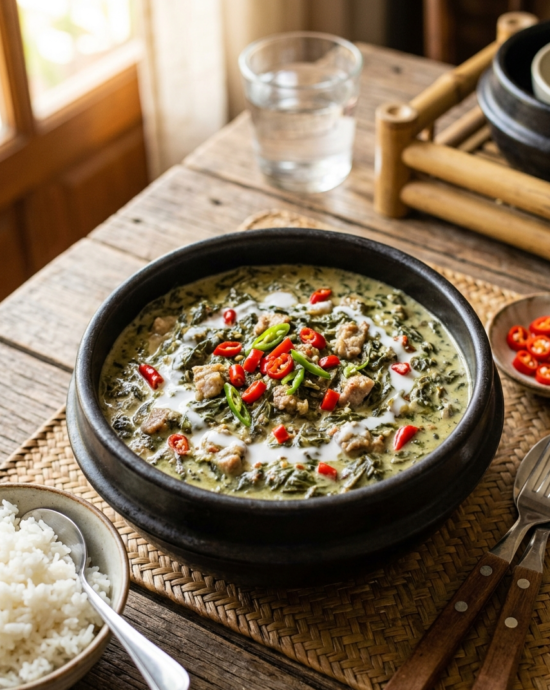
Taste the laing carefully and adjust seasoning with salt and pepper as needed. Keep in mind that bagoong alamang is already salty, so add extra salt conservatively. If you prefer a richer, more indulgent laing, you may drizzle in an additional tablespoon of coconut cream at this stage and stir through. The finished dish should have a thick, creamy, deep green sauce that clings to the tender taro leaves. The pork should be fork-tender, and the flavors should be bold, savory, spicy, and deeply coconutty. Remove from heat and allow the laing to rest for 5–10 minutes before serving to allow the flavors to fully meld together. Serve warm with steamed rice.
- Calories:290 kcal15%
- Protein:10 g20%
- Carbohydrates:9 g3%
- Sugar:2 g2%
- Fat:24 g31%
Table of Contents
What Is Laing?
Laing is a traditional Filipino dish made from dried taro leaves slow-cooked in coconut milk, typically enriched with pork, shrimp paste, and bird’s eye chilies. It originates from the Bicol Region of the Philippines, specifically associated with the provinces of Camarines Sur, Albay, and Sorsogon — a coastal area known for its bold, spicy, and coconut-heavy cuisine. The dish is sometimes referred to as ‘gabi sa gata’ in other regions, though ‘laing’ is the most widely recognized name nationally and internationally. Laing is one of the flagship dishes of Bicolano cooking, representing a cuisine that embraces the fire of chili peppers and the richness of fresh coconut milk with equal intensity.
The use of dried taro leaves — rather than fresh — is deliberate and essential. Fresh taro contains high levels of calcium oxalate crystals, which cause intense itching and irritation if not properly cooked. Drying the leaves dramatically reduces this compound, and the long cooking process in coconut milk neutralizes it further. This technique reflects generations of indigenous culinary wisdom passed down through Bicolano communities, where taro has been cultivated as a staple crop for centuries.
Flavor-wise, laing is simultaneously creamy, savory, spicy, and faintly earthy. The coconut milk provides a lush, tropical sweetness that tempers the heat of the chilies, while the shrimp paste lends a pungent, fermented depth that elevates the entire dish. It is this interplay between richness and fire that makes laing so iconic. Today, laing appears on restaurant menus across the Philippines and in Filipino communities worldwide, often served as a rice companion or as part of a larger kamayan feast.
Ingredient Notes
- Dried Taro Leaves (Gabi): The heart of the dish. Look for fully dried, brittle leaves with a deep olive-green color. Avoid any that smell musty or are still flexible, as residual moisture means they haven’t been dried long enough and may cause itchiness when cooked.
- Coconut Milk (Gata): Freshly extracted coconut milk produces the best results. If using canned, choose full-fat coconut milk and avoid ‘lite’ versions that lack the richness needed to properly sauce the taro leaves.
- Bagoong Alamang: The shrimp paste is essential for authentic Bicolano flavor. Use the sautéed or guisado variety for a milder punch, or raw bagoong for more intensity. The best bagoong for laing has a pinkish-red color and a clean fermented aroma.
- Siling Labuyo: These tiny bird’s eye chilies are very hot. Use 3–5 for a mild-to-medium heat level, or up to 8–10 for traditional Bicolano spice levels. Keep them whole if you prefer the flavor without maximum heat release.
- Pork Belly: Choose pork belly with a good fat-to-meat ratio for the richest flavor. The fat renders into the sauce, enriching the coconut base and keeping the meat tender throughout the long cook time.
Ingredient Suggestions
- Smoked Fish (Tinapa): Flake smoked fish into the laing along with or instead of shrimp for a distinct smoky, umami depth that complements the coconut milk beautifully.
- Crab or Tahong (Mussels): Adding shellfish intensifies the seafood flavor and transforms laing into a more luxurious dish. Add in the last 10 minutes of cooking.
- Extra Coconut Cream Drizzle: Finish with a tablespoon of pure coconut cream just before serving for an extra-rich presentation that tastes as good as it looks.
- Lemongrass Stalk: Add a bruised lemongrass stalk during the simmering stage for a fragrant citrus undertone that brightens the richness of the coconut milk.
Helpful Tips & Pro Tips
- Never wash the dried taro leaves and never stir after adding them. Both actions will trigger the calcium oxalate crystals to release, causing irritating itchiness. Trust the process — the steam and coconut milk do all the work.
- Why is my laing itchy? Itchiness in laing almost always means the taro leaves were not dried properly, were washed, or were not cooked long enough. Ensure your leaves are bone-dry before cooking and simmer for at least 20–25 minutes undisturbed.
- Low and slow is the key to great laing. Cooking on too high a heat will cause the coconut milk to separate and turn oily. Keep the flame at medium-low once the leaves are added to maintain a gentle, steady simmer.
- Taste before adding extra salt. Bagoong, dried shrimp, and the natural sodium in coconut milk already contribute significant saltiness. Season incrementally and taste as you go to avoid over-salting.
- Laing tastes even better the next day. Like many braised dishes, the flavors deepen and meld further after resting overnight in the refrigerator. Reheat gently over low heat with a splash of coconut milk to revive the creaminess.
How to Serve and Store
Serve laing warm alongside a generous mound of steamed white rice — the creamy, spicy coconut sauce is designed to be eaten with plain rice that absorbs the bold flavors. It pairs excellently with grilled pork (lechon liempo), steamed fish, or as part of a classic Filipino kamayan spread. For presentation, ladle into a shallow serving dish and garnish with a drizzle of fresh coconut cream and one or two whole bird’s eye chilies. Store leftover laing in an airtight container in the refrigerator for up to 4 days. To freeze, transfer to a freezer-safe container and store for up to 2 months. Reheat on the stovetop over low heat, adding a splash of coconut milk to restore the saucy consistency.
Substitutions
- Dried Taro Leaves → Fresh Taro Leaves (well-blanched): Blanch fresh leaves 3–4 times in boiling water before cooking to reduce oxalic acid, though the texture will be slightly different.
- Pork Belly → Chicken Thighs: For a lighter protein option, bone-in chicken thighs absorb the coconut milk beautifully and cook in a similar time frame.
- Bagoong Alamang → Fish Sauce + Fermented Black Bean Paste: Combine 1 tbsp fish sauce with 1 tsp fermented black bean paste for a similar fermented, salty punch without shrimp paste.
- Coconut Milk → Coconut Cream Diluted with Water (1:1): If coconut cream is all you have, dilute it with equal parts water to approximate coconut milk’s consistency and fat content.
- Siling Labuyo → Serrano or Thai Chili: Both provide comparable heat levels if bird’s eye chili is unavailable. Adjust quantity based on personal heat tolerance.
Suggested Recipes
- Bicol Express: Another spicy Bicolano coconut milk dish using pork and siling labuyo, perfect for those who love the heat profile of laing but want a chunkier texture.
- Ginataang Kalabasa at Sitaw: A milder coconut milk vegetable stew that uses a similar technique of simmering vegetables in gata, great for exploring Filipino coconut milk cooking.
- Kare-Kare: A rich Filipino oxtail and vegetable stew in peanut sauce, traditionally paired with bagoong alamang — bridging the flavor connection to laing.
- Pinakbet: A Ilocano vegetable medley with bagoong that shares laing’s love of fermented shrimp paste and bold savory flavors.
Frequently Asked Questions

Jeff Smith
"Cooking is the intersection of history, science, and emotion."
For me, the kitchen has always been a laboratory of culture. With a background deeply rooted in digital strategy and precision, I approach the culinary arts with the same rigor I apply to the digital landscape—analyzing flavors, perfecting techniques, and documenting the nuance that makes Filipino cuisine truly world-class.
Findme Recipe was born from a desire to bridge the gap between traditional heritage and the modern home cook. Whether it is mastering the perfect balance of acidity in a classic Adobo or simplifying complex regional dishes for everyday kitchens, my mission is to preserve our culinary identity through accessible, data-backed, and delicious content.
I am not just building a database; I am cultivating a community where every Filipino kitchen feels empowered, every ingredient is celebrated, and every family heirloom recipe finds a place to thrive.
Join me as we translate the soul of our islands into recipes for the next generation.