
- Step 1: Sauté the Aromatics and Brown the Pork
Heat cooking oil in a large wok or deep pot over medium-high heat. Once the oil is shimmering and hot, add the minced garlic and cook for one minute until it turns pale golden and fragrant. Add the diced onions and stir-fry until softened, about two minutes. Increase the heat to high and add the sliced pork, spreading it in a thin layer and letting it sit undisturbed for sixty seconds to develop a golden sear. Toss and continue cooking until the pork is cooked through and lightly browned on all sides, about four to five minutes total. The browning of the pork at this stage is very important for lomi — it adds a savory, caramelized depth to the soup base that boiled or poached pork cannot provide. Season the pork and aromatics with the oyster sauce and fish sauce and stir to coat evenly.
- Step 2: Add the Kikiam, Squid Balls, and Shrimp
Add the sliced kikiam (squid cake) and halved squid balls to the pan with the browned pork and aromatics. These processed seafood products are a defining ingredient in Filipino-style lomi and add a characteristic slightly bouncy, chewy texture to the dish. Stir-fry the kikiam and squid balls with the pork for two to three minutes until lightly browned. Add the peeled shrimp last, stir-frying for just one to two minutes until they curl and turn pink — overcooked shrimp become rubbery and lose their natural sweetness. Pour the soy sauce over all the proteins and toss to coat. The combination of oyster sauce, fish sauce, and soy sauce creates a layered umami base that is the backbone of authentic Filipino lomi flavor. Taste the seasoned proteins at this stage and adjust with additional fish sauce or soy sauce if needed.
- Step 3: Add the Broth and Bring to a Boil
Pour the pork or chicken broth and the water into the pot with the sautéed meats and aromatics. Stir everything together thoroughly, scraping any caramelized bits from the bottom of the pot into the liquid. Bring the soup to a rolling boil over high heat. Once boiling, add the fresh lomi noodles, gently pressing them into the broth to submerge them fully. Fresh lomi noodles are thick, wide egg noodles with a characteristic chewiness and slightly alkaline flavor from the lye water used in their production. They cook quickly in boiling soup — about three to four minutes until just tender with a slight al dente bite. Do not overcook lomi noodles; they continue softening in the hot soup even after the heat is turned off. Add the shredded cabbage in the last minute of noodle cooking, as it needs only brief exposure to heat to soften slightly while retaining its texture.
- Step 4: Thicken the Broth with Cornstarch
The most distinctive characteristic of Filipino lomi — what sets it apart from all other noodle soups — is its thick, almost gravy-like broth. This thickness is achieved by adding a cornstarch slurry to the boiling soup. Once the noodles are just cooked, reduce the heat to medium and pour the dissolved cornstarch (cornstarch mixed with cold water) slowly and steadily into the soup while stirring constantly. The broth will immediately begin to thicken as the cornstarch gelatinizes in the hot liquid. Continue stirring for one to two minutes as the broth transforms from clear and watery to a glossy, coating consistency. The finished broth should coat the back of a spoon and hold its shape briefly when you drag a line through it — this is the signature lomi consistency. If the broth becomes too thick, add small amounts of broth or hot water to thin it to your preferred consistency.
- Step 5: Add the Egg Drop and Final Seasoning
Once the broth has reached the desired thick consistency, pour the beaten eggs in a thin, steady stream directly into the gently simmering soup while stirring slowly and constantly with a circular motion. The eggs will cook immediately upon contact with the hot, thickened broth, forming delicate wisps and ribbons of cooked egg throughout the soup — this technique is known as egg drop and adds richness and a silky texture to the finished dish. Continue stirring gently for another thirty seconds to distribute the egg ribbons evenly. Taste the lomi one final time and adjust with additional fish sauce for saltiness, or a pinch of white pepper for heat. White pepper is preferred over black in lomi for its cleaner, more penetrating heat that does not dominate the other flavors. The finished lomi should taste deeply savory, slightly rich, and warming.
- Step 6: Garnish and Serve Immediately
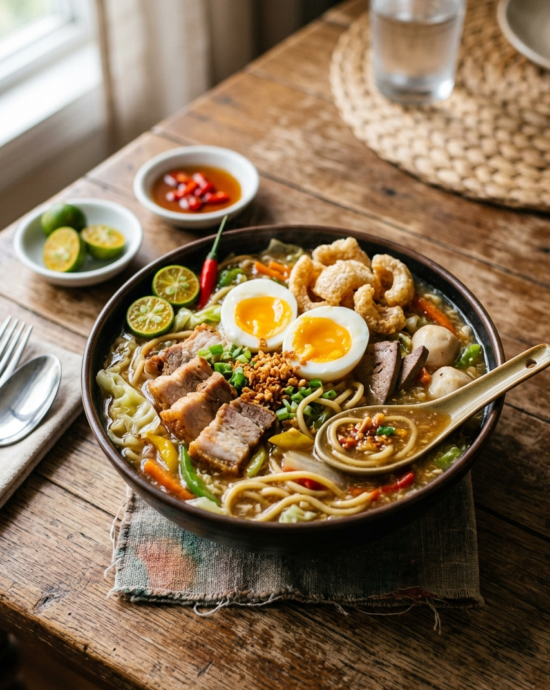
Ladle the thick, steaming lomi into deep bowls immediately — the cornstarch-thickened broth continues to set as it cools, becoming even thicker, so serve without delay. Each bowl should have a generous proportion of noodles, pork, shrimp, kikiam, and squid balls, with the thick, glossy broth coating every ingredient. Finish each bowl with a light dusting of freshly ground white pepper over the surface, which adds aroma and a faint warming note. Place a calamansi half on the side of each bowl — a squeeze of the intensely fragrant Filipino lime cut through the richness of the thick broth and brightens the entire dish. Some diners also enjoy lomi with a splash of spiced vinegar, which provides a tart, cooling counterpoint. Serve immediately with additional calamansi, fish sauce, and chili vinegar on the side.
- Calories:450 kcal23%
- Protein:26 g52%
- Carbohydrates:58 g19%
- Sugar:4 g4%
- Fat:12 g15%
Table of Contents
What Is Lomi?
Lomi is a thick, hearty Filipino noodle soup characterized by its signature starchy, almost gravy-like broth thickened with cornstarch and enriched with beaten eggs. The dish takes its name from the thick, fresh egg noodles — called lomi noodles — that form its base, and it represents one of the clearest examples of Chinese culinary influence on Filipino cooking, brought by Hokkien Chinese settlers who adapted their lo mein noodle soup traditions to local Filipino tastes and ingredients. What makes Filipino lomi distinctly different from Chinese-style noodle soups is its intensely thick, coating broth — the cornstarch slurry transforms what would otherwise be a clear soup into something closer to a noodle stew that clings to every ingredient and noodle strand. Each region of the Philippines has developed its own variation of lomi; the version most widely beloved is Lomi Batangas — the Batangas province variation — which is considered the gold standard of Filipino lomi. The combination of proteins typically found in lomi — pork, shrimp, kikiam, and squid balls — reflects the Filipino love of textural contrast, with each element offering a different chewiness, springiness, or tenderness. The egg drop technique, borrowed directly from Chinese egg drop soup, creates delicate silky ribbons throughout the thick broth that add richness and visual interest. Lomi is unambiguously comfort food — deeply filling, warming, and satisfying — making it particularly popular as a late-night meal, a breakfast dish on cold mornings, or a hearty merienda that carries you through the afternoon. Its popularity has made it a staple of Filipino carinderia (eatery) menus nationwide.
Ingredient Notes
- Fresh Lomi Noodles: Fresh lomi noodles are thick, wide, pale yellow egg noodles made with lye water that gives them a characteristic slightly springy, alkaline character. Buy them fresh from Asian grocery stores or Filipino markets; dried alternatives exist but lack the authentic chewy texture that defines the dish.
- Kikiam: Kikiam is a processed fish and squid cake of Chinese-Filipino origin, typically wrapped in tofu skin and sold frozen or refrigerated. It adds a distinctive savory, slightly fishy flavor and a firm, chewy texture; substitute with fish tofu or any firm fish cake if kikiam is unavailable.
- Cornstarch: The cornstarch slurry is what makes lomi lomi — it transforms the broth from a clear soup into the thick, coating, almost gravy-like consistency that defines the dish. Always mix cornstarch with cold water before adding to hot liquid; adding dry cornstarch directly to hot soup creates lumps.
Ingredient Suggestions
- Pork Blood — Dark pork blood cubes (dinuguan-style) add a richer, more traditional flavor profile to the lomi broth.
- Quail Eggs — Add halved hard-boiled quail eggs for a premium variation common in Filipino restaurant-style lomi.
- Fried Garlic Bits — Top each bowl with crispy fried garlic for an additional aromatic layer that complements the thick, savory broth.
- Crab Meat — Add fresh or imitation crab meat in the last two minutes for a sweeter, more luxurious version of lomi.
Helpful Tips & Pro Tips
- Always add the cornstarch slurry to a simmering, not boiling, soup. Adding starch to furiously boiling liquid causes it to clump unevenly and can make the broth gluey rather than smooth and glossy. Reduce heat to a gentle simmer before pouring and stir constantly while adding.
- Fresh lomi noodles cook very quickly and continue absorbing liquid even after the heat is off. Cook them just until tender with a slight chew — they will soften further as they sit in the hot broth. Overcooked lomi noodles become mushy and fall apart in the thick broth.
- Season the lomi in layers — add some fish sauce when browning the pork, some when adding the broth, and then do a final adjustment after the egg drop. Layered seasoning produces a more complex, well-integrated flavor than adding all the salt at once at the end.
- Why is my lomi not thick enough? Adding too little cornstarch or adding it to cold broth rather than hot simmering liquid prevents proper thickening. Use two tablespoons of cornstarch per two cups of liquid as a starting ratio and adjust. The broth should visibly coat the back of a spoon when done.
How to Serve and Store
Lomi must be served the moment it is ready — the thickened broth continues to set and the noodles continue to absorb liquid, so even a ten-minute delay produces a noticeably thicker, denser result. This rapid change is actually considered desirable by some; ‘matanda’ (old) lomi with a very thick, heavily absorbed broth has its devoted fans. Store leftover lomi in an airtight container for up to two days. Reheat over low heat with a generous addition of broth or water to restore the original consistency. Do not freeze lomi as the cornstarch-thickened broth breaks apart upon thawing.
Substitutions
- Fresh lomi noodles → Udon noodles — Japanese udon provides a similar thick, chewy noodle character in this Filipino soup.
- Kikiam → Fish tofu — Available in most Asian grocery stores, fish tofu provides a similar chewy, savory character.
- Pork → Chicken breast — Thinly sliced chicken breast provides a leaner protein option that works well in the thick broth.
- Oyster sauce → Hoisin sauce — Similar sweet-savory profile with slightly more sweetness for those who find oyster sauce too intense.
- Shrimp → Imitation crab sticks — For a lower-cost seafood option that still adds a seafood note and some textural variety.
- Cornstarch → Arrowroot powder (gluten-free) — Arrowroot creates an equally glossy, smooth thick broth and is a good alternative for those avoiding corn.
Suggested Recipes
- Lomi Batangas — The gold standard variation of lomi from Batangas province with a slightly richer, darker broth.
- Pancit Malabon — Another thick, seafood-forward Filipino noodle dish with a similarly rich, coating sauce.
- La Paz Batchoy — The Visayan noodle soup that rivals lomi as the Philippines’ favorite specialty noodle dish.
- Goto (Congee) — A thick rice porridge that shares lomi’s comforting, thick-and-hearty character.
Frequently Asked Questions

Jeff Smith
"Cooking is the intersection of history, science, and emotion."
For me, the kitchen has always been a laboratory of culture. With a background deeply rooted in digital strategy and precision, I approach the culinary arts with the same rigor I apply to the digital landscape—analyzing flavors, perfecting techniques, and documenting the nuance that makes Filipino cuisine truly world-class.
Findme Recipe was born from a desire to bridge the gap between traditional heritage and the modern home cook. Whether it is mastering the perfect balance of acidity in a classic Adobo or simplifying complex regional dishes for everyday kitchens, my mission is to preserve our culinary identity through accessible, data-backed, and delicious content.
I am not just building a database; I am cultivating a community where every Filipino kitchen feels empowered, every ingredient is celebrated, and every family heirloom recipe finds a place to thrive.
Join me as we translate the soul of our islands into recipes for the next generation.