
- Step 1: Brown the Beef
Pat the beef chuck cubes completely dry with paper towels — moisture is the enemy of browning and will cause the meat to steam rather than sear. Heat the vegetable oil in a large, heavy-bottomed Dutch oven or deep casserole pot over high heat until the oil begins to shimmer. Add the beef cubes in a single layer without crowding — work in two batches if necessary. Allow the beef to sear completely undisturbed for three to four minutes until a deep, dark mahogany crust forms on the bottom. Resist the urge to move the meat prematurely; it will release naturally when properly browned. Flip and sear the opposite side for another two to three minutes. Remove browned beef and set aside. This Maillard browning creates hundreds of complex flavor compounds that form the rich, savory depth that defines an exceptional Massaman curry and cannot be achieved without this initial searing step.
- Step 2: Bloom the Spices and Paste
Reduce the heat to medium and add the cardamom pods, cinnamon stick, and dried bay leaves to the remaining oil in the pot. Toast these whole spices for sixty seconds, stirring constantly, until they release their fragrance. The warm, sweet cinnamon and floral cardamom aromas signal that the spices are properly activated. Add the Massaman curry paste to the pot and stir-fry it with the toasted spices for two minutes until the paste darkens slightly and becomes intensely fragrant. Pour in the coconut cream and stir vigorously, scraping up any browned bits from the bottom of the pot. Cook this mixture for four to five minutes until the coconut fat separates and rises to the surface — the cracking step that produces the glossy, rich sauce base characteristic of a properly made Massaman curry.
- Step 3: Braise the Beef
Return the browned beef to the pot and stir well to coat every piece in the fragrant curry paste and coconut cream mixture. Add the full-fat coconut milk, fish sauce, palm sugar, and tamarind paste. Stir to combine all the liquid elements into a smooth, unified sauce. Add the quartered onion pieces. Bring the entire mixture to a gentle simmer, then reduce the heat to low. Cover the pot and braise the beef for 75 to 90 minutes, checking and stirring every 20 minutes. The beef should become deeply tender and yielding — a fork inserted into a cube should meet virtually no resistance, and the meat fibers should separate easily. Massaman curry is specifically designed for longer-cooked tougher cuts of beef that transform from chewy to meltingly tender through the slow braising process with the acidic tamarind and rich coconut milk.
- Step 4: Add Potatoes and Peanuts
After the beef has braised for 75 minutes and is nearly tender, add the peeled and quartered waxy potatoes to the curry. Stir gently to submerge the potato pieces in the sauce. Waxy potatoes such as Yukon Gold or red potatoes are specifically preferred over floury varieties because they hold their shape during the long braising time rather than dissolving into the sauce. Add the roasted peanuts and stir to combine. Continue simmering the curry, uncovered this time, for an additional 20 to 25 minutes until the potatoes are completely tender when pierced with a thin skewer. During this uncovered simmering period, the sauce will reduce slightly and thicken, intensifying the complex spice and coconut flavors. Stir every five minutes to prevent sticking at the bottom of the pot as the sauce thickens.
- Step 5: Final Seasoning
Once the potatoes and beef are both perfectly tender, taste the Massaman curry and make final seasoning adjustments. The finished curry should express a complex, layered flavor profile with the following characteristics: deeply savory and rich from the long-braised beef and coconut cream, mildly sweet from the palm sugar and cinnamon, gently sour from the tamarind, subtly salty from the fish sauce, and warmly spiced from the Massaman paste with its characteristic notes of cardamom, cloves, and cinnamon. Add more fish sauce if the curry needs salt, more tamarind for tartness, or a touch more palm sugar to balance. Remove and discard the cinnamon stick, cardamom pods, and bay leaves before serving, as these are inedible aromatics used only for flavor infusion.
- Step 6: Rest and Plate
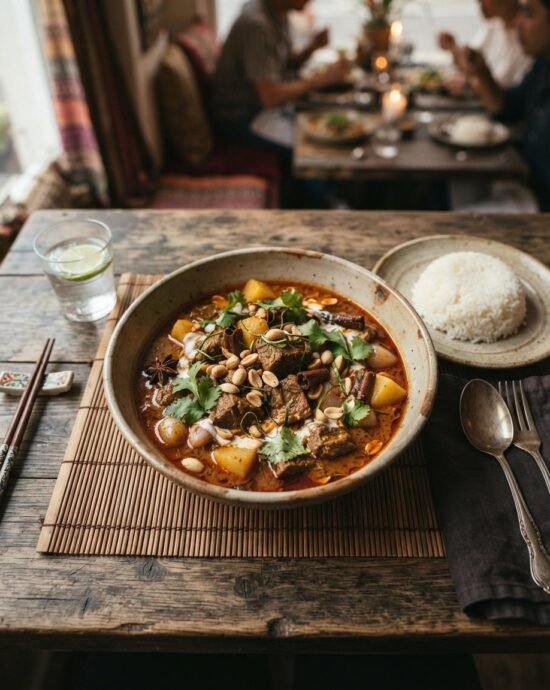
Remove the Massaman curry from the heat and allow it to rest, uncovered, for ten minutes before serving. This resting period allows the sauce to cool slightly and thicken to the perfect consistency — Massaman curry sauce should be rich and coating rather than thin and brothy. The flavors also continue to develop and meld during this brief rest, producing a more harmonious, integrated taste in the finished bowl. Ladle the curry generously into wide, shallow bowls, ensuring each portion receives multiple pieces of tender beef, quartered potatoes, and peanuts. The rich, fragrant sauce should be spooned generously over and around the solids. Serve immediately with steamed jasmine rice on the side. Garnish with a small drizzle of coconut cream and a few toasted peanuts on top for visual appeal and extra richness.
- Step 7: Garnish and Serve
Present the Massaman curry with steamed jasmine rice and fresh accompaniments arranged attractively. A traditional Thai Massaman curry service includes a small bowl of thinly sliced red onion pickled in white vinegar, which provides a sharp, refreshing counterpoint to the richness of the coconut and beef. Arrange two or three crispy fried shallots on top of each bowl for textural contrast. A wedge of fresh lime on the side allows diners to brighten the rich, complex curry with a squeeze of citrus if desired. Provide a small spoon of extra tamarind paste at the table for those who prefer more tartness in their individual serving. The warm, amber-colored Massaman curry with its glistening coconut sauce, tender beef, and golden potatoes is one of the most visually gorgeous and aromatically complex dishes in the entire Thai culinary canon.
- Calories:610 kcal31%
- Protein:38 g76%
- Carbohydrates:28 g10%
- Sugar:10 g11%
- Fat:38 g49%
- Salt:1.9 g32%
- Energy:2552 kJ31%
Table of Contents
What Is Massaman Curry?
Massaman Curry is Thailand’s most richly complex and internationally lauded curry — a slow-braised, deeply aromatic, mildly sweet curry that reflects the remarkable cultural fusion of Thai Buddhist culinary traditions with Muslim Persian and Indian spice influences brought by traders traveling the ancient maritime Silk Road. In 2011, CNN Travel declared Massaman Curry the number one most delicious food in the world, a testament to its extraordinary complexity and universal appeal. The dish is called gaeng Massaman in Thai, with Massaman believed to derive from a corruption of the word “Mussulman,” an archaic term for Muslim, reflecting the dish’s Islamic culinary heritage in the Muslim-majority southern Thai and Malay communities where it originated. What distinguishes Massaman from other Thai curries is its unique spice palette: unlike the fresh herb-forward green and red curries, Massaman paste incorporates warming dried spices including cinnamon, cardamom, cloves, star anise, and cumin — spices that arrived in Thailand via the Indian Ocean spice trade and found a remarkable home in this Thai coconut milk base. Massaman is also distinguished by its use of whole peanuts and potatoes, both relatively unusual in Thai curries, and its characteristic long cooking time, which produces fall-apart tender beef or lamb in a glossy, complex sauce. The flavor profile balances sweet, sour, salty, and savory with warmly spiced cinnamon and cardamom notes in a way that feels simultaneously exotic and comforting. Massaman curry with rice is a deeply satisfying, warming meal that rewards patient, attentive cooking with extraordinary depth of flavor.
Ingredient Notes
- Beef Chuck: Beef chuck is the ideal cut for Massaman curry because its connective tissue collagen melts into rich gelatin during slow braising. The best beef for Massaman curry should have good marbling and visible connective tissue that will soften to silky tenderness over time.
- Massaman Curry Paste: Massaman paste is complex and time-consuming to make from scratch, making quality store-bought versions particularly valuable. Look for pastes that list dried spices like cinnamon, cardamom, and cloves among the ingredients for authentic flavor.
- Waxy Potatoes: Waxy potatoes such as Yukon Gold or red potatoes hold their shape during extended braising. How to choose potatoes for Massaman: select firm, unblemished potatoes with a waxy appearance rather than the fluffy, starchy floury varieties that disintegrate in the sauce.
- Tamarind Paste: Tamarind provides the essential sourness that balances Massaman’s rich sweetness. Fresh tamarind paste made from a block has the most complex flavor — the best tamarind paste for Massaman should be dark brown, thick, and tart rather than overly acidic or sharp.
Ingredient Suggestions
- Hard-Boiled Eggs: Adding peeled hard-boiled eggs to the last 20 minutes of braising is a classic variation — they absorb the curry sauce and provide a protein-rich, creamy addition to the bowl.
- Sweet Potato: Replacing half the waxy potato with cubed sweet potato adds natural sweetness and a beautiful orange color that complements the warm spice profile of Massaman perfectly.
- Crispy Fried Shallots: Scattering crispy fried shallots over the finished curry adds textural contrast and a sweet, caramelized allium note that the dish traditionally includes in authentic versions.
Helpful Tips & Pro Tips
- Never rush the braising time. Massaman curry’s defining characteristic is its melt-in-the-mouth beef, which only develops after 75 to 90 minutes of gentle simmering. Tough, chewy beef means the curry was undercooked.
- Brown the beef in batches. Crowding the pot steams the meat instead of searing it, preventing the Maillard browning that creates hundreds of complex flavor compounds essential to the curry’s depth.
- Why is my Massaman Curry too thin? Remove the lid during the final 20 to 30 minutes of cooking to allow the sauce to reduce and concentrate. Alternatively, a small cornstarch slurry can thicken it quickly, though natural reduction produces better flavor.
- Make Massaman curry a day ahead if possible. Like most braises, the flavors develop and deepen significantly overnight in the refrigerator, making reheated Massaman often tastier than freshly made.
How to Serve and Store
Massaman Curry stores and improves beautifully. Refrigerate in an airtight container for up to four days — the flavor deepens noticeably by the second day as the spices continue to meld with the sauce. Reheat gently over low heat with a splash of coconut milk to restore consistency. Massaman Curry freezes excellently for up to three months; thaw overnight in the refrigerator and reheat slowly. The potatoes may soften further upon freezing but the sauce and beef freeze perfectly.
Substitutions
- Beef Chuck → Lamb Shoulder or Chicken Thighs — lamb is a traditional alternative; chicken reduces the cooking time to approximately 45 minutes.
- Fish Sauce → Soy Sauce — provides comparable saltiness for a vegan Massaman curry with tofu and vegetables.
- Palm Sugar → Brown Sugar or Coconut Sugar — suitable alternatives with similar caramel sweetness.
- Tamarind Paste → Lime Juice — use in smaller quantities as lime juice is sharper and less complex than tamarind.
- Roasted Peanuts → Cashews — a common substitute that adds comparable richness with a slightly sweeter, creamier note.
Suggested Recipes
- Thai Green Curry: A lighter, more herbaceous contrast to rich Massaman for those who love Thai coconut milk curries across the flavor spectrum.
- Roti: Flaky Thai roti bread is the classic accompaniment for Massaman Curry in southern Thailand — perfect for scooping up the complex, fragrant sauce.
- Mango Sticky Rice: The cool, sweet mango and coconut sticky rice makes the perfect dessert to follow the warm, spiced richness of Massaman Curry.
Frequently Asked Questions

Jeff Smith
"Cooking is the intersection of history, science, and emotion."
For me, the kitchen has always been a laboratory of culture. With a background deeply rooted in digital strategy and precision, I approach the culinary arts with the same rigor I apply to the digital landscape—analyzing flavors, perfecting techniques, and documenting the nuance that makes Filipino cuisine truly world-class.
Findme Recipe was born from a desire to bridge the gap between traditional heritage and the modern home cook. Whether it is mastering the perfect balance of acidity in a classic Adobo or simplifying complex regional dishes for everyday kitchens, my mission is to preserve our culinary identity through accessible, data-backed, and delicious content.
I am not just building a database; I am cultivating a community where every Filipino kitchen feels empowered, every ingredient is celebrated, and every family heirloom recipe finds a place to thrive.
Join me as we translate the soul of our islands into recipes for the next generation.