
- Step 1: Prepare the Noodles
Fresh wide rice noodles (sen yai) are the defining element of Pad See Ew and require careful handling before cooking. If refrigerated, allow the noodles to come to room temperature for 20 to 30 minutes before use — cold noodles are rigid and brittle and will break apart rather than separate cleanly in the wok. Gently separate the noodles by hand, pulling them apart into individual sheets and then tearing or cutting into approximately 2-centimeter strips. Do this carefully over the noodle package to catch any starchy liquid. If the noodles are very sticky and won't separate despite being at room temperature, place them in a microwave for 20 to 30 seconds on medium power or briefly run warm water over them. Separated, pliable noodle sheets are essential — clumps of fused noodles cook unevenly and create a texture that is simultaneously raw in the middle and over-cooked on the outside.
- Step 2: Prepare the Sauce and Protein
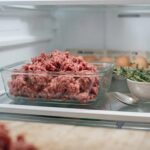
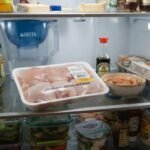
Combine the dark soy sauce, light soy sauce, oyster sauce, and sugar in a small bowl and whisk together until the sugar dissolves completely. Set the sauce within immediate reach of the stove. Dark soy sauce is responsible for Pad See Ew's defining characteristic: its deep, caramelized, molasses-dark color and slightly sweet coating on the noodles. Without dark soy sauce specifically, the dish will taste correct but lack the beautiful dark color that visually identifies this noodle dish. Slice the chicken breast or beef as thinly as possible across the grain — thin, uniform slices cook quickly and evenly at high heat. Marinate the protein for ten minutes in one tablespoon of light soy sauce and a pinch of baking soda if using chicken — the baking soda tenderizes the protein and helps it develop a better sear in the wok.
- Step 3: Sear the Protein
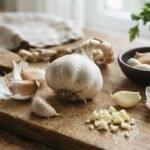
Heat the wok over maximum heat until it begins to smoke, then add two tablespoons of vegetable oil. Add the marinated protein in a single layer without any crowding. If your wok cannot accommodate all the protein without crowding, cook in two batches — crowding causes steaming rather than searing and results in gray, limp protein rather than golden, flavorful pieces. Allow the protein to sear undisturbed for 90 seconds until the bottom develops a golden crust with some charred edges, then flip and cook for another 60 seconds. The protein should be about 90 percent cooked at this stage. Push the protein to one side of the wok and add the minced garlic to the empty space. Stir the garlic rapidly for 20 seconds until fragrant and beginning to color, then combine with the protein and toss briefly.
- Step 4: Cook the Vegetables
Add the Chinese broccoli stems to the wok first and stir-fry for 60 seconds until they begin to soften and brighten in color. Chinese broccoli — Gai Lan — has a pleasantly bitter, robust quality that holds up beautifully to the dark, sweet soy sauce coating and provides essential green vegetable balance to the rich noodles and protein. Add the Chinese broccoli leaves and toss vigorously for 30 seconds until just wilted. Remove the protein and vegetables from the wok and set aside together on a plate. The wok should now be empty but blazing hot and coated with fragrant oil and caramelized protein juices. This clearing step is important — it prevents the vegetables from overcooking while the eggs and noodles are being cooked in the next steps, ensuring each component reaches its ideal texture independently before being combined.
- Step 5: Cook the Eggs and Noodles
Add the remaining tablespoon of vegetable oil to the hot wok. Crack all three eggs into the wok and scramble them rapidly for 20 to 30 seconds until mostly set but still wet. Add the separated fresh rice noodles immediately over the eggs and press them flat against the hot wok surface. Pour the sauce mixture over the noodles and leave everything undisturbed for 60 seconds. This undisturbed contact time is crucial — it allows the dark soy sauce to caramelize directly on the wok surface with the noodles sitting on top, creating the distinctive charred, smoky flavor that authentic Pad See Ew is famous for. After 60 seconds, toss everything vigorously to combine the eggs, sauce, and noodles. The noodles should turn a beautiful deep mahogany color from the dark soy sauce caramelization.
- Step 6: Combine and Finish
Return the cooked protein and vegetables to the wok and toss everything together vigorously for 60 seconds to reheat and combine all the components. Taste and adjust seasoning — the noodles should be deeply savory, slightly sweet from the dark soy, and well-seasoned without being aggressively salty. If the noodles seem dry or are sticking excessively, add one or two tablespoons of water to the wok and toss quickly — the steam helps loosen the noodles and creates a slightly glossy sauce coating. Remove from heat and drizzle the sesame oil over the finished noodles, tossing gently to distribute. Sesame oil is added off the heat because its delicate, nutty fragrance evaporates when exposed to high temperatures. Season with white pepper — this is the classic and correct seasoning for Pad See Ew rather than black pepper.
- Step 7: Plate and Serve
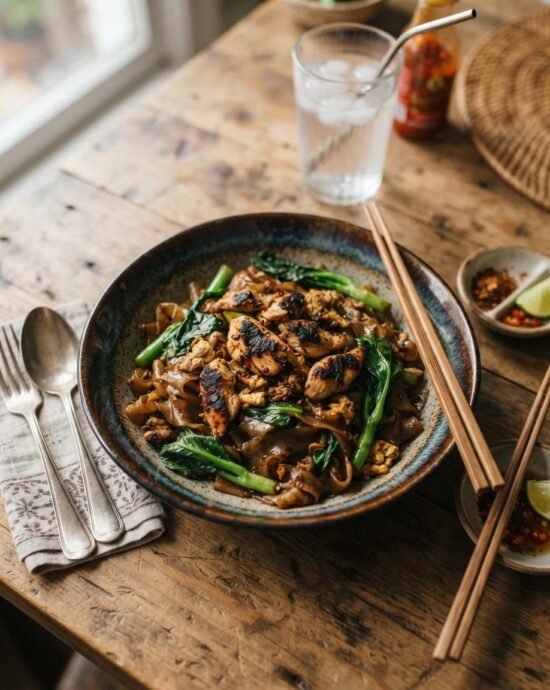
Divide the Pad See Ew into individual portions, arranging the wide, dark, caramelized noodles attractively in each bowl or on each plate. Ensure each serving has a generous amount of both the Chinese broccoli and the seared protein distributed throughout rather than piled on top. The finished noodles should be dark mahogany in color, glossy from the soy sauce coating, and fragrant with the savory-sweet aroma of dark soy caramelization. Garnish with a sprinkle of white pepper directly at the table for freshness. Serve with the traditional Thai condiment set: white vinegar with sliced fresh green chilies, fish sauce, sugar, and chili powder, which allow each diner to adjust the acidity, saltiness, sweetness, and spice level of their individual bowl. Pad See Ew is best eaten immediately while the noodles are hot and the texture is at its optimal silky-chewy best.
- Calories:475 kcal24%
- Protein:28 g56%
- Carbohydrates:58 g21%
- Sugar:5 g6%
- Fat:14 g18%
- Salt:1.9 g32%
- Energy:1988 kJ24%
Table of Contents
What Is Pad See Ew?
Pad See Ew is one of Thailand’s most popular and satisfying noodle dishes — a simple yet deeply flavorful stir-fry of wide fresh rice noodles coated in dark soy sauce with egg, protein of choice, and Chinese broccoli, cooked over ferociously high heat until the noodles caramelize and develop a subtly smoky, slightly charred character. The name translates as “fried soy sauce noodles” — pad meaning to stir-fry and see ew meaning soy sauce — which describes the dish’s defining characteristic accurately. Unlike the sweet-sour tamarind flavors of Pad Thai, Pad See Ew belongs to a different flavor family entirely: sweet, dark, savory, and deeply caramelized, owing its character entirely to dark soy sauce rather than the complex multi-element sauce of Thailand’s most famous noodle. The dish has clear Chinese origins, brought to Thailand by immigrant Chinese communities primarily from Guangdong and Fujian provinces who settled in Bangkok during the nineteenth and early twentieth centuries, establishing the Chinatown district of Yaowarat that remains a vibrant culinary hub today. Thai cooks adopted the Chinese technique of stir-frying noodles with dark soy sauce but added Thai-specific elements including fish sauce seasoning and the particular preference for wok caramelization that gives the dish its characteristic slightly charred, smoky edges. Chinese broccoli — Gai Lan — is the traditional and authentic vegetable for Pad See Ew, contributing a pleasant bitter note that balances the sweetness of the dark soy sauce and prevents the dish from becoming cloying. The wide, flat rice noodles provide the ideal surface area to absorb and caramelize in the dark soy sauce, developing the characteristic dark color and slightly chewy, silky texture that makes Pad See Ew so satisfying to eat.
Ingredient Notes
- Wide Fresh Rice Noodles (Sen Yai): Fresh wide rice noodles are the soul of Pad See Ew — they caramelize and absorb the dark soy sauce in a way that dried noodles cannot replicate. Select the freshest sheets available, which should be pliable and slightly translucent.
- Dark Soy Sauce: Dark soy sauce is what makes Pad See Ew visually and flavor-distinct from Pad Thai. It is thicker, sweeter, and less salty than regular soy sauce, producing the deep mahogany color and caramel coating characteristic of the dish.
- Chinese Broccoli (Gai Lan): Chinese broccoli has thicker, more robust stems and a pleasantly bitter, slightly peppery flavor superior to regular broccoli for this dish. The best Gai Lan for Pad See Ew should have firm, dark green stems and unwilted, glossy leaves.
Ingredient Suggestions
- Shrimp: Replacing chicken with large shrimp creates a seafood Pad See Ew that cooks even faster and pairs beautifully with the sweet dark soy sauce coating on the noodles.
- Extra Egg: Using four eggs instead of three creates an even richer, more coating egg presence in the noodles that many diners prefer for extra creaminess and richness.
- Bean Sprouts: Adding a handful of bean sprouts in the final thirty seconds provides a refreshing crunchy contrast to the soft, silky noodles and helps cut the richness of the dark soy sauce.
Helpful Tips & Pro Tips
- Let the noodles sit undisturbed on the hot wok surface for 60 seconds after adding sauce. This deliberate no-stir period allows the dark soy sauce to caramelize against the hot metal surface with the noodles on top — creating the slightly charred, smoky flavor that defines great Pad See Ew.
- Never rinse the noodles. The starchy surface of fresh rice noodles helps the sauce coat and cling to each strand. Rinsing removes this starch and produces slippery noodles that the sauce slides off rather than coats.
- Why are my noodles breaking apart? Cold or refrigerated fresh rice noodles break instead of separating cleanly. Always allow fresh rice noodles to come to full room temperature for 30 minutes before cooking and handle them gently during separation.
- Use a carbon steel wok if possible. Carbon steel conducts and retains heat more evenly than stainless steel and produces better caramelization on the noodles. Season the wok well before use for the best non-stick performance.
How to Serve and Store
Pad See Ew is best eaten immediately after cooking, as the fresh rice noodles become hard and brittle when refrigerated. Leftover Pad See Ew can be stored for up to one day but the texture will deteriorate significantly. Reheat in a hot wok with a splash of water and a small drizzle of dark soy sauce to refresh the noodles. The dish does not freeze well due to the fresh rice noodle texture.
Substitutions
- Wide Rice Noodles → Flat Rice Noodles (Dried) — soak dried flat noodles per package instructions; the texture will be less silky but adequate.
- Chinese Broccoli → Broccolini or Regular Broccoli — acceptable alternatives with a milder flavor than authentic Gai Lan.
- Dark Soy Sauce → Regular Soy Sauce plus a small amount of molasses — approximates the sweetness and deep color of dark soy.
- Chicken → Tofu — firm tofu pressed and cubed creates an excellent vegetarian version that absorbs the dark soy sauce beautifully.
- Oyster Sauce → Mushroom Oyster Sauce — vegan-friendly alternative with comparable sweetness and body.
Suggested Recipes
- Pad Thai: The perfect companion dish for a complete Thai noodle comparison — serve both side by side to experience the full spectrum of Thai stir-fried noodle traditions.
- Tom Yum Goong: A bowl of bright, sour Tom Yum beautifully offsets the dark, sweet richness of Pad See Ew as a complete Thai meal.
- Som Tum: The fresh, crunchy, acidic papaya salad provides ideal textural and flavor contrast alongside the soft, caramelized Pad See Ew noodles.
Frequently Asked Questions

Jeff Smith
"Cooking is the intersection of history, science, and emotion."
For me, the kitchen has always been a laboratory of culture. With a background deeply rooted in digital strategy and precision, I approach the culinary arts with the same rigor I apply to the digital landscape—analyzing flavors, perfecting techniques, and documenting the nuance that makes Filipino cuisine truly world-class.
Findme Recipe was born from a desire to bridge the gap between traditional heritage and the modern home cook. Whether it is mastering the perfect balance of acidity in a classic Adobo or simplifying complex regional dishes for everyday kitchens, my mission is to preserve our culinary identity through accessible, data-backed, and delicious content.
I am not just building a database; I am cultivating a community where every Filipino kitchen feels empowered, every ingredient is celebrated, and every family heirloom recipe finds a place to thrive.
Join me as we translate the soul of our islands into recipes for the next generation.