
- Step 1: Soak the Bihon Noodles
Place the dry bihon (rice vermicelli) noodles in a large bowl and cover completely with room-temperature water. Do not use hot or boiling water — hot water pre-cooks the noodles and turns them soft and fragile before they even reach the wok, resulting in noodles that break apart and become clumpy rather than maintaining the long, slippery, separate strands that are the hallmark of great Pancit Bihon. Soak in room-temperature water for ten to fifteen minutes until the noodles are pliable and flexible but not fully cooked — they should bend without breaking but still have significant resistance when you try to bite one. Drain thoroughly and set aside in a colander. If the soaked noodles are very long, use kitchen shears to cut them into more manageable lengths — approximately twenty to twenty-five centimeters is ideal for stir-frying without the noodles tangling uncontrollably in the wok.
- Step 2: Brown the Pork and Cook the Shrimp
Heat the cooking oil in a large wok or the widest pan you own over medium-high heat. Add the thinly sliced pork in a single layer and cook without stirring for sixty to ninety seconds to develop a light golden sear. Flip and cook the other side for another minute. Remove the browned pork and set aside. In the same oil remaining in the wok, add the shrimp and stir-fry over high heat just until they turn pink and curl, about one to two minutes — they will cook further when added back to the noodles. Remove and set aside with the pork. Cooking the proteins separately before the aromatics and noodles ensures they have proper caramelization and do not become pale and steamed in the large volume of vegetables and noodles. The residual oil from cooking the pork and shrimp is already seasoned with their natural fats and juices, enriching every subsequent element cooked in it.
- Step 3: Sauté the Aromatics
In the oil remaining in the wok after browning the meats, add the minced garlic over medium-high heat and cook for one minute until golden and fragrant. Add the sliced onion and stir-fry for two minutes until softened and slightly translucent. Properly cooked aromatics are the flavor base of all pancit — the combination of golden garlic and softened onion in the hot oil creates a savory, aromatic foundation that permeates every noodle strand and vegetable. Season the aromatics with a tablespoon of the soy sauce and stir well to distribute the flavor. The soy sauce at this stage begins to caramelize slightly in the hot wok, developing a richer, more complex flavor than soy sauce added raw to noodles. This technique of blooming soy sauce in the hot oil with aromatics before adding the noodles is one of the key differences between restaurant-quality Pancit Bihon and home versions that taste flat.
- Step 4: Add the Vegetables
Add the harder vegetables first — julienned carrots and snow peas — and stir-fry over high heat for two minutes until slightly softened but still retaining significant crunch. Add the shredded cabbage and stir-fry for another sixty to ninety seconds until it wilts slightly but still has some texture. The goal for all vegetables in Pancit Bihon is 'crisp-tender' — cooked through but not soft or limp. Overcooked vegetables turn soggy and release too much water into the noodles, making the finished dish wet and heavy. High heat and quick cooking preserve color, nutrients, and textural contrast. Season the vegetables with a pinch of black pepper and a small splash of fish sauce if available. Transfer the vegetables temporarily to a separate plate if your wok is getting crowded — cooking in batches over high heat produces better results than overcrowding, which causes steaming rather than stir-frying.
- Step 5: Add the Noodles and Broth
Return all the vegetables to the wok. Add the drained, soaked bihon noodles on top of the vegetable mixture. Pour the chicken broth over the noodles — the liquid will immediately begin steaming and sizzling in the hot wok. Using tongs or two wooden spatulas, toss the noodles with the vegetables over high heat, working quickly to distribute the ingredients evenly and prevent the noodles from sticking to the bottom. Add the remaining soy sauce and the oyster sauce, continuing to toss and stir-fry. The noodles will absorb the broth rapidly — Pancit Bihon should be stir-fried to a dry or nearly dry finish, with no excess liquid pooling at the bottom of the wok. Continue tossing over high heat for five to six minutes until the noodles are fully cooked, tender, and most of the liquid has been absorbed. Taste and adjust seasoning.
- Step 6: Add the Proteins and Finish
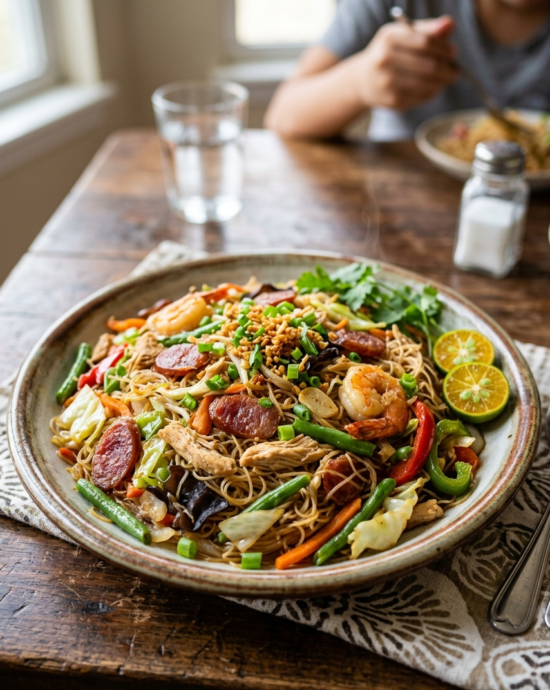
Return the browned pork, shrimp, and shredded chicken to the wok with the noodles and vegetables. Toss everything together thoroughly over high heat for one to two minutes to heat the proteins through and integrate them evenly with the noodles. The finished Pancit Bihon should have a rich, golden-brown color from the soy sauce, glistening noodle strands coated in savory aromatics, and an even distribution of proteins and colorful vegetables throughout. Transfer to a large serving platter — Pancit Bihon is almost always served on a large shared platter rather than in individual bowls, reflecting its role as a communal, celebratory dish. Garnish with sliced spring onions scattered over the top and arrange calamansi halves around the edges of the platter. Serve immediately while the noodles are hot and the vegetables are still vibrant.
- Calories:380 kcal19%
- Protein:22 g44%
- Carbohydrates:52 g17%
- Sugar:5 g6%
- Fat:9 g12%
Table of Contents
What Is Pancit Bihon?
Pancit Bihon is arguably the most widely eaten and most universally beloved noodle dish in the Philippines, present at virtually every Filipino celebration, birthday party, family gathering, and fiesta table across the archipelago. Made from thin, delicate rice vermicelli noodles (bihon) stir-fried with a combination of pork, chicken, shrimp, and fresh vegetables in a garlic-soy-oyster sauce base, Pancit Bihon is the quintessential Filipino celebration food, and its presence at birthdays carries the specific cultural meaning of ‘long life’ — the long noodle strands symbolizing longevity and prosperity for the celebrant. The tradition of eating noodles for longevity was introduced to the Philippines by Chinese traders and settlers who began arriving in the archipelago centuries before the Spanish colonial period, and the word ‘pancit’ itself derives from the Hokkien Chinese ‘pian e sit,’ meaning ‘something conveniently cooked.’ Over generations of Filipino adaptation, Chinese-style stir-fried noodles were transformed using local ingredients, cooking techniques, and flavor preferences into the distinctly Filipino dish that Pancit Bihon is today. Unlike Chinese stir-fried noodles, which emphasize wok hei and minimal seasoning, Filipino Pancit Bihon is more generously seasoned with soy sauce, oyster sauce, and fish sauce, and it typically contains more vegetables and a wider variety of proteins. The calamansi squeeze at the end is a distinctly Filipino touch that is absent from Chinese noodle traditions but has become absolutely inseparable from the Filipino experience of eating pancit. Pancit Bihon is a dish that transcends class, region, and occasion — it is eaten at luxury hotel banquets and simple home kitchen tables with equal enthusiasm.
Ingredient Notes
- Bihon (Rice Vermicelli) Bihon is thin, translucent dried rice noodles that cook very quickly and have a delicate, slightly neutral flavor that absorbs seasonings beautifully. Look for bihon labeled specifically for stir-frying rather than soup; the stir-fry variety is slightly thicker and holds up better to tossing in a hot wok without breaking.
- Chicken Broth: The chicken broth in Pancit Bihon is not added as a soup liquid but as a cooking medium — it hydrates the soaked noodles during stir-frying and carries flavor into every strand. Use full-flavored, properly seasoned homemade or store-bought broth; watery, unseasoned broth produces a flat, uninspiring finished dish.
- Cabbage: Cabbage is the most traditional vegetable in Pancit Bihon, providing bulk, sweetness, and a satisfying crunch when cooked at high heat. Shred it into thin ribbons no wider than half a centimeter; larger pieces cook unevenly and dominate the other vegetables visually.
Ingredient Suggestions
- Squid Balls — Add halved squid balls for a Filipino street food touch that adds a bouncy, savory element.
- Tokwa (Firm Tofu) — Pan-fried cubed firm tofu makes an excellent protein addition or substitution for a vegetarian version.
- Kikiam — Sliced kikiam (squid cake) adds a characteristic Filipino-Chinese flavor and chewy texture that complements the bihon beautifully.
- Pork Cracklings — Scatter crushed chicharron over the platter just before serving for an additional savory crunch element.
Helpful Tips & Pro Tips
- Never fully cook the bihon noodles before stir-frying. Soaking in room-temperature water for ten to fifteen minutes until pliable is the correct preparation. Over-soaked or pre-boiled noodles will break apart in the wok and turn to mush when tossed with the other ingredients. The remaining cooking happens in the wok with the broth.
- Pancit Bihon is one dish where amount of protein matters significantly for flavor — don’t be tempted to reduce the chicken, pork, and shrimp. The rendered fat and natural juices from multiple proteins combine to create the complex, rich cooking liquid that flavors every strand of noodle. A single-protein version will taste noticeably thinner.
- For large batches (typical at Filipino parties), cook in multiple smaller wok batches rather than one enormous batch. Overcrowding the wok drops the temperature dramatically, resulting in steamed rather than stir-fried noodles and causing vegetables to release excess water. Combine batches on the serving platter at the end.
- Why is my Pancit Bihon too wet and clumpy? The most common cause is under-draining the soaked noodles before stir-frying and adding too much broth. Drain soaked noodles thoroughly and add broth in small increments, allowing each addition to absorb before adding more. High heat is also essential — low heat causes steaming and moisture buildup.
How to Serve and Store
Pancit Bihon is served on a large shared platter for celebrations, surrounded by calamansi halves and garnished generously with spring onions. At birthdays, the noodles are traditionally served uncut as long strands to preserve the longevity symbolism — cutting them shorter is considered bad luck by superstitious Filipinos. Store leftovers in an airtight container for up to two days. Reheat in a hot wok with a small splash of broth or water to restore moisture. Do not microwave covered, as this steams the noodles and makes them soggy. Pancit Bihon does not freeze well.
Substitutions
- Bihon → Glass noodles (sotanghon) — Creates Pancit Sotanghon, a similar dish with a slightly more gelatinous, glassy noodle texture.
- Chicken broth → Vegetable broth (vegan) — Combined with tofu and mushrooms instead of meat, creates a satisfying vegetarian Pancit Bihon.
- Soy sauce → Coconut aminos — Lower sodium alternative that maintains the savory, slightly sweet character of soy sauce.
- Pork → Lap cheong (Chinese sausage) — Sweet, smoky lap cheong adds a rich, slightly caramelized flavor dimension different from plain pork.
- Shrimp → Imitation crab sticks — Provides a seafood note and pinkish color for a budget-friendly seafood option.
- Oyster sauce → Hoisin sauce — Similar sweet-savory umami profile at a comparable thickness and consistency for coating the noodles.
Suggested Recipes
- Pancit Canton — Another beloved Filipino noodle dish using thick egg noodles instead of bihon, with a similar stir-fried technique.
- Pancit Malabon — A thick, bright orange seafood noodle dish from Malabon City with an intensely flavored sauce.
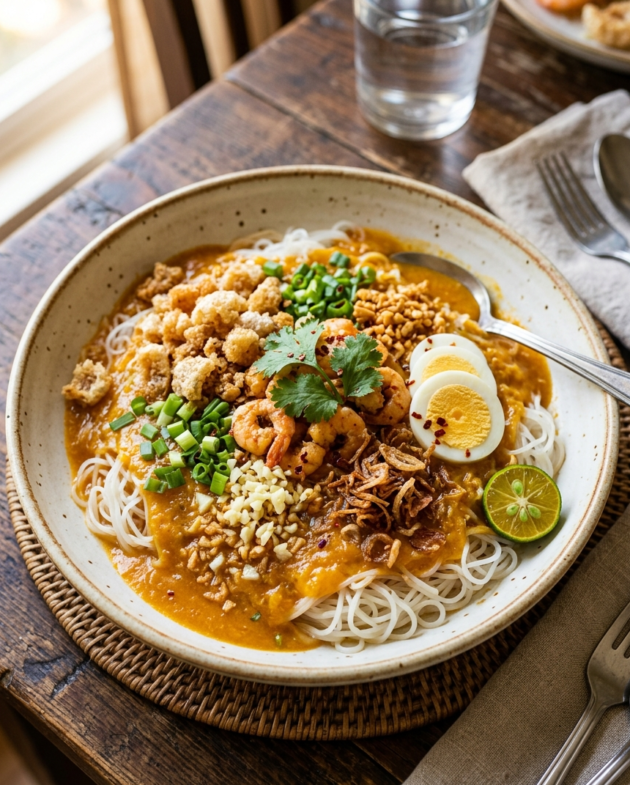
- Pancit Palabok — Rice noodles with a shrimp-based orange sauce, hard-boiled eggs, and chicharon; another classic Filipino celebration noodle.
- Sotanghon Guisado — Stir-fried glass noodles that use the same technique as Pancit Bihon but with translucent mung bean noodles.
Frequently Asked Questions

Jeff Smith
"Cooking is the intersection of history, science, and emotion."
For me, the kitchen has always been a laboratory of culture. With a background deeply rooted in digital strategy and precision, I approach the culinary arts with the same rigor I apply to the digital landscape—analyzing flavors, perfecting techniques, and documenting the nuance that makes Filipino cuisine truly world-class.
Findme Recipe was born from a desire to bridge the gap between traditional heritage and the modern home cook. Whether it is mastering the perfect balance of acidity in a classic Adobo or simplifying complex regional dishes for everyday kitchens, my mission is to preserve our culinary identity through accessible, data-backed, and delicious content.
I am not just building a database; I am cultivating a community where every Filipino kitchen feels empowered, every ingredient is celebrated, and every family heirloom recipe finds a place to thrive.
Join me as we translate the soul of our islands into recipes for the next generation.