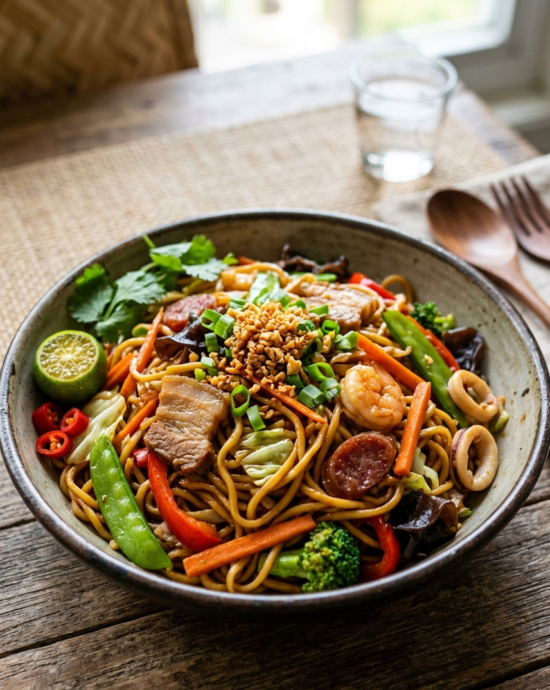

- Step 1: Soak and Prepare the Canton Noodles
Begin by soaking the dried canton noodles in a large bowl of warm — not boiling — water for five to eight minutes, just until the noodles are pliable and slightly softened but still quite firm in the center. Do not soak them until fully soft, as they will continue to cook in the wok and absorb more liquid from the sauce. Drain the noodles well and set them aside. While the noodles soak, prepare all your vegetables: shred the cabbage into thin strips, julienne the carrots into matchstick-sized pieces, trim the snap peas, and slice the celery on the diagonal. Having everything cut and ready before you start cooking is essential, as this stir-fry dish moves at a rapid pace once the wok is hot.
- Step 2: Sauté the Aromatics and Cook the Meats
Heat vegetable oil in a large wok over high heat until it begins to smoke slightly. Add the minced garlic and sliced onion to the wok, stirring constantly for about two minutes until the onion softens and the garlic turns fragrant and lightly golden. Season the sliced pork and chicken lightly with salt and pepper, then add them to the wok. Cook the meats over high heat for four to five minutes, stirring frequently, until they are browned on the outside and cooked through. The high heat is essential — it creates a light sear on the proteins, adding depth of flavor to the finished dish. Once the meats are cooked, push them to the sides of the wok to clear the center for the shrimp, which cook significantly faster than the pork and chicken.
- Step 3: Cook the Shrimp and Build the Sauce
Add the shrimp to the center of the wok and cook for about ninety seconds per side, just until they curl and turn pink throughout. Immediately push the shrimp in with the meats and pour the soy sauce, oyster sauce, and fish sauce directly into the hot wok. Stir vigorously to coat all the proteins in the sauce and deglaze any browned bits stuck to the bottom of the wok — these bits carry enormous flavor. Pour in the chicken broth and bring the liquid to a rapid simmer over high heat. Taste the broth at this point and season with salt and a generous crack of black pepper. The broth should be boldly savory with a pleasant salty-sweet balance; if it tastes flat, add another splash of soy sauce or fish sauce before proceeding.
- Step 4: Add the Hard Vegetables
Begin adding the vegetables in order of how long they need to cook, starting with the densest ones first. Add the julienned carrots and sliced celery to the wok and stir-fry them in the simmering sauce for two minutes. These denser vegetables need a head start to soften without losing too much of their texture and bite. Follow with the snap peas or snow peas and toss everything together for another one to two minutes. The vegetables should remain vibrant in color and retain a slight crunch at this stage — overcooking them now will result in a soggy, dull-colored finished dish. Hold off on adding the cabbage and noodles for now; both require very short cooking times and will be added in the next step together with the pre-soaked canton noodles.
- Step 5: Add Noodles and Cabbage, Toss Vigorously
Add the pre-soaked and drained canton noodles and the shredded cabbage to the wok simultaneously. Using tongs, toss and fold everything together continuously to ensure the noodles are evenly distributed throughout the vegetables and coated in the sauce. If the wok appears too dry, add an additional quarter cup of chicken broth or water to keep the noodles from sticking. Continue cooking and tossing for three to four minutes until the noodles are fully tender, have absorbed most of the broth, and are well coated in the savory sauce. Taste again and adjust the seasoning. The cabbage should be just wilted — still slightly crunchy, bright, and green. The noodles should be fully cooked through but not mushy, with each strand glistening in the rich, umami-forward sauce.
- Step 6: Plate and Garnish for Serving
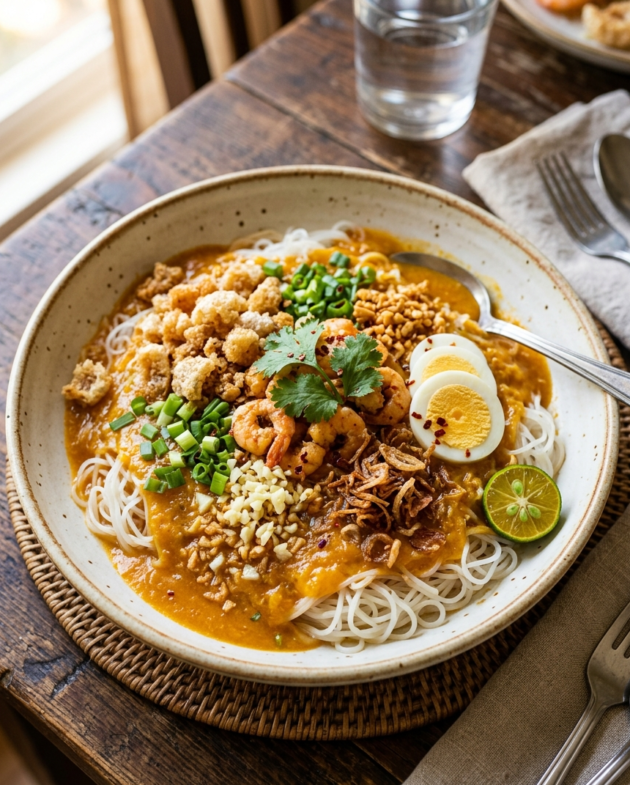
Transfer the finished Pancit Canton to a large, flat serving platter that allows the colorful vegetables and noodles to spread out beautifully. Arrange the sliced hard-boiled eggs artfully around the edges of the platter — the creamy yellow yolks against the golden noodles create a visually appealing contrast that signals abundance and festivity. Scatter the chopped green onions generously over the top for freshness and a pop of color. Place the halved calamansi on the side of the platter with a small reminder for guests to squeeze the juice directly onto their serving before eating. The bright, acidic calamansi juice is not optional — it dramatically lifts the richness of the dish, balancing the soy and oyster sauces and brightening every single flavor in the bowl.
- Calories:420 kcal21%
- Protein:26 g52%
- Carbohydrates:52 g17%
- Sugar:4 g4%
- Energy:1757 kJ21%
- Fat:10 g14%
Table of Contents
What Is Pancit Canton?
Pancit Canton is a beloved Filipino stir-fried noodle dish made with dried egg noodles tossed in a savory sauce of soy sauce, oyster sauce, and chicken broth, combined with a colorful medley of vegetables and proteins including chicken, pork, and shrimp. The name reflects its dual heritage: pancit is derived from the Hokkien word pian-e-sit, meaning something conveniently cooked, while canton refers to the Canton region of China, speaking to the Chinese culinary influence that has profoundly shaped Filipino food culture over centuries of trade and migration. Today, Pancit Canton is one of the most universally recognized and prepared noodle dishes in the Philippines, found in every region of the archipelago from Luzon to Mindanao. It holds deep cultural significance as a birthday dish, where noodles symbolize long life and good fortune — it is considered inauspicious to cut the noodles before eating, as doing so would symbolically shorten one’s lifespan. The dish’s enduring appeal lies in its remarkable versatility: the protein and vegetable combination can be adjusted to suit whatever is available, making it an ideal dish for feeding large families and crowds. The flavor profile is savory, slightly sweet, and deeply umami, with each element — the silky noodles, tender proteins, and crisp vegetables — playing a complementary role. Despite its simple technique, Pancit Canton achieves a satisfying complexity that explains why it has remained one of the Philippines’ most beloved comfort foods across generations, consistently earning its place as the first dish consumed at every celebration.
Ingredient Notes
- Canton (Egg) Noodles: The best canton noodles are firm, dry, and pale golden yellow with a subtle egg richness. Look for brands specifically labeled as canton or pancit canton at Filipino or Asian grocery stores; avoid noodles that appear brittle or discolored, which may indicate age.
- Chicken Broth: A good-quality homemade or store-bought chicken broth forms the liquid base of the sauce and determines the depth of flavor of the entire dish. Choose low-sodium broth if using store-bought so you can control the salt level precisely as you cook.
- Oyster Sauce: Oyster sauce provides the characteristic glossy coating and sweet-savory depth that distinguishes Pancit Canton’s sauce. Use a premium brand like Lee Kum Kee for the richest flavor; the quality of your oyster sauce has a direct and noticeable impact on the finished dish.
- Snap Peas: For the best snap peas, choose pods that are bright green, firm, and snap cleanly when bent. They contribute both sweetness and crunch, two qualities that balance the richness of the sauce and proteins beautifully.
Ingredient Suggestions
- Quail Eggs — Boiled and halved quail eggs added as a topping add visual elegance and extra protein to the dish.
- Kikiam — Sliced and pan-fried kikiam (fish rolls) is a traditional add-in that adds a savory, bouncy texture beloved in classic Filipino pancit presentations.
- Wood Ear Mushrooms — Rehydrated sliced wood ear mushrooms add an earthy flavor and satisfying chewy texture that complements the egg noodles.
- Squid — Adding scored squid rings introduces a seafood dimension and pleasing chewiness that elevates this noodle dish into something more celebratory.
Helpful Tips & Pro Tips
- Never fully cook the noodles during soaking — pre-soaked noodles should still feel slightly underdone in the center. They will finish cooking in the wok and absorb the flavorful sauce, becoming perfectly tender in the process.
- Cook over the absolute highest heat your stove can produce for the best texture and flavor. Pancit Canton suffers in low-heat environments, producing steamed rather than stir-fried noodles that are mushy, pale, and lacking in depth.
- Add your vegetables in stages based on their density and cooking time. Adding everything simultaneously will result in overcooked cabbage and undercooked carrots, destroying the textural balance the dish depends on.
- Why is my Pancit Canton soggy? This is the most common mistake and results from either over-soaking the noodles, using insufficient heat, or adding too much liquid. Use high heat, add broth gradually, and drain your pre-soaked noodles very well before adding them to the wok.
- Always serve with calamansi on the side, never squeezed directly into the wok. Individual diners have different preferences for acidity, and the citrus should remain a personal seasoning rather than an element baked into the dish.
How to Serve and Store
Pancit Canton is ideally served immediately after cooking while the noodles are at their silkiest and the vegetables still retain their color and crunch. Store leftovers in an airtight container in the refrigerator for up to three days. To reheat, place in a wok or skillet over medium heat with two to three tablespoons of chicken broth or water to rehydrate the noodles, tossing gently until heated through. Alternatively, microwave in 30-second intervals, stirring between each, until warm. Pancit Canton is not recommended for freezing as the egg noodles become mushy and the vegetables deteriorate significantly upon thawing.
Substitutions
- Canton Noodles → Rice Noodles — a gluten-free option with a delicate, lighter texture that still pairs beautifully with the sauce.
- Soy Sauce → Tamari — a wheat-free, gluten-free soy sauce alternative with an equally deep, savory flavor.
- Oyster Sauce → Hoisin Sauce — a vegetarian-friendly alternative that provides similar sweetness and umami depth.
- Chicken → Extra-Firm Tofu — press, cube, and pan-fry for a vegan protein option that absorbs the sauce beautifully.
- Pork → Beef Sirloin — thinly sliced beef adds a richer, meatier profile for those who prefer it over pork.
- Fish Sauce → Soy Sauce + Pinch of Salt — works as a simple patis substitute while maintaining the savory depth of the dish.
Suggested Recipes
- Pancit Bihon — a lighter, rice noodle version of this classic stir-fry that is equally beloved at Filipino celebrations and gatherings.
- Pancit Cabagan — a regional Isabela specialty that uses similar proteins but thick miki noodles stained with annatto and topped with chicharron.
- Lomi — a thick, comforting Filipino noodle soup using similar egg noodles in a rich, cornstarch-thickened broth.
- Chop Suey — a classic Filipino vegetable dish that shares the same wok-cooking technique and many of the same vegetables as Pancit Canton.
Frequently Asked Questions

Jeff Smith
"Cooking is the intersection of history, science, and emotion."
For me, the kitchen has always been a laboratory of culture. With a background deeply rooted in digital strategy and precision, I approach the culinary arts with the same rigor I apply to the digital landscape—analyzing flavors, perfecting techniques, and documenting the nuance that makes Filipino cuisine truly world-class.
Findme Recipe was born from a desire to bridge the gap between traditional heritage and the modern home cook. Whether it is mastering the perfect balance of acidity in a classic Adobo or simplifying complex regional dishes for everyday kitchens, my mission is to preserve our culinary identity through accessible, data-backed, and delicious content.
I am not just building a database; I am cultivating a community where every Filipino kitchen feels empowered, every ingredient is celebrated, and every family heirloom recipe finds a place to thrive.
Join me as we translate the soul of our islands into recipes for the next generation.