
- Step 1: Prepare the Banana Leaves for Serving
Before you begin cooking, prepare the banana leaf wrappers that make Pancit Habhab so uniquely distinctive and memorable. Pass large, clean sections of fresh banana leaf directly over an open gas flame or hold them briefly over a hot electric burner, moving them constantly, until they turn a vibrant deep green and become supple and flexible. The heat wilts the stiff leaf and releases the subtle grassy, slightly sweet fragrance that perfumes the noodles as they are served. Cut the wilted leaves into rectangular pieces approximately 25 by 30 centimeters. If fresh banana leaves are unavailable, parchment paper can be used as a substitute, though the presentation and aroma will not be as authentic. Set the prepared leaves aside on a clean surface while you cook the noodles.
- Step 2: Sauté the Aromatics and Cook the Pork
Heat the vegetable oil in a large wok or skillet over high heat. Add the minced garlic and sliced onion and cook, stirring constantly, for about two minutes until the onion softens and the garlic turns golden and fragrant. Add the thinly sliced pork belly to the wok and cook over high heat for four to five minutes, stirring frequently, until the pork is browned on all sides, the fat is rendered, and the edges are slightly crispy. The rendered pork fat will add a rich, porky depth to the overall flavor of the dish. Season the pork with a light pinch of salt and pepper during cooking. The high heat is essential here — you want a proper sear on the pork, not a gentle steam, which would result in pale, flaccid meat without the caramelized flavor that makes this dish so satisfying.
- Step 3: Add Shrimp and Build the Sauce
Add the shrimp to the wok with the browned pork belly and sauté for about two minutes, just until the shrimp turn pink and opaque throughout. Do not overcook the shrimp, as they will toughen and shrink significantly if left on the heat too long. Pour in the soy sauce and oyster sauce and toss everything together, ensuring all the proteins are evenly coated in the glossy sauce. Add the broth to the wok and bring everything to a simmer. The liquid should be fragrant and deeply savory at this point. Taste and adjust the seasoning with salt, pepper, or a touch more soy sauce. The sauce for Pancit Habhab is intentionally less abundant than in other pancit varieties — this is a drier, more concentrated noodle dish meant to be eaten by hand, folded in banana leaf, rather than from a bowl.
- Step 4: Add Vegetables and Noodles
Add the julienned carrots to the wok first and stir-fry for one minute before adding the shredded cabbage. Both vegetables should remain vibrant and slightly crunchy — this is not a dish where the vegetables cook to softness. Add the fresh miki noodles directly to the wok and use tongs to toss everything together vigorously, distributing the noodles evenly among the proteins and vegetables. If the noodles start to stick, add a small splash of broth. Cook for two to three minutes, tossing continuously until the noodles are heated through, well coated in the sauce, and tender but with a slight chew. The final dish should be relatively dry — Pancit Habhab is traditionally served without excess sauce, as it is meant to be eaten directly from banana leaf without utensils.
- Step 5: Serve on Banana Leaves the Traditional Way
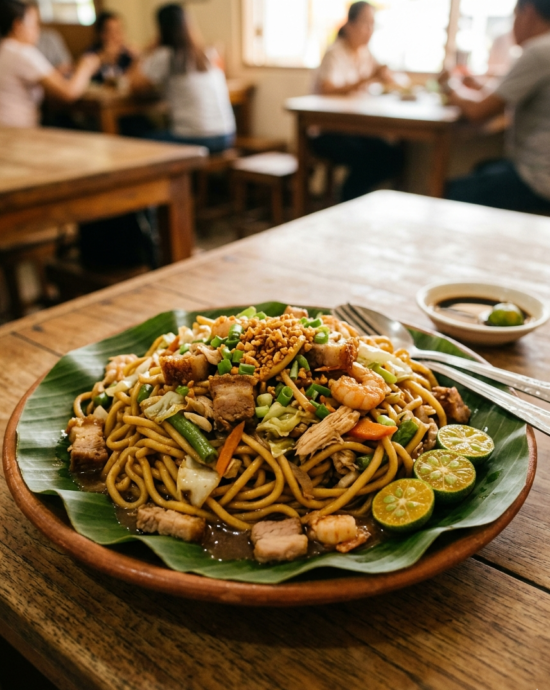
Spoon a generous portion of the finished Pancit Habhab onto the center of each prepared banana leaf rectangle. The noodles should rest in a mound in the middle of the leaf, with the colorful vegetables and proteins visible throughout. Fold the sides of the banana leaf up slightly to contain the noodles and prevent them from sliding off. Traditionally, Pancit Habhab is eaten without utensils — diners hold the banana leaf with both hands and eat directly by bringing the leaf to the mouth, which is precisely where the name habhab originates, as it mimics the scooping eating motion. This communal, hands-on serving style is fundamental to the experience and connects the dish to its street food roots in Lucban and Tayabas, Quezon province.
- Calories:380 kcal19%
- Protein:18 g36%
- Carbohydrates:42 g14%
- Sugar:3 g3%
- Energy:1590 kJ19%
- Fat:14 g19%
Table of Contents
What Is Pancit Habhab?
Pancit Habhab is a uniquely Filipino noodle dish that originates from the province of Quezon, particularly associated with the historic municipalities of Lucban and Tayabas. It is made with fresh miki egg noodles stir-fried with pork, shrimp, and vegetables in a simple, savory sauce, then served on a piece of softened banana leaf to be eaten directly by hand — the name habhab itself is derived from the Tagalog term for the scooping eating motion used to consume it. This entirely distinctive serving style, which requires no utensils and invites diners to hold the banana leaf and eat directly from it, defines Pancit Habhab as one of the most experiential and culturally immersive foods in the Philippine culinary landscape. The dish is most famously associated with Lucban’s Pahiyas Festival, held each May in honor of San Isidro Labrador, patron saint of farmers, where food stalls line the streets and vendors sell Pancit Habhab wrapped in banana leaf to throngs of festival-goers. The banana leaf imparts a subtle, grassy fragrance to the noodles that cannot be replicated with any other serving vessel. Eaten alongside suka or sukang Iloko — a sharp, pungent cane vinegar from Ilocos — the contrast of the savory, lightly oiled noodles against the bright, acidic vinegar creates a flavor pairing that is arrestingly good and deeply Filipino. Its rustic presentation and simple preparation belie the complexity of flavors it delivers, making Pancit Habhab a beloved celebration of Quezon culinary heritage.
Ingredient Notes
- Fresh Miki Noodles: For Pancit Habhab, look for fresh miki that is thin to medium in thickness, springy, and uniformly pale yellow — these will absorb the sauce quickly while retaining a pleasant chew. Avoid noodles that are wet or sticky, as these have been stored improperly and will clump in the wok.
- Banana Leaves: Fresh banana leaves should be deep green, supple, and free from tears or discoloration. Wilt them over an open flame for ten to fifteen seconds per section — they should turn a darker, vibrant green and become flexible without becoming brittle or brown.
- Sukang Iloko (Cane Vinegar): The best sukang Iloko has a sharp, assertive sourness with a slightly funky, fermented depth that sets it apart from regular distilled vinegar. Look for it in Filipino grocery stores; its acidic punch is essential to the authentic eating experience of Pancit Habhab.
- Pork Belly: Choose pork belly with a good fat-to-meat ratio — the rendered pork fat flavors the entire dish and gives the noodles their characteristic richness. Slice it thin for quicker cooking and crispier edges.
Ingredient Suggestions
- Chili Flakes — A sprinkle of dried chili flakes or fresh bird’s eye chili adds a welcome heat that contrasts beautifully with the vinegar dipping sauce.
- Kikiam — Sliced fish rolls add texture and a savory, seasoned fishiness that is a popular traditional addition in Quezon province.
- Extra Bean Sprouts — A small handful of fresh bean sprouts added at the very end adds crunch and freshness that balances the richness of the pork.
- Toasted Garlic — A drizzle of toasted garlic oil over the finished noodles before serving deepens the aroma and adds a nutty richness.
Helpful Tips & Pro Tips
- The key to authentic Pancit Habhab is keeping the dish relatively dry — add just enough broth to coat and cook the noodles without creating excess sauce that would make serving on banana leaf impractical and messy.
- Wilt your banana leaves just before serving, not hours in advance. Leaves prepared too early become brittle as they cool and may tear when you spoon the hot noodles onto them.
- Eat Pancit Habhab hot, directly after serving. The banana leaf releases its aromatic oils and subtle fragrance only when warm noodles are placed on it; cold noodles on banana leaf lose this essential dimension entirely.
- Why does my Pancit Habhab taste bland? The sauce is minimal by design, which means the quality of your soy sauce, oyster sauce, and broth matters enormously. Use a premium soy sauce and reduce the broth slightly for a more concentrated, punchy flavor.
- If cooking for a crowd, prepare the sauce and proteins in advance and stir-fry the noodles in batches just before serving. Freshly cooked noodles on warm banana leaf deliver the full sensory experience that makes this dish so special.
How to Serve and Store
Pancit Habhab is designed as a street food experience and is best consumed immediately after preparation. Leftovers can be stored in an airtight container in the refrigerator for up to two days; store without the banana leaf, as the leaves do not keep well. Reheat in a wok with a small splash of broth over medium heat, tossing gently until warmed through. The dish is not suitable for freezing. For serving leftovers, simply prepare fresh banana leaf pieces and plate as usual — the banana leaf experience can always be recreated even with reheated noodles.
Substitutions
- Fresh Miki Noodles → Fresh Rice Noodles — a gluten-free option that maintains the delicate, slightly chewy texture of the original.
- Pork Belly → Chicken Thighs — a leaner substitute that still provides richness; remove skin and slice thin before cooking.
- Sukang Iloko → Apple Cider Vinegar — a widely available substitute with a milder, slightly fruity sourness that works well as a dipping sauce.
- Banana Leaves → Parchment Paper — not traditional but functional for serving if fresh banana leaves are unavailable.
- Soy Sauce → Coconut Aminos — a gluten-free, slightly sweeter alternative that pairs nicely with the mild sauce profile of this dish.
- Shrimp → Squid Rings — another traditional Quezon seafood addition that adds chewiness and a light brininess to the dish.
Suggested Recipes
- Pancit Canton — a closely related stir-fried egg noodle dish that uses a richer, more abundant sauce and a wider variety of toppings.
- Lucban Longganisa — the signature garlicky sausage of Lucban, Quezon, often served alongside Pancit Habhab at Pahiyas Festival celebrations.
- Pancit Bihon — a lighter rice noodle version of Filipino pancit that shares the same quick stir-fry technique and similar vegetable components.
- Binagoongang Baboy — another Quezon-province specialty featuring pork in a bold shrimp paste sauce, perfect for exploring regional Filipino flavors.
Frequently Asked Questions

Jeff Smith
"Cooking is the intersection of history, science, and emotion."
For me, the kitchen has always been a laboratory of culture. With a background deeply rooted in digital strategy and precision, I approach the culinary arts with the same rigor I apply to the digital landscape—analyzing flavors, perfecting techniques, and documenting the nuance that makes Filipino cuisine truly world-class.
Findme Recipe was born from a desire to bridge the gap between traditional heritage and the modern home cook. Whether it is mastering the perfect balance of acidity in a classic Adobo or simplifying complex regional dishes for everyday kitchens, my mission is to preserve our culinary identity through accessible, data-backed, and delicious content.
I am not just building a database; I am cultivating a community where every Filipino kitchen feels empowered, every ingredient is celebrated, and every family heirloom recipe finds a place to thrive.
Join me as we translate the soul of our islands into recipes for the next generation.