
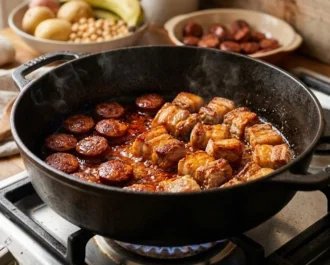
- Step 1: Brown the Chorizo and Sear the Pork

Heat the cooking oil in a large, heavy-bottomed pot over medium heat. Add the chorizo de Bilbao rounds and cook, stirring, for 2 to 3 minutes until they render their vivid red, paprika-infused fat into the pan and develop lightly golden, caramelized edges. Remove the chorizo and set aside. Increase the heat to medium-high and add the pork pieces in batches, searing each piece for 3 to 4 minutes until golden brown on the exterior. The chorizo fat left in the pan bastes the pork as it sears, infusing the exterior with its smoky, paprika-forward character before any liquid is added. This layered fat-building between chorizo and pork creates a depth of flavor in the soup base that cannot be replicated by adding both ingredients to cold water simultaneously.
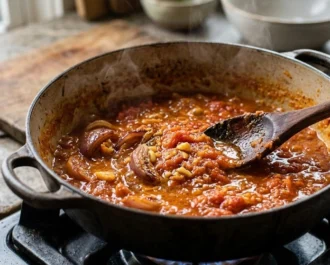
- Step 2: Build the Aromatic Tomato Base
In the same pot with all the rendered fat, reduce the heat to medium. Add the quartered onion and cook for 3 minutes until softened and beginning to lightly caramelize at the edges. Add the crushed garlic and cook for 1 minute until golden and fragrant. Add the chopped fresh tomatoes and stir everything together, scraping the fond from the bottom. Cook the tomatoes for 4 minutes, pressing them with the back of a spoon until they completely break down into a rich, pulpy aromatic base. Pour in the tomato sauce and stir to incorporate, cooking for 2 more minutes until the sauce darkens slightly and the raw tomato smell transforms into a deeper, more rounded, cooked-tomato fragrance that signals it is properly prepared and ready for the liquid additions.
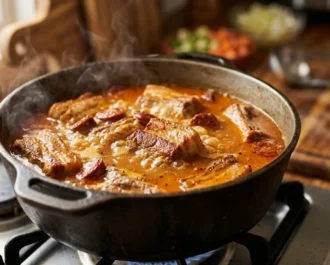
- Step 3: Add Broth and Simmer the Pork
Return the seared pork pieces and browned chorizo to the pot. Pour in the water or pork broth and stir gently, ensuring the pork is submerged in the liquid. Season with fish sauce, salt, and black pepper. Bring to a full boil over high heat, skimming off any foam that rises to the surface during the first 5 minutes for a cleaner, clearer broth. Once the liquid is boiling clear and skimmed, reduce the heat to medium-low and partially cover the pot. Allow the pork to simmer gently for 40 to 45 minutes until the meat is fork-tender and nearly falling from the bone. The tomato sauce and chorizo flavors meld beautifully with the pork broth during this long simmer, creating a richly complex, deeply colored soup base that is the heart of pochero's character.
- Step 4: Add the Firmer Vegetables
Once the pork is nearly tender, add the corn rounds and potato quarters to the simmering broth. These two vegetables require the longest cooking time of all the pochero vegetables — the potatoes need 12 to 15 minutes to become tender, and the corn needs 8 to 10 minutes. Stir gently to ensure they are submerged in the broth. Add the chickpeas (garbanzos) at this stage as well — they are already cooked and simply need time to absorb the flavors of the tomato-chorizo broth before serving. The saba banana halves also go in now — their natural starch content means they need 8 to 10 minutes to cook through and soften to the pleasantly starchy, mildly sweet consistency that is one of pochero's most beloved and distinctly Filipino characteristics.
- Step 5: Add the Softer Vegetables
Once the potatoes are just tender and the corn is cooked through, add the eggplant rounds to the broth and cook for 5 minutes until the eggplant is completely soft and has absorbed the broth's flavors. Add the quartered cabbage next and cook for 3 minutes until the leaves are just wilted and tender but still holding their shape. Finally, add the pechay or kangkong in the very last 2 minutes of cooking, stirring it gently into the broth just until it wilts and turns a brilliant, vibrant green. The sequential addition of vegetables in order of their cooking time ensures that every component reaches its ideal texture simultaneously rather than some being overcooked while others remain raw. Remove from heat immediately after the greens wilt.
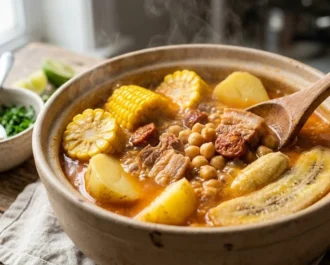
- Step 6: Season, Plate, and Serve
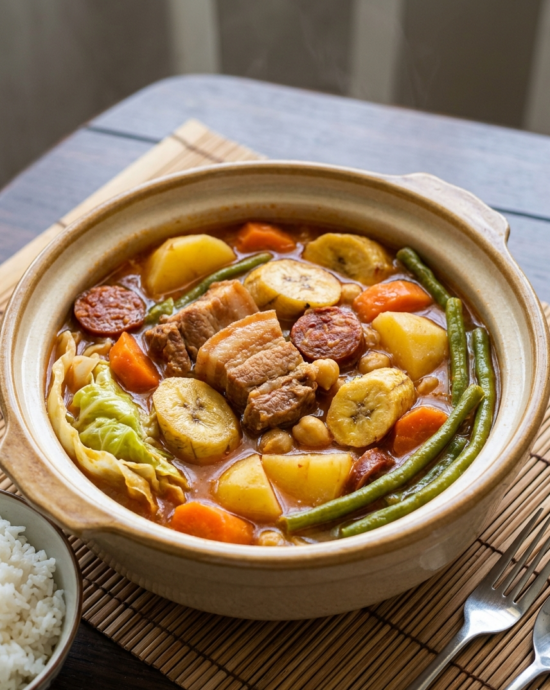
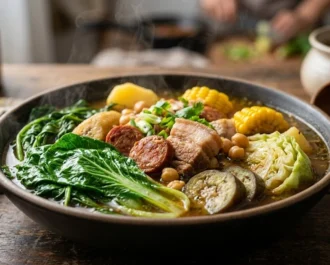
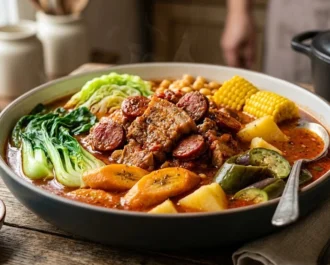
Taste the finished pochero broth carefully and adjust the seasoning with fish sauce, salt, and black pepper. The broth should be rich, savory, and slightly sweet from the tomato sauce and saba banana, with the paprika-smoky character of the chorizo clearly present throughout. Arrange the pochero in a wide, deep bowl or pot for family-style serving — pile the pork pieces and chorizo in the center, arrange the colorful vegetables around them in sections, and ladle the vivid, deep-red broth generously over everything. The visual abundance of pochero — with corn, banana, potato, cabbage, eggplant, pechay, and chickpeas all visible alongside the pork and chorizo — is as much a part of the dish's celebration spirit as its extraordinary flavor.
- Calories:430 kcal22%
- Energy:1,799 kJ22%
- Protein:28 g56%
- Carbohydrates:22 g8%
- Sugar:8 g9%
- Fat:22 g28%
- Salt:1.2 g20%
Table of Contents
What Is Pork Pochero?
Pork pochero is a Filipino tomato-based pork and chorizo stew slow-cooked with an extraordinary abundance of vegetables — including saba bananas, corn, potatoes, cabbage, eggplant, and chickpeas — a deeply festive, nutritionally generous, and visually abundant soup that embodies Filipino hospitality and celebration at its most expressive. The dish traces its origins directly to the Spanish puchero — a hearty, one-pot meat and vegetable stew popular throughout Spain and its former colonies — brought to the Philippines during centuries of Spanish colonial rule and transformed by Filipino cooks into something vibrantly, unmistakably Filipino.
The most distinctively Filipino element of pochero is the inclusion of saba bananas — the thick, starchy cooking banana that appears throughout Filipino cuisine. No other national version of puchero includes banana, and its presence in the Filipino dish creates a subtly sweet, pleasantly starchy element that provides a unique counterpoint to the savory, tomato-chorizo broth. The garbanzos (chickpeas) are a Spanish inheritance, while the pechay, kangkong, and eggplant are Southeast Asian additions — together they tell the story of Filipino culinary history in a single pot.
What makes pork pochero so deeply beloved in Filipino food culture is its abundance. The pot is generous to an almost theatrical degree — brimming with multiple proteins, multiple starch vegetables, multiple leafy greens, and a rich, deeply colored broth. Serving pochero communicates that the cook cares deeply about the people being fed and has spared nothing in the preparation. It appears at Christmas celebrations, town fiestas, and elaborate Sunday family lunches across every region of the Philippines, always greeted with the anticipation due a dish of genuine celebration and communal joy.
Ingredient Notes
- Chorizo de Bilbao: The Spanish-style smoked sausage that gives pochero its characteristic smoky, paprika-enriched depth — its rendered fat colors and flavors the entire soup base. Marca El Rey is the most trusted brand in Filipino cooking. Look for firm, deeply red chorizo; soft or pale chorizo has lost its potency and will not deliver the rich color and flavor the dish requires.
- Saba Banana (Cardaba): The essential Filipino element that distinguishes pochero from all other global puchero preparations. Saba is a thick, starchy cooking banana with a mildly sweet, earthy flavor — do not substitute with ripe eating bananas, which are too sweet and too soft. Look for firm, yellow-green saba with no black spots, which would indicate over-ripeness.
- Pork Ribs: Bone-in pork ribs are preferred for pochero because the bones contribute natural gelatin to the broth during the long simmer, adding body and a silky richness to the tomato-chorizo base. Choose meaty ribs with good meat coverage; avoid overly bony rack sections that contribute little meat relative to their size.
- Chickpeas (Garbanzos): Canned, pre-cooked chickpeas are added in the final 15 minutes — they need no long cooking, only time to absorb the broth’s flavor. Their earthy, nutty character and creamy texture provide the Spanish culinary heritage element most clearly recognizable in the dish.
- Tomato Sauce: The tomato sauce provides both flavor and the characteristic deep red color of pochero’s broth. Use unseasoned, pure tomato sauce for full flavor control — Del Monte or Hunt’s are the most commonly used Filipino brands.
Ingredient Suggestions
- Pork liver or beef tripe — Traditional Spanish puchero often includes offal; adding pork liver in the final 5 minutes adds earthy depth while tripe adds a pleasantly chewy textural element beloved in some regional Filipino versions.
- Green plantain — A widely available substitute for saba banana in international markets that produces a comparable starchy, mildly sweet element in the broth.
- Sweet potato (kamote) — Quartered and added with the potatoes, sweet potato contributes additional natural sweetness that complements the tomato-chorizo base beautifully.
- Pechay Baguio (napa cabbage) — A softer, more delicate leafy green alternative to regular cabbage that wilts more quickly and has a milder, sweeter flavor.
- Whole black peppercorns — Added to the simmering broth alongside the aromatics, whole peppercorns contribute a gradually building warmth and fragrance to the soup base throughout the long cook.
Helpful Tips & Pro Tips
- Render the chorizo fat first — it is the soup’s flavor foundation. The deep red, paprika-infused fat from browning the chorizo is the single most important flavoring element in pochero’s broth. Skipping this step or adding the chorizo directly to water produces a dramatically less flavorful, less colorful result. Always render the chorizo first and build everything else on its fat.
- Add vegetables in strict order of cooking time. Pochero contains seven or eight different vegetables with widely varying cooking times. Adding them all at once produces a pot of mushy vegetables and crisp greens simultaneously. Corn and potato go first, then banana and chickpeas, then eggplant and cabbage, and greens last — each staggered addition produces a final pot where everything reaches perfect tenderness together.
- Why is my pochero broth not red enough? Pale pochero broth results from insufficient tomato sauce or under-rendering of the chorizo. Use the full cup of tomato sauce and cook it with the aromatics until it darkens slightly before adding the liquid. Ensure the chorizo is properly browned so it releases its full paprika-red fat into the soup base.
- Skim the broth diligently. Pochero’s beauty is its clear, vivid red broth — foam left in the pot from the initial boil clouds and dulls the finished soup. Skim attentively for the first 5 minutes of full boiling for the clearest, most vibrant result.
- Serve in the pot for maximum visual impact. Pochero’s extraordinary abundance of colorful ingredients makes the most powerful impression when served directly from the cooking pot or transferred to a large, deep serving vessel where all the components are visible simultaneously. Ladling into individual bowls in the kitchen diminishes the theatrical presentation the dish deserves.
How to Serve and Store
Serve pork pochero family-style in the cooking pot or a large, deep serving bowl, placing it at the center of the table and letting diners serve themselves. The visual abundance — colorful vegetables, pork pieces, and chorizo rounds visible above the vivid red broth — is part of the dish’s celebratory appeal. Serve with steaming white rice and a small bowl of fish sauce and calamansi for individual seasoning.
Store leftover pochero with the broth and solids together in an airtight container in the refrigerator for up to 3 days. Vegetables soften further overnight; if planning to store, slightly undercook the potatoes and cabbage. Reheat gently on the stovetop over low heat, adding a small splash of water if needed. Freeze the broth and pork separately from the vegetables for up to 2 months; add fresh vegetables when reheating.
Substitutions
- Chorizo de Bilbao → Andouille or smoked kielbasa — A widely available substitute with a comparable smoky, savory character; add ½ tsp smoked paprika to the oil to compensate for the color.
- Saba banana → Green plantain — The most accurate substitute in international markets; use firm, unripe plantain for the correct starchy, mild-sweet flavor.
- Pork ribs → Bone-in chicken thighs — A lighter protein alternative; reduce simmering time to 25 minutes for comparable tenderness.
- Fish sauce → Soy sauce — A gluten-free seasoning substitute with comparable saltiness and umami depth.
- Chickpeas → Butter beans or cannellini beans — A budget-friendly substitute with a comparable creamy texture and neutral, earthy flavor.
- Pechay → Spinach or regular bok choy — Both wilt quickly and have mild, clean flavors that work well in the tomato-chorizo broth.
Suggested Recipes
- Chicken Afritada — Shares pochero’s Spanish-influenced tomato base and colorful vegetable combination in a simpler, quicker braised chicken format.
- Nilagang Baboy — The clear-broth pork and vegetable soup that shares pochero’s one-pot, whole-vegetable philosophy without the tomato and chorizo.
- Pork Menudo — Another Spanish-influenced Filipino tomato-based pork dish with chorizo and vegetables; a natural flavor companion to pochero.
- Caldo Gallego — The Spanish white bean and chorizo soup that represents pochero’s direct European ancestor, illuminating the fascinating culinary evolution between the two dishes.