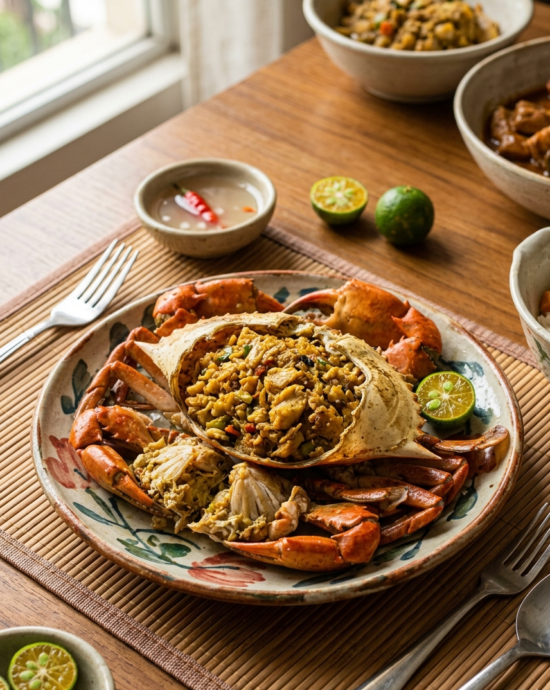

- Step 1: Cook and Extract the Crab Meat
Steam or boil the live mud crabs for 12 to 15 minutes until the shells are fully red-orange and the meat is cooked through. Allow to cool completely. Carefully remove the top shell (carapace) from each crab, scooping out and reserving all the crab fat (tomalley) and roe. Wash the carapace shells and reserve — these will serve as the stuffing vessels. Extract all the crab meat from the body and claws using a small spoon and crab fork, picking carefully to remove every last piece of meat while being meticulous about removing shell fragments. Mix the extracted crab meat with the reserved crab fat and roe in a bowl. The quality and quantity of meat extraction directly determines the richness of the finished Relyenong Alimango.
- Step 2: Prepare the Filling
In a wide pan, heat two tablespoons of oil over medium heat. Sauté the minced garlic for 30 seconds, then add the minced onion and cook for two minutes until softened. Add the ground pork if using and cook, breaking it up, until no longer pink. Add the extracted crab meat mixture and stir gently to combine with the pork and aromatics. Add the soy sauce, calamansi juice, and black pepper. Cook for two to three minutes. Remove from heat and allow to cool to room temperature. Once cooled, mix in the eggs, breadcrumbs, and mayonnaise — these bind the filling and provide moisture and richness. Taste and adjust seasoning carefully before stuffing, as the filling's flavor determines the entire dish.
- Step 3: Stuff the Shells
Using a spoon, generously fill each reserved crab carapace with the prepared filling, mounding it slightly above the rim of the shell to create a visually generous, dome-shaped presentation. Press the filling gently to ensure it adheres inside the shell and fill any gaps or depressions for an even, professional appearance. Repeat until all filling is used across both shells. The filled shells can be prepared to this point and refrigerated for up to 24 hours before the final cooking step — making this an excellent make-ahead dish for celebrations and parties.
- Step 4: Cook the Stuffed Crabs
For a baked version: place the stuffed shells filling-side up on a baking sheet and bake in a preheated 180°C oven for 20 to 25 minutes until the filling is golden brown and set. For a pan-fried version: heat butter in a wide pan and cook the shells filling-side down for three to four minutes until the filling develops a golden crust, then carefully flip and cook shell-side down for two more minutes. The baked version produces a more even, controlled result while the pan-fried version gives a more dramatically caramelized crust but requires more skill to execute without the filling breaking apart.
- Step 5: Serve and Garnish
Transfer the finished Relyenong Alimango to a serving platter, filling-side up. Garnish with fresh chopped parsley, a squeeze of calamansi, and decorative lemon wedges. Serve with sweet chili dipping sauce and steamed rice. Relyenong Alimango is a celebration dish — its labor-intensive preparation makes it a showstopper at parties and family gatherings, and its spectacular presentation in the natural crab shell always draws admiration and appreciation from guests.
- Calories:410 kcal21%
- Protein:38 g76%
- Carbohydrates:10 g4%
- Sugar:1 g1%
- Fat:24 g31%
- Salt (Sodium):640 mg28%
- Energy:1715 kJ21%
Table of Contents
What Is Relyenong Alimango?
Relyenong Alimango is an elaborate Filipino stuffed crab dish in which cooked mud crab meat is mixed with aromatics, egg, and breadcrumbs then packed back into the crab’s own shell and baked or pan-fried until the filling is golden and set — a dish of impressive visual presentation and remarkable flavor that showcases Filipino ingenuity in maximizing the entire crab’s potential. It is a celebration and special occasion dish that represents Filipino fiesta cooking at its most creative.
The word ‘relyeno’ derives from the Spanish ‘relleno,’ meaning stuffed or filled, reflecting the dish’s colonial culinary heritage. The technique of using the crab’s own shell as a vessel for a composed filling is found in cuisines worldwide, but the Filipino version is distinctive in its use of the entire crab — including the precious tomalley and roe — mixed into the filling, creating an extraordinarily crab-intense result that surpasses more Western stuffed crab preparations.
Relyenong Alimango occupies a prestigious position in Filipino festive cooking. The labor required — steaming the crab, extracting every morsel of meat, preparing the filling, stuffing the shells, and baking — places it firmly in the category of dishes prepared with love and effort for important occasions. In many Filipino families, the appearance of Relyenong Alimango at the table signals a genuinely special day.
Ingredient Notes
- Mud Crab (Alimango) The largest, heaviest mud crabs available yield the most meat for filling. A generous meat yield is essential for a satisfying filling — small crabs may require three or four to produce enough filling for just two shells. Female crabs with full roe produce the richest, most flavorful filling.
- Crab Fat and Roe: The tomalley (yellowish-green crab fat) and orange roe from the female crab are the most intensely flavored components of the entire dish — never discard these. Mixed into the filling, they create an incomparably rich, pure crab flavor that no store-bought crab paste can replicate.
Ingredient Suggestions
- Water Chestnuts — Finely diced water chestnuts mixed into the filling add pleasant crunch that survives cooking and contrasts the soft filling.
- Cheese — Sprinkling grated quick-melt cheese over the filling before baking creates a golden, melted cheese crust that adds richness.
- Ham — Finely diced cooked ham mixed into the filling adds a subtle smokiness and another layer of savory depth.
Helpful Tips & Pro Tips
- Allow the cooked crab to cool completely before attempting to extract the meat — hot crab meat is more fragile and tears into smaller, less presentable pieces than properly cooled meat.
- Use a small flashlight or bright lamp while picking crab meat to spot tiny shell fragments — a shell piece in the finished dish is a significant eating hazard and quality failure.
How to Serve and Store
Relyenong Alimango is best served freshly baked, warm, as part of a celebratory meal alongside rice and a simple vegetable side. Prepare the stuffed shells up to 24 hours ahead and refrigerate; bake just before serving. Cooked leftovers keep for 2 days refrigerated; reheat in the oven at 160°C for 10 minutes.
Substitutions
- Mud Crab → Blue Swimmer Crab — Smaller shells require careful handling but produce excellent filling with similar sweet meat flavor.
- Ground Pork → Ground Chicken — A lighter meat extender for those who prefer to avoid pork.
- Breadcrumbs → Panko — Japanese panko creates a lighter, crispier crust on the baked filling surface.
Suggested Recipes
- Ginataang Alimango — The simpler, equally celebratory coconut milk mud crab dish for when stunning flavor is wanted with less preparation labor.
- Baked Tahong — A simpler baked shellfish preparation that shares the oven-cooking approach with far less preparation time.
Frequently Asked Questions

Jeff Smith
"Cooking is the intersection of history, science, and emotion."
For me, the kitchen has always been a laboratory of culture. With a background deeply rooted in digital strategy and precision, I approach the culinary arts with the same rigor I apply to the digital landscape—analyzing flavors, perfecting techniques, and documenting the nuance that makes Filipino cuisine truly world-class.
Findme Recipe was born from a desire to bridge the gap between traditional heritage and the modern home cook. Whether it is mastering the perfect balance of acidity in a classic Adobo or simplifying complex regional dishes for everyday kitchens, my mission is to preserve our culinary identity through accessible, data-backed, and delicious content.
I am not just building a database; I am cultivating a community where every Filipino kitchen feels empowered, every ingredient is celebrated, and every family heirloom recipe finds a place to thrive.
Join me as we translate the soul of our islands into recipes for the next generation.