
- Step 1. Simmer the aromatics
Pour the chicken stock into a medium pot and bring it to a gentle simmer over medium heat. Add the galangal slices, bruised lemongrass, and torn kaffir lime leaves. Let the aromatics steep for about 5 minutes so their oils release into the broth, filling the kitchen with citrusy, peppery fragrance. This step is the foundation of authentic Tom Kha Gai flavor, so don't rush it. Keep the heat moderate to avoid scorching the herbs. You'll know it's ready when the broth smells distinctly floral and warm, with galangal's sharper, piney edge layered over the lemongrass.
- Step 2. Add the coconut milk
Pour in the coconut milk and stir gently to combine with the infused stock. Reduce the heat slightly to maintain a soft simmer rather than a rolling boil, which can cause the coconut milk to separate or curdle. Allow the mixture to heat through for 3 to 4 minutes, stirring occasionally. The broth should turn a pale, creamy ivory color and develop a silky texture. This gentle approach preserves the richness of the coconut fat while keeping the soup smooth, balanced, and visually appealing for serving.
- Step 3. Cook the chicken
Add the sliced chicken thigh directly into the simmering coconut broth. Stir occasionally so the pieces cook evenly and don't stick together. Chicken thigh is ideal here because it stays tender and juicy even with extended simmering, unlike leaner cuts that can turn rubbery. Cook for 6 to 8 minutes, or until the chicken is fully opaque and cooked through. Skim off any foam that rises to the surface for a cleaner, more refined presentation in the final bowl.
- Step 4. Add mushrooms and chilies
Stir in the halved straw mushrooms and crushed Thai chilies. Continue simmering for another 3 to 4 minutes until the mushrooms soften but still hold their shape. The chilies should be crushed just enough to release their heat without disintegrating into the broth, allowing diners to control their own spice level by eating around them if desired. This stage rounds out the textural contrast of the soup, balancing tender chicken with the slight bite of mushroom.
- Step 5. Season the broth
Remove the pot from heat and stir in the fish sauce, lime juice, and palm sugar. Taste and adjust, balancing salty, sour, and sweet until the flavor feels bright and layered rather than flat. Adding the lime juice off the heat preserves its fresh acidity, which can turn bitter if boiled too long. This final seasoning step is what separates a good Tom Kha Gai from a forgettable one, so taste carefully before moving to plating.
- Step 6. Garnish and serve
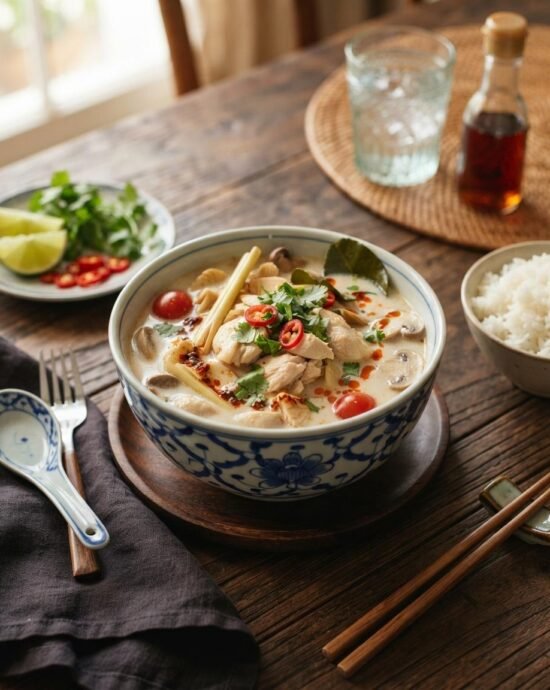
Ladle the hot soup into serving bowls, making sure each portion gets a generous mix of chicken, mushrooms, and aromatic herbs. Scatter fresh cilantro leaves over the top for a final burst of color and herbal brightness. Serve immediately alongside steamed jasmine rice to soak up the rich, tangy broth. The soup is best enjoyed piping hot, when the coconut aroma is most pronounced and the contrasting flavors are at their liveliest.
- Calories:310 kcal16%
- Protein:19 g38%
- Carbohydrates:9 g3%
- Sugar:4 g4%
- Energy:1297 kJ16%
- Salt:1.8 g30%
- Fat:23 g33%
Table of Contents
What Is Tom Kha Gai?
Tom Kha Gai is a creamy Thai coconut soup built on a fragrant base of galangal, lemongrass, and kaffir lime leaf, simmered with tender chicken and mushrooms. Unlike its fiery cousin Tom Yum, Tom Kha Gai leans into richness, using coconut milk to mellow the chili heat and create a silky, comforting broth. The name itself describes the dish plainly: tom means boiled or simmered, kha refers to galangal, and gai means chicken, reflecting the straightforward but deeply aromatic nature of Thai home cooking. The soup originates from central Thailand, where coconut palms grow abundantly and galangal is a kitchen staple distinct from common ginger, prized for its sharper, more citrus-forward bite. Each spoonful delivers a layered experience: the initial creaminess of coconut milk gives way to bright lime acidity, salty depth from fish sauce, and a gentle warmth from crushed chilies that builds rather than overwhelms. Mushrooms add an earthy contrast, while the lemongrass and lime leaf perfume every bite without being eaten directly, since they’re typically left whole for diners to push aside. Tom Kha Gai has become one of Thailand’s most internationally recognized dishes, appearing on Thai restaurant menus worldwide as an approachable entry point into Thai cuisine. It’s traditionally served as part of a shared meal alongside rice and other dishes, but it also stands beautifully on its own as a starter or light lunch. Whether you’re new to Thai cooking or revisiting a familiar favorite, this dish rewards patience with the aromatics and a careful final balance of seasoning, making it a must-try for anyone drawn to comforting, fragrant soups.
Ingredient Notes
- Galangal: Galangal provides the soup’s signature peppery, citrus-forward backbone and should not be substituted with ginger if authenticity matters. Look for firm, pale rhizomes with smooth skin; fresh galangal sold in Asian markets offers far more aromatic punch than dried or powdered versions.
- Coconut milk: Full-fat coconut milk gives Tom Kha Gai its signature richness and silky body. Choose a brand with minimal additives and shake the can well before opening, since the cream and water naturally separate during storage.
- Kaffir lime leaves: These glossy, figure-eight-shaped leaves deliver a citrus aroma unlike any other ingredient and are essential for authentic flavor. Fresh or frozen leaves work best; torn rather than chopped leaves release more fragrance into the broth.
- Lemongrass: Lemongrass contributes a clean, floral citrus note that balances the richness of coconut milk. Choose stalks that are firm and pale green near the base, and bruise them with the back of a knife before adding to release their oils.
- Fish sauce: Fish sauce is the primary salty element and should be added gradually to taste. A high-quality fish sauce, often labeled extra fine or first-press, offers a rounder, less harsh saltiness than cheaper varieties.
Ingredient Suggestions
- Tofu: Adding cubed firm tofu alongside or instead of chicken makes the soup heartier and vegetarian-friendly while soaking up the coconut broth beautifully.
- Thai bird’s eye chili oil: A drizzle of homemade chili oil at the table lets each diner intensify the heat without altering the base broth’s balance.
- Cherry tomatoes: Halved cherry tomatoes add a juicy sweetness and a pop of color that pairs surprisingly well with the tangy, creamy broth.
- Roasted chili paste (nam prik pao): A spoonful stirred in at the end deepens the soup with smoky, savory complexity reminiscent of Tom Yum variations.
- Baby corn: Baby corn adds crunch and a mild sweetness that complements the mushrooms and rounds out the vegetable profile.
Helpful Tips & Pro Tips
- Don’t boil the coconut milk aggressively, since high heat can cause it to split into oily curds and a watery base. Keep the simmer gentle from the moment coconut milk enters the pot.
- If your soup tastes flat, it’s usually missing acid, not salt. Add lime juice in small increments off the heat until the broth brightens noticeably.
- Bruise lemongrass firmly with the flat side of a knife before adding it. This cracks the fibrous stalk and releases significantly more aromatic oil into the broth.
- Why is my Tom Kha Gai too thin? You likely used light coconut milk instead of full-fat, or diluted it with too much stock; adjust the ratio toward more coconut milk for richer body.
- Crush chilies rather than chopping them finely if you want a milder, more controllable heat, since whole or lightly crushed chilies release less capsaicin into the broth.
- Always add fish sauce and lime juice after removing the pot from heat to preserve their sharp, fresh flavors, which dull quickly when boiled.
How to Serve and Store
Serve Tom Kha Gai piping hot in deep bowls alongside steamed jasmine rice, allowing diners to spoon rice directly into the broth if they prefer. It pairs naturally with other shared Thai dishes like grilled meats or stir-fried vegetables for a balanced meal. Leftover soup keeps well in an airtight container in the refrigerator for up to 3 days, though the coconut milk may thicken slightly when chilled. Reheat gently over low heat, stirring frequently, and avoid boiling to prevent separation. Freezing is not recommended, as coconut milk-based soups tend to become grainy once thawed.
Substitutions
- Chicken thigh → Firm tofu — creates a fully plant-based version while maintaining a satisfying texture. (Vegan)
- Fish sauce → Soy sauce or mushroom seasoning sauce — replicates the salty umami depth without animal products. (Vegan)
- Chicken stock → Vegetable stock — keeps the base broth gluten-free and plant-based simultaneously. (Gluten-Free)
- Straw mushrooms → Button or cremini mushrooms — offers a budget-friendly, widely available alternative with a similar earthy bite. (Budget-Friendly)
- Galangal → Fresh ginger plus a strip of lime zest — approximates the citrus-peppery profile when galangal isn’t accessible.
- Palm sugar → Light brown sugar — delivers a comparable caramel sweetness using a common pantry staple.
Suggested Recipes
- Tom Yum Goong: Shares the same aromatic base of lemongrass and lime leaf but leans spicier and sourer without coconut milk.
- Gaeng Daeng: Another coconut milk-based Thai dish that builds on similar aromatics with a deeper red curry profile.
- Khao Man Gai: A comforting chicken-and-rice dish that makes an excellent accompaniment to a bowl of Tom Kha Gai.
- Gaeng Jued: A milder, clear Thai soup for those who enjoy Tom Kha Gai’s comfort but want something lighter and less rich.
Frequently Asked Questions

Jeff Smith
"Cooking is the intersection of history, science, and emotion."
For me, the kitchen has always been a laboratory of culture. With a background deeply rooted in digital strategy and precision, I approach the culinary arts with the same rigor I apply to the digital landscape—analyzing flavors, perfecting techniques, and documenting the nuance that makes Filipino cuisine truly world-class.
Findme Recipe was born from a desire to bridge the gap between traditional heritage and the modern home cook. Whether it is mastering the perfect balance of acidity in a classic Adobo or simplifying complex regional dishes for everyday kitchens, my mission is to preserve our culinary identity through accessible, data-backed, and delicious content.
I am not just building a database; I am cultivating a community where every Filipino kitchen feels empowered, every ingredient is celebrated, and every family heirloom recipe finds a place to thrive.
Join me as we translate the soul of our islands into recipes for the next generation.