
- Step 1: Prepare the Vegetables
Begin by washing all vegetables thoroughly under cold running water. Peel and cut the kalabasa into one-inch cubes. Slice the eggplant into half-moons about half an inch thick. Trim the ends of the sitaw and cut into two-inch pieces. Halve the ampalaya lengthwise, scoop out the seeds and white pith using a spoon — this helps reduce bitterness — then slice thinly crosswise. Trim the tops of the okra pods. Quarter the tomato and set aside. Prepare the shrimp by peeling and deveining each piece. Organize your vegetables by cooking time: kalabasa and sitaw first, then eggplant and okra, and ampalaya last to preserve as much of its slight bitterness while avoiding excessive cooking.
- Step 2: Prepare the Broth Base
Pour the rice washing water and plain water into a medium to large pot and bring to a boil over medium heat. Rice washing water, called hugas bigas in Filipino, is the starchy liquid produced when rinsing raw rice before cooking. It gives the bulanglang broth a distinctive mild, slightly cloudy appearance and a subtle body that plain water cannot replicate. If rice washing water is unavailable, plain water works fine. Add the crushed garlic and quartered tomatoes to the pot. Allow everything to simmer together for about five minutes before adding any other ingredients. The tomatoes will begin to break down, releasing their natural sweetness and acidity into the broth and creating a light, savory flavor foundation.
- Step 3: Add the Squash and Beans
Add the cubed kalabasa (squash) and sitaw (string beans) to the simmering broth. These are the vegetables that require the longest cooking time and must go in first to ensure they are properly tender by the time the rest of the ingredients are added. Cook over medium heat for seven to eight minutes, stirring occasionally. The squash will begin to soften and release its natural sweetness into the broth, while the beans will start to turn a more vivid shade of green. Test the squash with a fork — it should offer slight resistance but not be completely firm. Do not allow the squash to become too soft at this stage, as it will continue to cook when the remaining vegetables are added later.
- Step 4: Add Remaining Vegetables
Add the eggplant slices and trimmed okra to the pot. Stir gently to submerge all vegetables in the broth. Continue to cook over medium heat for about five minutes. The eggplant will absorb liquid and become silky and tender, while the okra will begin to release its natural thickening mucilage, adding a pleasant body to the soup. Add the sliced ampalaya last, stirring it gently into the pot. The bitter melon requires the least cooking time and should be added only in the final few minutes to preserve its characteristic slight bitterness and firm-tender texture. Overcooking ampalaya makes it mushy and excessively bitter, so timing its addition carefully makes a significant difference in the final dish.
- Step 5: Season with Bagoong
Add the shrimp and bagoong alamang to the pot, stirring to distribute evenly throughout the vegetable mixture. If using whole shrimp, they will cook quickly — about two to three minutes — turning pink and opaque when done. Stir in the shrimp paste and allow it to dissolve into the broth. The bagoong provides the essential salty, umami-rich backbone that defines authentic bulanglang and differentiates it from other Filipino vegetable soups. Taste the broth and adjust with additional bagoong or salt as needed. The soup should have a pleasant savory depth with the tangy sweetness of tomatoes, the natural sweetness of squash, and the characteristic slight bitterness of ampalaya all present in balance.
- Step 6: Final Adjustment and Serve
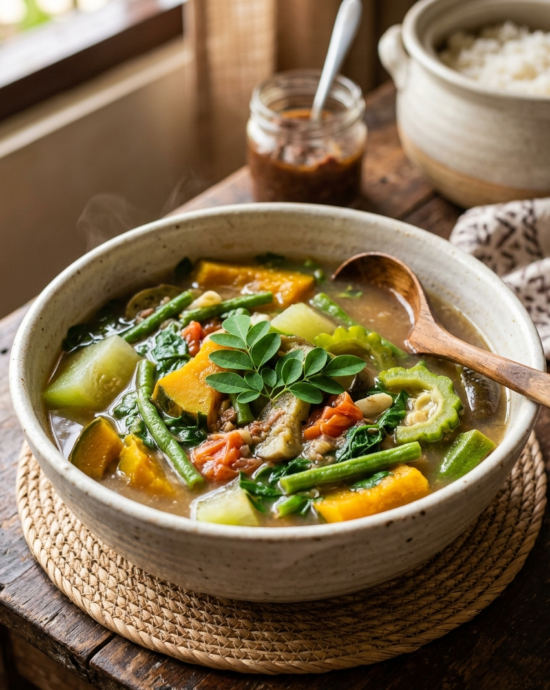
Do a final taste check before serving. The bulanglang should have a harmonious balance of savory, slightly sweet, and mildly bitter flavors. All vegetables should be tender but not falling apart, and the broth should be a beautiful golden color from the squash with a light, slightly cloudy appearance from the rice washing water. Adjust seasoning one final time with salt or additional bagoong if needed. Ladle into deep bowls, making sure each serving includes a generous variety of all the vegetables and some broth. Serve immediately alongside a mound of hot steamed white rice and additional bagoong alamang on the side as a condiment for those who prefer a saltier, more pungent accent to the mild vegetable broth.
- Calories:95 kcal5%
- Protein:10 g20%
- Carbohydrates:10 g3%
- Sugar:3 g3%
- Fat:2 g3%
Table of Contents
What Is Bulanglang?
Bulanglang is a traditional Filipino vegetable soup originating from the Kapampangan culinary tradition of Pampanga province in Central Luzon, Philippines. It is made by simmering an assortment of seasonal vegetables — typically squash, eggplant, string beans, okra, and bitter melon — in rice washing water seasoned with bagoong alamang, garlic, and tomatoes. The dish is a quintessential example of Filipino resourcefulness in the kitchen, using the starchy water from rinsing rice as the cooking liquid rather than discarding it, resulting in a broth with a subtle body and characteristic slightly cloudy appearance. Bulanglang is closely related to other Filipino vegetable soups such as pinakbet, dinengdeng, and laswa, all of which celebrate the natural flavors of fresh, locally grown vegetables. However, bulanglang is distinguished by its use of rice washing water as the base and its preparation method, which involves cooking everything together in a single pot with minimal seasoning beyond bagoong and aromatics. The name bulanglang may derive from the Kapampangan word meaning to cook mixed vegetables together. This dish holds deep cultural significance in Pampanga, a province renowned as the culinary capital of the Philippines. Home cooks in Pampanga take pride in using the freshest, most flavorful vegetables sourced directly from local farms and markets. Bulanglang is inherently flexible — cooks adapt it based on whatever vegetables are in season or available, making it a year-round staple that changes with the agricultural calendar. It is deeply nourishing, low in calories, and packed with vitamins and minerals, making it as virtuous as it is delicious.
Ingredient Notes
- Bagoong Alamang (Shrimp Paste): This is the soul of bulanglang. Use a quality, well-fermented bagoong for the best flavor. The paste should smell pungently savory without being rancid. Gently frying it in a little oil before adding amplifies its flavor even further.
- Rice Washing Water (Hugas Bigas): Collect this from the first or second rinse of uncooked rice. It should be milky and slightly starchy. This water adds a subtle body to the soup and is a traditional, zero-waste cooking technique used across Filipino cuisine.
- Ampalaya (Bitter Melon): Choose bitter melon with firm, pale green skin and no soft spots. Removing the seeds and white pith reduces bitterness. Salting the slices and rinsing them is another technique to further reduce harshness if preferred.
Ingredient Suggestions
- Malunggay (moringa) leaves — stir in during the last minute for a nutrient boost and pleasant earthy flavor
- Corn on the cob, cut into sections — adds natural sweetness that balances the bitter melon beautifully
- Pork ribs or pork neck bones — simmer for 20 minutes before adding vegetables for a richer, meatier broth
- Kamias (bilimbi) — a few pieces add pleasant tartness typical of some regional bulanglang variations
Helpful Tips & Pro Tips
- Add vegetables in stages according to cooking time. Hard vegetables like squash go in first; delicate ones like ampalaya go in last. This ensures every vegetable is perfectly cooked rather than some being mushy and others underdone.
- Don’t skip the rice washing water. It genuinely changes the texture and appearance of the soup. Collect it during your normal pre-cooking routine — it is the water produced when you first rinse uncooked rice before cooking it for the meal.
- Why is my bulanglang too bitter? Excessive bitterness almost always comes from overcooked ampalaya or using too much of it. Add bitter melon in the final three minutes of cooking only and balance with a pinch of sugar or additional tomatoes to counteract the bitterness.
- Scoop rather than stir. Use a large ladle to gently scoop and fold the vegetables rather than stirring vigorously. This prevents the tender squash from breaking apart and keeps the soup looking attractive and the vegetables intact.
How to Serve and Store
Serve bulanglang hot in deep bowls alongside steamed white rice. Place additional bagoong alamang on the table as a condiment for those who like more saltiness. The soup is best enjoyed immediately while the vegetables retain their textures and the broth is at its most flavorful. Store leftovers in an airtight container in the refrigerator for up to 2 days. Reheat gently to avoid overcooking the vegetables further. Not suitable for freezing as the vegetables become waterlogged and lose their texture upon thawing.
Substitutions
- Shrimp → Diced firm tofu (vegan) — pan-fry briefly before adding for a plant-based protein alternative
- Bagoong alamang → Miso paste — a non-fishy umami alternative for those who avoid fermented seafood products
- Ampalaya → Chayote — milder and more neutral, a good option for those who dislike bitterness
- Sitaw → Regular green beans — same cooking time and similar flavor profile
- Rice washing water → Plain water with a teaspoon of cornstarch — approximates the slightly starchy, cloudy quality of hugas bigas
Suggested Recipes
- Dinengdeng — an Ilocano cousin of bulanglang, similarly built around fresh vegetables and fermented fish sauce
- Pinakbet — a mixed vegetable stew from the Ilocos region using bagoong and regional vegetables with a drier preparation
- Laswa — a Visayan version of mixed vegetable soup that shares many similarities with bulanglang
- Ginataang Kalabasa — a richer, coconut milk-based squash dish that uses several of the same vegetables
Frequently Asked Questions

Jeff Smith
"Cooking is the intersection of history, science, and emotion."
For me, the kitchen has always been a laboratory of culture. With a background deeply rooted in digital strategy and precision, I approach the culinary arts with the same rigor I apply to the digital landscape—analyzing flavors, perfecting techniques, and documenting the nuance that makes Filipino cuisine truly world-class.
Findme Recipe was born from a desire to bridge the gap between traditional heritage and the modern home cook. Whether it is mastering the perfect balance of acidity in a classic Adobo or simplifying complex regional dishes for everyday kitchens, my mission is to preserve our culinary identity through accessible, data-backed, and delicious content.
I am not just building a database; I am cultivating a community where every Filipino kitchen feels empowered, every ingredient is celebrated, and every family heirloom recipe finds a place to thrive.
Join me as we translate the soul of our islands into recipes for the next generation.