
- Step 1: Marinate and Prep the Protein
Slice the chicken breast or pork thinly against the grain into bite-sized strips approximately two inches long and a quarter inch thick. Place the sliced meat in a small bowl and add a teaspoon of soy sauce, a pinch of salt, and a light dusting of cornstarch. Toss to coat evenly and set aside to marinate for at least ten minutes while you prepare the vegetables. This brief marinade tenderizes the meat and gives it a light coating that helps it brown better in the pan. Peel and devein the shrimp and set them aside separately. If using chicken liver, rinse and slice into bite-sized pieces and marinate briefly in soy sauce.
- Step 2: Prepare the Vegetables
Organize all vegetables before you begin cooking since chop suey is a stir-fry that moves quickly once heat is applied. Cut cauliflower into small, even florets. Trim Baguio beans and cut on a diagonal into one-inch pieces. Chop cabbage into roughly two-inch squares. Julienne the carrot into thin matchstick strips approximately two inches long. Slice the celery diagonally and the bell pepper into thin strips. Pod the snow peas if they have tough strings. Arrange all vegetables by cooking time: carrots and Baguio beans require slightly longer cooking than cabbage and snow peas. Having everything cut and ready prevents overcooking while you scramble to prep ingredients mid-stir-fry.
- Step 3: Stir-Fry the Protein
Heat cooking oil in a large wok or wide pan over high heat until very hot and shimmering. Add the marinated chicken or pork and stir-fry quickly, tossing constantly, for three to four minutes until cooked through and lightly browned on the exterior. The high heat is crucial here — it creates the characteristic slightly charred, smoky flavor known in Chinese cooking as wok hei. Push the meat to one side and add the shrimp. Cook the shrimp for one to two minutes until they curl and turn pink and opaque. If using chicken liver, add it with the pork and cook thoroughly. Remove all proteins from the wok and set aside on a plate while you cook the vegetables.
- Step 4: Cook the Vegetables
In the same wok over high heat, add another tablespoon of oil if needed. Add the garlic and onion and stir-fry for one minute until fragrant. Add the carrots and Baguio beans first, tossing quickly for two minutes. Add the cauliflower florets and continue stir-frying for another two minutes. Follow with the cabbage, snow peas, celery, and bell pepper. Toss all vegetables together continuously over high heat for two to three more minutes. The vegetables should remain vibrant in color, crisp-tender, and full of life. Avoid overcooking — chop suey is best when the vegetables retain their bright colors and a satisfying crunch that contrasts beautifully with the tender protein and silky sauce.
- Step 5: Add Sauce and Protein
Return the cooked meat, shrimp, and any optional proteins back into the wok with the vegetables. Pour the chicken broth over everything, then add the oyster sauce and soy sauce. Stir to combine all ingredients thoroughly and bring the liquid to a quick boil. Let it cook together for one to two minutes, allowing the flavors to meld. Give the cornstarch slurry a quick stir to ensure it is fully dissolved, then pour it gradually into the wok while stirring constantly. The sauce will quickly thicken into a glossy, velvety coating that clings to every piece of vegetable and protein beautifully. Add the slurry in stages if you prefer a lighter coating rather than a very thick sauce.
- Step 6: Season and Serve
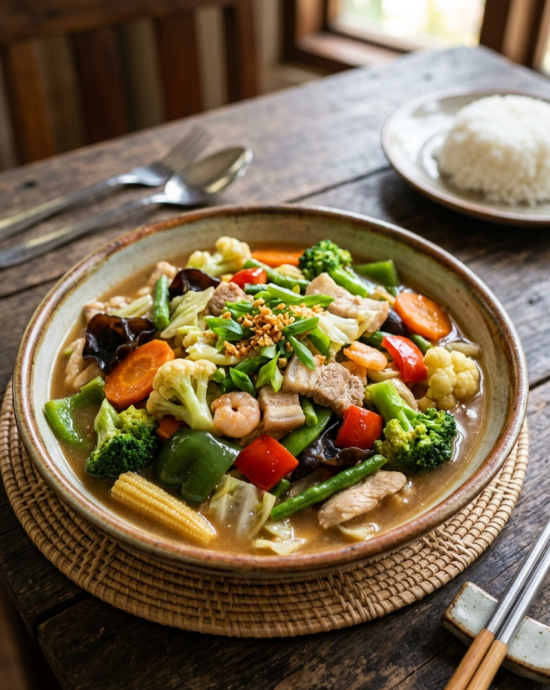
Taste the dish and adjust seasoning with salt, pepper, or additional oyster sauce as desired. The finished chop suey should have a beautiful, glossy sauce that lightly coats all the colorful vegetables and protein. Every component should be tender yet retaining slight bite, and the overall dish should smell wonderfully savory and aromatic. Transfer immediately to a large serving platter, arranging the colorful vegetables attractively. Serve hot alongside steamed white rice or pancit noodles. Filipino-style chop suey is a classic fiesta dish and a household staple that is as visually impressive as it is delicious, making it an excellent choice for family meals and special occasions alike.
- Calories:230 kcal12%
- Protein:18 g36%
- Carbohydrates:14 g5%
- Sugar:5 g6%
- Fat:11 g14%
Table of Contents
What Is Chop Suey (Filipino-Style)?
Filipino-style chop suey is a stir-fried mixed vegetable dish combining chicken, shrimp, and an abundant selection of colorful vegetables in a savory oyster sauce-based gravy. While the dish has Chinese-American origins — the term chop suey likely comes from the Cantonese tsa sui meaning miscellaneous odds and ends — the Filipino version has evolved into a distinctly local dish that reflects the Philippine culinary tradition of making vibrant, nourishing meals from whatever ingredients are available. In the Philippines, chop suey is a fiesta staple, a go-to dish for celebrations, family reunions, and special gatherings because of its abundance of ingredients, generous portions, and visually striking presentation. The Filipino adaptation sets itself apart from other versions through the use of chicken liver as a traditional addition, the inclusion of quail eggs, and the characteristic sauce thickened with cornstarch that gives the dish its glossy, restaurant-quality appearance. Another distinctly Filipino touch is the use of Baguio beans — the highland green beans from Benguet province known for their firm texture and fresh flavor — alongside cauliflower, which is not always found in other Asian versions. Chop suey in Filipino homes represents both Chinese culinary influence and local ingredient adaptation, a living example of how centuries of trade and cultural exchange between the Philippines and China have shaped Filipino food culture. The dish is deeply flexible: home cooks adapt it based on available vegetables and proteins, making every family’s version slightly different while remaining recognizably the same beloved dish at its core.
Ingredient Notes
- Oyster Sauce: Use a quality oyster sauce — it is the dominant flavoring agent in Filipino chop suey and gives the sauce its characteristic savory-sweet depth and glossy texture. Lee Kum Kee is widely trusted. Check for fresh expiry as old oyster sauce loses its sweetness.
- Baguio Beans (French/Green Beans): These firm, slender beans from the highlands have a distinct sweetness and crunch. Choose bright green beans that snap cleanly. Blanching them briefly before stir-frying preserves their vivid color and shortens cooking time.
- Cornstarch Slurry: Always dissolve cornstarch completely in cold water before adding to the wok. Lumps form instantly if added dry. The slurry thickens the sauce rapidly, so add gradually and stir constantly to achieve the desired consistency.
Ingredient Suggestions
- Baby corn — adds sweetness and visual appeal; a classic chop suey addition in many Filipino households
- Mushrooms (button or shiitake) — add deep umami and a meaty texture that complements the protein beautifully
- Young corn (mais) — sweet, tender, and traditionally Filipino; adds crunch and mild sweetness
- Quail eggs — halved or whole, they are a traditional Filipino chop suey addition that adds richness and visual charm
Helpful Tips & Pro Tips
- Cook over the highest possible heat. Stir-frying over high heat is non-negotiable for chop suey. Low heat steams the vegetables, making them limp and waterlogged rather than crisp-tender and vibrant. A very hot wok also develops the coveted wok-breath flavor.
- Blanch hard vegetables first if needed. If your stove’s heat output is limited, briefly blanch carrots and cauliflower in boiling water for two minutes, drain, and add them later in the stir-fry process to ensure even cooking without overcrowding the wok.
- Why is my chop suey watery? Watery chop suey usually results from vegetables releasing too much moisture. Ensure all vegetables are completely dry before stir-frying and do not overcrowd the wok. If too wet, increase heat and stir until excess liquid evaporates.
- Add the cornstarch slurry gradually. Pour in half the slurry first, stir for thirty seconds, then assess the consistency before adding more. Sauce that is too thick can be loosened with a small splash of chicken broth to reach the perfect glossy coating.
How to Serve and Store
Serve Filipino chop suey immediately after cooking while the vegetables are still crisp and the sauce is at its glossiest. It is best enjoyed over steamed white rice or alongside pancit noodles at a fiesta. Store leftovers in an airtight container in the refrigerator for up to 2 days. Reheat in a pan over medium heat, adding a tablespoon of water or broth to loosen the sauce. The vegetables will soften further upon reheating but remain flavorful. Not recommended for freezing.
Substitutions
- Chicken breast → Pork tenderloin — equally tender and quick-cooking; slice thinly against the grain
- Oyster sauce → Hoisin sauce — sweeter and thicker but works as a substitute for those avoiding shellfish products
- Oyster sauce → Mushroom sauce (vegan) — plant-based umami alternative with a very similar flavor profile
- Chicken broth → Vegetable broth — suitable for reducing meat content while maintaining savory depth
- Cornstarch → Arrowroot powder — a natural, gluten-free thickener that behaves identically to cornstarch in this recipe
Suggested Recipes
- Pancit Canton — stir-fried noodles that share many of the same vegetables and sauces used in chop suey
- Lumpiang Shanghai — crispy spring rolls often served alongside chop suey at Filipino fiestas and celebrations
- Chicken Pastel — another Chinese-influenced Filipino dish featuring tender chicken in a creamy vegetable-rich sauce
- Bam-i — a Visayan noodle dish combining egg noodles and vermicelli with stir-fried vegetables similar to chop suey
Frequently Asked Questions

Jeff Smith
"Cooking is the intersection of history, science, and emotion."
For me, the kitchen has always been a laboratory of culture. With a background deeply rooted in digital strategy and precision, I approach the culinary arts with the same rigor I apply to the digital landscape—analyzing flavors, perfecting techniques, and documenting the nuance that makes Filipino cuisine truly world-class.
Findme Recipe was born from a desire to bridge the gap between traditional heritage and the modern home cook. Whether it is mastering the perfect balance of acidity in a classic Adobo or simplifying complex regional dishes for everyday kitchens, my mission is to preserve our culinary identity through accessible, data-backed, and delicious content.
I am not just building a database; I am cultivating a community where every Filipino kitchen feels empowered, every ingredient is celebrated, and every family heirloom recipe finds a place to thrive.
Join me as we translate the soul of our islands into recipes for the next generation.