
- Step 1: Prepare the Curacha
Curacha, also known as the spanner crab or red frog crab, is a flat, red-shelled crab native to the waters surrounding the Zamboanga Peninsula in Mindanao. Clean each crab by scrubbing the shell under cold running water to remove any surface debris. If the crab is still alive, dispatch it humanely by placing it in the freezer for 30 minutes to render it insensible before cleaning. Remove the top shell (carapace) and discard the feathery gills, which are inedible. Rinse the cleaned crab body thoroughly. Using a heavy cleaver, cut each crab body in half through the center. Crack the claws lightly with the back of the cleaver to allow the sauce to penetrate the meat during cooking. Set aside on a clean plate.
- Step 2: Build the Aromatic Base
Heat two tablespoons of cooking oil in a large, wide wok or heavy-bottomed pot over medium heat. Add the sliced ginger and bruised lemongrass stalks and cook for one minute until fragrant — these aromatics form the signature scent foundation of Alavar-style cooking, a culinary tradition of the Tausug and Zamboangueño people of Mindanao. Add the minced garlic and sliced onion and sauté for two to three minutes until softened and fragrant. Add the bagoong alamang and stir it through the aromatics, cooking for two minutes to temper the fermented shrimp paste's raw intensity and meld it into the oil. Add the annatto powder or strained annatto water and stir to incorporate — this gives the sauce its characteristic golden-orange hue.
- Step 3: Add Coconut Milk and Aromatics
Pour in the coconut milk, stirring to combine it with the aromatic base. Add the bay leaves and siling haba. Bring the coconut milk to a gentle simmer over medium heat — do not allow it to boil vigorously, as coconut milk can separate into an unappealing oily mess at very high temperatures. Simmer the coconut milk with the aromatics for five minutes, stirring occasionally, to allow the lemongrass, ginger, bay leaf, and bagoong flavors to fully infuse into the coconut milk. This infusion step is what creates the deeply complex, layered sauce that makes Curacha Alavar so distinctive. Taste the sauce at this stage and assess the balance — it should be creamy, aromatic, and carry a pleasant background brininess from the bagoong.
- Step 4: Cook the Curacha in Sauce
Gently add the prepared curacha pieces to the simmering coconut milk sauce, pressing them down so they are partially submerged. Spoon sauce over any portions that are not covered. Cover the pot and cook over medium heat for approximately 10 to 12 minutes, turning the crab pieces carefully once halfway through. The crab is cooked when the shells have turned a deeper, more vivid orange-red and the meat is opaque and firm throughout. The curacha's natural sweetness and oceanic flavor will infuse into the coconut milk sauce during cooking, creating a beautifully integrated flavor exchange where the sauce tastes deeply of the sea and the crab tastes deeply of coconut and aromatics.
- Step 5: Add Coconut Cream and Reduce
Remove the lid and pour in the coconut cream, stirring gently to incorporate it into the cooking liquid. Increase the heat slightly to medium-high and cook uncovered for five to seven minutes, stirring regularly, until the sauce reduces and thickens to a rich, glossy, creamy consistency that coats the back of a spoon. The coconut fat should begin to separate slightly and pool around the crab, creating the characteristic 'oiling out' that signals proper sauce reduction in Filipino coconut milk dishes. Taste and adjust salt — the bagoong already contributes saltiness, so add additional salt carefully. Remove the lemongrass stalks, bay leaves, and ginger slices before serving. The sauce should be deeply flavored, creamy, and intensely aromatic.
- Step 6: Final Seasoning and Garnish
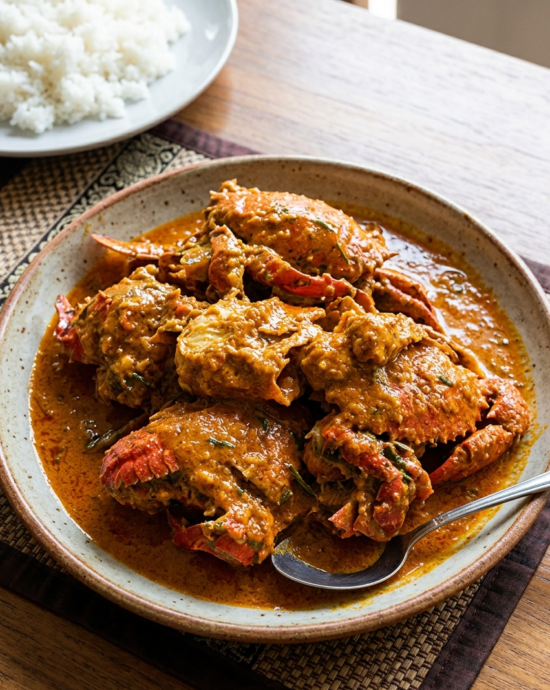
Do a final taste adjustment — Curacha Alavar should balance the sweetness of the crab meat, the creaminess of the coconut, the brininess of the bagoong, and the fragrant herbal notes of the lemongrass and ginger into a harmonious whole. If the sauce is too rich, a squeeze of fresh calamansi can provide a bright, refreshing counterpoint. If you prefer more heat, slice additional siling haba or add a small siling labuyo to the finished sauce. Garnish the dish with fresh cilantro leaves or additional sliced green chili for visual interest. The finished dish should display the vivid orange-red crab shells beautifully against the golden-orange coconut sauce.
- Step 7: Serve with Rice and Condiments
Transfer the finished Curacha Alavar to a large, wide serving bowl or directly in the cooking pot for family-style presentation. Provide crab crackers or the back of a heavy spoon for cracking the claws at the table. Serve alongside generous portions of steamed white rice — the Alavar coconut sauce is so flavorful and rich that rice is absolutely essential to balance and absorb it. A small bowl of extra Alavar sauce on the side allows diners to add additional sauce as they eat their way through the crab. Fresh lemon or calamansi wedges should always be available for individual brightness adjustment. Eating Curacha Alavar is an experience best shared communally, picking the sweet crab meat directly from the shells with one's fingers.
- Calories:340 kcal17%
- Protein:36 g72%
- Carbohydrates:8 g3%
- Sugar:3 g3%
- Fat:18 g23%
- Salt (Sodium):640 mg28%
- Energy:1422 kJ17%
Table of Contents
What Is Curacha Alavar?
Curacha Alavar is Zamboanga City’s most iconic and celebrated dish — a preparation of curacha (spanner crab) cooked in the signature Alavar sauce, which is a rich, golden-orange coconut milk sauce infused with lemongrass, ginger, bagoong alamang, and annatto that reflects the complex Tausug, Chavacano, and Malay culinary traditions of the Zamboanga Peninsula in southwestern Mindanao. It is widely considered one of the most distinctive and regionally specific dishes in all of Philippine cuisine.
The name ‘Alavar’ refers to the legendary Zamboanga restaurant ‘Alavar Seafoods Restaurant,’ established by the Alavar family and credited with popularizing and codifying the Alavar sauce recipe that has since become synonymous with Zamboanga cooking. The restaurant’s secret sauce formula — involving coconut milk, bagoong, lemongrass, and a proprietary blend of aromatics — became so famous that ‘Alavar-style’ became a recognized culinary descriptor in Philippine gastronomy.
Curacha itself is a uniquely Mindanao seafood treasure — the spanner crab is found abundantly in the shallow, warm waters of the Sulu and Moro Gulf surrounding Zamboanga and is prized for its exceptionally sweet, delicate meat and impressive size. Its flat, broad shell and vivid red color make it as visually striking as it is delicious.
For food travelers and culinary adventurers, Curacha Alavar represents one of the most compelling reasons to visit Zamboanga — a dish so deeply rooted in local geography, cultural history, and culinary tradition that it simply cannot be fully replicated anywhere else, making it a true Philippine culinary pilgrimage destination.
Ingredient Notes
- Curacha (Spanner Crab) Curacha is a distinctive flat crab with a broad, fan-shaped body found primarily in Mindanao waters. Its flesh is exceptionally sweet and delicate — best compared to Dungeness crab in flavor profile. Fresh, live curacha from Zamboanga markets is the gold standard; frozen curacha is an acceptable substitute for those outside Mindanao.
- Bagoong Alamang: Fermented shrimp paste is the umami backbone of Alavar sauce, providing the briny, complex foundation that no other seasoning can replicate. Use a quality bagoong alamang with a clean, briny aroma and avoid any batches with a sour or chemical smell.
- Lemongrass: Bruised lemongrass stalks infuse the coconut milk with a citrusy, floral herbal note that is signature to Alavar-style cooking and distinguishes it from other Filipino coconut milk crab preparations.
Ingredient Suggestions
- Blue Swimmer Crab — An excellent substitute for curacha when the spanner crab is unavailable; similar sweetness and responds identically to the Alavar sauce treatment.
- Galangal — Adding sliced galangal alongside the ginger deepens the herbal, spicy complexity of the aromatic base in a more traditional Tausug cooking direction.
- Turmeric — A teaspoon of fresh grated turmeric adds an additional layer of warm, earthy heat and a deeper golden color to the Alavar sauce.
Helpful Tips & Pro Tips
- Do not overcook the curacha — the sweet, delicate flesh toughens quickly with extended heat exposure. Ten to twelve minutes in the simmering coconut sauce is sufficient; the shells will have turned vivid red-orange when done.
- Bruise the lemongrass stalks by bending and crushing them with the back of a knife before adding to the pan — this ruptures the cells and releases the essential oils that give Alavar sauce its signature fragrance far more effectively than unbruised stalks.
- If curacha is unavailable, the Alavar sauce itself is extraordinary on shrimp, lobster, or any sweet, mild-flavored shellfish — the sauce is the star and adapts beautifully to various seafood proteins.
How to Serve and Store
Curacha Alavar is best served immediately after cooking while the sauce is richest and the crab meat is at peak tenderness. Serve with steamed white rice and provide tools for cracking the shells. Leftover Curacha Alavar keeps in the refrigerator for up to 2 days in an airtight container. Reheat gently over low heat, adding a small splash of water if the coconut sauce has thickened too much. The sauce alone freezes beautifully for up to 1 month and can be used to cook fresh shellfish at a later date.
Substitutions
- Curacha → Blue Swimmer Crab — The most widely available substitute with similar sweet flesh that works perfectly with Alavar sauce.
- Bagoong Alamang → Fish Sauce — Use 1–2 teaspoons of fish sauce for similar umami brininess without the fermented paste texture.
- Coconut Milk → Light Coconut Milk — A lower-fat option that produces a thinner sauce requiring longer reduction time.
Suggested Recipes
- Ginataang Alimango — A fellow coconut milk crab dish from a different Philippine region that shares the same coconut-seafood philosophy with a different aromatic profile.
- Bicol Express — Another coconut milk dish with bagoong that shares the rich, creamy spiced coconut sauce tradition of Filipino coastal cooking.
- Sinigang na Hipon — A sour shrimp soup that provides a complete flavor contrast to the rich creaminess of Curacha Alavar in a full seafood meal spread.
Frequently Asked Questions

Jeff Smith
"Cooking is the intersection of history, science, and emotion."
For me, the kitchen has always been a laboratory of culture. With a background deeply rooted in digital strategy and precision, I approach the culinary arts with the same rigor I apply to the digital landscape—analyzing flavors, perfecting techniques, and documenting the nuance that makes Filipino cuisine truly world-class.
Findme Recipe was born from a desire to bridge the gap between traditional heritage and the modern home cook. Whether it is mastering the perfect balance of acidity in a classic Adobo or simplifying complex regional dishes for everyday kitchens, my mission is to preserve our culinary identity through accessible, data-backed, and delicious content.
I am not just building a database; I am cultivating a community where every Filipino kitchen feels empowered, every ingredient is celebrated, and every family heirloom recipe finds a place to thrive.
Join me as we translate the soul of our islands into recipes for the next generation.