
- Step 1: Prepare the Tulingan
Clean the tulingan by removing the scales, gills, and internal organs. Rinse thoroughly under cold running water. Cut the fish into thick steaks approximately two inches wide — steaks of uniform thickness ensure even cooking in the coconut milk. If using small whole tulingan, they can be cooked whole after removing the head and tail. Pat the fish pieces dry with paper towels. Rub lightly with salt and allow to rest for five minutes — this light salting seasons the flesh and draws out a small amount of surface moisture that would otherwise dilute the coconut milk sauce. Tulingan is a small, firm-fleshed tuna-family fish with dark, flavorful meat and a slightly stronger taste than milder white fish, which stands up beautifully to the richness of coconut milk.
- Step 2: Sauté Aromatics
Heat two tablespoons of cooking oil in a wide wok or heavy pan over medium heat. Add the sliced ginger and cook for 30 seconds until fragrant. Add the minced garlic and sliced onion and sauté for two to three minutes until softened and beginning to turn golden. Add the siling haba to the aromatics and stir together. This simple aromatic trinity of ginger, garlic, and onion is the standard foundation of Filipino ginataan dishes, building a savory, slightly spicy base that will be amplified by the coconut milk. The ginger is particularly important with tulingan — its natural warmth and slight astringency counteract any residual fishiness from the dark-fleshed fish and elevate the overall flavor.
- Step 3: Add Coconut Milk
Pour the coconut milk into the wok and stir to combine with the sautéed aromatics. Bring to a gentle simmer over medium heat. Add the fish sauce (patis) and stir — fish sauce with tulingan is a flavor amplifier that deepens the oceanic character of the dish without making it taste overwhelmingly fishy. Simmer the coconut milk with the aromatics for three to four minutes before adding the fish — this brief pre-simmering step allows the ginger and chili to infuse their flavors into the coconut milk so the fish is cooked in an already well-seasoned liquid rather than plain coconut milk. Taste and adjust the fish sauce quantity to your preference for saltiness and oceanic depth.
- Step 4: Add Fish and Cook
Gently lower the tulingan steaks into the simmering coconut milk, arranging them in a single layer. Spoon sauce over any fish portions not submerged. Cover the wok and reduce heat to medium-low. Cook the fish for approximately 12 to 15 minutes, turning carefully once halfway through, until the fish is cooked through and flakes easily when tested with a fork. The flesh should be opaque throughout — tulingan has dark flesh that may retain some pink color near the bone even when fully cooked; use a fork test rather than color alone to judge doneness. Avoid overcooking, which makes tulingan dry and crumbly. The coconut milk will have absorbed some of the fish's natural oils during cooking, creating a deeply savory, fish-infused sauce.
- Step 5: Add Coconut Cream and Reduce
Pour in the coconut cream and stir gently to incorporate without breaking the cooked fish steaks. Add the siling labuyo if using. Cook uncovered over medium heat for five to seven minutes more until the sauce reduces to a thick, creamy consistency. The coconut fat will begin to separate and appear as a golden oil ring around the edges of the wok — this is the desired 'oiling out' of properly reduced ginataang sauce. The finished sauce should be visibly thicker and richer than when the fish was first added. Taste and adjust salt — the fish sauce and natural fish oils will have seasoned the sauce significantly during cooking, so taste carefully before adding additional salt.
- Step 6: Add Greens and Finish
Add the pechay or kangkong to the simmering ginataang sauce. These leafy greens wilt almost immediately in the hot coconut sauce — push them under the surface and cook for just two to three minutes until wilted and bright green. The fresh greens add color, textural contrast, and nutritional balance to an otherwise rich and creamy dish. Their mild bitterness also provides a pleasant counterpoint to the coconut's sweetness. Taste one final time — the dish should be creamy, savory, mildly spicy, with the rich, slightly dark flavor of well-cooked tulingan integrated throughout. Garnish with additional fresh chili slices for color.
- Step 7: Serve
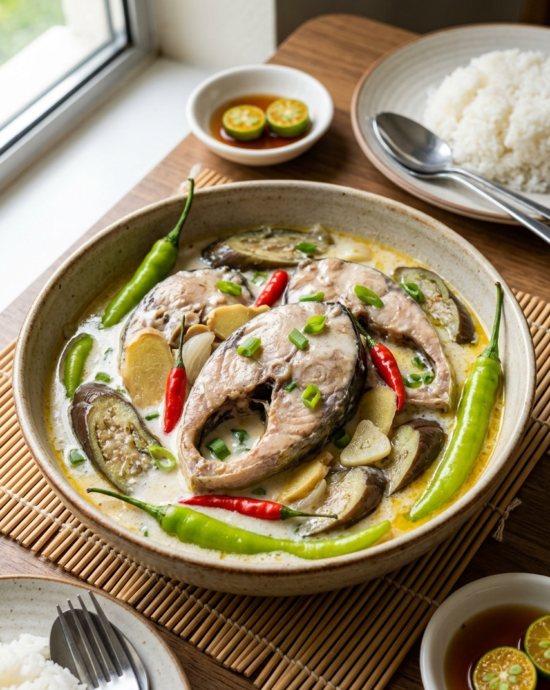
Carefully transfer the Ginataang Tulingan to a wide serving bowl, handling the fish steaks gently to keep them intact. Pour the rich coconut sauce over the fish and vegetables. Serve immediately alongside steamed white rice. Ginataang Tulingan is a beloved everyday dish in Filipino coastal communities — unpretentious, deeply nourishing, and utterly satisfying in the way that only a perfectly made coconut milk fish dish can be. The combination of the slightly strong, oily tulingan with the rich, sweet coconut milk and aromatic ginger represents one of Filipino cuisine's most successful and harmonious flavor marriages.
- Calories:380 kcal19%
- Protein:34 g68%
- Carbohydrates:7 g3%
- Sugar:3 g3%
- Fat:23 g29%
- Salt (Sodium):560 mg24%
- Energy:1590 kJ19%
Table of Contents
What Is Ginataang Tulingan?
Ginataang Tulingan is a Filipino fish dish made by simmering tulingan (bullet tuna or mackerel tuna) in coconut milk with ginger, garlic, chilies, and fish sauce until the fish is tender and the coconut milk reduces into a rich, creamy, deeply savory sauce. It is a staple dish in Filipino coastal communities and a beloved example of the ginataan cooking style that defines much of the Philippines’ seafood culinary heritage.
Tulingan is a small, torpedo-shaped fish from the tuna family (Auxis rochei) that is caught abundantly in Philippine coastal waters and sold fresh at wet markets throughout the country at highly accessible price points. Its dark, oily flesh has a stronger, more pronounced seafood flavor than white-fleshed fish, which some cooks find challenging but which is actually its greatest asset when paired with the rich neutralizing sweetness of coconut milk — the two ingredients balance each other brilliantly.
The ginataan cooking method — simmering ingredients in coconut milk — is practiced across the Philippine archipelago but is most deeply associated with the seafood-rich coastal regions of the Visayas, Bicol, and Mindanao, where coconut palms grow in abundance and coconut milk has been an everyday cooking medium for millennia. The technique requires minimal equipment and ingredients but produces results of remarkable complexity and satisfaction.
Ginataang Tulingan exemplifies the Filipino principle of cooking with what is local, seasonal, and affordable — transforming everyday, accessible fish into a genuinely exceptional meal through the skilled application of traditional technique and a handful of pantry staples.
Ingredient Notes
- Tulingan (Bullet Tuna) Tulingan’s naturally oily, dark flesh stands up beautifully to coconut milk braising where milder fish might taste bland. Choose the freshest tulingan available — bright red gills, clear eyes, and firm flesh with no ammonia smell indicate top quality. Fresh tulingan from morning wet market is ideal.
- Ginger: Ginger is the essential counterbalance to tulingan’s strong fish flavor in this dish — its natural enzymes and aromatic compounds neutralize fishiness and add a warming, slightly spicy depth. Use fresh ginger; dried ginger powder lacks the essential oils needed for this effect.
Ingredient Suggestions
- Sitaw (String Beans) — Adding cut string beans alongside the leafy greens extends the vegetable content and adds pleasant crunch.
- Eggplant — Sliced eggplant cooked in the coconut milk absorbs the sauce beautifully and adds a meaty, creamy textural element.
- Bagoong Alamang — Adding a teaspoon of bagoong to the aromatics intensifies the oceanic depth and creates a richer, more complex sauce.
Helpful Tips & Pro Tips
- Adding the fish to already-simmering coconut milk infused with aromatics produces significantly better flavor than adding fish and coconut milk simultaneously — the fish cooks in a pre-seasoned medium and the flavors integrate more completely.
- Handle tulingan steaks gently during cooking to keep them intact — the firm but somewhat delicate flesh can break apart if stirred aggressively. Use a wide spatula to turn the steaks carefully.
- If tulingan’s strong flavor is too intense, soak the cleaned fish pieces in salted water with a squeeze of calamansi for 15 minutes before cooking to mellow the flavor while retaining the fish’s natural richness.
How to Serve and Store
Ginataang Tulingan is best served hot immediately after cooking with steamed white rice. Leftover Ginataang Tulingan keeps in the refrigerator for up to 2 days and the flavors deepen overnight. Reheat gently over low heat; add a small splash of water if the coconut sauce has thickened too much during storage. The fish will be more fragile after refrigeration — handle carefully when reheating.
Substitutions
- Tulingan → Mackerel (Alumahan) — Very similar in flavor profile and fat content; a direct weight-for-weight substitute that responds identically to the coconut milk treatment.
- Fish Sauce → Soy Sauce — A widely available substitute; use half the quantity as soy sauce is saltier and lacks fish sauce’s distinctive oceanic character.
- Pechay → Spinach — Fresh spinach wilts similarly and provides comparable texture and color contrast.
Suggested Recipes
- Ginataang Alimango — The prestige coconut milk dish using crab that applies the same ginataan technique to a luxury seafood ingredient.
- Tinola na Isda — A lighter, ginger-forward fish soup that showcases fish in a clear, clean broth rather than coconut milk for a refreshing contrast.
- Sinigang na Lapu-Lapu — A tamarind-soured fish soup using a premium fish that contrasts the rich coconut approach of ginataang preparations.
Frequently Asked Questions

Jeff Smith
"Cooking is the intersection of history, science, and emotion."
For me, the kitchen has always been a laboratory of culture. With a background deeply rooted in digital strategy and precision, I approach the culinary arts with the same rigor I apply to the digital landscape—analyzing flavors, perfecting techniques, and documenting the nuance that makes Filipino cuisine truly world-class.
Findme Recipe was born from a desire to bridge the gap between traditional heritage and the modern home cook. Whether it is mastering the perfect balance of acidity in a classic Adobo or simplifying complex regional dishes for everyday kitchens, my mission is to preserve our culinary identity through accessible, data-backed, and delicious content.
I am not just building a database; I am cultivating a community where every Filipino kitchen feels empowered, every ingredient is celebrated, and every family heirloom recipe finds a place to thrive.
Join me as we translate the soul of our islands into recipes for the next generation.