
- Step 1: Prep the Ingredients
Wash the sitaw thoroughly and cut into half-inch pieces — much shorter than the typical two-inch cut used in most other sitaw preparations. This shorter, finer cut is characteristic of gising-gising and allows the beans to cook quickly and absorb the spicy coconut sauce throughout every piece. Prepare the chilies by slicing both the bird's eye chili and the green long chili thinly. Adjust the amount of bird's eye chili based on your personal heat tolerance — traditional gising-gising is aggressively spicy, which is reflected directly in the dish's name, meaning wake up, wake up in Filipino. Mince the onion and garlic finely. If using shrimp instead of ground pork, peel, devein, and roughly chop into small pieces for even distribution.
- Step 2: Sauté Aromatics and Protein
Heat cooking oil in a large skillet or wok over medium-high heat. Add the minced onion and cook, stirring constantly, for two minutes until softened. Add the garlic and sliced chilies — both the long green chili and the bird's eye chili — and stir-fry together for one to two minutes. The chilies will begin to release their capsaicin oils into the pan, and the kitchen will fill with a spicy, aromatic heat that signals the dish is building its signature character. Add the ground pork and cook, breaking apart any clumps, for four to five minutes until fully cooked and beginning to brown. Season with fish sauce or salt and a pinch of pepper. The combination of chili-infused oil, sautéed aromatics, and well-seasoned pork is the flavor foundation of gising-gising.
- Step 3: Add Bagoong
Add the bagoong alamang to the pan and stir to combine with the ground pork, aromatics, and chilies. Cook the shrimp paste for one to two minutes, stirring constantly, to allow it to cook down and integrate fully with the other ingredients. The bagoong will initially seem very intense and pungent, but cooking it for a minute or two mellows its raw fermented flavor into a more rounded, deeply savory quality that underpins the entire dish. The combination of bagoong, sautéed chili, and ground pork creates an intensely flavorful, spicy, pungent base that will permeate every piece of sitaw and define the remarkable character of this extraordinary dish. Do not add additional salt at this stage as the bagoong provides significant saltiness.
- Step 4: Add Sitaw
Add the finely cut sitaw pieces to the pan and toss vigorously to coat every piece with the spicy bagoong-pork mixture. Stir-fry for two to three minutes over medium-high heat, ensuring all the beans are evenly coated and beginning to turn a more vivid shade of green as they heat through. This initial stir-frying without liquid allows the beans to develop a slight char at the edges and absorb the concentrated spicy-savory flavors from the pan before the coconut milk is added. The contrast between the well-seasoned frying stage and the subsequent coconut milk simmer creates the complex, layered flavor and texture that makes gising-gising so irresistibly delicious and satisfying.
- Step 5: Add Coconut Milk and Simmer
Pour the coconut milk into the pan and stir to combine with all the ingredients. Bring to a gentle simmer over medium heat — do not allow to boil vigorously to prevent the coconut milk from separating. Cook, stirring occasionally, for eight to ten minutes until the sitaw is tender with a slight bite and the sauce has reduced and thickened to a rich, creamy consistency that clings to the beans. As the coconut milk reduces, the fat naturally separates slightly and begins to fry the ingredients in their own coconut oil — a technique called pitik in Filipino cooking — which creates an intensely flavored, slightly oily, glossy final sauce. Taste and adjust seasoning with additional bagoong, salt, or more chili as desired.
- Step 6: Final Reduction and Serve
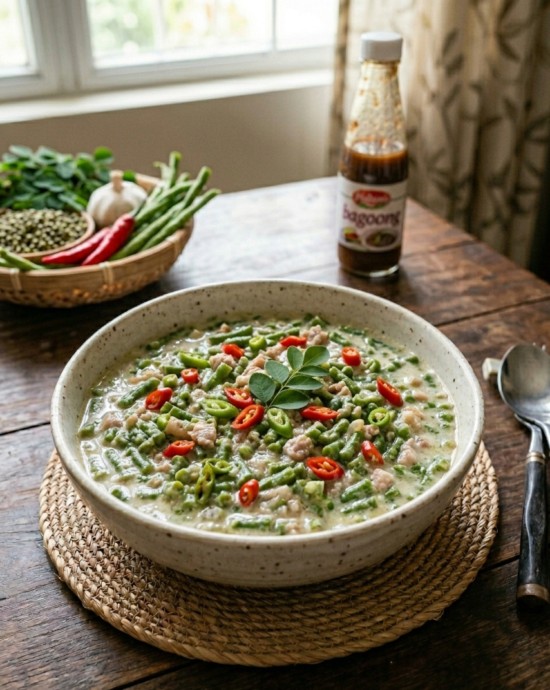
Continue simmering until the sauce has reduced to your preferred thickness — gising-gising is often cooked until quite dry and concentrated, with very little excess sauce, though some cooks prefer a slightly saucier finish. The beans should be fully cooked and coated in a vivid, glossy, reddish-tinged coconut sauce from the abundance of chili. The finished dish should have a complex profile: creamy and coconutty from the gata, intensely savory and funky from the bagoong, boldly spicy from the chili, and slightly sweet from the natural sugar in the beans. Serve immediately over steamed white rice, where the starchiness of the rice acts as the essential cooling counterpoint to the extraordinary heat and complexity of this remarkable, wake-up-call Filipino dish.
- Calories:260 kcal13%
- Protein:11 g22%
- Carbohydrates:10 g3%
- Sugar:3 g3%
- Fat:21 g27%
Table of Contents
What Is Gising-Gising?
Gising-gising is a fiery Filipino dish made from finely cut yard-long beans cooked in coconut milk with shrimp paste, ground pork, and a generous amount of bird’s eye chili. Its name, which translates to wake up, wake up in Filipino, is a direct and humorous reference to the dish’s formidable spiciness — it is one of the spicier dishes in the Filipino culinary repertoire and a particular point of pride in Kapampangan cooking. The dish originates from Pampanga province in Central Luzon, renowned throughout the Philippines and beyond as the culinary capital of the country, a region that has produced some of the most celebrated Filipino cooks, chefs, and food traditions in the archipelago. Gising-gising belongs to the gata family of Filipino dishes, alongside ginataang kalabasa, ginataang langka, and laing, all of which are built around coconut milk as the creamy, rich sauce base. However, gising-gising stands apart from its gata siblings through its uncompromising embrace of heat — where many gata dishes use chili as a background note, gising-gising places it front and center, making the fiery, mouth-numbing spiciness as important to the dish’s identity as the coconut creaminess or the savory bagoong. Sitaw (yard-long beans), cut very finely for this preparation, provide the vegetable base and act as a perfect vehicle for the bold sauce. The beans cook quickly, absorb the gata and bagoong flavors deeply, and provide a pleasant al dente bite that stands up to the intensity of the sauce. Gising-gising is a small but powerful dish that challenges and delights in equal measure, embodying the Filipino joy of food that is simultaneously comforting and thrilling.
Ingredient Notes
- Bird’s Eye Chili (Siling Labuyo): These tiny, intensely hot chili peppers are the heat source of gising-gising. The number used determines the spice level — ten peppers produces a bold, very spicy dish while five is more moderate. Fresh chili has more complexity than dried; use fresh for best results.
- Bagoong Alamang (Shrimp Paste): The fermented shrimp paste is the savory, funky soul of this dish. Its pungency combines with the coconut milk to create a complex, deeply layered sauce that is impossible to achieve with any other ingredient. Use freshly purchased, well-fermented bagoong.
- Sitaw (Yard-Long Beans): Cut the beans very finely — half-inch pieces — unlike the longer cuts used in other preparations. This shorter cut is characteristic of gising-gising and allows the beans to cook quickly, absorb maximum sauce, and be easily eaten with rice in every spoonful.
Ingredient Suggestions
- Pork skin (balat ng baboy) — cook with the pork for additional gelatin-rich richness that gives the sauce a luxurious, silky body
- Fried tofu — a plant-based protein alternative that absorbs the spicy coconut sauce beautifully
- Dried shrimp (hibe) — a tablespoon added with the bagoong deepens the savory umami of the sauce
- Additional coconut cream — stir in at the very end for an even richer, smoother sauce that tames the heat slightly
Helpful Tips & Pro Tips
- Cut the sitaw finely and consistently. Half-inch pieces are traditional and essential for the right texture and sauce absorption in gising-gising. Larger pieces mean less surface area in contact with the sauce and a less cohesive dish overall.
- Cook to a near-dry consistency for the most authentic version. Traditional Kapampangan gising-gising is cooked until most of the coconut milk has reduced and only a thick, concentrated, slightly oily sauce remains coating the beans. This intensifies all the flavors dramatically.
- Why is my gising-gising not spicy enough? Add more bird’s eye chili — this dish is meant to be aggressively spicy. Gising-gising with insufficient heat misses the entire point of the dish. Add more fresh siling labuyo until the heat level genuinely feels like a wake-up call.
- Let the coconut milk pitik (render out). Cooking the coconut milk until it separates and the oil renders out is a traditional Filipino technique that concentrates flavors and creates a glossy, deeply savory sauce. Do not be alarmed if you see oil separating — this is correct and desirable.
How to Serve and Store
Serve gising-gising immediately over hot steamed white rice. The plain starchiness of the rice is essential to balance the bold spiciness of the dish. A cold drink, additional rice, or a simple side of pickled vegetables provides welcome relief between bites. Store leftovers in an airtight container in the refrigerator for up to 3 days. The dish reheats well in a small pan over low heat. The flavors intensify upon resting, making the reheated version arguably more delicious than freshly made. Not recommended for freezing.
Substitutions
- Ground pork → Shrimp — peel, devein, and chop roughly; add with the bagoong for a seafood version popular in coastal areas
- Ground pork → Skip entirely (vegan) — the bagoong provides sufficient protein and savory depth without meat
- Bagoong alamang → Miso paste — for a non-fishy, plant-based umami alternative that still complements the coconut and chili
- Bird’s eye chili → Serrano or jalapeño — milder substitutes for a less intense version; use double the amount for comparable heat
- Sitaw → Green beans (haricot verts) — cut finely and use the same quantity; cooks slightly faster than yard-long beans
Suggested Recipes
- Laing — dried taro leaves in spicy coconut milk; shares the same Kapampangan gata-and-heat philosophy as gising-gising
- Bicol Express — pork cooked in coconut milk with abundant chili; the closest sister dish to gising-gising in flavor profile
- Ginataang Kalabasa — a milder gata vegetable dish that pairs beautifully with gising-gising on the same table for heat contrast
- Adobong Sitaw — a non-coconut preparation of the same yard-long beans that showcases how versatile sitaw is in Filipino cooking
Frequently Asked Questions

Jeff Smith
"Cooking is the intersection of history, science, and emotion."
For me, the kitchen has always been a laboratory of culture. With a background deeply rooted in digital strategy and precision, I approach the culinary arts with the same rigor I apply to the digital landscape—analyzing flavors, perfecting techniques, and documenting the nuance that makes Filipino cuisine truly world-class.
Findme Recipe was born from a desire to bridge the gap between traditional heritage and the modern home cook. Whether it is mastering the perfect balance of acidity in a classic Adobo or simplifying complex regional dishes for everyday kitchens, my mission is to preserve our culinary identity through accessible, data-backed, and delicious content.
I am not just building a database; I am cultivating a community where every Filipino kitchen feels empowered, every ingredient is celebrated, and every family heirloom recipe finds a place to thrive.
Join me as we translate the soul of our islands into recipes for the next generation.