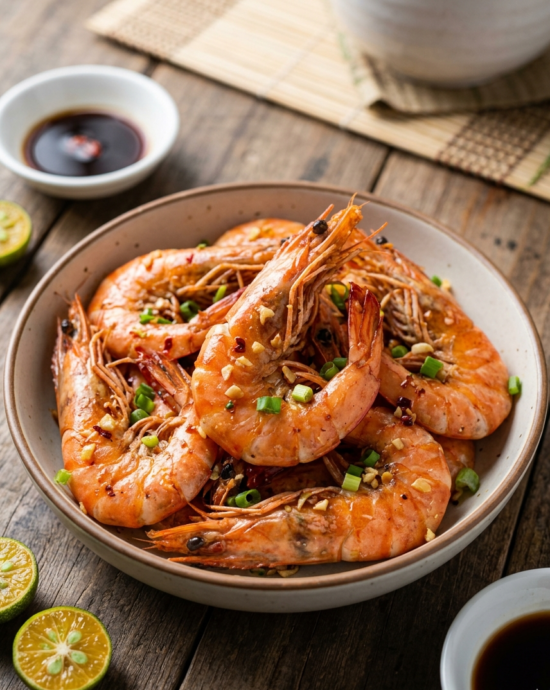

- Step 1: Prepare and Season Shrimp
Rinse the shrimp under cold running water, leaving the shells intact — the shells trap steam and impart flavor during the halabos cooking process. Devein by making a shallow cut along the back curve if desired. Place the rinsed shrimp in a single layer at the bottom of a wide pan or wok. Sprinkle the salt evenly over the shrimp. Many Filipino cooks add a splash of 7-Up or Sprite instead of water — the carbonation and subtle sweetness of the soda is a traditional trick that lightly flavors and tenderizes the shrimp during steaming, contributing a barely perceptible sweetness that complements the shrimp's natural flavor. The minimal seasoning is intentional: Halabos celebrates the pure, natural sweetness of fresh shrimp above all else.
- Step 2: Steam-Cook the Shrimp
Pour the water or soda over the seasoned shrimp in the pan. Cover the pan tightly with a lid. Place the pan over high heat. The liquid will quickly turn to steam inside the covered pan, cooking the shrimp rapidly in an intensely humid environment that preserves their natural juices rather than diluting them in water. Cook for approximately four to five minutes, shaking the pan occasionally to redistribute the shrimp, until all the shells have turned a vivid pink-orange and the flesh is opaque throughout. Check doneness by cutting a single shrimp — the flesh should be white and firm but not rubbery. The entire cooking process from cold pan to table takes less than ten minutes.
- Step 3: Finish and Serve
Remove the lid and add the calamansi juice directly over the cooked shrimp, tossing to coat. Transfer to a serving plate immediately. Serve piping hot with a small dipping bowl of garlic vinegar or spiced Sukang Paombong. Halabos na Hipon is the purest expression of Filipino seafood cooking philosophy — absolute minimum intervention to celebrate exceptional ingredient quality. Peel and eat at the table for maximum flavor.
- Calories:140 kcal7%
- Protein:26 g52%
- Carbohydrates:2 g1%
- Sugar:1 g1%
- Fat:2 g3%
- Salt (Sodium):420 mg18%
- Energy:586 kJ7%
Table of Contents
What Is Halabos na Hipon?
Halabos na Hipon is the Filipino method of cooking shrimp by steaming them in their own shells with minimal liquid — traditionally using a small amount of water or soda — resulting in shrimp that are extraordinarily juicy, naturally sweet, and intensely flavored from being cooked shell-on in concentrated steam. The dish is the Philippine equivalent of boiled shrimp but superior in flavor due to the shell-on steam method.
The word ‘halabos’ specifically refers to this technique of cooking shellfish in a covered pan with minimal liquid so they steam in their own juices and the liquid quickly evaporates, leaving the shellfish lightly glazed with concentrated flavor rather than sitting in water. The technique highlights the natural sweetness and oceanic flavor of very fresh shrimp with extraordinary efficiency and purity.
Halabos na Hipon is a profoundly democratic dish — it requires virtually no culinary skill, minimal equipment, and the cheapest possible preparation of one ingredient. Yet the result is often better-tasting than elaborate shrimp preparations, because nothing masks or competes with the shrimp’s natural flavor. It is a dish that demands only one thing: the freshest shrimp possible.
For Filipino home cooks and seafood lovers, Halabos na Hipon is the gold standard for a quick, honest, deeply satisfying seafood meal that places absolute trust in ingredient quality over technique.
Ingredient Notes
- Fresh Shrimp: The quality of the shrimp is everything in Halabos — buy the freshest shrimp available. Live shrimp or shrimp bought the same morning from the wet market produce a dramatically superior result compared to refrigerated or previously frozen shrimp.
- 7-Up or Sprite: The traditional use of clear soda (carbonated soft drink) instead of water is a beloved Filipino technique that adds a subtle sweetness and the carbonation creates a more vigorous steaming action that cooks the shrimp faster and slightly more evenly throughout.
Ingredient Suggestions
- Minced Garlic — Adding two tablespoons of minced garlic to the pan before steaming creates a garlicky steam that infuses the shrimp flesh with aromatic depth.
- Knorr Shrimp Cube — Dissolving half a shrimp bouillon cube in the steaming liquid amplifies the seafood flavor of the finished shrimp significantly.
Helpful Tips & Pro Tips
- Cook shrimp in a single layer when possible to ensure even steaming — shrimp piled in multiple layers cook unevenly, with the bottom layer overcooked before the top is done.
- The moment all the shells turn uniformly pink-orange is the precise moment to remove from heat — even one additional minute of steaming noticeably toughens the flesh.
How to Serve and Store
Halabos na Hipon must be served immediately — it is a ‘from pan to table in 60 seconds’ dish at its best. Serve with garlic vinegar, calamansi, and steamed rice. Leftovers refrigerate for 1 day but lose their exceptional tenderness; serve cold or reheat briefly in the same pan.
Substitutions
- Shrimp → Crab (Alimasag) — Blue swimmer crabs halabos-cooked in the same manner for 8–10 minutes produce excellent results.
- Water/Soda → Beer — A small splash of beer creates a rich, malty steaming environment with a pleasing depth of flavor.
Suggested Recipes
- Butter Garlic Shrimp — The more richly sauced counterpart to Halabos that uses the same shrimp with a dramatically different, more indulgent preparation.
- Sinigang na Hipon — The sour tamarind shrimp soup that is the complete opposite approach to shrimp cookery — complex and sour versus pure and simple.
Frequently Asked Questions

Jeff Smith
"Cooking is the intersection of history, science, and emotion."
For me, the kitchen has always been a laboratory of culture. With a background deeply rooted in digital strategy and precision, I approach the culinary arts with the same rigor I apply to the digital landscape—analyzing flavors, perfecting techniques, and documenting the nuance that makes Filipino cuisine truly world-class.
Findme Recipe was born from a desire to bridge the gap between traditional heritage and the modern home cook. Whether it is mastering the perfect balance of acidity in a classic Adobo or simplifying complex regional dishes for everyday kitchens, my mission is to preserve our culinary identity through accessible, data-backed, and delicious content.
I am not just building a database; I am cultivating a community where every Filipino kitchen feels empowered, every ingredient is celebrated, and every family heirloom recipe finds a place to thrive.
Join me as we translate the soul of our islands into recipes for the next generation.