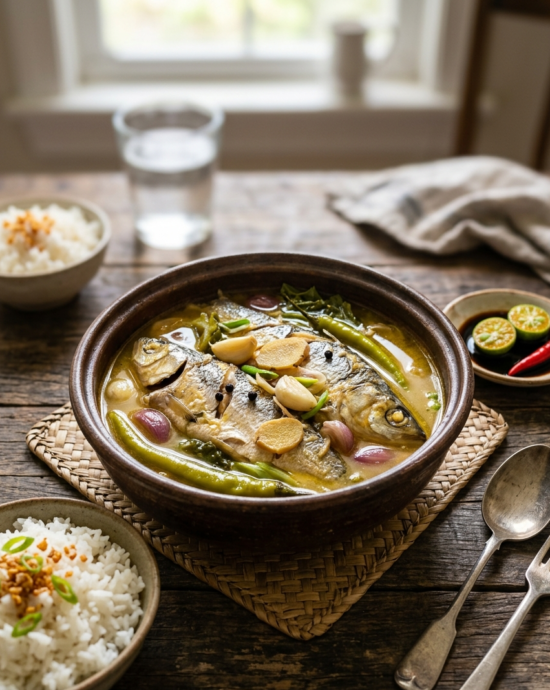

- Step 1: Prepare and Season the Fish
Start with fresh, whole bangus or tilapia that has been properly scaled, gutted, and cleaned. The fish can be left whole for a single serving or cut into crosswise steaks of approximately five centimeters thick — cutting into pieces allows the vinegar and aromatics to penetrate the flesh more evenly and makes the dish easier to serve and eat. If using bangus, ask your fishmonger to score the fish slightly on both sides to help flavors penetrate the thick flesh. Rinse the fish pieces thoroughly under cold water, then pat them dry with paper towels. Season each piece lightly with salt and a pinch of black pepper, pressing the seasoning into any scored cuts. Allow the seasoned fish to rest for five minutes. This initial seasoning step ensures the fish itself is flavorful before it even enters the vinegar broth, building flavor from the inside out.
- Step 2: Arrange Fish and Aromatics in the Pan
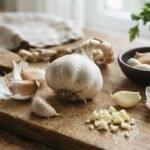
Select a wide, shallow clay pot (palayok) or non-reactive saucepan large enough to accommodate the fish pieces in a single layer. Arranging the fish in a single layer ensures even cooking and prevents the pieces from breaking apart from excessive stacking. Begin layering the aromatics into the pot: scatter the sliced ginger across the bottom of the pan — placing ginger underneath the fish prevents sticking and infuses the broth from the bottom up. Add the crushed garlic cloves, quartered onion, whole finger chilies, bird's eye chilies if using, and the whole black peppercorns around and between the fish pieces. The finger chilies in paksiw are typically left whole or halved, as their role is to add mild warmth to the broth without making it spicy — Filipino finger chilies are mild and aromatic rather than intensely hot.
- Step 3: Add the Braising Liquid
Pour the white cane vinegar and water over the arranged fish and aromatics. The ratio of vinegar to water is crucial in paksiw — too much vinegar makes the broth overwhelmingly sharp and masks the fish's natural flavor, while too little fails to properly tenderize the fish and achieve the characteristic sour-savory balance. The half-cup vinegar to one-cup water ratio used in this recipe is the classic Filipino home cook's proportion. Add the fish sauce and cooking oil to the braising liquid. The fish sauce amplifies the savory, umami depth of the broth significantly, while the cooking oil adds a subtle richness and helps carry flavors throughout the dish. Do not stir the pot at this stage — paksiw should not be stirred during cooking, as this breaks up the fish pieces.
- Step 4: Bring to a Boil and Simmer
Place the pot over medium-high heat and bring the braising liquid to a full boil uncovered. Allowing the liquid to reach a vigorous boil before reducing is important: the initial high heat cooks the surface of the fish quickly, helping the pieces hold their shape throughout the remaining cooking. Once boiling, reduce the heat to low-medium and cover the pot. Allow the fish to simmer gently for fifteen to twenty minutes. The simmering time will vary based on the thickness and size of the fish pieces — bangus steaks of five centimeters will need the full twenty minutes, while thinner pieces of tilapia may be done in twelve to fifteen minutes. Check for doneness by testing the thickest piece with a fork: the flesh should flake easily and be completely opaque throughout with no translucent areas remaining near the bone.
- Step 5: Taste, Adjust, and Reduce
After the initial simmering period, uncover the pot and taste the braising broth. It should be pleasantly sour from the vinegar, savory from the fish sauce, aromatic with ginger and garlic, and have a gentle warmth from the chili. At this stage you can adjust the seasoning — add more fish sauce or salt for greater savory depth, a splash more vinegar for additional sourness, or a pinch of sugar (a small addition only) to round off any overly sharp edges. If the broth tastes too diluted or mild, increase the heat slightly and allow it to simmer uncovered for an additional three to five minutes, reducing the liquid and concentrating the flavors. The ideal paksiw broth should be thin and soup-like but bold and assertive — not watery and bland. The finished volume of broth should be roughly half a cup to serve as a flavorful accompaniment to rice.
- Step 6: Plate and Serve
Carefully transfer the fish pieces from the pot to a shallow serving bowl or clay pot using a wide spatula or spoon, taking care not to break the cooked pieces apart. The fish should be tender and intact with a pale, lightly glazed appearance from the vinegar broth. Ladle the aromatic braising broth — complete with ginger slices, softened garlic, chili, and peppercorns — generously over the fish. The broth is as important as the fish itself in paksiw and should not be discarded. Serve immediately while hot alongside generous portions of steamed white rice. Filipino households traditionally pour the flavorful paksiw broth directly over the rice, allowing it to soak in for a fully satisfying bowl. Paksiw is a complete meal in its simplest, most elemental form — a perfect expression of vinegar-based Filipino home cooking.
- Calories:210 kcal11%
- Protein:26 g52%
- Carbohydrates:8 g3%
- Sugar:3 g3%
- Fat:7 g9%
Table of Contents
What Is Paksiw na Isda?
Paksiw na Isda is a traditional Filipino dish of fish stewed or braised in a simple mixture of vinegar, water, ginger, garlic, and chili, producing a light, sour-savory broth that is served with the fish over steamed white rice. It is one of the most fundamental and frequently prepared dishes in the Filipino home kitchen, valued for its simplicity, speed of preparation, and the clean, assertive flavors it delivers from minimal ingredients. The word paksiw is believed to derive from an old Austronesian root connected to the act of cooking in vinegar, placing this dish among the oldest known culinary traditions of the Philippine archipelago — a form of acid-based cooking that predates Spanish colonization and traces back to indigenous preservation and cooking practices using native cane vinegar and coconut vinegar. Paksiw falls within a broader Filipino tradition of sour-cooking known as sangkutsa, which encompasses various vinegar-braised dishes across different proteins and regions. Bangus (milkfish) is the most popular fish for paksiw due to its richly flavored flesh and fat content, which pair exceptionally well with the sharp vinegar broth. Tilapia, tuna belly, pompano, and dried fish (tuyo or danggit) are also common in regional variations. The flavor profile of paksiw na isda is intentionally understated and pure: vinegary, gently aromatic from the ginger, subtly savory from the fish sauce, and mildly warming from the chili. It is purposefully less complex than festive Filipino dishes, occupying the role of the everyday, restorative meal that every Filipino food lover returns to for comfort — paired always with steaming hot white rice.
Ingredient Notes
- Bangus or Tilapia: Choose fresh fish with firm flesh, clear eyes, and clean-smelling gills. Bangus has a richer, fattier flesh that produces a more flavorful broth, while tilapia is a leaner, more economical option. Both absorb the vinegar broth beautifully.
- White Cane Vinegar: The acid foundation of paksiw. Philippine cane vinegar brands like Datu Puti are the standard, providing clean sourness without bitterness. Coconut vinegar adds greater depth for regional variations.
- Ginger: Fresh ginger is essential — use a generous thumb-sized piece. Ginger in paksiw provides aromatic warmth that counterbalances the sharpness of the vinegar. Slice rather than mince so pieces are easy to avoid while eating.
- Finger Chili (Siling Haba): These long, mild green chilies add a pleasant warmth and grassy freshness to the broth without making it hot. They are left largely intact to control heat release.
- Fish Sauce (Patis): The secret depth-builder of Filipino paksiw. A tablespoon of good-quality fish sauce adds savory umami complexity that plain salt cannot achieve.
Ingredient Suggestions
- Eggplant (talong): Sliced eggplant added to the pot absorbs the sour broth beautifully and makes the dish more substantial — a popular paksiw na bangus addition.
- Bitter melon (ampalaya): Thin slices added during the last five minutes add pleasant bitterness that contrasts the sour broth memorably.
- Lemongrass (tanglad): A bruised stalk added with the aromatics introduces a subtle tropical citrus fragrance that elevates the broth.
- Coconut cream: A few tablespoons stirred in at the end create a paksiw-inspired coconut sauce variation popular in Bicolano cooking.
- Tomatoes: Adding quartered tomatoes softens and enriches the broth with gentle acidity and sweetness, a Tagalog paksiw variation.
Helpful Tips & Pro Tips
- Never stir paksiw during cooking. Stirring breaks apart the delicate cooked fish. Let the broth do the work — the vinegar-water braising liquid circulates naturally around the fish with the heat of the simmering liquid.
- Use a clay pot (palayok) if available. Clay pots distribute heat more gently and evenly than metal pans, and they add an earthy mineral quality to the broth that many Filipino cooks swear by for paksiw.
- Why is my paksiw too sour? You may have used too much vinegar or too little water. Balance by adding more water and a pinch of sugar to round off the edges — simmer uncovered briefly to reduce and mellow.
- Add oil for richness. The tablespoon of cooking oil in the broth may seem small, but it carries flavor compounds and gives the thin broth a subtle body and sheen that makes it more satisfying over rice.
- Leftover paksiw becomes better the next day. The vinegar broth continues to season the fish overnight in the refrigerator, and the flavors meld further for a more deeply infused result when reheated the following day.
How to Serve and Store
Paksiw na isda is best served hot immediately after cooking, ladled over steamed white rice with plenty of the aromatic sour broth. Leftover paksiw stores well in an airtight container in the refrigerator for up to 3 days — the vinegar acts as a natural preservative that helps maintain the fish’s quality. Reheat gently on the stovetop over low heat with a splash of water added to compensate for any evaporation. Do not microwave at high power as this toughens the fish. Paksiw is not suitable for freezing as the already-braised fish becomes waterlogged and mushy upon thawing. For meal prep purposes, the aromatics and braising liquid can be pre-combined and refrigerated for up to 2 days before adding the fish and cooking.
Substitutions
- Bangus → Dried fish (tuyo or danggit): Paksiw na tuyo is a classic variation using dried salted fish — reduce or eliminate added salt as the dried fish is already heavily cured.
- White cane vinegar → Apple cider vinegar: Provides a similar mild acidity with a slight fruity note — use the same quantity as a 1:1 swap.
- Fish sauce → Salt: For a patis-free version, substitute with an equal volume of soy sauce or simply use additional salt to taste.
- Siling haba → Green cayenne pepper: For those outside the Philippines, green cayenne provides similar mild aromatic warmth; use sparingly as it tends to be slightly hotter.
- Water → Rice washing water (hugas bigas): Using the cloudy starch water from washing rice adds a subtle body and sweetness to the paksiw broth — a classic trick from Filipino grandmothers.
Suggested Recipes
- Sinigang na Bangus: The definitive comparison dish — another beloved sour Filipino fish preparation, but using tamarind broth and fresh vegetables for a more elaborate, soupy result.
- Daing na Bangus: For the same bangus in a completely different preparation — garlic-vinegar marinated and pan-fried for a crispy contrast to the soft, braised paksiw.
- Tinola na Isda: A lighter, ginger-forward fish soup that shares paksiw’s simplicity and clean flavors but with a clear, mild broth.
- Pinangat na Isda: A Tagalog and Bicolano sour fish preparation using young tamarind leaves or kamias that is closely related to paksiw in technique and spirit.
Frequently Asked Questions

Jeff Smith
"Cooking is the intersection of history, science, and emotion."
For me, the kitchen has always been a laboratory of culture. With a background deeply rooted in digital strategy and precision, I approach the culinary arts with the same rigor I apply to the digital landscape—analyzing flavors, perfecting techniques, and documenting the nuance that makes Filipino cuisine truly world-class.
Findme Recipe was born from a desire to bridge the gap between traditional heritage and the modern home cook. Whether it is mastering the perfect balance of acidity in a classic Adobo or simplifying complex regional dishes for everyday kitchens, my mission is to preserve our culinary identity through accessible, data-backed, and delicious content.
I am not just building a database; I am cultivating a community where every Filipino kitchen feels empowered, every ingredient is celebrated, and every family heirloom recipe finds a place to thrive.
Join me as we translate the soul of our islands into recipes for the next generation.