
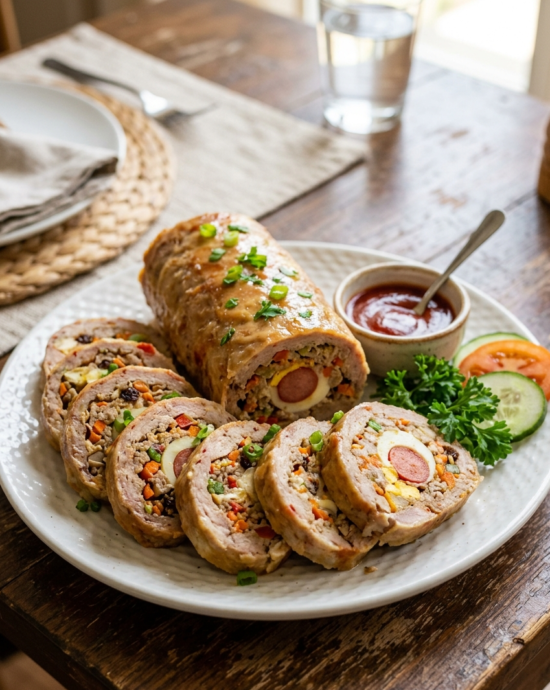

- Step 1: Prepare the Meat Mixture

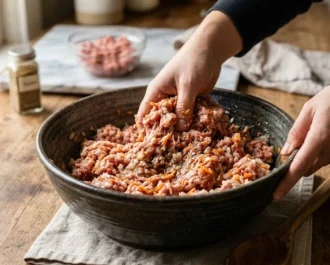
In a large mixing bowl, combine the ground pork, finely minced onion, minced garlic, grated carrot, soy sauce, Worcestershire sauce, salt, ground black pepper, and sugar. Mix thoroughly using clean hands until all the seasoning is evenly distributed through the ground meat and the mixture has a cohesive, homogeneous consistency. Add the beaten eggs and mix again — the eggs are the critical binding agent that holds the roll together during steaming and slicing. The mixture should feel slightly tacky and hold together when squeezed firmly in the palm, indicating sufficient egg binding. At this stage, test the seasoning by frying a small teaspoon of the mixture in a pan over medium heat, tasting the cooked sample, and adjusting with additional salt, pepper, or soy sauce before adding the remaining ingredients.
- Step 2: Add the Mix-Ins
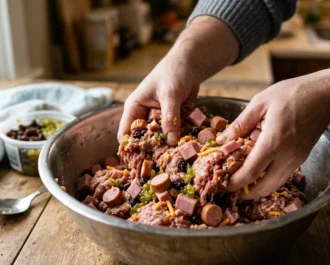
Add the diced sweet ham, Vienna sausage rounds, sweet pickle relish, raisins, and grated cheddar cheese to the seasoned ground pork mixture. Use your hands to fold and incorporate these additions gently but thoroughly through the base mixture — distribute them as evenly as possible so every slice of the finished roll will contain a beautiful, colorful cross-section of all the mix-ins. Avoid overmixing at this stage, which can make the ground pork mixture dense and compact. The sweet pickle relish provides pockets of tangy sweetness, the raisins burst with fruity sweetness, the ham and Vienna sausages add savory, salty contrast, and the cheddar cheese creates creamy, slightly tangy pockets throughout the finished roll. This combination of flavors is distinctively, unmistakably Filipino.
- Step 3: Assemble and Roll
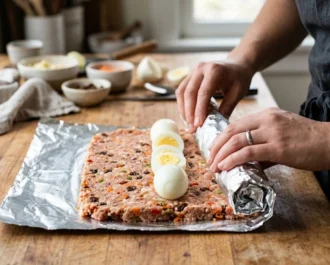
Tear off a large sheet of aluminum foil — approximately 35 cm long — and lay it flat on your work surface. Spoon half the meat mixture onto the center of the foil and spread it into an even rectangle approximately 20 cm long, 12 cm wide, and 2 cm thick. Place 1.5 hard-boiled eggs end to end along the center of the meat rectangle in a straight line. The hard-boiled eggs running through the center of the roll will create the beautiful, decorative cross-section that makes each slice of embutido visually spectacular when cut. Carefully fold the meat mixture up around the eggs using the foil to help form a tight, compact cylinder. Roll the foil tightly around the meat roll, twisting both ends firmly like a candy wrapper to seal. Repeat with the remaining mixture and eggs to create a second roll.
- Step 4: Steam the Rolls
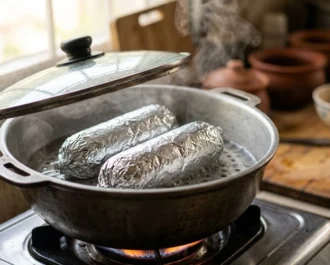
Set up a steamer by filling a large pot with about 5 cm of water and placing a steaming rack or basket inside. Bring the water to a full boil over high heat. Place both foil-wrapped embutido rolls on the steaming rack, ensuring they are not directly touching the boiling water. Cover the pot with a tight-fitting lid and steam over medium-high heat for 45 to 50 minutes. Check the water level at the 25-minute mark and add more boiling water if needed to prevent the pot from running dry. The embutido is fully cooked when the internal temperature reads 74°C (165°F) when a thermometer is inserted through the foil into the center. The finished rolls should feel firm and solid when pressed gently through the foil rather than soft and yielding, which would indicate undercooking.
- Step 5: Cool Under Weight
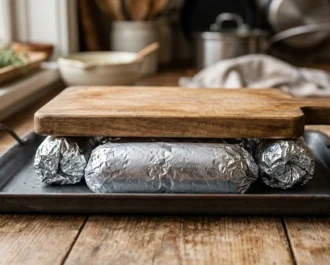
Remove the steamed embutido rolls from the steamer and place them on a flat tray immediately while still wrapped in foil. Place another flat tray or cutting board directly on top of the rolls and weight it down with heavy cans, books, or any heavy, flat object — at least 2 kilograms of total weight. This pressing step is critically important for producing firm, sliceable embutido with clean, well-defined cross-sections when cut. The steam cooking produces a slightly airy interior; the pressing compresses it into the dense, sliceable consistency that defines properly made embutido. Allow the rolls to cool completely under weight at room temperature for at least 1 hour before transferring, still wrapped and weighted, to the refrigerator for a minimum of 2 hours or overnight.
- Step 6: Slice and Fry or Serve Cold
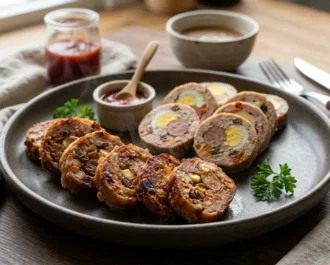
Unwrap the chilled embutido rolls from the foil and slice them into even rounds approximately 1.5 cm thick using a sharp knife with clean, decisive cuts — the rolls should be fully chilled for the cleanest slices with well-defined cross-sections. Embutido can be served in two ways: cold and sliced as part of a cold cut platter or merienda spread, or pan-fried until golden. For the pan-fried version — the more popular preparation — heat a thin film of cooking oil in a non-stick pan over medium heat and fry the slices for 2 to 3 minutes per side until each slice develops a deep golden-brown, slightly caramelized exterior that adds a wonderful textural contrast to the tender interior. Serve with ketchup, banana sauce, or gravy.
- Calories:350 kcal18%
- Energy:1,464 kJ18%
- Protein:22 g44%
- Carbohydrates:18 g7%
- Sugar:6 g7%
- Fat:20 g26%
- Salt:1.2 g20%
Table of Contents
What Is Pork Embutido?
Pork embutido is a Filipino ground pork roll stuffed with hard-boiled eggs, sweet ham, Vienna sausages, raisins, and pickle relish — steamed until firm, chilled until sliceable, and served either cold or pan-fried to golden perfection — one of the most beloved, most frequently prepared celebration and everyday comfort dishes in the Philippine culinary tradition. The name derives from the Spanish word embutido, meaning “stuffed” or “encased meat” — a direct reference to the Spanish colonial heritage that introduced European sausage-making concepts to Filipino cooking. But the Filipino version of embutido has evolved so distinctly from its Spanish origins that it bears virtually no resemblance to Spanish-style embutidos today, having incorporated local Filipino flavors and the characteristic sweet-savory mix-ins that define Filipino cooking’s unique palate.
What makes Filipino pork embutido so characteristically distinctive is its flavor profile — an unabashedly sweet-savory combination of ground pork, raisins, pickle relish, and cheese that would seem unusual in any other culinary tradition but is entirely natural in the Filipino context. This same sweet-savory instinct appears throughout Filipino festive cooking, from the sweet ham in pastel filling to the raisins in galantina. In embutido, the sweetness from the raisins and pickle relish provides a counterpoint to the savory ground pork and ham that Filipino diners find deeply satisfying and nostalgic.
Embutido appears at birthday parties, fiesta spreads, Christmas celebrations, and casual weekday lunches with equal frequency. It is one of the most reliably crowd-pleasing dishes in the Filipino home cook’s repertoire — familiar enough to be universally loved, visually impressive enough to anchor a celebration platter, and simple enough to make without specialized equipment or skills.
Ingredient Notes
- Ground Pork: The best ground pork for embutido contains at least 20% fat — leaner ground pork produces a dry, crumbly roll that lacks the moisture and richness of a properly made embutido. Ask your butcher to grind pork shoulder with a portion of pork belly for the ideal fat content. Avoid extra-lean pork mince, which makes it nearly impossible to achieve the desired moist, cohesive texture.
- Eggs (Raw, as Binder): Two beaten eggs are the essential structural binder that holds the ground meat mixture together during steaming and makes the finished roll sliceable rather than crumbly. Use large eggs at room temperature — cold eggs don’t incorporate as evenly. The binding function of the egg is critical; skimping on eggs produces a roll that falls apart when sliced.
- Sweet Pickle Relish: The tangy, sweet pickle relish is one of the defining flavors of Filipino embutido and should not be omitted or substituted. Drain any excess liquid before adding to prevent the mixture from becoming too wet. Look for finely chopped relish rather than chunky; finer relish distributes more evenly through the meat for consistent flavor in every slice.
- Raisins: Plump, moist raisins that burst with sweetness in every bite are a distinctively Filipino touch in embutido. Use moist raisins rather than dry, shriveled ones — soak dried raisins in warm water for 10 minutes before using if they have dried out.
- Hard-Boiled Eggs (for center): The eggs running through the center of the roll create the beautiful decorative cross-section that makes sliced embutido visually spectacular. Cook the eggs for exactly 10 minutes in boiling water then immediately transfer to an ice bath for perfectly set yolks with no green ring.
Ingredient Suggestions
- Gherkins or olives — Sliced and added to the mix-in layer alongside the Vienna sausages for a briny, tangy counterpoint that adds visual color to the cross-section.
- Chorizo de Bilbao — Replacing or supplementing the Vienna sausages with sliced Bilbao chorizo adds a smoky, paprika-forward depth that elevates the embutido from everyday to festive.
- Pineapple tidbits — Drained and added to the mixture, pineapple provides a bright, tropical sweetness that pairs beautifully with the ham and raisins.
- Queso de bola (Edam cheese) — Replacing cheddar with cubed queso de bola introduces the classic Filipino Christmas cheese character that is deeply nostalgic and festive.
- Carrot strips (blanched) — Arranged alongside the hard-boiled egg for the center of the roll, carrot strips create vivid orange visual contrast in the cross-section.
Helpful Tips & Pro Tips
- Test the seasoning before rolling. Fry a small teaspoon of the raw meat mixture in a pan before rolling and steaming — the only way to taste and adjust the seasoning accurately before the entire batch is committed to its final form. Many experienced Filipino cooks consider this test-fry step mandatory rather than optional.
- Press firmly under weight after steaming. The weight-pressing step during cooling is what transforms embutido from a soft, airy roll into a firm, sliceable product with clean cross-sections. Skip it and the roll will crumble when sliced. Use at least 2 kilograms of weight and maintain the pressing for a full 2 hours minimum.
- Why is my embutido falling apart when sliced? Embutido that crumbles when sliced is caused by insufficient egg binding in the raw mixture, insufficient weight-pressing during cooling, or slicing before the roll is fully chilled. Ensure the mixture holds together when squeezed raw, press under significant weight for at least 2 hours, and always slice from refrigerator-cold.
- Chill completely before pan-frying. Slices cut from a warm or room-temperature roll fall apart in the pan. Always refrigerate the roll for at least 2 hours before slicing and pan-frying — fully chilled slices hold together perfectly and develop a beautiful, even golden crust.
- Wrap tightly for a perfect cylinder shape. The tightness of the foil wrap determines the shape of the finished roll. Roll the foil as tightly as possible around the meat, using the edge of a cutting board or baking sheet to help compress and shape the roll into a uniform cylinder before twisting the ends closed.
How to Serve and Store
Serve pork embutido sliced and pan-fried to golden brown on a platter with banana ketchup, tomato ketchup, or simple brown gravy on the side. For a classic Filipino merienda or party presentation, serve slices cold on a platter alongside other cold cuts, cheese, and bread rolls. Garnish with sliced tomatoes and spring onions for color.
Store unsliced embutido rolls wrapped tightly in fresh foil in the refrigerator for up to 4 days — the roll actually improves after the first day as the flavors meld and the texture firms further. For longer storage, freeze unsliced rolls for up to 2 months; thaw overnight in the refrigerator before slicing. Pan-fry slices directly from chilled — do not allow them to return to room temperature before frying, as cold slices hold their shape better in the pan.
Substitutions
- Ground pork → Ground chicken or turkey — A leaner alternative; add 2 tbsp cooking oil to the mixture to compensate for reduced fat and prevent a dry result.
- Vienna sausages → Chicken franks or smoked sausage — A widely available substitute with comparable mild, savory flavor.
- Sweet ham → Luncheon meat (Spam or similar) — A budget-friendly substitute with a comparable salty-sweet flavor; dice finely before adding.
- Raisins → Dried cranberries — A tart-sweet substitute that provides comparable sweetness contrast with a slightly more acidic note.
- Cheddar cheese → Queso de bola (Edam) — The traditional Filipino festive cheese that is particularly appropriate for Christmas embutido preparations.
- Eggs (raw binder) → 3 tbsp cornstarch mixed with 3 tbsp cold water — A binding substitute for egg-free versions; the result is slightly less rich but still cohesive.
Suggested Recipes
- Chicken Galantina — The whole-chicken version of the same stuffed, rolled, and sliced Filipino celebration dish concept; uses the same sweet-savory mix-in philosophy in a more elaborate format.
- Pork Menudo — Another Filipino pork dish with ham, Vienna sausages, and raisins that shares embutido’s characteristic sweet-savory festive flavor profile.
- Chicken Pastel — Uses nearly identical mix-in ingredients — ham, Vienna sausages, peas, carrots — in a creamy baked pie format; a natural companion dish on the same celebration menu.
- Morcon — A Filipino beef roll stuffed with carrots, pickles, and hard-boiled eggs that shares embutido’s dramatic cross-section visual appeal.