
- Marinate the Pork Belly

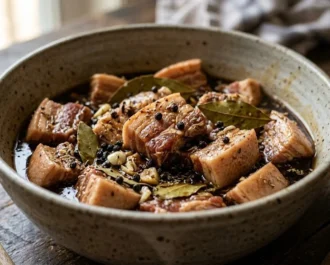
In a large bowl, combine the pork belly cubes with the soy sauce, crushed garlic, whole black peppercorns, and bay leaves. Toss thoroughly to coat every piece. Marinate for at least 30 minutes at room temperature, or overnight in the refrigerator for deeper flavor and a more tender texture.
- Sear the Pork
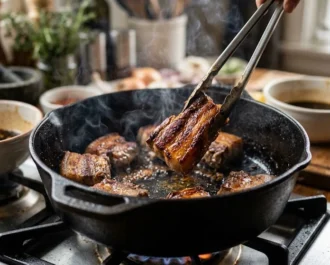
Heat the cooking oil in a large, heavy-bottomed pot or Dutch oven over medium-high heat. Remove the pork from the marinade, reserving the liquid, and sear the pieces in batches, skin-side down first, for 3-4 minutes until deep golden-brown, then flip and sear 2 more minutes per side. Transfer seared pork to a plate, keeping the rendered fat in the pot.
- Build the Braising Sauce
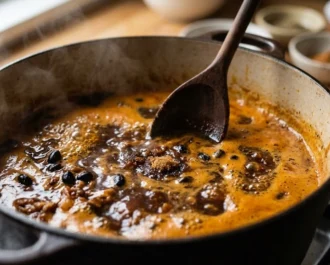
Pour the reserved marinade into the hot pot to deglaze, scraping up the browned bits. Add the vinegar and let it boil undisturbed for 2 minutes. Add the water, brown sugar, fermented black beans (tausi), and annatto powder or oil, stirring until the sugar dissolves and the color is even. Taste and adjust the balance before adding the pork.
- Braise the Pork Low and Slow
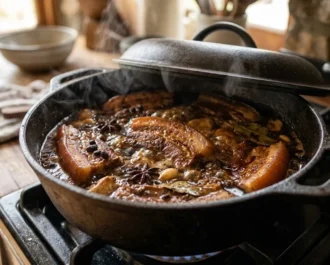
Return the seared pork to the pot, bring to a gentle simmer, then reduce to the lowest setting. Cover loosely and braise for 45-55 minutes, turning the pork once at the halfway point, until the collagen breaks down into gelatin and the pork is fall-off-the-bone tender. Add small splashes of water if the liquid runs low.
- Add Banana Blossoms and Reduce
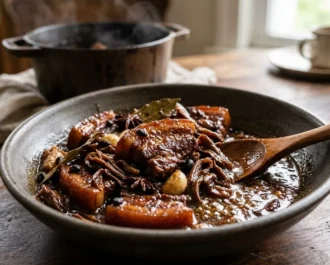
If using dried banana blossoms, drain the soaked pieces and press them into the braising liquid. Remove the lid, raise the heat to medium, and let the sauce reduce uncovered for 10-12 minutes, stirring occasionally, until thick, glossy, and deep mahogany in color.
- Final Glaze and Serve
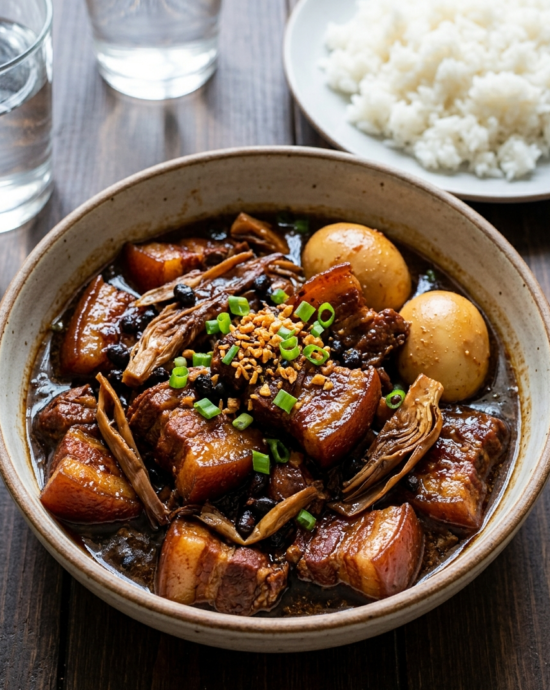
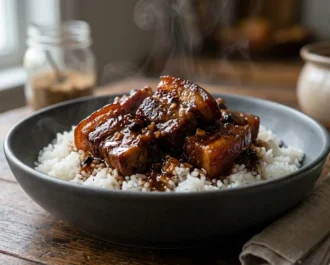
Taste and adjust the seasoning with additional soy sauce, sugar, or vinegar as needed. Discard the bay leaves. Transfer the tender pork to a deep serving bowl and spoon the glossy sauce generously over the top. Serve immediately with steaming white rice.
- Calories:480 kcal24%
- Energy:2008 kJ24%
- Protein:28 g56%
- Carbohydrates:24 g9%
- Sugar:12 g13%
- Fat:28 g36%
- Salt:1.3 g22%
Table of Contents
What Is Pork Humba?
Pork humba is a Visayan Filipino braised pork belly dish slow-cooked in soy sauce, vinegar, brown sugar, and fermented black beans (tausi) until the pork is meltingly tender and coated in a thick, sweet-sour-savory sauce of extraordinary complexity — widely considered the Visayan version of pork adobo and one of the most beloved comfort dishes in the regional cuisines of Cebu, Bohol, Leyte, and the broader Visayas and Mindanao island groups. The name humba is derived from the Chinese-Hokkien word hong ba — a reference to the Chinese red-braised pork (hong shao rou) that inspired the dish through centuries of trade and cultural exchange between Chinese merchants and the Visayan people.
What distinguishes pork humba from the more internationally famous pork adobo is primarily the addition of two key ingredients: fermented black beans (tausi) and brown sugar. The tausi introduces a deeply savory, slightly funky, fermented complexity inherited from Chinese braising traditions — a flavor dimension that adobo, with its simpler vinegar-and-soy profile, does not possess. The generous brown sugar creates a sauce that is noticeably, pleasurably sweeter than adobo, with a caramelized depth that makes humba’s sauce one of the most addictive rice companions in Filipino cooking. Dried banana blossoms (puso ng saging) are a traditional Visayan addition that adds a pleasantly chewy textural element unique to regional preparations.
Pork humba is profoundly associated with the Visayan celebration tradition — it appears at bayanihan community gatherings, fiesta lunches, and family reunions across the islands. Its extraordinary richness and the labor of the long, slow braise communicate the same abundance and care that lechon conveys at grander occasions. For anyone seeking to understand Visayan Filipino food culture, pork humba is an essential, deeply rewarding discovery.
Ingredient Notes
- Pork Belly (Liempo): Skin-on pork belly is essential for authentic pork humba — the skin softens to a meltingly yielding gelatinous texture during the long braise, and the generous fat layer renders into the sauce, creating the extraordinary richness that makes humba’s sauce so compelling over rice. Choose pork belly with an even, thick fat layer; avoid very lean cuts, which produce a significantly less satisfying result.
- Fermented Black Beans (Tausi): The defining ingredient that separates pork humba from adobo — this fermented soybean condiment contributes a deeply savory, slightly briny, complex umami depth inherited from Chinese cooking traditions. Use whole fermented black beans rather than black bean sauce for the most authentic texture and flavor; rinse briefly before using to moderate saltiness if needed.
- Brown Sugar or Muscovado: The generous sweetness of pork humba is non-negotiable — it is the characteristic that most immediately distinguishes the dish from adobo. Use dark muscovado sugar for the deepest molasses complexity, or brown sugar for a slightly lighter sweetness. Do not reduce the sugar quantity; the sweetness is fundamental to humba’s identity.
- Annatto (Achuete): Annatto powder or oil gives humba its characteristic deep amber-orange hue that distinguishes it visually from the darker, browner tones of standard pork adobo. Both annatto powder and annatto oil work effectively; annatto oil produces a slightly more evenly distributed color throughout the sauce.
- Dried Banana Blossoms (Puso ng Saging): The dried, rehydrated banana blossom adds a distinctively Visayan textural element — chewy, deeply flavored, and uniquely absorbent of the braising liquid. Soak for 20 minutes in warm water before adding; it should be pliable and slightly softened but not completely limp.
Ingredient Suggestions
- Hard-boiled eggs — Added in the final 15 minutes, eggs absorb the sweet tausi-soy sauce and take on a beautiful mahogany stain that makes them as deeply flavored as the pork itself.
- Dried mushrooms — Soaked shiitake mushrooms added during the braise absorb the complex sauce and contribute an earthy, meaty depth that complements the tausi beautifully.
- Tofu skin (tokwa) — Fried firm tofu added in the final 10 minutes absorbs the humba sauce dramatically and adds a plant protein element.
- Pineapple tidbits — A small can added with the braising liquid creates a sweeter, more tropical variation that is particularly popular in some Visayan regional versions.
- Star anise — Two pods added with the aromatics introduce a warm, anise-forward complexity that deepens the Chinese-influenced character of the dish.
Helpful Tips & Pro Tips
- Low and slow is the entire philosophy of pork humba. The pork belly requires at least 45 minutes of gentle, unhurried braising to convert its collagen to gelatin and render its fat into the sauce. High heat produces tough, unpleasant pork with a greasy rather than silky sauce. Resist any temptation to increase the heat to speed the process — patience is the recipe.
- Allow the vinegar to boil undisturbed. As with adobo and other Filipino vinegar-braised dishes, the vinegar must boil undisturbed for 2 minutes before the first stir to mellow its harsh volatile acids. Stirred vinegar retains more of its raw sharpness and can produce an unpleasantly acidic final sauce.
- Why is my pork humba sauce not thick and glossy? Thin humba sauce results from insufficient reduction time or from adding too much water relative to the other ingredients. Remove the lid and increase the heat to medium after the pork is fully tender, simmering uncovered until the sauce reduces to a thick, coating consistency that clings to the pork.
- The tausi is salty — season carefully. Fermented black beans contain significant salt. Add soy sauce gradually and taste before each addition during the sauce-building stage, as the combined salt from tausi and soy sauce can easily oversalt the dish if both are added at full measure without tasting.
- Pork humba improves dramatically overnight. Like pork adobo, humba tastes noticeably better on the second day — the sweet-sour-salty-funky flavors integrate and deepen overnight in the refrigerator, producing a richer, more harmonious sauce. Make it a day ahead whenever the schedule allows.
How to Serve and Store
Serve pork humba in a deep bowl over abundant steaming white rice, spooning the thick, glossy mahogany sauce generously over both the pork and the rice. The sauce-soaked rice is the greatest pleasure of the dish. For a complete Visayan spread, accompany with sinuglaw (ceviche) or a simple green salad to provide acidic contrast to the dish’s richness.
Store leftover pork humba in an airtight container in the refrigerator for up to 5 days — like all vinegar-braised pork dishes, the acidity extends shelf life noticeably. The sauce solidifies from the rendered fat and gelatin upon chilling; reheat gently on the stovetop over low heat, stirring to remelt the sauce. Freeze for up to 3 months; thaw overnight in the refrigerator and reheat gently before serving.
Substitutions
- Fermented black beans (tausi) → Black bean sauce (2 tbsp) — A convenient substitute that approximates the flavor with less textural presence; reduce quantity as black bean sauce is more concentrated.
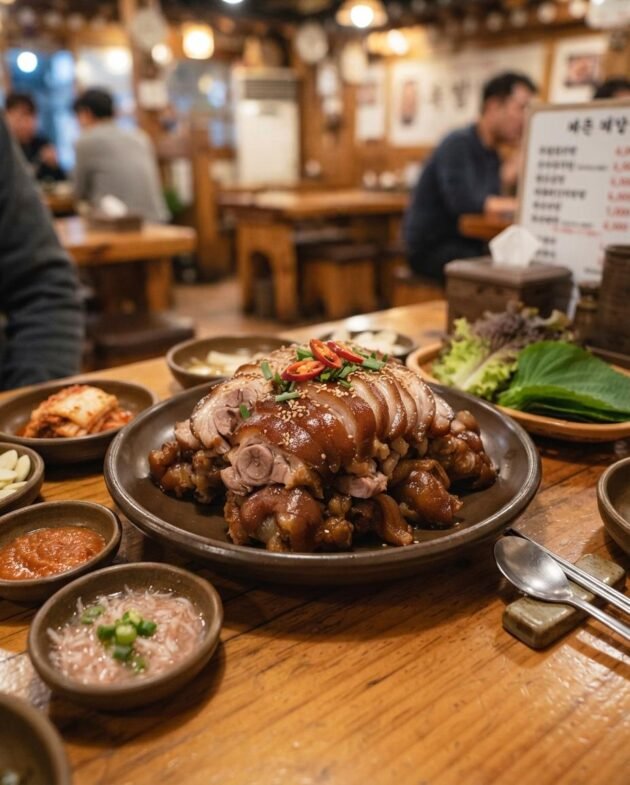
- Pork belly → Pork knuckle (pata) — A spectacular alternative that produces a more dramatic presentation; increase braising time to 2 hours for complete collagen breakdown.
- White cane vinegar → Apple cider vinegar — A mellow, slightly fruity substitute with comparable balancing acidity.
- Brown sugar → Honey or muscovado — Both provide comparable sweetness with slightly different aromatic profiles; muscovado adds the deepest molasses complexity.
- Banana blossoms → Bamboo shoots — A widely available substitute with a comparable chewy, neutral-flavored texture that absorbs the braising sauce well.
- Pork → Firm tofu, pan-fried golden — A vegan adaptation; tofu absorbs the sweet-soy-tausi sauce beautifully and takes on a wonderful flavor with extended simmering.
Suggested Recipes
- Pork Adobo — The natural comparison dish to pork humba — same technique, same base ingredients, but without tausi or sugar; understanding both deepens appreciation for each.
- Chicken Humba — A lighter chicken version using the same tausi-soy-sugar-vinegar braising formula; excellent for introducing humba flavors in a more accessible format.
- Paksiw na Pata — Pork knuckle braised in vinegar and soy sauce; shares humba’s low-and-slow braising philosophy with an even more dramatic cut of meat.
- Lechon Paksiw — Another sweet-savory Filipino vinegar-braised pork dish that shares humba’s philosophy of building complex flavor from a small number of well-chosen ingredients.