
- Step 1: Blanch the Beef for a Clear Broth
Place the beef shank and marrow bones in a large stockpot and cover completely with cold water. Bring to a boil over high heat and let it boil vigorously for 10 minutes — you will see grey foam and impurities rising to the surface. This blanching step is critical for achieving bulalo's defining characteristic: a crystal-clear, golden broth. Drain the pot completely and rinse each piece of beef and bone under cold running water, scrubbing away any remaining impurities. Rinse the pot itself before returning the meat and bones. Many home cooks skip this step and wonder why their broth is cloudy — do not skip it. Starting with clean, blanched beef ensures a beautifully translucent soup that looks as good as it tastes.
- Step 2: Build the Broth Base
Return the cleaned beef shank and marrow bones to the pot. Add fresh cold water, enough to cover all pieces by at least 2 inches. Add the halved onion (place cut-side down in the pot for a slightly charred flavor) and the halved garlic head. Add the whole black peppercorns. Bring the water to a boil over high heat, then immediately reduce to the lowest possible simmer. The key to a clear bulalo broth is a very gentle simmer — the liquid should barely tremble on the surface. Cover partially and cook for 2.5 to 3 hours, skimming the surface every 30 minutes to remove any foam or fat. Add more water as needed to keep the beef submerged throughout. By the end, the broth should be fragrant, golden, and deeply flavored.
- Step 3: Test Beef Tenderness
After 2.5 hours of simmering, test the beef shank for tenderness by piercing the thickest part of the meat with a skewer or thin knife. It should slide in with almost no resistance. If there is still significant resistance, continue simmering for another 30–45 minutes and test again. The goal is beef that is pull-apart tender but still holding its shape on the bone. Do not rush this stage — the difference between adequately cooked and perfectly braised beef shank is dramatic in terms of both texture and flavor. Once the beef is properly tender, add the fish sauce and salt to the broth, tasting and adjusting as needed. The broth should be savory and clean, with the salt enhancing rather than dominating the natural beef flavors. Remove and discard the onion and garlic.
- Step 4: Add Vegetables in Stages
With the beef fully tender, it is time to add the vegetables in order of their cooking times. Start with the corn pieces and potatoes, which take the longest — simmer for 12–15 minutes. Then add the cabbage wedges and cook for another 5 minutes. Finally, add the baby bok choy and cook for just 2–3 minutes until bright green and slightly wilted. The bok choy should retain some crunch. Adding vegetables in stages ensures that each component is perfectly cooked — soft corn and potatoes, tender-crisp cabbage, and vibrant bok choy. Taste the broth one final time and adjust seasoning. The vegetables will absorb the broth and become seasoned as they cook; avoid over-salting at this stage.
- Step 5: Serve and Garnish Properly
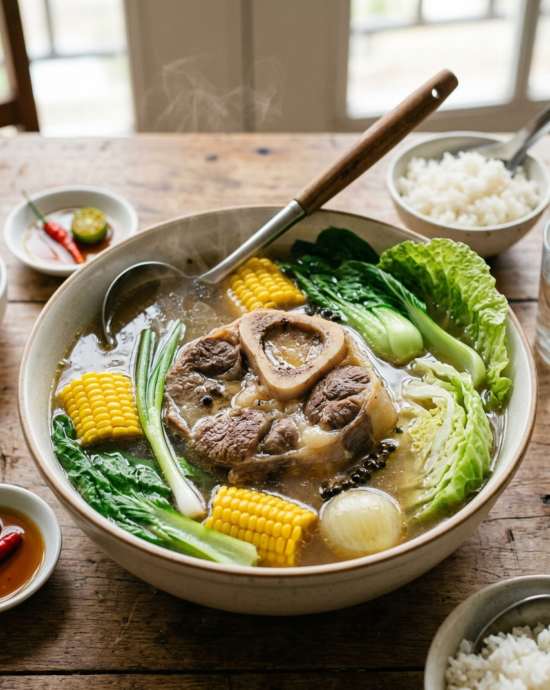
Bulalo is best served immediately in deep, wide bowls that can accommodate the generous bone-in shank pieces along with the vegetables and plenty of clear golden broth. Ladle the broth generously, ensuring every bowl gets a piece of beef shank, marrow bone, corn, potato, cabbage, and bok choy. Encourage diners to scoop out the marrow from the bones using a small spoon — this rich, silky bone marrow is the prized centerpiece of bulalo. Garnish with sliced green onions and a crack of fresh black pepper. Serve with fish sauce and calamansi on the side for individual seasoning, along with steamed white rice. The tradition of adding a squeeze of calamansi and a dash of fish sauce at the table is quintessential to the bulalo experience.
- Calories:520 kcal26%
- Protein:45 g90%
- Carbohydrates:15 g5%
- Sugar:6 g12%
- Salt:1,150 mg50%
- Fat:32 g41%
- Energy:1,757 kj21%
Table of Contents
What Is Beef Bulalo?
Beef Bulalo is a Filipino beef bone marrow soup that stands as one of the most beloved and iconic dishes in the national culinary repertoire. Originating from the province of Batangas in the Tagalog region of Luzon, bulalo has earned a permanent place at Filipino tables as the definitive comfort soup — warming, nourishing, and deeply satisfying in every sense.
The defining element of authentic bulalo is the beef shank cooked bone-in, with the marrow intact inside the large femur bones. After hours of gentle simmering, the marrow softens to a rich, creamy consistency that is scooped directly from the bone and spread over rice or eaten with a spoon. This bone marrow is so treasured by Filipinos that entire restaurants in Batangas have been built around the bulalo experience.
What distinguishes bulalo from other Filipino beef soups is its insistence on simplicity and clarity. The broth is seasoned minimally — typically only fish sauce, peppercorns, and sometimes a touch of salt — allowing the pure, natural flavor of slow-cooked beef and marrow to be the star. Vegetables such as corn, cabbage, potatoes, and pechay or bok choy are added near the end of cooking to retain their color and texture.
Bulalo is deeply tied to Filipino family culture — it is the kind of dish prepared for Sunday family lunches, celebrations, or whenever someone needs comforting. The city of Tagaytay, with its cool mountain climate, has become synonymous with bulalo, and countless restaurants along Tagaytay’s ridge serve steaming bowls of it year-round. Today, bulalo remains an enduring symbol of Filipino culinary heritage — pure, generous, and soul-sustaining.
Ingredient Notes
- Beef Shank (Bone-In): Choose thick-cut cross-section shanks for the most marrow and collagen. The bone should be visible with marrow intact. Avoid de-boned or trimmed shanks as these lose the dish’s essential character.
- Marrow Bones: Ask your butcher for extra marrow bones (canoe-cut for easy scooping). The marrow is the prized element of bulalo — more bones means more luxury per bowl.
- Peppercorns: Whole black peppercorns are preferred over ground pepper for the long simmer. They release their heat gradually, producing a clean, warming spice note rather than a sharp pepper flavor.
- Corn on the Cob: Use mature sweet corn cut into thirds. The corn absorbs the broth as it cooks, becoming deeply flavored and adding a gentle sweetness to the overall dish.
Ingredient Suggestions
- Pechay (Chinese Cabbage): A traditional substitute or addition to bok choy; use both for an authentic restaurant-style presentation.
- Whole Peppercorn Blend: Add a few white peppercorns alongside black for a more complex, layered pepper heat in the broth.
- Banana Flower: Slice and add with the cabbage for a unique textural element that soaks up the broth beautifully.
- Ginger (1-inch knob): Bruised ginger added to the broth eliminates any gaminess and adds a subtle warmth to the soup.
Helpful Tips & Pro Tips
- Why Is My Bulalo Broth Cloudy?: Cloudy broth almost always results from skipping the initial blanching step or simmering the soup at too high a heat. Always blanch first, rinse thoroughly, and maintain the gentlest possible simmer throughout the entire cooking process.
- Never Boil After Blanching: Once the broth is established, it should never boil vigorously. A hard boil emulsifies the fat into the broth, creating permanent cloudiness. Keep the heat at the lowest setting your stove allows.
- Season Only at the End: Add fish sauce and salt only in the final 30 minutes of cooking. Early salting can toughen the beef. Taste and adjust just before adding the vegetables for the most accurate seasoning.
- Chill Overnight for Best Fat Removal: If time permits, refrigerate the finished broth overnight. The fat will solidify on the surface and can be removed in one clean sheet, resulting in a leaner, cleaner broth when reheated.
How to Serve and Store
Bulalo stores well in the refrigerator for up to 3 days in an airtight container. Keep the beef, vegetables, and broth together or separate them to prevent the vegetables from becoming mushy. To reheat, bring the broth to a gentle simmer in a pot and add fresh vegetables if desired. Bulalo can be frozen (broth and beef only, not vegetables) for up to 2 months. Thaw in the refrigerator overnight before reheating. Reheat always on the stovetop over low heat for best texture and flavor.
Substitutions
- Beef Shank → Oxtail — produces a richer, more gelatinous broth; increases cooking time by 30–45 minutes.
- Fish Sauce → Salt and soy sauce mixture — for those avoiding fermented fish products; adjust ratio to taste.
- Baby Bok Choy → Pechay or spinach — both are traditional and work beautifully in the hot broth.
- Potatoes → Taro root (gabi) — a budget-friendly starch alternative that also thickens the broth slightly.
- Corn on the Cob → Sweet corn kernels frozen — convenient substitute; add only in the last 10 minutes.
Suggested Recipes
- Beef Balbacua: A Visayan cousin to bulalo, also relying on collagen-rich cuts but with coconut milk, annatto, and peanuts.
- Nilaga: A simpler version of bulalo without marrow bones, common in everyday Filipino home cooking.
- Beef Pochero: A Spanish-influenced Filipino soup with tomato base and additional sweet plantain accompaniment.